

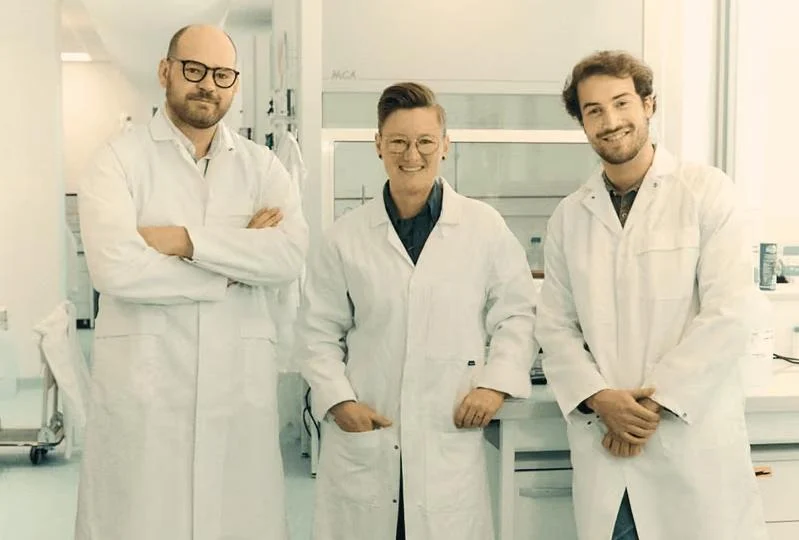
Syntetica, a Paris-based startup specializing in circular textile technology, has successfully closed a $30 million Series A funding round to propel the commercialization of its proprietary chemical recycling process for nylon. This significant capital injection, led by the Ecotechnologies 2 fund—managed by Bpifrance on behalf of the French government—marks a pivotal moment for the textile industry as it seeks to transition from a linear "take-make-waste" model toward a truly circular economy. The round saw participation from a diverse coalition of strategic and financial heavyweights, including global athletic apparel leader lululemon, major apparel manufacturer MAS Holdings, and existing investor EQT Ventures. Other notable contributors included SWEN Capital Partners and the family offices representing the Peugeot, Etam, and Indorama Ventures’ largest shareholders, alongside institutional backing from the European Innovation Council (EIC).
A Technological Breakthrough in Nylon Circularity
Founded in 2023 by Marco Bertone and Louis Monsigny, Syntetica has rapidly emerged as a frontrunner in the race to solve the "nylon problem." While polyester recycling has seen significant advancements, nylon remains a notoriously difficult material to process, particularly when it is blended with other fibers or contaminated by dyes and finishes. Syntetica’s core innovation lies in its chemical recycling technology, which is capable of converting nylon-containing textile waste back into high-quality recycled feedstocks. These feedstocks are chemically identical to virgin petroleum-based materials, allowing for the production of new nylon that maintains the performance characteristics required for high-stress applications like sportswear and industrial textiles.
A key differentiator of the Syntetica process is its ability to handle both Nylon 6 and Nylon 6,6 simultaneously within a single processing stream. Nylon 6,6, known for its superior durability, heat resistance, and mechanical strength, is a staple in the production of high-performance gear, including the leggings and outerwear produced by companies like lululemon. However, these same properties make it incredibly resilient to traditional recycling methods. By developing a solution that can process mixed nylon waste without the need for intensive pre-sorting by chemical subtype, Syntetica addresses one of the primary technical and economic barriers that has historically hindered the scaling of nylon recycling.
The Scale of the Textile Waste Crisis
The urgency of Syntetica’s mission is underscored by the current state of global textile production and waste management. Approximately 7 million tons of nylon are produced annually across the globe, serving industries ranging from fashion and athletics to automotive and carpeting. Despite its ubiquity, recycled nylon currently accounts for only about 2% of total production. Most "recycled" nylon currently on the market is derived from "pre-consumer" waste, such as industrial scraps or discarded fishing nets, which are relatively clean and easy to process.
In contrast, post-consumer textile waste—the clothes, bags, and gear discarded by consumers—accounts for roughly 80% of the industry’s total waste footprint. This stream has remained largely untapped because it is often composed of complex fiber blends (such as nylon mixed with elastane or polyester) and contains various chemical additives. Syntetica’s technology is specifically designed to tackle this post-consumer challenge, offering a pathway to reclaim value from the millions of tons of garments that currently end up in landfills or incinerators each year.
Strategic Partnerships and Industrial Scaling
The $30 million in new capital is earmarked for a critical phase of the company’s growth: the leap from laboratory-scale operations to industrial-grade production. Syntetica has announced plans to construct its first commercial demonstration facility in France. This facility will serve as a proof-of-concept for the technology’s viability at scale, with an initial target of processing several hundred tons of textile waste annually.

A cornerstone of this industrial expansion is Syntetica’s partnership with Michelin. The demonstration plant will be developed in collaboration with Michelin’s Centre for Sustainable Materials in Clermont-Ferrand. This partnership is strategic on multiple levels; Michelin brings extensive experience in industrial scaling and high-performance polymers, and the collaboration highlights the potential for Syntetica’s technology to impact sectors beyond apparel, such as the automotive industry, where nylon is heavily utilized in tire cords and engine components.
Marco Bertone, co-founder and CEO of Syntetica, emphasized the transformative nature of the funding, stating that for decades, mixed nylon waste was dismissed as too complex and costly to recycle. He noted that the company has proven it is possible to recover high-value materials from waste streams the industry had effectively written off. Bertone believes this funding will allow the company to move from "breakthrough chemistry to industrial reality," facilitating a broader transition to circular materials.
Investor Sentiment and Market Implications
The involvement of lululemon and MAS Holdings as strategic investors signals a growing trend among apparel brands and manufacturers to take a direct stake in their supply chain’s sustainability. For lululemon, which relies heavily on nylon for its signature fabrics, securing a future supply of high-quality recycled nylon is essential to meeting its public environmental targets. Similarly, MAS Holdings, one of the world’s largest apparel manufacturers based in Sri Lanka, views the partnership as a way to integrate circularity into the manufacturing process from the ground up.
Sid Amalean, Director of Group Innovation at MAS Holdings, remarked that the success of recycling technology depends on the convergence of brand commitment, manufacturing partnership, and industrial scale-up expertise. He expressed confidence that Syntetica is one of the few ventures that has successfully aligned these three pillars. By leveraging MAS’s manufacturing footprint, Syntetica can more effectively integrate its recycled monomers back into the global textile supply chain.
From a financial perspective, the lead role of Bpifrance’s Ecotechnologies 2 fund reflects the French government’s broader strategy to position the country as a hub for "GreenTech" and industrial sovereignty. By supporting home-grown technologies that reduce dependence on imported petrochemicals, the fund is aligning economic growth with environmental mandates like the European Green Deal and the Circular Economy Action Plan.
Regulatory Tailwinds and the Future of Circularity
The timing of Syntetica’s expansion coincides with a tightening regulatory environment in Europe and North America. The European Union’s Ecodesign for Sustainable Products Regulation (ESPR) and the proposed revisions to the Waste Framework Directive are expected to introduce stricter requirements for textile durability, repairability, and recycled content. Furthermore, extended producer responsibility (EPR) schemes are being implemented across various jurisdictions, making fashion brands financially responsible for the end-of-life management of their products.
These regulations are creating a massive market demand for "fiber-to-fiber" recycling solutions. Historically, the industry has relied on "bottle-to-textile" recycling (turning PET plastic bottles into polyester fleece), but regulators and environmental advocates are increasingly calling for closed-loop systems where textiles are turned back into textiles. Syntetica’s focus on nylon-to-nylon chemical recycling places it directly in line with these emerging requirements.

Broadening the Horizon: Beyond Fashion
While the immediate focus of the Series A funding is on the textile and apparel sector, Syntetica has articulated a long-term vision that extends into other high-value applications. The company’s technology platform is designed to be adaptable, with potential future applications in the automotive sector, specialty chemicals, and even aerospace.
In the automotive industry, nylon 6 and 6,6 are used for their high melting points and mechanical strength in everything from intake manifolds to airbags. As car manufacturers face their own circularity mandates, the ability to source recycled nylon that meets rigorous safety and performance standards will be invaluable. Syntetica’s partnership with Michelin is a clear indication that the company is already laying the groundwork for this cross-industry expansion.
Conclusion and Analysis
Syntetica’s $30 million Series A round is more than just a financial milestone for a startup; it is a barometer for the maturing circular economy. The transition from mechanical recycling—which often degrades the quality of the plastic—to chemical recycling represents a significant technological leap. By breaking polymers down into their constituent monomers, Syntetica allows for the creation of "infinite" nylon that does not lose its integrity over multiple recycling cycles.
However, challenges remain. The cost of chemical recycling is currently higher than that of virgin nylon production, largely due to the energy-intensive nature of the processes and the logistical hurdles of collecting and pre-processing post-consumer waste. The success of Syntetica’s demonstration plant in France will be a critical test of whether these costs can be brought down through industrial efficiencies and economies of scale.
Furthermore, the industry must address the "collection gap." Even the most advanced recycling technology is useless if the waste never reaches the facility. The involvement of manufacturers like MAS Holdings and brands like lululemon suggests that the industry is beginning to build the necessary infrastructure to close this loop. As Syntetica moves toward industrial production, its progress will be closely watched by competitors, regulators, and environmental stakeholders as a potential blueprint for the future of sustainable material science.
