

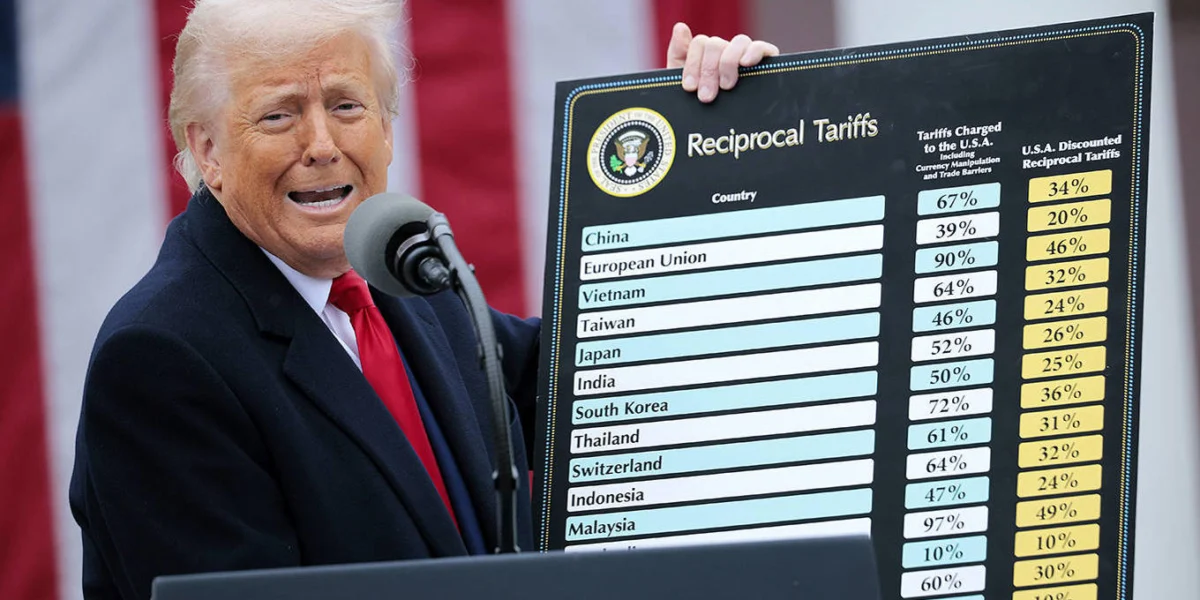
The global economic landscape, already navigating a complex web of geopolitical shifts and technological advancements, faces a significant headwind from the rising tide of trade protectionism. While nations often invoke the pursuit of domestic interests and job creation as justifications for imposing higher trade restrictions, new research underscores a critical, often overlooked, consequence: the detrimental impact of policy uncertainty on foreign direct investment (FDI). This article delves into the findings of recent studies, examines the volatile nature of protectionist policies, and explores the far-reaching implications for global economic stability and growth.
The Siren Song of Protectionism and the Trumpian Precedent
The recent history of international trade policy has been punctuated by a resurgence of protectionist sentiment. A notable example, as highlighted in earlier reports, occurred when then-US President Donald Trump issued warnings to business leaders at the World Economic Forum in Davos. His directive to "Come make your product in America" was not merely an encouragement for domestic manufacturing; it was a clear signal of impending trade barriers designed to incentivize onshoring. This pronouncement served as a precursor to the "America First" trade agenda, which manifested in a series of tariff announcements, waivers, reversals, and legal challenges.
The implementation of these tariffs was far from a straightforward, predictable process. Reports indicated that duties were announced, then temporarily suspended, subsequently reinstated, declared unconstitutional by certain legal bodies, and ultimately re-enacted under different legislative authorities. This constant flux created an environment of profound uncertainty for businesses, both domestic and international, that relied on predictable trade flows and global supply chains.
The Research: Uncertainty as a Drag on Investment
A growing body of economic research is now quantifying the adverse effects of such policy volatility. Studies examining the relationship between trade policy uncertainty and FDI inflows reveal a consistent pattern: heightened unpredictability leads to significant collateral damage. Foreign direct investment, the lifeblood of economic development, job creation, and technological diffusion, is particularly sensitive to stable and transparent policy environments.
When a country signals a willingness to impose or alter trade restrictions with little notice or clear rationale, it sends a powerful disincentive to foreign investors. The prospect of sudden tariffs, quotas, or non-tariff barriers can dramatically alter the cost-benefit analysis for companies considering establishing operations, expanding existing facilities, or engaging in long-term investments abroad. The perceived risk of capital being devalued or operations being disrupted by capricious policy shifts can lead to a substantial withdrawal or redirection of FDI.
Quantifying the Impact: Data and Analysis
While specific figures vary across different studies and methodologies, the consensus is that the negative correlation between trade policy uncertainty and FDI is robust. For instance, research published by institutions like the International Monetary Fund (IMF) and the National Bureau of Economic Research (NBER) has explored this nexus. These studies often employ econometric models that isolate the impact of uncertainty, controlling for other economic variables.
One line of inquiry focuses on measuring trade policy uncertainty through proxies such as the frequency of news articles mentioning trade disputes, the volatility of trade-related policy announcements, and the number of trade-related legal challenges. When these uncertainty indices rise, the data consistently shows a corresponding decline in FDI inflows. The magnitude of this decline can be substantial, with some estimates suggesting that a significant increase in trade policy uncertainty can lead to FDI reductions in the range of several percentage points of a country’s GDP.
For example, a hypothetical scenario might illustrate this: if a nation experiences a 10% increase in its trade policy uncertainty index, FDI inflows could potentially decrease by 2-5% in the subsequent periods, depending on the specific industry and the global economic climate. This impact is not uniform; sectors that are heavily reliant on international trade, such as manufacturing, automotive, and technology, tend to be more acutely affected.
The Economic Rationale Behind the Impact
The economic rationale for this phenomenon is multifaceted. Firstly, FDI often involves long-term commitments of capital. Investors require a degree of predictability regarding the regulatory and fiscal environment in which their investments will operate. Unforeseen policy changes can erode expected returns, increase operational costs, and even render previously viable projects unprofitable.
Secondly, FDI is crucial for the integration of economies into global value chains. Companies invest abroad to access markets, tap into specialized labor, or secure access to raw materials. When trade barriers become unpredictable, these integrated supply chains are disrupted, making it more difficult and expensive to operate efficiently. This can lead companies to diversify their production bases, seeking out more stable and predictable markets, or to reduce their overall international exposure.
Thirdly, the psychological impact of uncertainty cannot be understated. Business leaders are naturally risk-averse. When faced with a climate of unpredictability, they are more likely to delay or abandon investment decisions, opting for safer, albeit potentially less profitable, alternatives. This can create a vicious cycle, where reduced investment leads to slower economic growth, which in turn may further fuel protectionist sentiments as governments seek to address perceived economic stagnation.
Background Context: A Shift in Global Trade Norms
The rise of protectionist rhetoric and policies in recent years represents a significant departure from the prevailing global trade consensus that emerged in the latter half of the 20th century. Following World War II, international institutions like the General Agreement on Tariffs and Trade (GATT), and later the World Trade Organization (WTO), were established to promote multilateral trade liberalization and establish a rules-based international trading system. This era saw a dramatic expansion of global trade and investment, contributing to unprecedented global economic growth and poverty reduction.
However, several factors have contributed to a questioning of this liberal trade order. These include:
- Growing Inequality: Concerns that the benefits of globalization have not been evenly distributed, leading to widening income disparities within many developed nations.
- Job Displacement: The perception that outsourcing and international competition have led to significant job losses in certain domestic industries.
- Geopolitical Tensions: Increased competition and strategic rivalries between major global powers, leading to a greater emphasis on national security and economic self-reliance.
- Perceived Unfair Practices: Allegations of unfair trade practices by some trading partners, such as intellectual property theft, state subsidies, and currency manipulation.
These concerns have provided fertile ground for political leaders advocating for more protectionist policies, often framed as a necessary means to defend national sovereignty and domestic economic interests.
Chronology of Protectionist Measures and Reactions
The period following the 2016 US presidential election marked a noticeable acceleration in the implementation of protectionist measures by major economies. This was not confined to the United States; other nations also began to review their trade policies, sometimes in response to perceived threats and sometimes to pursue their own domestic agendas.
- Early 2017: The Trump administration initiated a series of reviews of existing trade agreements and announced its intention to use tariffs more aggressively.
- 2018: The US imposed tariffs on a wide range of goods from countries including China, the European Union, Canada, and Mexico. These measures triggered retaliatory tariffs from affected nations.
- Throughout 2018-2019: A period of intense trade disputes, characterized by tit-for-tat tariffs, negotiations, and a significant increase in global trade policy uncertainty. Business groups and international organizations repeatedly warned about the negative consequences for global trade and investment.
- 2020 onwards: While the intensity of some specific trade disputes has ebbed and flowed, the underlying trend of increased trade policy uncertainty and a greater willingness by governments to use trade restrictions as a policy tool has persisted. This has been further complicated by the COVID-19 pandemic, which led to supply chain disruptions and a renewed focus on national resilience and the security of critical goods.
During this period, various stakeholders voiced their concerns:
- International Monetary Fund (IMF): Consistently warned that rising trade tensions and protectionism were damaging global growth prospects and increasing financial stability risks.
- World Trade Organization (WTO): Expressed concerns about the erosion of the rules-based multilateral trading system and the potential for escalating trade disputes.
- Business Associations: Organizations such as the US Chamber of Commerce and the Confederation of British Industry (CBI) issued statements highlighting the negative impacts of tariffs on their members, including increased costs, reduced competitiveness, and supply chain disruptions.
- Academic Economists: A large body of economists across the globe published research papers and op-eds emphasizing the economic inefficiencies and welfare losses associated with protectionist policies.
Broader Implications and Analysis
The implications of persistent trade policy uncertainty extend far beyond the immediate impact on FDI.
- Reduced Global Economic Growth: When investment slows and trade becomes more difficult, overall economic growth tends to decelerate. This can lead to fewer job opportunities, slower wage growth, and diminished prospects for poverty reduction.
- Increased Consumer Prices: Tariffs and other trade barriers often translate into higher prices for imported goods, which can disproportionately affect lower-income households.
- Fragmented Global Supply Chains: Uncertainty can encourage businesses to de-risk their supply chains by diversifying away from potentially volatile markets. While this can enhance resilience in some ways, it can also lead to less efficient production and higher costs globally.
- Weakened Multilateral Institutions: A rise in unilateral trade actions and a decline in adherence to international trade rules can weaken institutions like the WTO, making it harder to resolve future trade disputes and manage the global trading system effectively.
- Geopolitical Instability: Trade disputes can spill over into broader geopolitical tensions, exacerbating existing rivalries and hindering international cooperation on other critical global challenges.
The core dilemma lies in the short-term perceived benefits of protectionism versus its long-term, often hidden, costs. While specific industries or segments of the workforce might see temporary gains from targeted protection, the broader economic ecosystem suffers from the instability and inefficiency that such policies engender. The research on FDI is a stark reminder that a predictable and open trade environment is not just a matter of abstract economic theory; it is a fundamental prerequisite for sustained investment, innovation, and shared prosperity in the globalized world.
As policymakers continue to grapple with the complex challenges of the 21st-century economy, the evidence is mounting: the path of least resistance in terms of trade policy – marked by unpredictability and volatility – ultimately leads to a less prosperous and more uncertain future for all. A return to a more stable, rules-based international trading system, coupled with targeted domestic policies to address the legitimate concerns of those negatively impacted by globalization, remains the most prudent course for fostering long-term economic well-being.
