

Contrary to conventional wisdom, the world is neither converging on liberal democracy nor being swept by an authoritarian tide. The decisive political struggles of the 21st century will be won or lost through the unglamorous work of strengthening democratic accountability and building effective institutions.
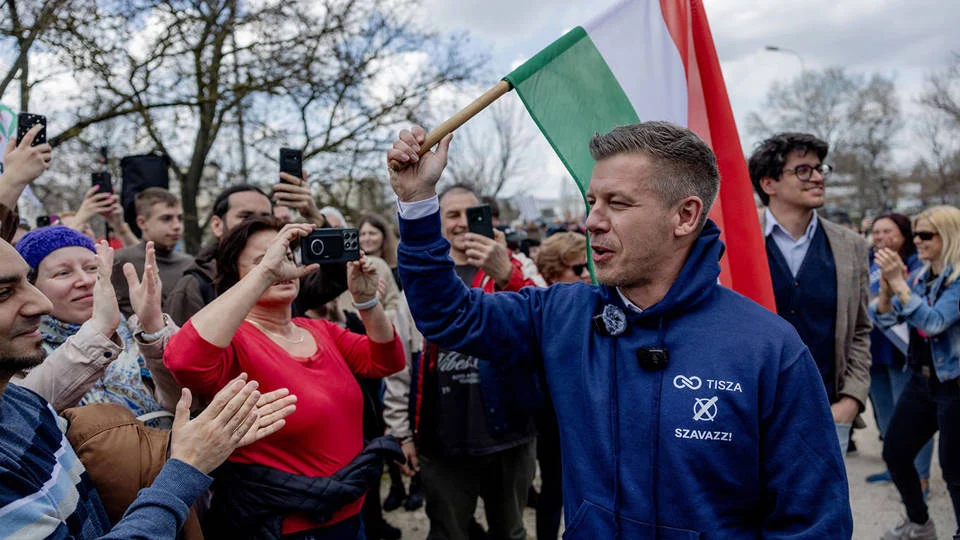
BERLIN – The year 2026 has been punctuated by seismic political shifts, offering a complex narrative that defies simplistic pronouncements of democratic triumph or authoritarian ascendancy. For proponents of liberal democracy, a significant moment of optimism arrived in April with the electoral defeat of Viktor Orbán in Hungary. His departure after a 16-year tenure marked the end of a carefully constructed authoritarian model, self-proclaimed as "illiberal democracy." Against considerable odds and despite the Fidesz party’s extensive control over public and private media landscapes, Hungarian voters delivered a resounding victory to Péter Magyar’s Tisza party, ushering in Magyar as the new Prime Minister. This outcome, widely interpreted as a repudiation of Orbán’s autocratic governance, has been hailed by many as a crucial victory for democratic principles in Europe.
The Hungarian election, held on April 12, 2026, saw the Tisza party secure a landslide victory, unseating the long-dominant Fidesz party. Official results indicated that Tisza garnered over 55% of the vote, a significant margin that allowed them to form a government without the need for coalition partners. This result was a stark contrast to the previous elections, where Fidesz had consistently maintained a supermajority. Orbán’s government, in power since 2010, had been characterized by a systematic erosion of democratic checks and balances, including judicial independence, media freedom, and civil society space. International watchdogs, such as Freedom House and Reporters Without Borders, had repeatedly documented these regressions, flagging Hungary as a country moving away from democratic norms.
Péter Magyar, a former insider within Orbán’s political circle, emerged as a formidable opposition leader in late 2023. His movement, Tisza (Respect and Freedom), capitalized on widespread public discontent stemming from economic stagnation, corruption allegations, and a perceived authoritarian drift. Magyar’s campaign strategy focused on direct appeals to voters, utilizing social media and independent news platforms to bypass the state-controlled media apparatus. His message of restoring rule of law and democratic accountability resonated deeply with a populace weary of Orbán’s entrenched power.
The Erosion of Democratic Norms Under Orbán
Viktor Orbán’s ascent to power in 2010 coincided with a period of global financial instability. He initially presented himself as a strong leader capable of steering Hungary through turbulent economic times. However, over the subsequent decade and a half, his government gradually consolidated power, enacting constitutional changes and legislative reforms that critics argued systematically undermined the separation of powers and democratic freedoms.
Key among these changes were:
- Media Control: The Orbán government implemented a sweeping media reform that led to the creation of a state-controlled media council, which subsequently awarded most broadcasting licenses to government-aligned entities. Independent media outlets faced increasing pressure, including economic boycotts and legal challenges, leading to a significant decline in media pluralism. According to data from the European Journalism Centre, by 2020, over 80% of the Hungarian media landscape was either directly or indirectly controlled by government allies.
- Judicial Independence: Constitutional court judges were appointed with a lower threshold for approval, and the government expanded its influence over judicial appointments. This raised concerns about the judiciary’s ability to act as an independent check on executive power.
- Civil Society Suppression: Numerous non-governmental organizations (NGOs) faced increased scrutiny and funding restrictions, particularly those receiving support from foreign sources. Legislation, such as the "foreign agent law" enacted in 2017, was criticized for stigmatizing and hindering the work of civil society groups.
- Electoral System Manipulation: Changes to electoral laws, including gerrymandering and the redrawing of constituency boundaries, were implemented in ways that analysts suggested favored the ruling Fidesz party.
Despite these challenges, a resilient civil society and a segment of the independent media continued to operate, laying the groundwork for eventual political change. The emergence of Péter Magyar and the Tisza party provided a unified platform for opposition forces, channeling widespread dissatisfaction into a cohesive electoral challenge.
The Hungarian Election: A Turning Point?
The April 2026 election was more than just a change of government; it represented a significant recalibration of Hungary’s political trajectory. The landslide victory for Tisza offered a stark contrast to previous elections, which had been marred by allegations of irregularities and a deeply uneven playing field.
Key Election Data and Analysis:
- Turnout: The election saw a high voter turnout of approximately 70%, indicating significant public engagement and a strong desire for change.
- Seat Distribution: The Tisza party secured an outright majority in the National Assembly, gaining over 140 out of the 199 seats. This strong mandate allows Magyar’s government to implement its policy agenda without immediate reliance on coalition partners.
- Orbán’s Legacy: Viktor Orbán, who had served as Prime Minister for a cumulative 16 years, announced his retirement from frontline politics following the defeat. His departure signifies the end of an era, though the long-term impact of his policies and the institutional changes he implemented will continue to be felt.
- International Reactions: The election results were met with a mix of relief and cautious optimism from international bodies and European Union member states. The European Commission, which had been engaged in ongoing disputes with the Orbán government over rule of law concerns, expressed its readiness to work with the new administration. Leaders in Brussels noted that the election presented an opportunity for Hungary to reintegrate more fully into the European democratic consensus.
Beyond Hungary: The Global Context of Democratic Resilience
While the Hungarian election is a significant event, it is crucial to avoid overstating its implications as a definitive turning point in a global ideological struggle. The narrative of a world bifurcating into liberal democracies and authoritarian states is an oversimplification. Instead, the 21st century is characterized by a more complex and nuanced reality: the persistent struggle for effective governance, characterized by democratic accountability and robust institutions.
The challenges faced by liberal democracies are not solely external threats from authoritarian regimes. They also stem from internal fragilities, including declining public trust, economic inequality, and the erosion of shared civic values. Similarly, authoritarian states often face internal pressures for greater freedom and accountability, even if these are suppressed.
The core of the political contest in the 21st century lies not in ideological declarations but in the practical delivery of good governance. This involves:
- Strengthening Democratic Accountability: This means ensuring that elected officials are genuinely responsive to the will of the people, that corruption is effectively prosecuted, and that power is not concentrated in the hands of a few. It requires robust checks and balances, independent judiciaries, and a free and pluralistic media.
- Building Effective Institutions: Beyond electoral processes, the strength of a democracy is measured by its capacity to provide essential public services, manage its economy competently, ensure social justice, and uphold the rule of law. This requires professional, impartial, and efficient public administrations, independent regulatory bodies, and a commitment to evidence-based policymaking.
- Fostering Civic Engagement: True democratic resilience depends on an informed and engaged citizenry. This necessitates investment in education, media literacy, and platforms for constructive public discourse. It also requires protecting the space for civil society to advocate for the public interest and hold power to account.
The Unseen Work: The Path Forward
The political upheavals of 2026, including the Hungarian election, highlight the ongoing dynamism of global politics. They underscore that democratic gains are not irreversible and that the fight for good governance requires continuous effort. The unglamorous work of strengthening democratic accountability and building effective institutions, often overlooked in the heat of ideological battles, is where the real victories will be won or lost.
For countries like Hungary, the path ahead involves not just dismantling authoritarian structures but also actively rebuilding democratic institutions and fostering a culture of accountability. This will require sustained commitment from political leaders, active participation from citizens, and continued vigilance from civil society and the international community. The lessons from Hungary’s recent past, and the hope for its democratic future, serve as a potent reminder that the most critical political struggles of our time are waged not on grand ideological battlegrounds, but in the intricate, often unheralded, processes of good governance and institutional strength. The real test for democracy in the 21st century lies in its ability to deliver tangible improvements in the lives of its citizens through transparent, accountable, and effective governance.
