

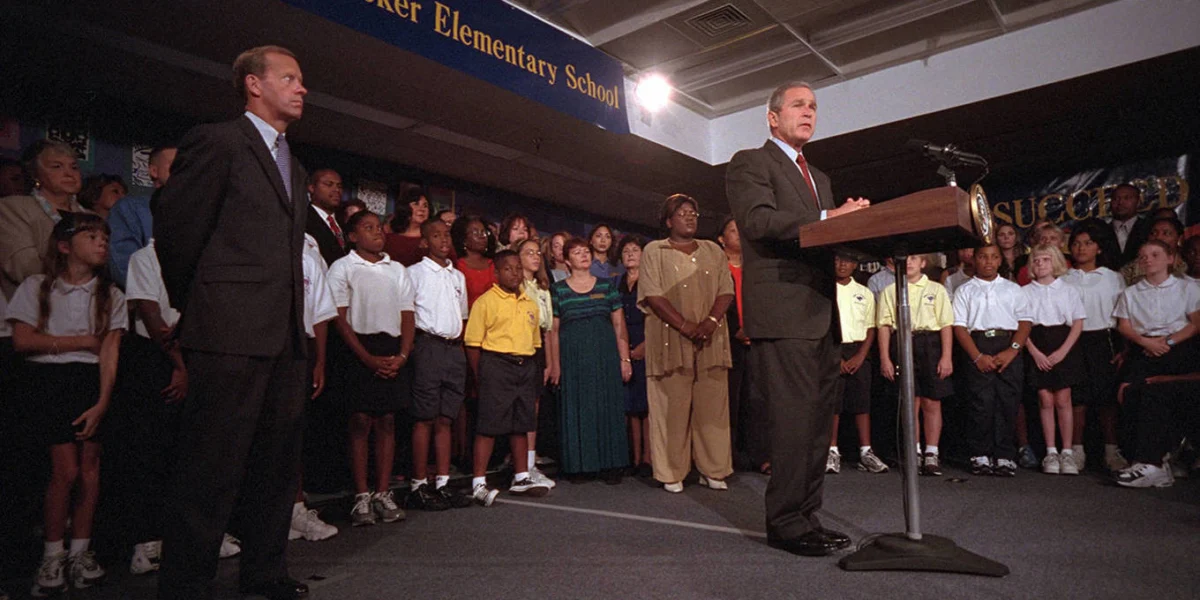
Twenty-five years after the September 11, 2001, terrorist attacks, the world grapples with a fractured geopolitical landscape that was irrevocably shaped by that single, cataclysmic day. The audacious assault orchestrated by al-Qaeda against the United States not only inflicted immense human tragedy but also served as a seismic shockwave, fundamentally altering the trajectories of global superpowers like the United States and Russia, and profoundly impacting the ascent of China, thereby ushering in an era of persistent geopolitical tumult.
The Dawn of a New Millennium and the Shadow of Terror
The turn of the 21st century had been marked by a palpable sense of optimism and the anticipation of a new era of global cooperation. The United States, under President George W. Bush, and Russia, led by President Vladimir Putin, both found themselves at the helm of nations navigating the early stages of this nascent millennium. Both possessed formidable military might, and their interactions, while complex, were being cautiously recalibrated in the post-Cold War order. Simultaneously, China, with its rapidly expanding economy, was steadily emerging as a significant global player, its influence growing with each passing year.
However, this nascent period of potential stability was brutally shattered on September 11, 2001. The coordinated terrorist attacks, which saw hijacked commercial airliners deliberately crashed into the Twin Towers of the World Trade Center in New York City and the Pentagon in Arlington, Virginia, with a fourth plane crashing in a field in Shanksville, Pennsylvania, after passengers bravely fought back, claimed the lives of nearly 3,000 people. The immediate aftermath was one of shock, grief, and an overwhelming sense of vulnerability that permeated the United States and echoed across the globe.
The Immediate Fallout: The War on Terror and Shifting Alliances
The United States’ response to the 9/11 attacks was swift and decisive. President Bush declared a "War on Terror," a global campaign aimed at dismantling terrorist organizations and their state sponsors. This declaration immediately reoriented American foreign policy, prioritizing counterterrorism efforts and leading to military interventions in Afghanistan in October 2001, to oust the Taliban regime harboring al-Qaeda, and later in Iraq in March 2003, based on controversial intelligence regarding weapons of mass destruction.
The launch of the War on Terror had profound implications for the United States’ relationships with other major powers. While Russia, under Putin, initially offered strong support and condemned the attacks, expressing solidarity with the United States, the subsequent trajectory of the War on Terror, particularly the invasion of Iraq, created fissures. Russia began to perceive American unilateralism and its expanding influence in regions deemed vital to Russian interests with increasing suspicion. This divergence in perspectives would gradually contribute to a more strained relationship between Moscow and Washington.
China, while publicly condemning the attacks, largely adopted a more cautious approach. Beijing viewed the unfolding events through the lens of its own national interests and its burgeoning global ambitions. The American focus on the Middle East and counterterrorism provided China with a crucial window of opportunity to continue its economic development and expand its international influence without the immediate, intense scrutiny it might otherwise have faced.
A Chronology of Transformation: Key Developments Post-9/11
The 25 years since 9/11 have been marked by a series of interconnected events that have fundamentally reshaped the global order. Understanding this period requires a look at a generalized chronology of key developments:
- 2001-2003: The immediate aftermath of 9/11, characterized by the US-led invasions of Afghanistan and Iraq, the establishment of the Department of Homeland Security in the US, and the initial phase of the global War on Terror. Russia offers support, while China observes and prioritizes economic growth.
- 2004-2008: The prolonged conflicts in Afghanistan and Iraq continue, straining US resources and leading to growing public debate about the efficacy and cost of these interventions. Al-Qaeda and its affiliates adapt and spread. Russia consolidates its domestic power and begins to assert itself more assertively on the international stage, particularly in its near abroad. China’s economic growth accelerates, and its global footprint expands through initiatives like the Belt and Road Initiative, albeit in its nascent stages.
- 2009-2014: The Obama administration seeks to recalibrate US foreign policy, withdrawing troops from Iraq and focusing on counterterrorism through drone strikes and special operations. The Arab Spring uprisings in 2010-2011 create new geopolitical dynamics in the Middle East and North Africa, leading to instability and proxy conflicts. Russia annexes Crimea in 2014 following the Euromaidan Revolution in Ukraine, marking a significant escalation in its assertive foreign policy and leading to a deterioration of relations with the West.
- 2015-2020: The rise of the Islamic State of Iraq and Syria (ISIS) presents a new and brutal terrorist threat, requiring a renewed international coalition effort. China continues its military modernization and assertiveness in the South China Sea. Growing trade tensions between the US and China emerge. The global order becomes increasingly multipolar, with a more assertive Russia and a rapidly rising China challenging the post-Cold War unipolar moment.
- 2021-Present: The withdrawal of US forces from Afghanistan in 2021 leads to the Taliban’s return to power, raising new concerns about regional stability and the resurgence of terrorist groups. Russia launches a full-scale invasion of Ukraine in February 2022, triggering widespread international condemnation, severe sanctions against Russia, and a significant reorientation of European security policy. This conflict further exacerbates global tensions and highlights the fragility of the international system. China continues to expand its global influence, navigating complex relationships with both the West and Russia.
Supporting Data: The Shifting Sands of Global Power
The profound geopolitical shifts since 9/11 can be illustrated by various data points:
- Military Spending: While the US remains the world’s largest military spender, the gap between it and other major powers has narrowed over the past two decades. China’s defense budget has grown exponentially, and Russia, despite economic challenges, has maintained significant military modernization efforts. For instance, in 2022, US defense spending was estimated at over $800 billion, while China’s was around $290 billion, and Russia’s, though harder to ascertain precisely due to reporting methods, was substantial enough to fund major military operations. (Source: Stockholm International Peace Research Institute – SIPRI)
- Economic Power: China’s economic ascent has been one of the most defining features of the post-9/11 era. Its GDP has grown from approximately $1.3 trillion in 2001 to over $18 trillion in 2023, surpassing Japan to become the world’s second-largest economy. This economic might underpins its growing political and military influence. (Source: World Bank)
- International Alliances and Organizations: The effectiveness and unity of traditional Western alliances, such as NATO, have been tested. While NATO has expanded and adapted, the Ukraine war has underscored its continued relevance and the need for greater burden-sharing. Conversely, China has been actively forging new partnerships and strengthening existing ones, often through economic leverage, creating alternative frameworks for international cooperation.
- Terrorism Trends: While al-Qaeda’s core leadership was significantly degraded, the threat of terrorism has evolved and metastasized. The rise of ISIS and its global affiliates, the spread of extremist ideologies online, and the emergence of lone-wolf attacks have presented persistent challenges. Data from organizations like the Global Terrorism Index have shown fluctuating trends in terrorist incidents and fatalities, often linked to regional conflicts and political instability.
Official Responses and Evolving Perceptions
The initial response to 9/11 was characterized by a strong sense of global solidarity. United Nations resolutions condemned the attacks, and numerous countries offered support to the United States. However, as the War on Terror progressed, particularly with the invasion of Iraq, international consensus began to fracture.
United States: The overarching narrative from Washington has consistently been the need for decisive action against terrorism and the promotion of democracy abroad. However, the human and financial costs of prolonged conflicts have led to significant domestic debate and a recalibrating of foreign policy priorities over the years.
Russia: From initial condemnation and cooperation, Russia’s stance evolved to one of increasing skepticism towards US foreign policy, which it viewed as hegemonic. Moscow has consistently advocated for a multipolar world order and has actively sought to counter what it perceives as Western encroachment into its sphere of influence. The annexation of Crimea and the invasion of Ukraine are clear manifestations of this assertive policy.
China: Beijing has consistently emphasized its commitment to national sovereignty and non-interference in the internal affairs of other states. While publicly calling for peace and stability, China has strategically leveraged the shifting global landscape to enhance its economic and geopolitical standing, often through its Belt and Road Initiative and increasing engagement in international institutions.
Broader Impact and Implications: A World in Flux
The legacy of 9/11 is a world order that is far more complex, contested, and volatile than anticipated in the optimistic dawn of the 21st century. The "unipolar moment" of American dominance, widely perceived to have solidified after the Cold War, has been significantly challenged and eroded.
The rise of a more assertive Russia, willing to use military force to achieve its objectives, and a rapidly ascending China, with its growing economic and military power, have created a new global dynamic. This has led to increased competition between major powers, a resurgence of geopolitical rivalries, and a weakening of international norms and institutions designed to maintain peace and stability.
The focus on counterterrorism, while necessary, has also had unintended consequences. The vast resources diverted to wars in Afghanistan and Iraq, coupled with the erosion of civil liberties in some countries in the name of security, have had significant societal and political impacts. Furthermore, the instability created by these conflicts has, in some instances, contributed to the very conditions that foster extremism.
The rise of non-state actors and the increasing sophistication of cyber warfare have added new dimensions to global security challenges, often blurring the lines between traditional state-on-state conflict and asymmetric warfare.
In conclusion, the terrorist attacks of September 11, 2001, were not merely a tragic event but a pivotal turning point that irrevocably altered the trajectory of the 21st century. The subsequent two and a half decades have witnessed the unraveling of established power structures, the rise of new global contenders, and a pervasive sense of geopolitical uncertainty. The world continues to navigate the complex and often dangerous consequences of that fateful day, a stark reminder of the fragility of peace and the enduring impact of pivotal historical moments.
