

July 23, 2026
By Jean-Pierre Landau and Sébastien Jean
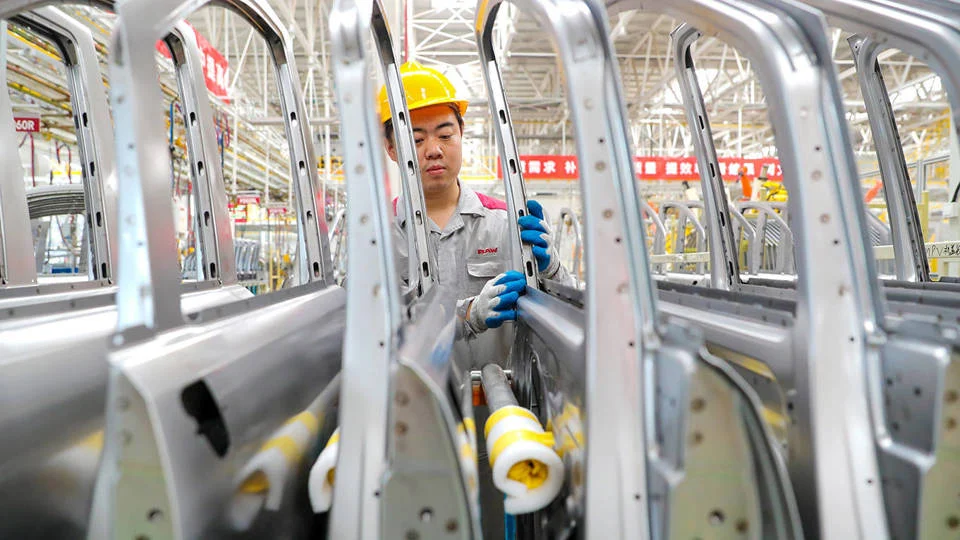
Global imbalances are re-emerging as a paramount concern on the international policy stage, fueled by anxieties surrounding what is increasingly being termed the "second China shock." The dramatic surge in China’s industrial exports, juxtaposed with stagnating import growth, has propelled its trade surpluses to unprecedented levels, creating significant economic headwinds for nations worldwide. This phenomenon, however, is far from a mere consequence of macroeconomic misalignments. Instead, it signifies a deliberate, long-term strategic reorientation by Beijing, marking a profound departure from the foundational principles of openness that underpinned the post-World War II global trade order.
The Resurgence of Global Imbalances
For years, the global economy operated under a framework that, while imperfect, generally promoted a degree of equilibrium in trade flows. However, recent economic data paints a starkly different picture. China’s trade surplus, which reached a record $800 billion in 2025, is projected by the International Monetary Fund (IMF) to exceed $950 billion by the end of 2026. This expansion is driven not by a generalized increase in global demand for Chinese goods, but by a targeted and intensified export drive in specific industrial sectors.
The implications of this growing surplus are multifaceted. For importing nations, it translates into increased competitive pressure on domestic industries, potentially leading to job losses and slower economic growth. The influx of lower-cost Chinese manufactured goods, ranging from electric vehicles and solar panels to advanced electronics, challenges established players and necessitates rapid adaptation. Conversely, China’s relatively subdued import growth suggests a recalibration of its economic model, with a greater emphasis on domestic consumption and investment rather than relying on external demand for its manufactured output.
A Departure from Postwar Principles
The post-1945 international economic architecture, spearheaded by institutions like the General Agreement on Tariffs and Trade (GATT), now the World Trade Organization (WTO), was built on the bedrock of multilateralism and a commitment to free and open trade. The Bretton Woods system, established in 1944, aimed to foster global economic stability and cooperation, with trade liberalization as a key pillar. This order encouraged countries to specialize in production based on comparative advantage and to open their markets to international commerce.
China’s current approach appears to represent a strategic recalibration, prioritizing national industrial development and global market share over the reciprocal market access that characterized the earlier era. While China has been a beneficiary of the existing trade order, its recent actions suggest a strategic divergence, leveraging its vast manufacturing capacity and state-backed industrial policies to achieve specific economic and geopolitical objectives. This is not a sudden shift but rather a culmination of years of policy development aimed at moving up the global value chain and asserting greater economic influence.
The "Second China Shock" – A Historical Perspective
The term "China shock" initially gained prominence in the early 2000s, referring to the disruptive impact of China’s rapid industrialization and its integration into the global economy. This period saw a dramatic increase in manufactured goods imports from China, leading to significant adjustments in developed economies, particularly in manufacturing sectors. Studies by economists like David Autor highlighted the substantial labor market consequences in the United States, with job losses concentrated in regions heavily reliant on industries facing intense Chinese competition.
The "second China shock" is qualitatively different. While the first wave was largely driven by China’s burgeoning labor-intensive manufacturing sector, the current wave is characterized by its dominance in higher-value, technology-intensive industries. China’s investments in research and development, coupled with substantial government subsidies and industrial policies, have propelled its capabilities in areas like renewable energy technology, electric vehicles, and advanced semiconductors. This shift presents a more complex challenge for established economies, as it directly competes in sectors considered vital for future growth and national security.
Strategic Drivers Behind China’s Trade Surpluses
Beijing’s current trade strategy appears to be underpinned by several interconnected objectives:
-
Industrial Upgrading and Technological Self-Sufficiency: China has explicitly stated its ambition to become a global leader in key technological sectors. Policies like "Made in China 2025" and subsequent initiatives have directed significant resources towards developing domestic champions in areas such as artificial intelligence, robotics, and new energy vehicles. Achieving dominance in these sectors not only enhances China’s economic power but also reduces its reliance on foreign technology, a crucial consideration in an increasingly geopolitical world.
-
Global Market Dominance: By leveraging its massive production capacity and cost advantages, China aims to secure significant global market share in strategically important industries. This can create dependencies for other nations, giving China considerable leverage in international trade negotiations and geopolitical discussions.
-
Currency Management and Capital Flows: While not as overt as in previous decades, China’s management of its currency, the renminbi, can influence trade competitiveness. A persistently strong export performance, if not fully offset by imports, can contribute to capital inflows, although China’s capital controls have historically managed these dynamics.
-
Geopolitical Influence: Economic power is increasingly intertwined with geopolitical influence. By dominating key supply chains and offering competitive alternatives to Western technologies, China can foster closer economic ties with developing nations, thereby expanding its global footprint and challenging existing international alignments.
Supporting Data and Trends
The evidence for this strategic shift is compelling. According to the United Nations Conference on Trade and Development (UNCTAD), China’s share of global exports in renewable energy technologies, such as solar panels and wind turbines, has grown from under 10% a decade ago to nearly 40% in 2025. Similarly, in the electric vehicle market, Chinese manufacturers have rapidly expanded their global presence, with exports of EVs from China more than doubling year-on-year in 2025.
Analysis from the Peterson Institute for International Economics reveals that while China’s overall trade surplus has widened, its imports from countries like the United States and the European Union have remained relatively stagnant or have even declined in certain sectors. This suggests a targeted export strategy rather than a broad-based increase in global demand for Chinese products.
Official Responses and International Reactions
The growing global imbalances have elicited a range of responses from international bodies and national governments.
European Union: The EU has been particularly vocal in its concerns. In early 2026, the European Commission launched an anti-subsidy investigation into Chinese electric vehicle imports, citing concerns that these vehicles benefit from unfair state subsidies. European Trade Commissioner Valdis Dombrovskis stated, "We cannot stand idly by while unfair competition erodes our own industries. We are committed to a level playing field for all businesses operating within the EU market." The investigation aims to determine whether additional tariffs are warranted to counteract the alleged subsidies.
United States: The U.S. administration has also expressed anxieties, though its approach has been more nuanced. While maintaining existing tariffs on a wide range of Chinese goods imposed during the previous administration, Washington has focused on bolstering domestic industrial capacity through legislation like the CHIPS and Science Act and the Inflation Reduction Act, which include incentives for domestic manufacturing of semiconductors and clean energy technologies. U.S. Trade Representative Katherine Tai has emphasized the need for "fair competition" and has engaged in dialogues with allies to coordinate responses to what it terms China’s "non-market policies and practices."
International Monetary Fund (IMF): The IMF has repeatedly called for greater policy coordination among major economies to address global imbalances. In its recent World Economic Outlook, the Fund warned that "persistent large current account surpluses and deficits can exacerbate trade tensions and undermine the stability of the international monetary system." The IMF has urged countries with surpluses to consider measures to boost domestic demand, while deficit countries should focus on fiscal consolidation and structural reforms.
Developing Nations: For many developing countries, the situation presents a mixed bag. On one hand, they benefit from access to affordable Chinese goods and infrastructure investment. On the other, they face increasing competition for their own nascent industries and are becoming more reliant on China as a trading partner, raising concerns about economic sovereignty.
Broader Impact and Implications
The long-term implications of this strategic trade reorientation are profound:
-
Reshaping Global Supply Chains: The intensified focus on national industrial champions and the potential for protectionist measures are leading to a significant reshaping of global supply chains. Companies are increasingly exploring diversification strategies, including "friend-shoring" and reshoring, to mitigate risks associated with over-reliance on any single country. This process is costly and time-consuming, potentially leading to higher consumer prices in the short to medium term.
-
Technological Decoupling: The competition in high-tech sectors could accelerate a trend towards technological decoupling, where different blocs of countries develop and adhere to distinct technological standards and ecosystems. This could fragment the global digital economy and hinder innovation.
-
Geopolitical Realignment: Economic power is a significant driver of geopolitical influence. China’s growing dominance in key industries could lead to a recalibration of global alliances and a more multipolar world order, where economic leverage is increasingly used to achieve strategic objectives.
-
Challenges to Multilateralism: The current trade tensions and the perceived shortcomings of existing multilateral trade rules pose a significant challenge to the future of global trade governance. The WTO, in particular, faces questions about its ability to address contemporary trade challenges, such as state-sponsored industrial policies and digital trade.
The Path Forward
Addressing the current global imbalances requires a multifaceted approach. For China, a recalibration of its economic strategy towards greater domestic consumption and more balanced import growth would be crucial. For importing nations, the focus remains on fostering domestic competitiveness, investing in innovation, and ensuring a level playing field through robust trade enforcement mechanisms.
The world stands at a critical juncture. The erosion of the postwar bias toward openness, driven by strategic national interests and evolving economic realities, demands a renewed commitment to international cooperation and a pragmatic reassessment of global trade governance. The choices made in the coming years will determine the future trajectory of the global economy and the international order itself. The "second China shock" is not merely an economic event; it is a signal of a fundamental shift in the global economic landscape, necessitating adaptive strategies and a clear-eyed understanding of the forces at play.
