

The geopolitical landscape of the Western Hemisphere is undergoing a profound transformation as China solidifies its role as a dominant economic force, prompting a sharp and controversial strategic pivot from the United States. In 2024, trade between China and Latin America reached a historic milestone of US$518.4 billion, signaling a fundamental shift in regional alliances and economic dependencies. This surge has positioned Beijing as the largest bilateral creditor and the second-largest trading partner for the Latin American and Caribbean (LAC) region, trailing only the United States in total volume but rapidly closing the gap in strategic sectors. This economic integration was further underscored at the 2025 China-Celac (Community of Latin American and Caribbean States) forum, where President Xi Jinping pledged a new credit line of 66 billion yuan (approximately US$9.2 billion) to support regional development and infrastructure.
While China’s influence grows through trade and credit, the United States, under the administration of President Donald Trump, has adopted a more assertive and interventionist posture. Moving away from purely economic competition, Washington has revived elements of traditional "gunboat diplomacy," characterized by some analysts as the "Donroe Doctrine"—a modern interpretation of the 19th-century Monroe Doctrine. This shift was most vividly illustrated in January 2025 by a high-stakes military operation in Caracas, Venezuela, which resulted in the capture of President Nicolás Maduro and the subsequent reconfiguration of the nation’s vast energy reserves under American influence.
The Evolution of Chinese Investment: From Commodities to High-Tech
For much of the early 21st century, China’s interest in Latin America was primarily driven by its appetite for raw materials, including iron ore from Brazil, copper from Chile and Peru, and soy from the Pampas. However, the nature of Chinese capital in the region has evolved significantly. Beijing is no longer merely an extractor of resources; it has become a primary driver of the region’s industrial modernization and green energy transition.
The manufacturing sector, particularly the automotive industry, has become a cornerstone of this new strategy. Chinese electric vehicle (EV) manufacturers, led by giants such as BYD and GWM, have established a massive footprint in Brazil, the region’s largest economy. By setting up local production hubs, Chinese firms are not only bypassing trade barriers but also integrating themselves into the regional supply chain. In Ecuador, the impact is even more pronounced, with Chinese-made vehicles accounting for 57 percent of the market share in the first half of 2025. This dominance is supported by aggressive pricing, advanced technology, and the lack of comparable Western competition in the affordable EV segment.
Beyond manufacturing, the US$9.2 billion credit line announced at the China-Celac forum is earmarked for "New Infrastructure" projects. This includes 5G telecommunications networks, smart city technology, and renewable energy grids. Critics in Washington argue that these investments create "debt traps," yet for many Latin American governments, Chinese capital remains the most accessible and least politically conditional source of funding for essential domestic projects.
Operation Absolute Resolve: A Turning Point in US-Venezuela Relations
As China expanded its economic soft power, the United States opted for a display of hard power. On January 15, 2025, the Pentagon executed "Operation Absolute Resolve," a calculated military raid on the Venezuelan capital, Caracas. The objective was the apprehension of President Nicolás Maduro, who had been under US indictment for years on charges related to narco-terrorism.
The operation was swift but lethal. According to reports from the ground, the raid resulted in the deaths of approximately 80 individuals. Among the casualties were 32 members of a Cuban security contingent tasked with protecting the Venezuelan leadership. Notably, the US Department of Defense reported zero American casualties, attributing the success to advanced drone technology and precision intelligence. Maduro was subsequently transported to New York, where he is currently facing a high-profile trial in a federal court.
The international community’s reaction to the raid has been polarized. While some regional neighbors, long frustrated by the Venezuelan migration crisis, offered tacit support for a change in leadership, others condemned the move as a violation of national sovereignty and international law. The United Nations and several human rights organizations have raised concerns over the "show trial" nature of the proceedings in New York, questioning the legality of capturing a sitting head of state on foreign soil.
The 100-Year Oil Deal and the Privatization of Venezuelan Energy
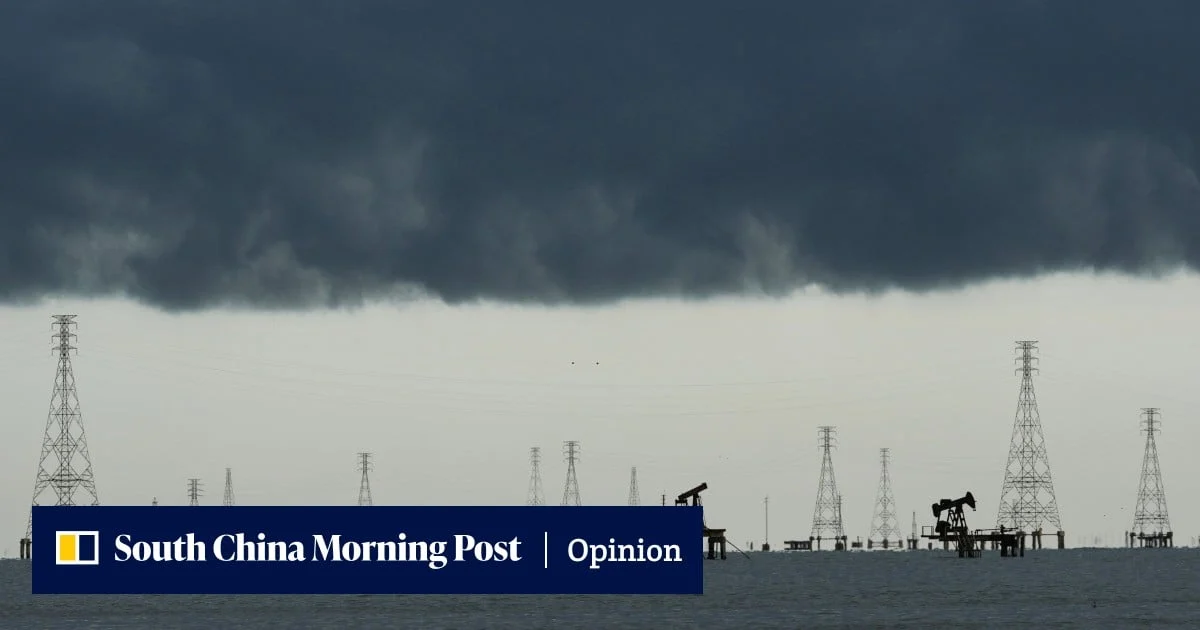
The immediate aftermath of Operation Absolute Resolve has seen a radical restructuring of Venezuela’s economic framework. Historically, Venezuela has sat atop the world’s largest proven oil reserves, estimated at over 300 billion barrels. Under the previous socialist administration, these resources were strictly state-controlled through the national oil company, PDVSA.
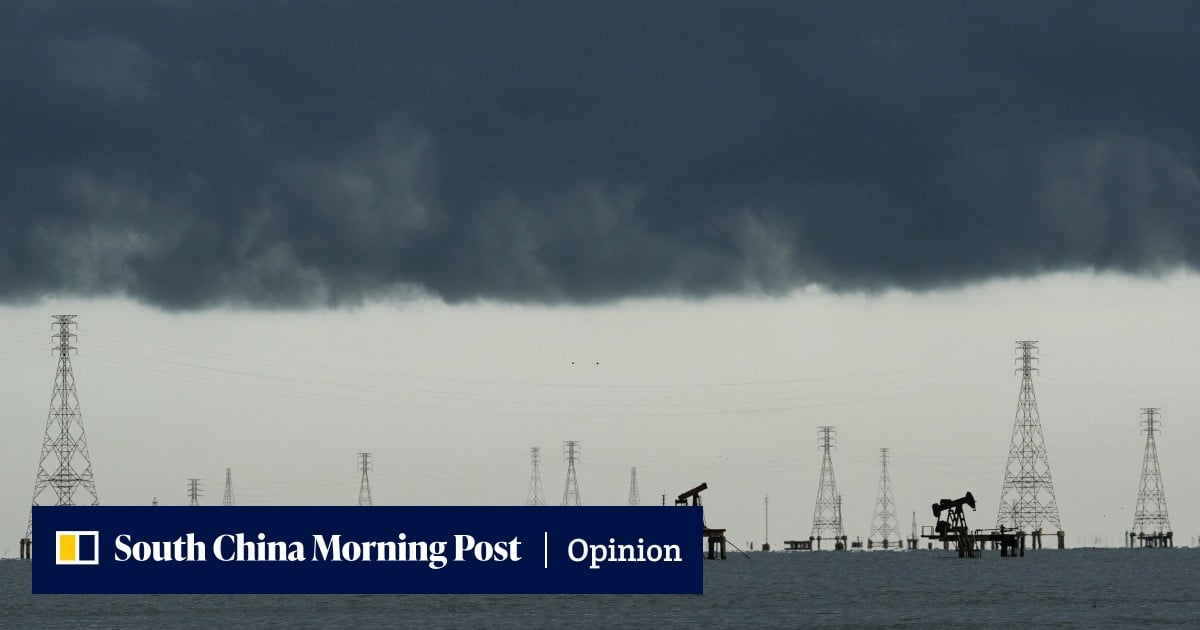
Under significant pressure from Washington, Acting President Delcy Rodríguez—who once served as a staunch defender of the Bolivarian Revolution—signed landmark legislation to privatize the energy sector. This move effectively reverses two decades of socialist policy established under the late Hugo Chávez. The centerpiece of this new economic order is a deal that grants the United States effective control over 65 billion barrels of oil.
The agreement is unprecedented in its scope and duration:
- Production Rights: Washington has been granted 55 percent of the output from 17 of Venezuela’s most productive oilfields.
- Timeline: The contract spans 100 years, ensuring long-term American energy security.
- Execution: The private oil producer hand-picked by Washington to lead the operation is North American Blue Energy Partners.
In a move that further blurs the lines between government policy and private enterprise, the Pentagon is expected to take a direct equity stake in the parent company of North American Blue Energy Partners. This arrangement has drawn sharp criticism from legal scholars who argue that it undermines the principles of free-market competition and sets a dangerous precedent for the militarization of corporate interests.
Regional Chronology of Events: 2024-2025
To understand the current state of affairs, it is necessary to look at the timeline of escalating tensions and economic shifts:
- May 2024: China-Latin America trade data reveals a record-breaking $518.4 billion in bilateral exchange for the previous fiscal year.
- August 2024: BYD announces the completion of its largest overseas EV manufacturing plant in Bahia, Brazil.
- November 2024: The US State Department issues a formal warning to Latin American nations regarding the "security risks" of Chinese 5G infrastructure.
- January 5, 2025: The China-Celac Forum convenes in Beijing; President Xi Jinping announces the $9.2 billion credit line.
- January 15, 2025: Operation Absolute Resolve is launched; Maduro is captured and taken to the United States.
- February 2025: Delcy Rodríguez signs the Energy Privatization Act in Caracas.
- March 2025: Maduro’s trial begins in the Southern District of New York.
Broader Implications for International Law and Sovereignty
The return to interventionist policies in the Western Hemisphere has sent shockwaves through the global diplomatic community. For decades, the consensus in international relations had moved toward multilateralism and the respect for territorial integrity. The "Donroe Doctrine" represents a stark departure from these norms.
By employing "outright imperialist methods," as described by some regional analysts, the United States risks alienating its democratic allies in Latin America who fear they may be next if their policies do not align with Washington’s interests. Countries like Colombia, Chile, and Argentina are now forced to navigate a precarious path between their primary economic provider (China) and their traditional security guarantor (the United States).
Furthermore, the privatization of Venezuela’s oil sector under military duress raises questions about the future of sovereign debt and international contracts. If a change in regime can be forced to facilitate the transfer of national assets to a foreign power, the stability of global energy markets and international investment law may be compromised.
Analysis of the Economic Tug-of-War
The competition between the US and China in Latin America is no longer a "zero-sum game" in the traditional sense; it has become a conflict of methodologies. China’s approach is rooted in "checkbook diplomacy"—using infrastructure projects and trade deals to build long-term influence. This method is slow but creates deep-seated structural dependencies.
In contrast, the current US administration has opted for a "security-first" approach. By securing the region’s most vital resource—oil—Washington aims to maintain its hegemony through control of the energy supply chain. However, this strategy does not address the underlying economic needs of the Latin American populace, such as the demand for affordable consumer goods, technology, and modern transport, which China continues to provide.
As 2025 progresses, the region remains a theater of intense geopolitical rivalry. The trial of Nicolás Maduro in New York will likely serve as a focal point for international debate on sovereignty, while the arrival of North American Blue Energy Partners in the Orinoco Belt will test the viability of the new energy deal. Meanwhile, Chinese engineers continue to build the bridges, ports, and power plants that are reshaping the physical landscape of the continent, ensuring that Beijing’s influence remains a permanent fixture of the Latin American future.
