

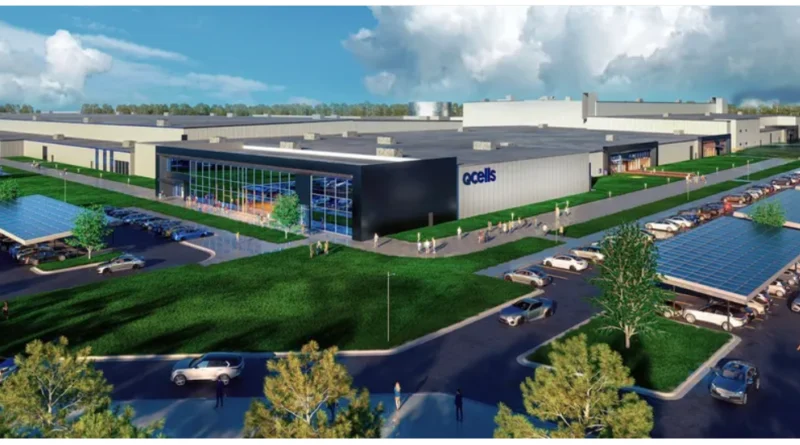
The United States solar power and energy storage sectors have evolved from niche alternative energy interests into a formidable economic engine, currently employing approximately 360,000 Americans across all 50 states. Of this workforce, the solar industry accounts for roughly 280,000 positions, while the rapidly expanding energy storage sector provides employment for an additional 80,000 workers. These figures represent a significant shift in the American energy landscape, signaling a transition toward a domestic manufacturing base that is increasingly capable of competing on a global scale. Despite this progress, industry leaders and policymakers suggest that the sector is only at the beginning of its potential growth trajectory, with the capacity to create hundreds of thousands of additional jobs if domestic production continues to receive strategic support and investment.
In a move to highlight this growth and advocate for continued policy stability, representatives from the solar and storage industries recently convened on Capitol Hill for the Solar Energy Industries Association’s (SEIA) American Solar and Storage Manufacturing Expo. The timing of this event was particularly poignant, occurring against a backdrop of escalating geopolitical tensions in the Middle East and the subsequent volatility in global energy markets. As fossil fuel prices fluctuate in response to international conflict, the solar and storage industries are positioning themselves as a stabilizing force, offering "home-collected" energy that is immune to the supply chain disruptions and price spikes associated with imported fuels.
A Strategic Showcase on Capitol Hill
The American Solar and Storage Manufacturing Expo served as a physical manifestation of the industry’s recent technological and industrial achievements. Manufacturers from across the nation displayed a comprehensive array of technologies that constitute the modern solar and storage supply chain. Attendees, including lawmakers and federal officials, were presented with the building blocks of the renewable transition: solar wafers, high-efficiency photovoltaic cells, completed solar modules, advanced power inverters, and battery cells and packs. Beyond the high-tech electronics, the expo also featured the industrial hardware necessary for large-scale deployment, such as sophisticated racking systems and specialized solar pile drivers used in utility-scale installations.
The event was designed to underscore the historic progress made in reshoring manufacturing capacity. For decades, the United States was heavily reliant on international markets—most notably China—for the components required to build solar arrays and battery systems. However, the data presented at the expo suggests a dramatic reversal of this trend. The SEIA reported that as of last year, the United States has developed the capability to manufacture every major component of the solar supply chain domestically. This includes the upstream production of polysilicon and wafers, which have traditionally been the most difficult segments of the supply chain to establish outside of East Asia.
The Catalyst of the Inflation Reduction Act
The primary driver behind this manufacturing resurgence is the Inflation Reduction Act (IRA) of 2022. Since its passage, the legislation has acted as a massive catalyst for domestic industrial investment. The IRA introduced a suite of tax credits and incentives, most notably the Section 45X Advanced Manufacturing Production Credit, which provides per-unit subsidies for components produced within the United States. This policy shift has led to what many economists describe as the most significant manufacturing boom in the United States in over a century.
Since the IRA was signed into law, the U.S. solar and storage industry has announced more than $43.1 billion in new manufacturing investments. These projects are distributed across more than 40 states, demonstrating that the "clean energy economy" is not confined to traditional tech hubs or coastal regions, but is instead revitalizing industrial corridors in the Midwest, the Southeast, and the Sun Belt. This geographic diversity is a critical component of the industry’s political and economic strategy, as it ties the success of the energy transition to local job creation in a broad cross-section of the country.
Today, the annual U.S. solar module manufacturing capacity has reached 70 gigawatts (GW). This figure is significant because it represents enough capacity to meet the entirety of current domestic demand for solar modules. While the U.S. still faces stiff competition internationally, it has successfully climbed the rankings to become the third-largest solar panel manufacturer in the world and the second-largest manufacturer of energy storage systems. While China remains the dominant global leader in both categories, the U.S. has established a solid foothold that allows it to mitigate supply chain risks and decrease its dependence on foreign entities.
Energy Security and Geopolitical Stability
The ongoing crisis in the Middle East has served as a stark reminder of the vulnerabilities inherent in a global energy system dependent on fossil fuels. Darren Van’t Hof, SEIA’s interim president and CEO, emphasized that American-made solar and storage are strengthening national energy security at a critical juncture. By generating electricity from the sun and storing it in batteries manufactured in American factories, the nation can insulate itself from the whims of international oil and gas markets.
The concept of "energy security" has evolved. While it once referred primarily to the ability to secure oil shipments, it now encompasses the resilience of the electrical grid and the reliability of the technology that powers it. As global instability continues to threaten traditional energy routes, the ability to deploy homegrown energy technologies becomes a matter of national defense. The domestic production of inverters and battery management systems is particularly crucial in this regard, as these components act as the "brains" of the modern grid and are vital for protecting against cyber threats and ensuring long-term infrastructure stability.
Insights from Industry Leadership
The sentiment of the expo was echoed by various CEOs who have overseen the rapid expansion of their manufacturing footprints. Phillip Vyhanek, CEO of GameChange Solar, noted that the growth of American solar manufacturing is not just about environmental goals, but about reinforcing the reliability of domestic supply chains. As electricity demand in the U.S. continues to rise—driven by the electrification of transport and the proliferation of energy-intensive data centers—the need for affordable and dependable energy has never been greater.
Dan Shugar, the founder and CEO of Nextpower, highlighted the necessity of stable policy to maintain this momentum. Nextpower operates a network of more than 30 manufacturing facilities across the United States, a feat that Shugar attributes to the predictability provided by recent federal legislation. However, he also warned that the continued leadership of the U.S. in this sector depends on addressing several persistent challenges, including the need for predictable permitting processes and the expansion of the national grid to accommodate new energy sources.
Shugar’s comments point to a broader reality: while the manufacturing capacity is growing, the ability to connect these American-made products to the grid remains a bottleneck. The "interconnection queue"—the list of energy projects waiting for approval to plug into the grid—has grown to unprecedented lengths, with some projects facing delays of five years or more. Resolving these bureaucratic and infrastructural hurdles is seen as the next great frontier for the industry.
Economic Implications and the Global Context
The $43.1 billion in investment since 2022 is more than just a number; it represents a fundamental shift in the American labor market. These investments support tens of thousands of jobs in construction, factory operations, engineering, and logistics. Furthermore, the "multiplier effect" of manufacturing means that for every job created on a solar factory floor, several more are supported in the surrounding community, from local service industries to specialized equipment maintenance.
In the global context, the U.S. advancement to the #2 and #3 spots in storage and solar production respectively is a notable achievement, but it comes with a caveat. China currently controls over 80% of the global supply chain for several key solar components. The U.S. strategy, therefore, is not necessarily to achieve total global dominance, but to ensure "strategic autonomy." By having the capability to manufacture every major component domestically, the U.S. protects itself against potential trade wars, shipping disruptions, or geopolitical coercion.
The shift toward domestic production also has environmental implications. American manufacturing facilities often operate under stricter environmental and labor standards than their overseas counterparts. By reshoring the supply chain, the U.S. is reducing the carbon footprint associated with shipping components halfway across the globe and ensuring that the "green" transition is built on a foundation of ethical labor practices.
Conclusion and Future Outlook
The American Solar and Storage Manufacturing Expo on Capitol Hill was a clear signal that the clean energy industry has arrived as a major player in the U.S. economy. The combination of $43 billion in private investment, a workforce of 360,000, and a manufacturing capacity that can now meet domestic demand paints a picture of an industry that is no longer in its infancy.
However, the road ahead is not without obstacles. To maintain this growth, the industry will require continued bipartisan support for the policies that incentivized this boom. It will also need to address the challenges of grid modernization and workforce development to ensure that there are enough skilled workers to staff the dozens of new factories currently under construction.
As the U.S. navigates an era of global uncertainty, the solar and storage sectors offer a path toward a more secure, self-reliant, and economically vibrant future. The transition to clean energy is increasingly being viewed through the lens of industrial policy and national security, ensuring that the "home-collected" energy of tomorrow is built by American workers in American factories. The progress documented by SEIA and its member companies suggests that while the challenges are significant, the momentum of the American solar and storage resurgence is currently at an all-time high.
