

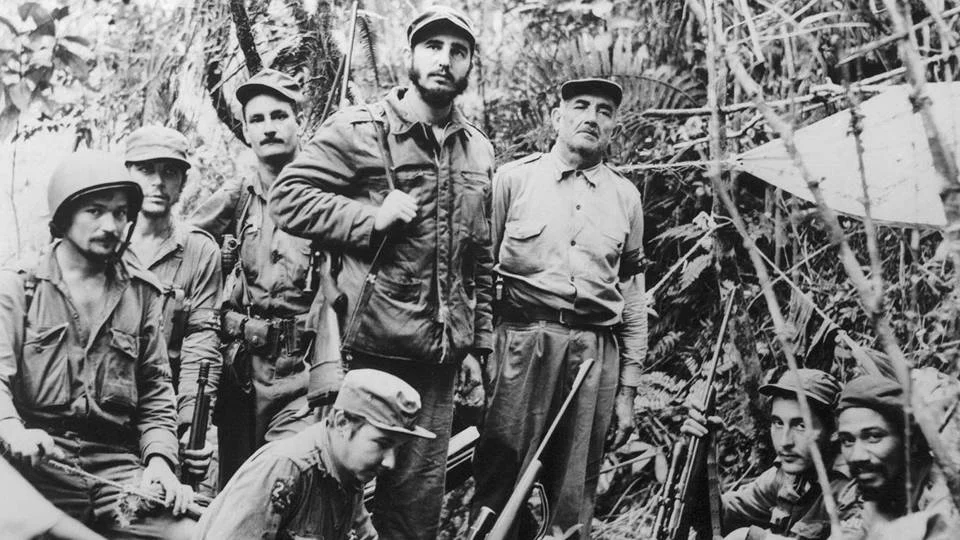
The resurgence of guerrilla warfare in Ukraine and Iran has underscored the potential benefits of asymmetric action in today’s increasingly multipolar world. Latin America, in particular, should consider how to leverage its many strengths to remedy its relatively weak position on the global stage.
MEXICO CITY – The ongoing conflicts in Iran and Ukraine have dramatically re-centered the global spotlight on the enduring relevance and effectiveness of guerrilla warfare. This form of conflict, characterized by smaller, less conventionally equipped groups or nations employing unconventional tactics, weaponry, and strategies to resist or overcome significantly stronger adversaries, is far from a novel phenomenon. Its historical roots can be traced back to ancient times, with notable examples like the Scythian resistance against the Persian Emperor Darius I. However, the term itself, "guerrilla," a Spanish diminutive meaning "small war," is more commonly associated with the fierce Spanish insurgency that erupted following Napoleon Bonaparte’s invasion of the Iberian Peninsula in 1808, a conflict that profoundly shaped military and political thought for centuries to come.
The Shifting Global Landscape and the Appeal of Asymmetric Tactics
The current geopolitical climate, often described as multipolar, is characterized by a diffusion of power away from a single dominant superpower towards a more complex web of influential state and non-state actors. This evolving landscape has created new opportunities and vulnerabilities, making asymmetric strategies increasingly attractive to nations and groups seeking to assert their interests or defend themselves against more powerful, conventionally superior forces. The conflicts in Ukraine and Iran serve as potent contemporary illustrations of this dynamic. In Ukraine, a nation facing a numerically and militarily superior invading force, the effective use of irregular warfare tactics, bolstered by Western military aid and a strong national will, has proven instrumental in slowing and, in many instances, repelling Russian advances. Similarly, in Iran, while the situation is more nuanced and involves a complex interplay of internal and external factors, the resilience of various non-state armed groups operating with asymmetric methodologies continues to challenge established regional powers.
These contemporary conflicts are not isolated incidents but rather manifestations of a broader trend. Throughout the late 20th and early 21st centuries, asymmetric warfare has been a recurring feature in numerous conflicts, from the Viet Cong’s protracted struggle against American forces to the Taliban’s insurgency against NATO in Afghanistan. The successes, however partial or costly, achieved by these groups in challenging well-resourced militaries have provided a compelling case study for other actors contemplating their strategic options in environments where direct confrontation is untenable.
Historical Precedents and Theoretical Frameworks
The theoretical underpinnings of guerrilla warfare have been explored by strategists and thinkers for generations. Figures like Sun Tzu, centuries before Napoleon, emphasized the importance of deception, maneuver, and exploiting an enemy’s weaknesses. Later, theorists like Mao Zedong in China and Vo Nguyen Giap in Vietnam developed sophisticated doctrines for protracted people’s war, emphasizing the mobilization of the populace, the importance of political indoctrination, and the gradual erosion of the enemy’s will and resources through persistent, low-intensity conflict. These principles, though developed in different historical and cultural contexts, offer enduring insights into the logic of asymmetric warfare.
The core tenets often involve:
- Exploiting Terrain and Population: Guerrilla forces frequently leverage their familiarity with local geography and their ability to blend in with or gain support from the civilian population. This allows them to conduct ambushes, sabotage, and hit-and-run attacks with a reduced risk of detection and a greater capacity to disappear into the environment.
- Intelligence Gathering: Superior intelligence, often gathered through extensive human networks, is crucial for identifying enemy vulnerabilities and planning successful operations.
- Psychological Warfare: Beyond kinetic actions, guerrilla campaigns often aim to demoralize the enemy, erode public support for their intervention, and garner international sympathy for their cause.
- Protracted Conflict: The strategy is often not to achieve outright military victory in a decisive battle, but to inflict continuous attrition, raise the cost of occupation or intervention to an unacceptable level, and ultimately force the stronger adversary to withdraw or negotiate.
Latin America’s Strategic Imperative
Latin America, a region rich in history, diverse in its cultures, and varied in its economic and political landscapes, often finds itself navigating a complex and sometimes precarious position within the global order. While many nations possess significant natural resources and growing economies, they can also face challenges such as economic inequality, political instability, and limited leverage in international negotiations. In this context, the lessons from the resurgence of asymmetric warfare in Ukraine and Iran may offer a strategic blueprint for how Latin American nations can better assert their interests and enhance their influence.
The region is not unfamiliar with forms of asymmetric resistance. Throughout its history, Latin America has witnessed numerous popular uprisings, liberation movements, and insurgencies that, while often brutally suppressed, have profoundly shaped national identities and political trajectories. From the fight for independence from colonial powers to internal struggles against authoritarian regimes, the spirit of resistance and the application of unconventional tactics have been woven into the fabric of the continent’s past.
Leveraging Strengths in a Multipolar World
For Latin American countries, understanding and potentially adapting the principles of asymmetric warfare could provide a pathway to strengthening their geopolitical standing. This does not necessarily imply advocating for armed insurgency, but rather understanding the strategic advantages that can be derived from leveraging specific strengths in novel ways.
1. Diplomatic and Economic Leverage: While individual Latin American nations may have limited individual power on the global stage, collective action and regional integration can amplify their voices. The concept of "asymmetric diplomacy" could involve forming robust regional blocs, like UNASUR (though currently weakened) or Mercosur, to present a united front on critical issues. This could include negotiating trade agreements with greater bargaining power, influencing international climate change policies, or advocating for reforms in global financial institutions. The collective economic weight of Latin America, if harnessed effectively, can become a significant force.
2. Information and Cultural Influence: In the digital age, information is a powerful weapon. Latin American nations possess vibrant cultural exports – music, film, literature, and art – that can be leveraged to build soft power and shape global perceptions. A concerted effort to promote these cultural assets, coupled with strategic communication campaigns highlighting regional perspectives on global issues, can counter dominant narratives and build international solidarity. This is a form of "information warfare" that relies on cultural resonance rather than coercion.
3. Resource Diplomacy: The region is endowed with vast natural resources, including critical minerals essential for the global energy transition. Instead of merely exporting raw materials, Latin American countries could explore strategies for adding value domestically, controlling supply chains, and engaging in "resource diplomacy" where access to these vital commodities is linked to favorable international terms and genuine partnerships. This is an asymmetric approach to economic power, leveraging a unique advantage.
4. Technological Adaptation and Innovation: While not at the forefront of all technological development, Latin America has shown significant capacity for innovation in specific sectors. Focusing on niche areas of technological development, such as sustainable agriculture, renewable energy solutions adapted to local conditions, or digital solutions for social inclusion, can create unique competitive advantages. This can lead to specialized expertise that commands international respect and fosters strategic partnerships.
5. Cybersecurity and Digital Resilience: As global dependencies on digital infrastructure grow, so do the vulnerabilities to cyber threats. Latin American nations could invest in developing robust cybersecurity capabilities, not only for national defense but also as a potential area for regional cooperation and even export of expertise. This creates a defensive asymmetric advantage, making the region a less attractive target for disruptive digital attacks.
Chronology of Key Developments in Asymmetric Warfare Discourse
- 1808: Napoleon’s invasion of Spain sparks the term "guerrilla" to describe the Spanish resistance.
- Early 20th Century: Chinese Communist leader Mao Zedong develops theories of "protracted people’s war," emphasizing guerrilla tactics.
- Mid-20th Century: Ho Chi Minh and Vo Nguyen Giap employ successful guerrilla strategies against French and later American forces in Vietnam.
- Late 20th Century: The Cold War sees various proxy conflicts and insurgencies where asymmetric tactics are prevalent.
- Early 21st Century: The "War on Terror" brings renewed focus on non-state actors and irregular warfare, particularly in Afghanistan and Iraq.
- 2022-Present: The conflict in Ukraine highlights the effectiveness of asymmetric resistance against a larger conventional force, while ongoing tensions in the Middle East feature persistent asymmetric challenges.
Data and Analysis: The Global Shift
The rise of multipolarity is not merely theoretical. Global defense spending patterns, while still dominated by major powers, show increasing investment in specialized asymmetric capabilities by smaller nations. Furthermore, the proliferation of advanced communication technologies and social media platforms has democratized the ability to disseminate information and mobilize support, a key element of modern asymmetric campaigns.
A 2023 report by the Stockholm International Peace Research Institute (SIPRI) indicated a continued increase in global military expenditure, but also noted a rise in procurement of specialized intelligence, surveillance, and reconnaissance (ISR) assets by numerous countries, often to counter asymmetric threats. The rise of non-state actors, while not always employing conventional guerrilla tactics, also demonstrates a shift in the nature of conflict, where localized, asymmetric challenges can have global repercussions.
Official Responses and Regional Perspectives
While no direct official statements from Latin American governments specifically referencing the lessons of Ukrainian or Iranian guerrilla warfare in a strategic context are publicly available, the underlying principles of seeking greater autonomy and influence are perennial concerns. Regional bodies have consistently advocated for a multipolar world order, emphasizing multilateralism and the sovereign equality of states.
For instance, statements from the Community of Latin American and Caribbean States (CELAC) often call for a more equitable international system, where the voices of smaller and medium-sized nations are heard and respected. This aligns with the broader strategic imperative of Latin America to leverage its unique strengths in a world where traditional power dynamics are being reshaped. The ongoing discussions within Mercosur and other regional economic blocs about strengthening internal markets and diversifying trade partners can be seen as practical applications of seeking greater economic leverage in a complex global marketplace.
Broader Impact and Implications
The strategic adaptation of asymmetric principles by Latin American nations could have profound implications. It could lead to a more balanced global power structure, where regional blocs wield greater influence. It might also foster greater internal cohesion and development as nations focus on building unique strengths rather than solely relying on external support or direct confrontation.
However, this approach is not without its challenges. It requires sustained political will, strategic foresight, and a commitment to regional cooperation. Misinterpreting or misapplying these principles could lead to unintended consequences. The goal is not to replicate the destructive nature of armed conflict, but to abstract the strategic logic of leveraging relative weaknesses against perceived strengths in a globalized, interconnected, and increasingly multipolar world. By understanding the dynamics at play in conflicts far from their shores, Latin American nations can better equip themselves to navigate the complexities of the 21st century and carve out a more influential and secure future. The "small war" of guerrilla tactics, when translated into diplomatic, economic, and informational strategies, can become a potent tool for achieving larger geopolitical objectives.
