

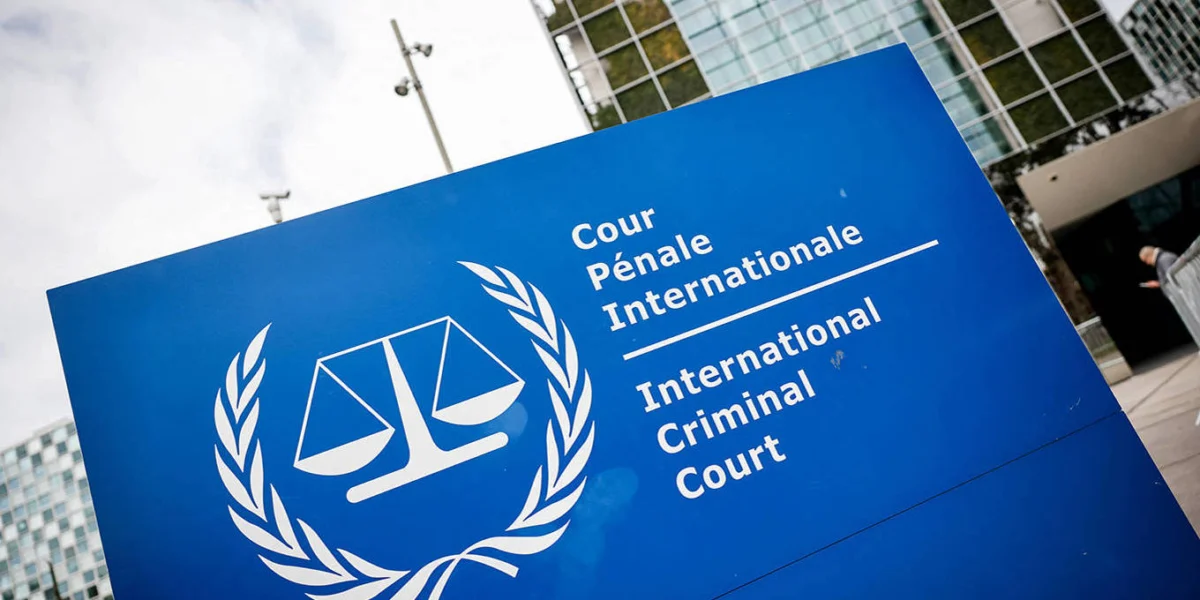
Born amid the euphoric aftermath of the West’s Cold War triumph, the International Criminal Court (ICC) was envisioned as a beacon of hope, a testament to the aspiration that international law could rise above the messy realities of power politics. However, from its inception, the court has been perceived by many as an instrument of victors’ justice, ill-equipped to navigate a global landscape fundamentally shaped by Machtpolitik – the pursuit of national interest through power. The court’s recent, and arguably more assertive, actions, including issuing arrest warrants for incumbent leaders like Russian President Vladimir Putin and Israeli Prime Minister Benjamin Netanyahu, while demonstrating a certain boldness, may ultimately prove to be a miscalculation, potentially precipitating its own downfall by failing to adequately account for the enduring realities of political power.
For decades, international criminal tribunals primarily focused their attention on prosecuting defeated leaders, figures like Slobodan Milošević of Serbia and Charles Taylor of Liberia, whose regimes had been overthrown. These trials, while significant in establishing accountability for egregious human rights violations, operated within a framework where the perpetrators were already out of power, thus diminishing the immediate political ramifications for the international order. The ICC, established by the Rome Statute in 2002, was intended to build upon this foundation, creating a permanent institution to investigate and prosecute individuals for the most serious international crimes: genocide, war crimes, crimes against humanity, and the crime of aggression. Its mandate was to ensure that "no one is above the law," a noble ideal aimed at deterring future atrocities and providing justice for victims.
A Shift in Posture: Targeting Incumbent Leaders
The ICC’s decision to issue arrest warrants for leaders currently in power marks a significant escalation in its operational approach. The arrest warrant for President Vladimir Putin, issued in March 2023, relates to alleged unlawful deportation and transfer of Ukrainian children from occupied areas of Ukraine to Russia. This action directly targets the head of state of a permanent member of the United Nations Security Council, a nation possessing significant geopolitical influence and nuclear capabilities. Similarly, the ICC’s recent announcement of its intention to seek arrest warrants for Prime Minister Benjamin Netanyahu and other Israeli officials, in relation to alleged war crimes and crimes against humanity in Gaza, places the court in direct confrontation with another key player in a highly volatile region, a nation with strong ties to influential global powers.
These moves, while lauded by proponents of international justice as a crucial step towards universal accountability, have ignited fierce debate and exposed the inherent tension between the aspirations of international law and the pragmatic realities of Machtpolitik. The very governments that have been targeted, along with their allies, have vehemently condemned these actions, labeling them as politically motivated and an overreach of the court’s jurisdiction.
Historical Context and the ICC’s Genesis
The establishment of the ICC was a landmark achievement in international law, a culmination of decades of advocacy and effort following the atrocities of World War II and the subsequent genocides in Cambodia, Rwanda, and the former Yugoslavia. The ad hoc tribunals for these conflicts, while important, were seen as piecemeal solutions. The Rome Statute aimed to create a permanent, independent judicial body capable of ensuring accountability where national courts are unable or unwilling to prosecute.
However, the path to the Rome Statute was fraught with political compromises. Several powerful nations, including the United States, Russia, and China, never ratified the treaty, expressing concerns about potential politically motivated prosecutions against their own citizens and military personnel. This absence of key global powers from the ICC’s foundational legal framework has, from the outset, limited its universal reach and enforcement capabilities. The court relies heavily on the cooperation of member states for investigations, evidence gathering, and the apprehension of suspects.
The "Victors’ Justice" Critique
The critique that the ICC operates as an instrument of "victors’ justice" is not new. Critics point to the historical pattern of international justice mechanisms being employed against those who have lost conflicts or whose regimes have been overthrown. The prosecution of leaders like Saddam Hussein in Iraq, while conducted by an Iraqi tribunal, occurred in the context of a US-led invasion. The ICC, while independent, operates within a geopolitical environment where the most powerful nations often set the agenda.
When the ICC targets incumbent leaders of powerful states, it moves into uncharted and potentially destabilizing territory. Such actions can be perceived not just as legal proceedings, but as political statements, challenging the existing power structures and potentially provoking retaliatory measures. The court’s reliance on the cooperation of states, including those with significant military and economic power, creates a vulnerability. If states refuse to cooperate, or actively obstruct investigations, the ICC’s effectiveness can be severely undermined.
Data and Precedents: A Shifting Landscape
Prior to the recent warrants, the ICC’s interventions were largely focused on situations in African nations, such as Uganda, the Democratic Republic of Congo, and the Central African Republic. While these interventions were crucial for addressing atrocities in those regions, they also fueled the perception among some that the court disproportionately targeted less powerful states.
The issuance of arrest warrants for leaders of powerful nations like Russia and Israel represents a significant departure from this pattern.
- Russia: As of the ICC’s announcement in March 2023, Russia was a signatory to the Rome Statute but had not ratified it. However, the ICC can exercise jurisdiction over alleged crimes committed on the territory of a state party (Ukraine, in this case) or by a national of a state party. The warrant for Putin is based on alleged war crimes. Russia has denied these allegations and has responded by opening its own criminal investigation against the ICC prosecutor.
- Israel: Israel is also not a state party to the Rome Statute. However, the ICC has opened an investigation into alleged crimes committed in Palestine, which acceded to the Rome Statute in 2015. This assertion of jurisdiction has been met with strong opposition from Israel and the United States, which do not recognize Palestine’s accession to the treaty.
The number of ICC cases that have resulted in convictions remains relatively low compared to the number of investigations opened. This is partly due to the complexities of evidence gathering, witness protection, and the challenges of apprehending high-profile suspects. The reliance on voluntary surrender or apprehension by state parties is a significant constraint.
Reactions and Political Ramifications
The reactions to the ICC’s recent actions have been swift and polarized.
- Supporters of the ICC: International human rights organizations and many Western governments have largely welcomed the ICC’s assertive stance, viewing it as a critical step towards accountability and a demonstration that no one, regardless of their position, is immune from international justice. They argue that focusing on powerful nations is essential for the court’s credibility and its mandate to end impunity.
- Critics and Targeted Nations: Russia has denounced the warrant for Putin as "legally void" and a political provocation. Israel has similarly condemned the potential warrants for its leaders, with Prime Minister Netanyahu calling the prosecutor’s actions "an outrage." The United States has expressed deep reservations about the ICC’s jurisdiction over Israeli officials and has previously warned against such actions. These reactions highlight the deep divisions within the international community regarding the ICC’s authority and its application.
The political ramifications are significant. The ICC’s actions could further isolate Russia and strain its relations with countries that support the court. For Israel, the prospect of arrest warrants could complicate its international travel and diplomatic engagements, particularly if ICC member states feel compelled to act on the warrants. It also raises questions about the future of the peace process in the Israeli-Palestinian conflict, as such legal actions can further entrench positions and complicate any potential negotiations.
The Perilous Path Forward: Machtpolitik vs. International Law
The ICC’s current trajectory, while driven by a commitment to justice, risks a direct confrontation with the entrenched realities of Machtpolitik. The court’s ability to function effectively is intrinsically linked to the cooperation and political will of its member states, as well as the acquiescence, or at least tolerance, of powerful non-member states.
Analysis of Implications:
- Undermining Enforcement: If powerful states actively resist or undermine the ICC, the court’s enforcement mechanisms could be severely crippled. This could lead to a situation where arrest warrants are issued but remain unenforced, thereby diminishing the court’s authority and credibility.
- Politicization of Justice: The ICC’s actions, however well-intentioned, can be perceived as politically motivated by those targeted and their allies. This perception, even if inaccurate, can fuel cynicism about international law and institutions, making them appear as tools of geopolitical power struggles rather than impartial arbiters of justice.
- Erosion of Support: A sustained conflict between the ICC and powerful states could lead to a withdrawal of support, both financial and political, from member states. This could further weaken the court and its ability to pursue its mandate.
- Shifting Alliances: The ICC’s actions might also lead to shifts in international alliances, with countries aligning themselves either in support of the court’s principles or in solidarity with the targeted nations, further fragmenting the international order.
The ICC was born from an optimistic vision of a world governed by law. However, the persistent reality of Machtpolitik – the pursuit of power and national interest – continues to shape international relations. The court’s current, more assertive posture, while embodying a laudable pursuit of accountability, must carefully navigate this complex terrain. Failure to do so could lead to its marginalization or, in the worst-case scenario, its undoing, leaving a void in the global fight against impunity that would be a profound loss for victims of atrocities worldwide. The coming years will be a critical test for the ICC, determining whether it can truly transcend politics or become another casualty of its enduring influence.
