

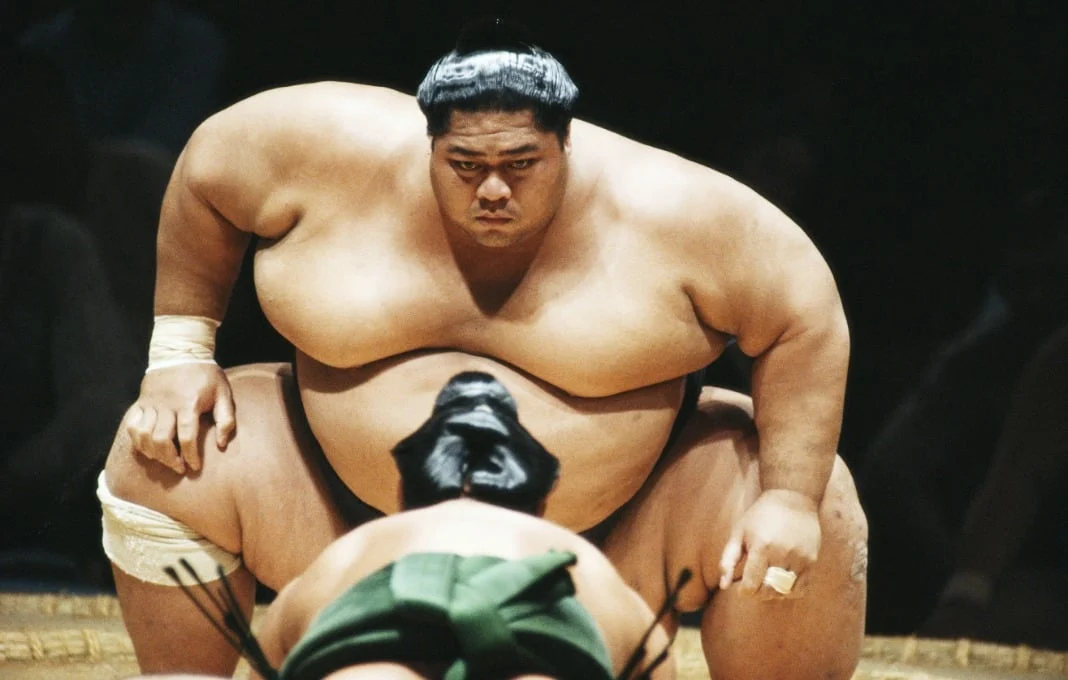
In the highly structured and deeply traditional world of professional sumo, where adherence to centuries-old customs is paramount, the story of Konishiki Yasokichi stands as a remarkable testament to the power of disciplined integration and the eventual, undeniable emergence of exceptional talent. For those observing from afar, particularly from the comfort of a small living room in the United Kingdom, Konishiki was an anomaly – an enormous, calm presence who defied easy categorization. Even to a child’s eye, there was something distinct about this Hawaiian-born wrestler who, despite his unconventional appearance and movement, consistently dominated his opponents. Years later, a personal interview with Konishiki himself illuminated the profound principles that underpinned his extraordinary career, revealing a masterclass in navigating high-performance systems and the delicate balance between assimilation and distinction.
Konishiki’s journey was not merely defined by being the first non-Japanese wrestler of Hawaiian descent to achieve the elite rank of Ozeki, nor solely by his three top-division championships. His true exceptionalism lay in his ability to redefine the very parameters of size and athleticism within a sport steeped in tradition. At approximately 287 kilograms (around 630 pounds), he challenged preconceived notions of what was possible, proving that immense physical presence could be coupled with surprising agility and power. More critically, he mastered a fundamental challenge inherent in any high-performance environment: understanding precisely when to blend in and when to assert one’s unique qualities.
The Outsider’s First Reality Check: Acknowledging a Lack of Authority
Konishiki’s reflections on his initial arrival in Japan offered a stark and illuminating perspective. "When you come in to sumo, you have no authority. You have no stance," he stated, a sentiment that immediately underscored the profound humility required of any newcomer. This wasn’t just about the physical rigors of sumo; it was about an acute awareness of one’s position within a deeply entrenched hierarchy. Konishiki did not anticipate preferential treatment. Instead, he understood that submission and deference were prerequisites for any progress. He described his entry into the world of sumo as being "blind," unable to speak Japanese and consciously adopting a strategy of quiet observation: "just shut up and listen."
This initial phase of enforced silence and diligent learning is a critical, often overlooked, aspect of integrating into any established culture, particularly within business environments. Research from Stanford’s Human-Centered AI, for instance, highlights the tension between fitting in and standing out. To align with a new organizational model, individuals must first grasp the prevailing norms of agency, whether that emphasizes individual autonomy or collective interdependence. Only after this foundational understanding is achieved can one begin to leverage their unique background to offer insights that might be invisible to those already immersed in the system. In legacy organizations, whether a sumo stable, a family business, or a centuries-old institution, authority is rarely bestowed; it is earned through consistent, quiet demonstration of respect and competence.
Earning Credibility from the Within: The Sumo Crucible
The discipline of sumo is legendary, demanding immense endurance and unwavering dedication. Konishiki detailed the arduous early mornings, starting at 4 AM for cleaning duties, followed by manual floor polishing for months. He was responsible for preparing meals for senior wrestlers and executing orders from everyone above him in the pecking order. These were not symbolic tasks; they were the bedrock of his training, designed to instill a profound sense of humility and communal responsibility. "Everybody goes through that. It wasn’t something that was only for me," he emphasized, pointing to a crucial misunderstanding many outsiders have: trust is not gained by highlighting one’s differences, but by demonstrating respect for the established rules and norms before contemplating any deviation.
This approach was instrumental in neutralizing what is often described as the "organizational immune system" – the collective habits, norms, and unconscious biases that can resist or even attack anything perceived as foreign or disruptive. Konishiki did not confront this inherent resistance head-on. Instead, he absorbed it, becoming an integral part of the system before seeking to excel within its boundaries. This strategy allowed him to navigate the complexities of the sumo world without alienating its established guardians.
Silence, Results, and the Discipline of Restraint
When confronted with external doubt, media criticism, public skepticism, and cultural resistance, Konishiki’s response was remarkably pragmatic: "I don’t waste my time fighting things I can’t control." His philosophy for navigating such pressures was simple and direct: "If you’re an athlete, the only way you respond is through action. Shut up and work. Put out numbers." This emphasis on tangible results over vocal defense is deeply rooted in Japanese cultural values, particularly the concept of Mugen, or invisible strength – a power that is felt rather than overtly displayed.
Konishiki spoke of learning to channel his competitive fire inward, a practice that allowed him to maintain a serene exterior even under immense pressure. This internal discipline, this ability to "pull the fire inward rather than broadcast it outward," was perhaps what made him so unsettling to some. In environments demanding constant performance and outward displays of confidence, his calm demeanor was perceived as a subtle threat. This is not to say he lacked intensity; rather, his intensity was meticulously controlled and directed.
Transforming Difference into Advantage: A Disciplined Approach
Konishiki’s physical stature was undeniably a significant factor in his success. As a teenager, he was reportedly bench-pressing over 500 pounds and squatting more than 600 pounds. Japan had never before witnessed a man of his immense weight move with such speed and power. However, what truly distinguished him was his deliberate and conscious effort to control his inherent difference.
He recounted an instance where his straightforward comment, "sumo is a fight," clashed with the prevailing cultural narrative that framed sumo as a ritual of beauty and form. While his statement was factually accurate from an athletic perspective, it failed to resonate with the established cultural language. This experience taught him a vital lesson: being different does not grant a license for carelessness. Unmanaged difference can easily become a liability or a risk. Conversely, difference that is understood, disciplined, and strategically applied can transform into a potent advantage. He learned to adapt his communication to align with the cultural context, ensuring his unique strengths could be appreciated without being perceived as a transgression.
Split-Second Decisions: The Primacy of Calm Over Cleverness
The tachiai, the initial charge at the start of a sumo bout, is a moment of explosive, split-second decision-making. There are no pauses, no opportunities for revision. Konishiki emphasized that the preparation for this critical moment was not made in that fleeting instant, but long before. "Once the plan is set, you don’t second-guess it," he advised. "If you think for even a moment, you’ve already lost." This was not an expression of recklessness, but of profound, ingrained preparation.
What surprised many was his description of the calm he experienced just before impact. "I’m very relaxed," he stated, almost casually. He explained that tension manifests physically, tightening the hips, altering the stance, and constricting the breath, thereby stealing clarity. By observing his opponents meticulously – reading their eyes, posture, and even subtle changes in skin tone – Konishiki was not merely reacting; he was recognizing pre-established patterns. This ability to remain calm and analytical in high-stakes moments is a critical leadership trait. Those who falter in intense situations are often not lacking in intelligence, but in the capacity for sustained calm under pressure.
Key Lessons for Business Leaders from the Sumo Dojo
The insights derived from Konishiki’s career offer a powerful toolkit for leaders navigating complex organizational landscapes:
- Embrace Humility and Submission: Acknowledge that entering a new or established system requires a period of learning and deference. Resist the urge to immediately impose your own agenda.
- Master the Fundamentals: Dedicate yourself to understanding and executing the core tasks and processes of your environment. This builds credibility and demonstrates respect for the existing structure.
- Cultivate Invisible Strength: Develop the ability to channel your energy and resolve internally, allowing your performance to speak for itself rather than relying on outward pronouncements.
- Control Your Difference: Understand how your unique attributes are perceived within your context. Learn to articulate your distinctiveness in a way that aligns with, rather than conflicts with, the prevailing culture.
- Prioritize Preparation Over Reaction: Invest heavily in foresight, planning, and skill development. This allows for decisive action in critical moments, rooted in deep preparation rather than frantic improvisation.
- Seek Calm in Chaos: Train yourself to maintain emotional equilibrium under pressure. Calmness is not passivity; it is a strategic advantage that enhances clarity and decision-making.
These principles may lack the glamour of immediate recognition or bold pronouncements, but their effectiveness lies precisely in their foundational and enduring nature.
The Enduring Significance of Konishiki’s Legacy
What remains most impactful from Konishiki’s story is the realization that humility and dominance are not mutually exclusive. He chose to integrate fully, relentlessly, and without complaint, earning the right to express his unique capabilities. When he did, his difference profoundly reshaped the sport of sumo. The ancient Japanese proverb, Keiko wa uso wo tsukanai – "Training never lies" – rings true. Results, like training, are honest indicators of effort and dedication.
Konishiki Yasokichi’s career serves as compelling evidence that the most impactful way to stand out is often through the disciplined act of disappearing into the process of rigorous training and integration, until one’s excellence becomes so undeniable that it compels recognition, forever changing the landscape.
