

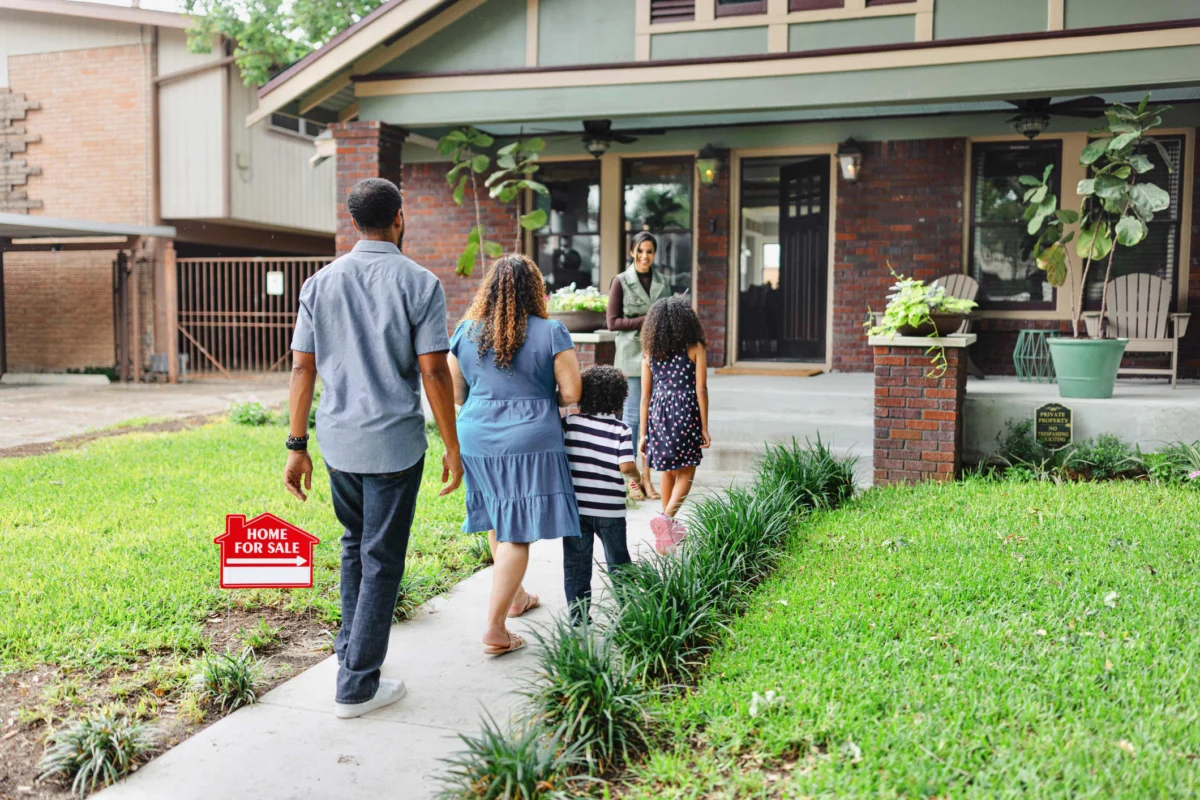
The United States housing market is experiencing a profound dichotomy, presenting a paradox where an increasing supply of lower-priced homes does not necessarily translate into greater affordability for potential buyers. New research indicates a widening gap between the aspirations of entry-level homebuyers and the financial realities they face, even as the availability of starter homes sees an uptick. This trend starkly contrasts with the robust performance of the luxury housing sector, underscoring a deepening K-shaped economic recovery that favors the affluent while burdening lower and middle-income households.
According to a recent report from real estate firm Zillow, sales of starter homes — defined as properties in the lowest-priced third of the market — experienced a 5.4% decline in May compared to the previous year. This contraction occurred despite a 4.5% increase in the number of such homes available for sale. The typical value of a starter home nationally stood at $202,000 in May, marking a 2.3% rise from the same month in 2025. This modest appreciation rate, while seemingly benign compared to the pandemic-era boom, still pushes these entry-level properties further out of reach for many prospective buyers grappling with broader economic pressures.
Kara Ng, a senior economist for Zillow and author of the report, encapsulated the situation: "Starter-home buyers have more choices, more price cuts and less competition. But the unfortunate reason for that advantage is that starter-home buyers are either unwilling or unable to purchase a home." This sentiment highlights a critical challenge where market dynamics of supply and demand are overshadowed by profound affordability constraints rooted in macroeconomic factors. The core issue, Ng elaborates, is that "Even with subdued rent growth, inflation is eating into other parts of household budgets, making it harder to save for a down payment."
Decoding the Starter Home Conundrum
The struggles of starter-home buyers are multi-faceted, extending beyond the headline price of a property. While the increase in availability might suggest a more buyer-friendly market, the actual cost of homeownership remains prohibitively high for many. Inflation, which has been a persistent economic concern throughout 2025 and into 2026, has significantly eroded the purchasing power of average households. Essential expenditures such as groceries, transportation, and utilities have seen substantial price increases, leaving less disposable income for saving towards a crucial down payment. The average American household, particularly those in lower and middle-income brackets, finds their budgets stretched thin, making the prospect of accumulating the necessary funds for a substantial down payment increasingly daunting.
Furthermore, even if a down payment is secured, the ongoing costs associated with homeownership present a formidable barrier. Property taxes, homeowners insurance, and potential homeowners association (HOA) fees have all seen significant increases in recent years. These costs, often rolled into the monthly mortgage payment through escrow, add hundreds, if not thousands, of dollars to the total financial commitment. For a typical starter home valued at $202,000, these ancillary costs can inflate the monthly financial burden considerably, making the overall affordability picture far grimmer than the home price alone might suggest.
The Ascent of Luxury: A Counterpoint
In stark contrast to the stagnant starter home market, the luxury housing sector is experiencing a robust expansion. The Zillow report indicates that sales of luxury homes — defined as properties in the top 5% of values, typically worth around $1.9 million nationally — surged by 6.2% year-over-year in May. This segment of the market appears largely insulated from the affordability crises plaguing the lower tiers, reflecting a divergent economic experience.
This disparity, as Ng noted, "mirrors a broader economic divide, with stock market gains supporting demand at the high end while rising everyday costs weigh on potential starter-home buyers." Affluent buyers, often possessing significant investment portfolios, have benefited from a resilient stock market, which has continued to see gains despite broader economic uncertainties. These gains provide substantial capital that can be liquidated for large down payments, or even full cash purchases, thereby reducing their reliance on high-interest mortgages. This financial flexibility allows them to navigate the current market with relative ease, contributing to the strong demand and sales volume in the upper echelons of the housing market.
The K-Shaped Economy in Detail
The term "K-shaped economy" has become increasingly prevalent among economists to describe this growing divergence. It illustrates a scenario where certain segments of the economy and population experience strong growth and wealth accumulation (the upper arm of the ‘K’), while others face stagnation or decline (the lower arm of the ‘K’). In the context of the housing market, this translates to higher-income households benefiting from rising asset values and robust financial markets, enabling them to invest further in real estate, often in luxury segments. Conversely, lower-income consumers are disproportionately affected by inflation and stagnant real wages, making fundamental purchases like a first home an increasingly unattainable goal.
This economic stratification is not new but has been exacerbated by recent global events. The economic recovery following the 2020 pandemic lockdowns saw unprecedented monetary and fiscal stimulus, which fueled asset markets. While this supported a quick rebound for many, it also contributed to inflationary pressures that disproportionately impact those with less discretionary income. The cost of living has steadily climbed, yet wage growth for many essential workers and entry-level positions has not kept pace, widening the wealth gap and making the journey to homeownership a steep uphill battle for a significant portion of the population.
Mortgage Rates: The Unyielding Barrier
A primary and unyielding barrier to homeownership for many remains the elevated cost of borrowing. As of mid-2026, the average interest rate on a 30-year fixed-rate mortgage stood at 6.75%, according to Mortgage News Daily. This rate represents a significant increase from the historically low rates observed during the pandemic housing boom, when rates often dipped below 3-4%. The Federal Reserve’s aggressive campaign to combat inflation through successive interest rate hikes has directly impacted mortgage rates, making monthly payments substantially higher for prospective buyers.
The impact of these rates on affordability is stark. For an illustrative $202,000 mortgage – typical for a starter home – a 6.75% interest rate translates to a monthly payment of approximately $1,310 for principal and interest alone. This figure is considerably higher than the $1,084 monthly payment at a 5% rate or the $852 at a 3% rate, which were more common just a few years prior. The difference of several hundred dollars per month can be the deciding factor for many budget-conscious buyers.
Daryl Fairweather, chief economist for real estate company Redfin, highlighted this challenge: "Buyers are also up against these nearly 7% mortgage rates currently, and can’t afford to buy at these high rates and high prices." She further elaborated on the potential impact of a rate drop: "Hypothetically, if mortgage rates were to drop to, say, 5%, that would make buying a home much more affordable. You would see instantaneously an increase in sales and more people buying and then more people selling." However, Fairweather tempered expectations, stating, "But I think it’s pretty far-fetched at this point to rely on that happening. Interest rates are looking like they will be higher for longer."

The geopolitical landscape also played a role in this trajectory. Rates had briefly dipped below 6% in late February of the current year (2026), but the onset of the Iran War and the accompanying specter of renewed inflationary pressures pushed them higher once more. This demonstrates how global events and their economic ripple effects can swiftly alter the domestic housing market landscape, adding another layer of uncertainty for buyers. The Federal Reserve, tasked with maintaining price stability, remains cautious, signaling a continued commitment to combating inflation, which inherently means maintaining a tighter monetary policy environment and, consequently, elevated borrowing costs.
Beyond Interest Rates: The Full Cost of Homeownership
While mortgage rates are a dominant factor, the full financial burden of homeownership extends significantly beyond just the principal and interest. Property taxes and homeowners insurance premiums, which are often included in a homebuyer’s monthly mortgage payment via an escrow account, have also seen substantial increases. According to Cotality, a property data and analytics firm, these costs have risen significantly since 2019, further straining the budgets of potential and existing homeowners.
The escalation of insurance premiums, in particular, has been notable in regions prone to natural disasters, where climate change impacts are leading to more frequent and severe weather events. Insurers are adjusting rates to reflect increased risks, making coverage more expensive and, in some cases, harder to obtain. Similarly, local property taxes, tied to rising home values and increasing municipal budgets, contribute to the overall monthly housing expense. These "hidden costs" can sometimes be overlooked by first-time buyers focusing solely on the mortgage principal and interest, only to discover the true, higher cost of homeownership upon closing.
The Persistent Supply Deficit and Policy Responses
Underlying many of the housing market’s current challenges is a persistent and acute housing supply deficit. As of 2025, the U.S. faced a shortage of more than 4 million homes, according to Realtor.com. This deficit is not a recent phenomenon but the cumulative result of years of underbuilding following the 2008 financial crisis, when construction slowed dramatically. The subsequent rebound in demand, fueled by demographic shifts, low interest rates, and the pandemic-driven desire for more space, quickly outstripped the available inventory.
Several factors contribute to this chronic undersupply. Restrictive zoning laws in many desirable areas limit the construction of denser, more affordable housing options. Labor shortages in the construction industry, coupled with rising material costs (exacerbated by supply chain disruptions), further impede builders’ ability to bring new homes to market quickly and affordably. The lengthy and complex permitting processes in many municipalities also add significant time and cost to development projects.
In response to these challenges, policymakers have introduced legislative measures aimed at increasing housing supply. The bipartisan 21st Century ROAD to Housing Act, which became law in July, is one such initiative. This comprehensive legislation combines dozens of measures designed to encourage home construction, expand access to financing for a broader range of buyers, and restrict purchases by large institutional investors who often convert starter homes into rental properties, further reducing the for-sale inventory.
While the Act represents a concerted effort to address the supply crisis, experts caution that its benefits will likely take time to materialize. Reversing a shortage of millions of homes is a monumental task that requires sustained effort across federal, state, and local levels. Builders need time to acquire land, secure financing, obtain permits, and construct homes, a process that can span years. Therefore, immediate relief for aspiring homeowners through increased supply is not anticipated, and the market may continue to grapple with inventory constraints for the foreseeable future.
Long-Term Implications and Societal Trade-offs
The ongoing housing affordability crisis carries significant long-term implications for individuals, communities, and the broader economy. For younger generations, the inability to purchase a home delays a crucial step in wealth accumulation, as homeownership has historically been a primary vehicle for building equity and intergenerational wealth. This delay can exacerbate existing wealth inequalities and make it harder for future generations to achieve financial stability.
The dilemma faced by young people, as highlighted by Daryl Fairweather, is particularly poignant: "One of the dilemmas for young people is that they kind of have to choose: Do they want to live somewhere that has the best job opportunities… or do they want to live where home ownership will be much easier to access at a younger age, but they might not earn as much over their lifetime because of that choice." This forced choice can impact career trajectories, geographic mobility, and overall quality of life, potentially leading to a brain drain from high-opportunity, high-cost areas.
Furthermore, persistent housing unaffordability can have broader societal consequences, including increased social stratification, challenges for local economies relying on a stable workforce, and potential impacts on birth rates and family formation. When a significant portion of the population struggles to secure stable housing, it can create ripple effects that undermine community cohesion and economic vitality.
The Road Ahead: An Uncertain Outlook
The current state of the U.S. housing market reflects a complex interplay of supply shortages, inflationary pressures, elevated interest rates, and widening economic disparities. While there is a growing consensus on the need for comprehensive solutions, the path forward remains challenging. Sustained efforts to boost housing supply through policy reform, incentives for builders, and addressing labor and material costs are crucial. Simultaneously, measures to alleviate the financial burden on first-time buyers, perhaps through targeted assistance programs or innovative financing models, could help bridge the affordability gap.
However, the "higher for longer" interest rate environment and the deeply entrenched K-shaped economic trends suggest that a significant rebalancing of the housing market will not occur rapidly. Experts anticipate that the divergence between the luxury and entry-level segments will persist, with the former continuing to thrive on accumulated wealth and the latter struggling under the weight of high costs and limited purchasing power. For aspiring homeowners, particularly those in the lower and middle-income brackets, the journey to owning a home remains arduous, demanding resilience, strategic financial planning, and a hopeful, yet realistic, outlook on the evolving economic landscape.
