

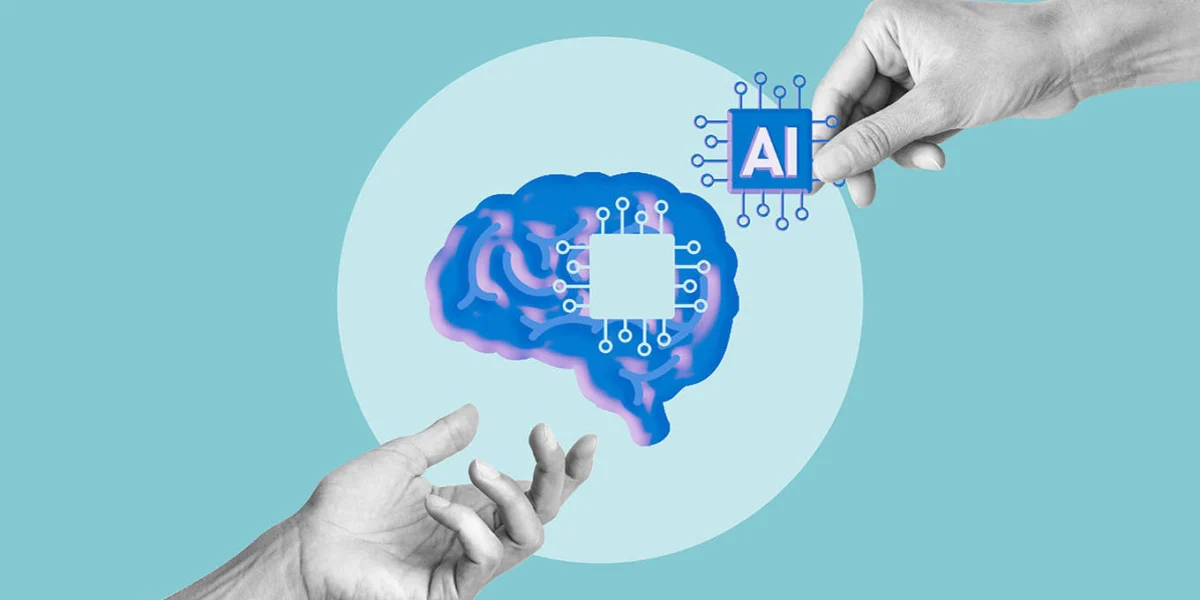
AI is doing what no previous technology could, turning tacit human knowledge into a product that can be extracted, priced, and distributed at scale. Yet the same technology that democratizes cognitive labor may also weaken the human capacities on which complex societies depend.
DUBAI – In his seminal 1956 paper, "The Magical Number Seven, Plus or Minus Two," American psychologist George Miller made a deceptively simple argument: our working memory can hold only seven pieces of information at once. In effect, Miller identified a hard constraint on the human mind’s processing capacity, showing that short-term cognition operates within surprisingly narrow limits. This foundational understanding of human cognitive limitations has, for decades, been a guiding principle in fields ranging from psychology and education to human-computer interaction. Yet, the advent of Artificial Intelligence (AI) is poised to fundamentally alter this landscape, presenting a profound paradox: while AI promises to democratize access to information and cognitive tasks, it simultaneously risks eroding the very human cognitive faculties that underpin complex societal functions.
The core of this transformative power lies in AI’s unprecedented ability to externalize and operationalize tacit knowledge – the unarticulated, intuitive understanding that individuals possess. This "know-how," often acquired through years of experience and practice, has historically been difficult to codify, transfer, or scale. Previous technologies, from the printing press to the internet, facilitated the dissemination of explicit knowledge – facts, theories, and data that are easily written down or digitized. However, AI, particularly through advanced machine learning models like large language models (LLMs), can now process, analyze, and even generate responses that mimic or augment human expertise in ways previously unimaginable. This allows for the extraction of nuanced insights and the creation of AI-powered tools that can perform complex cognitive tasks, making them accessible and affordable on a global scale.
The AI Revolution: From Explicit to Tacit Knowledge Transfer
For decades, the focus of technological advancement in information handling was on processing and distributing explicit knowledge. The telegraph, telephone, radio, television, and ultimately the internet, revolutionized how information traveled. The internet, in particular, provided an unprecedented repository of explicit knowledge, making vast libraries of information accessible to anyone with a connection. However, the true "intelligence" often resided in the human user’s ability to synthesize, interpret, and apply this information. This involved a complex interplay of memory, critical thinking, problem-solving, and creativity – all deeply rooted in our innate cognitive architecture, including the limitations Miller highlighted.
AI, however, is shifting this paradigm. Through techniques like natural language processing (NLP), computer vision, and sophisticated pattern recognition, AI can now ingest and learn from vast datasets that implicitly contain human knowledge. For instance, an LLM trained on millions of legal documents, medical journals, and customer service transcripts can not only recall specific facts but also infer best practices, predict outcomes, and even generate legal advice or diagnostic suggestions. This is essentially the process of AI learning and operationalizing tacit knowledge, a feat that no prior technology could achieve with such breadth and depth.
Supporting Data and Trends:
- Exponential Growth in AI Capabilities: The development of LLMs has seen an exponential increase in their parameter counts and training data. Models like GPT-3, GPT-4, and their successors have demonstrated remarkable abilities in understanding context, generating coherent text, and performing a wide array of tasks. For example, the number of parameters in leading LLMs has grown from hundreds of millions to trillions in a matter of years, enabling increasingly sophisticated knowledge extraction.
- Democratization of Specialized Skills: AI-powered tools are emerging that can assist individuals with tasks previously requiring specialized expertise. Examples include AI-driven coding assistants that help developers write and debug code, AI medical diagnostic tools that can analyze scans with high accuracy, and AI-powered legal research platforms that can sift through complex case law. This has the potential to significantly lower the barrier to entry for many professions.
- Economic Implications: The ability to extract and productize tacit knowledge has profound economic implications. Companies can leverage AI to automate customer support, personalize marketing, optimize supply chains, and even accelerate scientific discovery. This leads to increased efficiency and potential cost reductions, but also raises questions about the future of work and the value of human labor in cognitive-intensive fields.
The Erosion of Cognitive Foundations: A Growing Concern
While the benefits of AI in democratizing cognitive labor are undeniable, the potential downsides warrant serious consideration. The argument posits that an over-reliance on AI to perform complex cognitive tasks could lead to a atrophy of the very human capacities that enabled these tasks in the first place. If AI consistently handles problem-solving, critical analysis, memory recall, and even creative ideation, individuals may gradually cede these functions, leading to a decline in their own cognitive abilities.
This phenomenon is not entirely new. Critics of calculators have long argued that their widespread use might weaken mental arithmetic skills. Similarly, GPS navigation has been accused of diminishing our innate sense of direction and spatial reasoning. However, the scope and depth of AI’s potential impact far exceed these previous examples. AI is not merely a tool for calculation or navigation; it is increasingly positioned as a partner in complex thought processes.
Potential Cognitive Impacts:
- Diminished Problem-Solving Skills: If individuals consistently turn to AI for solutions to complex problems, they may have fewer opportunities to develop their own critical thinking and problem-solving strategies. This could lead to a generation that is less adept at navigating novel or ill-defined challenges.
- Reduced Memory and Recall: With AI readily available to access and synthesize information, the impetus to memorize and retain details may diminish. This could impact our ability to draw upon a rich internal knowledge base for creative thought and nuanced understanding.
- Weakened Analytical Reasoning: AI can perform complex analyses, but the process of how it arrives at conclusions is often opaque. If users passively accept AI-generated analyses without engaging in their own critical evaluation, their analytical reasoning skills could suffer.
- Impact on Creativity and Innovation: While AI can be a tool for creative inspiration, an over-reliance on AI-generated content might stifle original thought and unique artistic expression. The serendipitous discoveries and unique perspectives that arise from individual struggle and exploration could be sidelined.
Historical Context and Expert Reactions
The debate surrounding technology’s impact on human cognition is not new. Philosophers and scientists have long pondered the implications of tools on the human mind. Plato, in his Phaedrus, famously expressed concerns that writing would weaken memory and understanding, arguing that "this invention will produce forgetfulness in the learners’ souls, because they will not be compelled to exercise their memory." This sentiment echoes in contemporary discussions about AI.
While concrete, large-scale studies on the long-term cognitive effects of widespread AI adoption are still nascent, numerous experts are voicing their concerns. Dr. Sherry Turkle, a sociologist at MIT and author of Alone Together, has extensively researched the impact of technology on human connection and self-perception. She has warned that the increasing reliance on digital intermediaries, including AI, can lead to a diminished capacity for empathy and genuine interpersonal understanding.
Economists are also weighing in on the potential societal shifts. While acknowledging the productivity gains, some economists predict a widening gap between those who can leverage AI effectively and those whose skills become obsolete. This could exacerbate existing inequalities and necessitate significant societal adjustments in education and workforce training.
Inferred Reactions from Related Parties:
- Educators: Many in the education sector are grappling with how to integrate AI responsibly. There is a growing concern that students might use AI to complete assignments without genuinely learning the material. Institutions are exploring new assessment methods and curricula that emphasize critical thinking, AI literacy, and the ethical use of these technologies.
- Policymakers: Governments worldwide are beginning to recognize the profound implications of AI. Discussions are underway regarding regulatory frameworks, ethical guidelines, and investments in research to understand and mitigate potential risks. The focus is on ensuring that AI development benefits society as a whole and does not lead to widespread cognitive decline or social fragmentation.
- Technology Developers: While driven by innovation and market demand, many AI developers are also engaging with the ethical considerations of their work. There is an increasing emphasis on building AI systems that are transparent, explainable, and designed to augment rather than replace human capabilities, though the commercial incentives often push towards automation and efficiency.
Navigating the Future: Towards a Balanced Integration
The challenge ahead lies in harnessing the immense power of AI without sacrificing the cognitive foundations of human society. This requires a proactive and multifaceted approach:
Strategies for Balanced Integration:
- AI Literacy and Education: Comprehensive educational programs are crucial to equip individuals with the skills to understand, use, and critically evaluate AI. This includes teaching not only how to operate AI tools but also how to identify their limitations and potential biases.
- Promoting Cognitive Resilience: Educational and professional environments should continue to emphasize and cultivate core cognitive skills such as critical thinking, problem-solving, creativity, and memory. This might involve designing tasks that require human insight and judgment, even when AI is available as a resource.
- Ethical AI Development and Deployment: The design and implementation of AI systems must prioritize human well-being. This includes developing AI that is transparent, explainable, and designed to augment human capabilities rather than simply replace them. Ethical guidelines and regulations are essential to ensure responsible innovation.
- Societal Dialogue and Adaptation: Open and ongoing societal conversations are needed to discuss the implications of AI and to adapt our social structures, economic models, and cultural norms accordingly. This includes considering new forms of education, social safety nets, and the definition of valuable human contribution in an AI-augmented world.
The AI revolution is undeniably transformative. It offers the potential for unprecedented advancements in knowledge dissemination, problem-solving, and economic growth. However, the cautionary tale woven into George Miller’s observations about the limits of human cognition serves as a potent reminder. As we delegate more cognitive tasks to machines, we must remain vigilant about preserving and strengthening the very human capacities that enable us to think, to learn, and to build complex, meaningful societies. The future of human intelligence, intertwined with that of artificial intelligence, depends on our ability to strike this delicate balance.
