

The phrase “Play anywhere” has transitioned from a mere marketing slogan for Xbox into a defining characteristic of the modern video game industry. This shift reflects a profound transformation in how digital entertainment is consumed, as cloud gaming—the process of streaming high-end video games over the internet rather than running them on local hardware—becomes an increasingly dominant force. While this evolution promises to democratize access to gaming by removing the need for expensive consoles or high-performance PCs, it introduces a complex set of environmental challenges that are often invisible to the end-user. As the industry sheds its physical form, moving from plastic cartridges and optical discs to data centers and fiber-optic cables, the quantification of its carbon footprint has become a critical point of contention for researchers, tech companies, and environmental advocates alike.
Research indicates that the global cloud-gaming user base has expanded rapidly, reaching more than 395 million users in 2024. Market forecasts suggest this trajectory will continue, with the number of cloud-reliant players projected to approach 500 million by 2027. Currently, cloud gaming accounts for approximately 38% of the global online video game market, a significant jump from just a few years ago. According to the 2025 Cloud Gaming Report, which surveyed 22,665 players, 51% of respondents engaged with cloud gaming services daily, while more than 75% utilized them at least weekly. This ubiquity marks a turning point in the "dematerialization" of the medium, raising urgent questions about the environmental cost of a hobby that no longer requires a physical product.
The Evolution of Gaming: From Arcades to the Ether
To understand the current environmental dilemma, one must look at the historical trajectory of gaming hardware. The industry’s journey began in the 1970s and 80s with arcade cabinets—massive, energy-hungry machines confined to public spaces. The 1990s saw the rise of home consoles using plastic cartridges and later CD-ROMs, which required significant manufacturing and shipping infrastructure. By the 2010s, digital downloads via platforms like Steam and the PlayStation Store began to replace physical media, reducing the need for plastic and logistics but increasing the energy demand for high-speed internet transfers.
Today, cloud gaming represents the final stage of this physical shedding. In this model, the heavy computational lifting is performed by powerful servers located in remote data centers. The player’s device—be it a smartphone, a smart TV, or a dedicated handheld—essentially acts as a monitor, receiving a video stream of the game and sending input commands back to the server. While this process eliminates the need for millions of consumers to own high-powered local hardware, it centralizes energy consumption in data centers that must run 24/7.
The transition from physical to digital does not equate to a net-zero impact. Although the industry is using less plastic, the carbon intensity of the energy required to power and cool the servers, combined with the energy used by the telecommunications infrastructure to transmit data, creates a significant environmental toll.
Quantifying the Carbon Footprint of a Digital Stream
Recent data provides a sobering look at the electricity requirements of modern gaming. Climate technology firm Greenly reported in late 2024 that electricity usage for video game consoles in the United States alone totaled 3.9 terawatt-hours in 2025. This resulted in approximately 1.6 million metric tons of carbon dioxide equivalent (CO2e). Notably, this figure only accounts for the consoles themselves, excluding the electricity consumed by the televisions or monitors to which they are connected—a variable that can double or triple the energy profile of a gaming session.

The carbon cost of cloud gaming is particularly high when compared to other forms of digital entertainment. The Greenly report quantifies the emissions generated by one hour of cloud-based gaming at approximately 0.44 kilograms of CO2e. To put this in perspective, streaming a high-definition movie typically consumes far less energy because it does not require the real-time graphical rendering and low-latency feedback loops essential for interactive gaming.
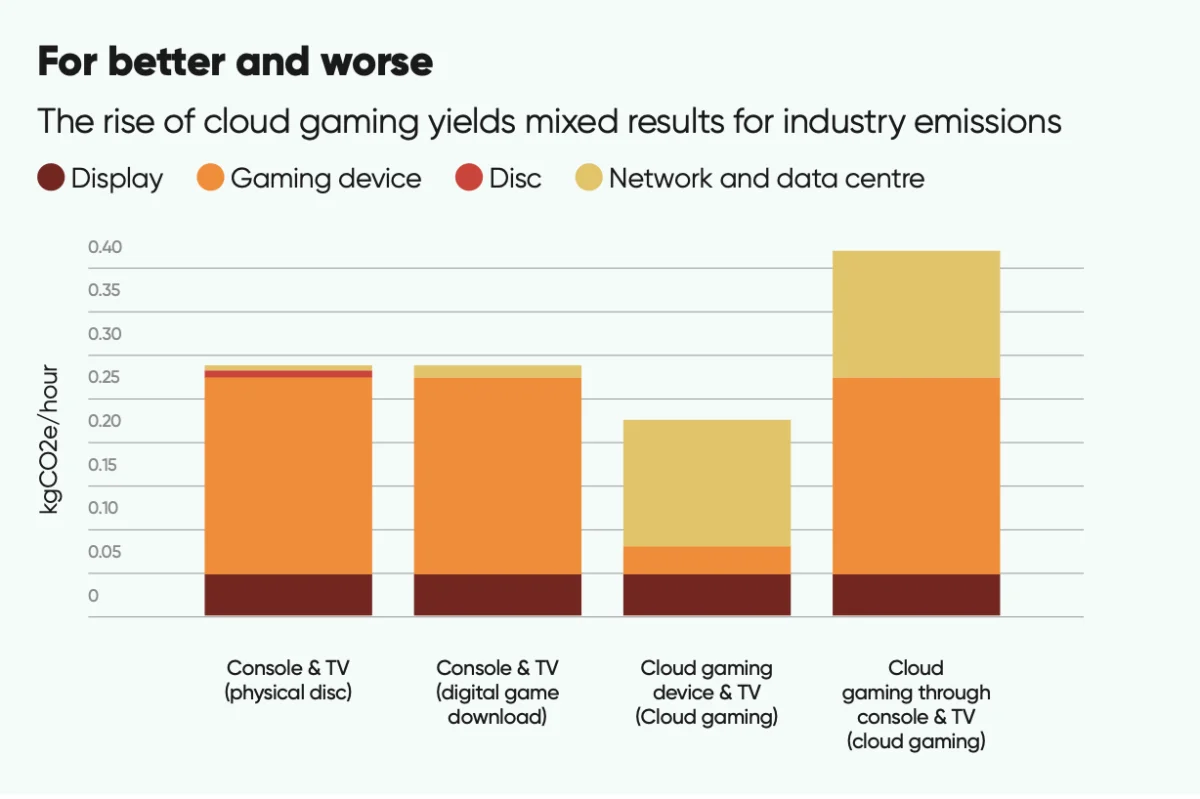
These findings are supported by a 2023 report from the Playing for the Planet Alliance, a United Nations-backed initiative aimed at mobilizing the gaming industry for environmental action. The alliance found that while the average carbon impact per hour of gameplay across all platforms is roughly 50 grams of CO2e, the specific delivery method creates wide variances. Cloud gaming on a dedicated, low-power device (such as the Logitech G Cloud or Nvidia Shield TV) produced the fewest emissions per hour. Conversely, cloud gaming performed on a high-powered console or PC connected to a large-format television produced the highest emissions, as it combines the energy draw of the local hardware with the massive energy requirements of the remote server and data transmission.
The Invisible Infrastructure and the Challenge of Reporting
One of the primary hurdles in addressing the industry’s environmental impact is the lack of standardized reporting. Matt Anderson, decarbonization lead at Playing for the Planet, notes that the industry currently relies on a patchwork of estimated data. "The simplest way to reduce emissions is to have renewable electricity," Anderson states, but achieving this requires transparency across the entire life cycle of a game—from the development phase in studios to the server farms and the player’s home.
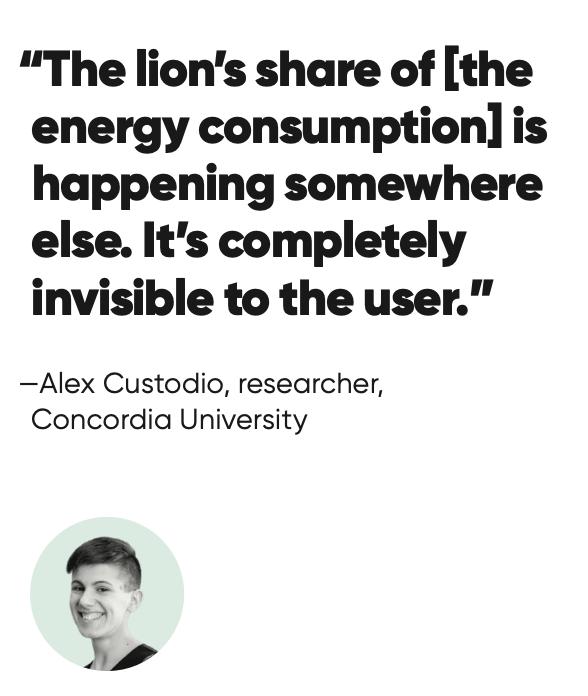
The energy consumption of the game development process itself is often overlooked. Creating a modern "AAA" title involves hundreds of developers using high-end workstations and servers to run energy-intensive software like Unreal Engine or Unity. When these games are eventually played via the cloud, the energy burden shifts from the consumer’s home to the data center, making the impact "completely invisible to the user," according to Alex Custodio, a researcher at Concordia University.
Custodio argues that the "obfuscation" of environmental costs is a systemic issue. Whether a player is downloading a 100-gigabyte game file or streaming it via the cloud, the carbon cost is hidden behind the convenience of high-speed internet. This invisibility makes it difficult for consumers to make informed choices about their carbon footprint, as the physical cues of energy consumption—such as a loud, hot console—are replaced by a seamless, silent stream.
Life Cycle Analysis: A Moving Target
The debate over whether cloud gaming is "greener" than traditional gaming is far from settled. Joshua Aslan, senior manager of environment and climate strategy at Sony Interactive Entertainment, conducted extensive research in 2019 that suggested cloud gaming produced more carbon emissions than local downloads for long play sessions. However, the study also found that for shorter sessions, cloud gaming could be more efficient because it avoids the massive initial energy spike of a large file download.
Michael Iantorno, a researcher at the University of Waterloo, emphasizes that a simple one-to-one comparison is often impossible. "The whole life cycle of games is much more difficult to quantify," Iantorno explains. For instance, a physical disc can be resold, gifted, or kept for decades, allowing multiple people to enjoy the product with no additional manufacturing or download energy. In contrast, cloud gaming requires a continuous energy expenditure every time the game is played, and the game disappears the moment the server is turned off or the subscription ends. This "digital ephemeralization" creates a perpetual energy demand that physical media does not.
Industry Responses and the Path to Sustainability
Despite the challenges, segments of the industry are beginning to take action. The Playing for the Planet Alliance now includes dozens of major studios, including Sony, Microsoft, and Ubisoft, who have committed to reducing their carbon footprints and integrating "green" themes into their games. These initiatives include optimizing software code to reduce CPU and GPU load, thereby lowering energy consumption on the user end.
Indie developers and gaming enthusiasts are also experimenting with grassroots solutions. These include "climate-sensitive mods"—user-created modifications that introduce environmental mechanics into popular games—and the development of solar-powered handheld gaming devices. Some researchers are even advocating for "perma-computing," a philosophy focused on building long-lasting, repairable, and sustainable digital systems that reject the planned obsolescence typical of the tech industry.
However, many experts remain skeptical of corporate promises that place the burden of change on the consumer. Alex Custodio argues that while individual actions like using energy-saving modes are helpful, they do not address the "huge infrastructural problem" at the heart of the industry. The transition to a truly sustainable gaming ecosystem would require a total transformation of how companies operate, from the sourcing of raw materials for hardware to the energy procurement policies of the massive data centers owned by Amazon, Microsoft, and Google.
Future Trajectories and Analysis
As we look toward 2027 and the projected 500 million cloud gamers, the industry stands at a crossroads. The convenience of "playing anywhere" is undeniable, but it comes with a hidden bill that the planet is currently paying. The growth of 5G technology and the expansion of fiber-optic networks will likely make cloud gaming even more seamless, potentially accelerating the abandonment of local hardware.
The implications of this shift are twofold. On one hand, the centralization of gaming in data centers offers an opportunity: it is far easier to transition a few thousand data centers to 100% renewable energy than it is to green the individual power grids of hundreds of millions of households. If tech giants like Microsoft and Google—who are already among the world’s largest purchasers of renewable energy—can fully decarbonize their server farms, cloud gaming could eventually become the most sustainable way to play.
On the other hand, the sheer volume of data being moved and the increasing complexity of game graphics (moving toward 4K and 8K streaming) could outpace gains in energy efficiency. Without aggressive regulation and a shift toward transparency in carbon reporting, the "dematerialization" of gaming may simply be a relocation of environmental harm rather than a reduction of it.
In the final analysis, the environmental future of video games will depend on whether the industry views sustainability as a core design principle or a public relations hurdle. As the boundary between the physical and digital continues to blur, the responsibility for the industry’s carbon footprint must be shared by the developers who create the worlds, the corporations that host them, and the players who inhabit them. Only through a systemic overhaul of the gaming infrastructure can the promise of "Play anywhere" be fulfilled without costing the earth.
