

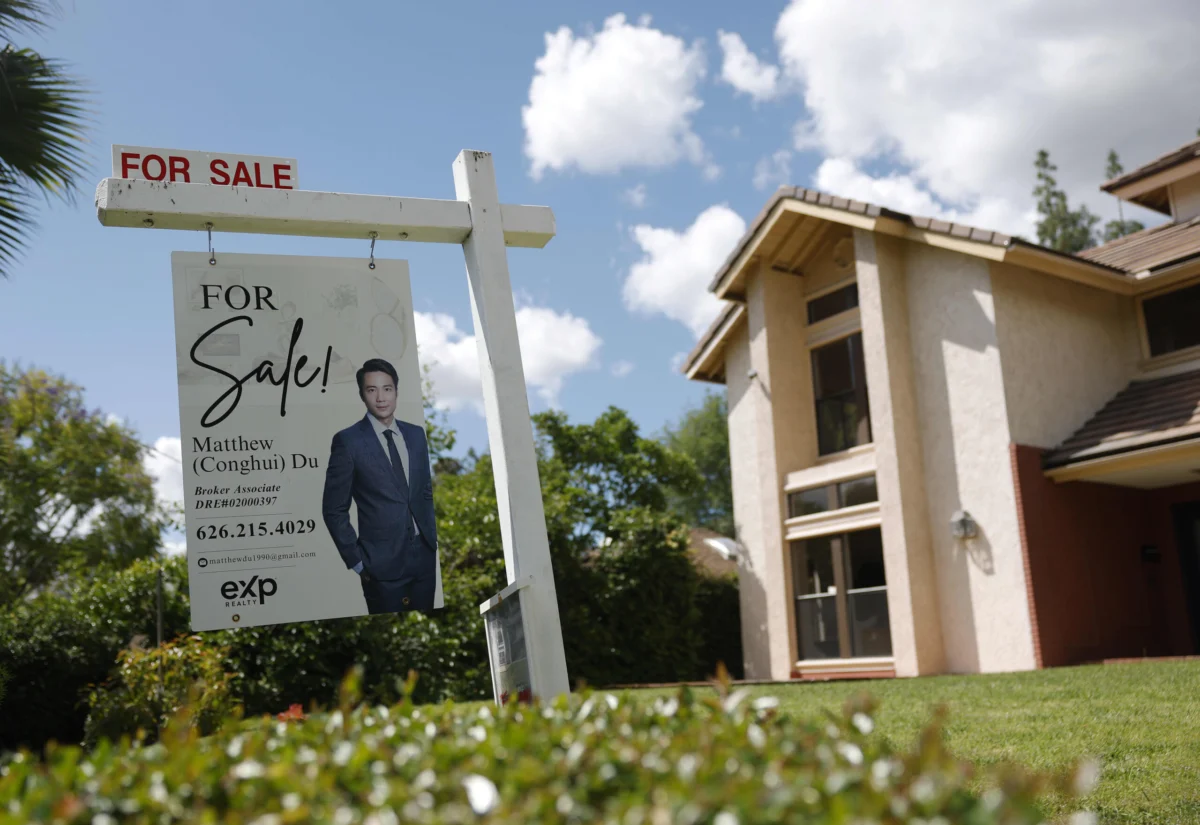
The housing market in June presented a challenging landscape for prospective buyers, characterized by a notable dip in sales of previously owned homes, even as median prices surged to unprecedented levels. According to the latest data released by the National Association of Realtors (NAR), sales of existing homes fell by 2.4% from May to a seasonally adjusted annual rate of 4.09 million units. This decline defied market expectations, as many housing analysts had projected a modest month-over-month gain, signaling the persistent sensitivity of the market to prevailing economic pressures. Despite the monthly setback, June’s sales figures represented a 2.8% increase when compared to the same month last year, offering a nuanced perspective on the market’s trajectory.
The Dual Challenge: High Rates and Record Prices
The primary forces driving this dynamic are the persistently high mortgage rates, which have hovered near two-decade highs, coupled with an escalating median home price that has now reached an all-time record. This potent combination has significantly eroded affordability, causing many potential homebuyers to delay or withdraw from the market. Lawrence Yun, NAR’s chief economist, articulated this sensitivity, stating, "The back-and-forth in monthly home sales activity, driven by mild fluctuations in mortgage rates, shows how sensitive home buyers are to affordability conditions." However, Yun also pointed to a silver lining in the broader economic picture, noting that "job gains – more than half a million since the beginning of the year – will continue to provide support for the housing market," suggesting that underlying economic strength could prevent a more severe downturn.
The reported sales figures represent closed transactions, meaning the associated contracts were likely signed in May. During that period, the average rate on the 30-year fixed mortgage continued its upward climb, a trend that commenced sharply at the start of March. This ascent in borrowing costs is a direct consequence of the Federal Reserve’s aggressive monetary policy aimed at taming inflation, which has seen the federal funds rate increase significantly over the past two years. Mortgage rates, closely tied to the yield on the 10-year Treasury bond, reflect broader market expectations for inflation and economic growth, which have been volatile in the current economic climate.
A Deeper Look at Mortgage Rate Evolution and Impact
To fully grasp the current state of affordability, it’s crucial to examine the trajectory of mortgage rates over the past few years. Following the onset of the COVID-19 pandemic, the Federal Reserve slashed interest rates to near zero, leading to historically low mortgage rates that dipped below 3% for much of 2020 and 2021. This period fueled an unprecedented housing boom, as buyers rushed to lock in cheap financing, contributing to rapid price appreciation.
However, as inflation began to surge in late 2021 and intensified into 2022, the Federal Reserve embarked on a series of aggressive rate hikes, pushing the federal funds rate from near zero to over 5% within a relatively short span. This shift profoundly impacted mortgage rates, which climbed steadily, surpassing 6% in mid-2022 and frequently touching or exceeding 7% in the subsequent months. For instance, the average 30-year fixed mortgage rate, which was around 3.0% at the start of 2022, had surged to over 6.5% by the end of that year and continued its volatile ascent into 2023 and 2024. This dramatic increase has effectively doubled the monthly housing cost for many prospective buyers compared to the pandemic-era lows, even for the same priced home. A $400,000 mortgage at 3% would have a principal and interest payment of roughly $1,686, whereas at 7%, it jumps to approximately $2,661 – a difference of nearly $1,000 per month, profoundly impacting buying power.
Inventory Shortfall: The Root of Price Escalation
Compounding the challenge of high mortgage rates is a persistent and acute shortage of available homes for sale. At the end of June, the total housing inventory stood at 1.56 million units. While this figure represented a marginal decrease of 0.6% from May, it marked a slight increase of 1.3% compared to June of the previous year. This seemingly minor year-over-year gain is insufficient to alleviate the intense competition that continues to underpin robust price growth.
At the current sales pace, the available inventory translates to a 4.6-month supply. This metric is critical: a market is generally considered balanced between buyers and sellers when there is a six-month supply of homes. The current figure indicates a significant seller’s market, where demand continues to outstrip supply, creating upward pressure on prices. The scarcity of homes is exacerbated by several factors. Many existing homeowners are "locked in" with historically low mortgage rates secured during the pandemic boom. The prospect of selling their current home, only to purchase a new one at a much higher interest rate, acts as a powerful disincentive to move, thereby reducing the flow of new listings onto the market. Furthermore, new home construction, while showing some signs of recovery, has not kept pace with demographic demand and years of underbuilding following the 2008 financial crisis. This structural deficit in housing supply is a long-term issue that contributes significantly to the ongoing affordability crisis.
Record Prices Amidst Sales Slowdown
With inventory remaining critically lean, home prices continue their relentless climb. The median price of an existing home sold in June reached an unprecedented $440,600. This figure represents an increase of 1.8% from the previous year and marks the highest median price ever recorded. June typically stands as the strongest month for both home sales and prices, given seasonal buying patterns as families look to relocate during the summer months. The fact that prices set a new record despite a monthly sales decline underscores the severity of the supply-demand imbalance. Even with fewer transactions, the homes that do sell command premium prices due to the limited options available to determined buyers. This trend signifies a market where only the most financially robust buyers, often less reliant on traditional mortgage financing, are able to successfully close deals.

Disparate Impacts Across Price Tiers and Regions
The impact of high interest rates and tight inventory is not uniform across all segments of the housing market. A closer examination reveals a widening divergence in sales performance based on price point. The lower end of the market, which is typically most sensitive to interest rate fluctuations and affordability constraints, experienced a contraction. Sales of homes priced below $100,000 were down 1.7% from a year ago, while sales of those priced between $100,000 and $250,000 saw only a marginal increase of less than 1%.
In stark contrast, the luxury segment continues to demonstrate robust activity. Sales of homes priced between $750,000 and $1 million surged by nearly 14% compared to the previous year. Even more impressively, sales of homes priced above $1 million saw an 18% increase. This trend suggests that wealthier buyers, who often have larger down payments, greater equity, or are less dependent on mortgage financing (e.g., all-cash buyers), are better positioned to navigate the current high-rate environment. Their ability to absorb higher costs or bypass borrowing altogether allows them to dominate the upper echelons of the market, further exacerbating the challenges for first-time and moderate-income buyers.
Regionally, home sales in June exhibited varied performance across the United States. Month-over-month sales declined in every region except for the Northeast, which managed to register a modest gain. This regional disparity can be attributed to a confluence of factors, including varying local economic conditions, job growth rates, population migration patterns, and the specific dynamics of local housing supply. For instance, strong job markets and persistent demand in certain Northeastern metropolitan areas might be providing sufficient impetus to sustain sales activity despite broader national headwinds.
Evolving Buyer Demographics and Transaction Dynamics
The characteristics of buyers and the nature of transactions are also shifting in response to the challenging market. All-cash sales accounted for one-quarter (25%) of all transactions in June, a decrease from 29% a year ago. While still a significant portion, this decline suggests that even cash buyers, who are immune to mortgage rate fluctuations, may be exercising more caution or finding fewer suitable properties.
On a more encouraging note, first-time buyers made up 33% of sales in June, an increase from 30% a year ago. This modest uptick indicates that despite the formidable barriers of high prices and rates, a segment of new entrants is still managing to break into homeownership. However, these buyers face immense hurdles, often requiring substantial savings for down payments and navigating a competitive market where they are frequently outbid by cash offers or buyers with greater financial flexibility. Many first-time buyers may be pooling resources, receiving financial assistance from family, or settling for smaller homes or less desirable locations to achieve their homeownership dreams.
Broader Economic Implications and Future Outlook
The current state of the housing market has significant broader economic implications. Housing is a critical component of the national economy, influencing consumer confidence, wealth accumulation, and overall economic activity. The slowdown in sales, coupled with persistent price appreciation, reflects a complex economic environment where inflation remains a key concern.
Lawrence Yun’s continued emphasis on increasing supply is a crucial policy recommendation. "Progress on long-term housing affordability could be hampered if inventory growth continues to stall. Without consistent gains in inventory, home prices can accelerate. It is critical to introduce more supply to the market to widen the opportunity for homeownership," Yun stated. Achieving this requires a multi-faceted approach, including addressing restrictive zoning regulations, incentivizing builders to construct more entry-level and affordable homes, and streamlining permitting processes.
Looking ahead, the housing market’s trajectory will largely depend on the future path of inflation and the Federal Reserve’s monetary policy. Should inflation show sustained signs of cooling, the Fed may consider pausing or even cutting interest rates, which could provide some relief to mortgage rates and potentially stimulate buyer activity. However, any significant decline in rates is unlikely to occur rapidly. Meanwhile, a strong labor market, characterized by consistent job gains and rising wages, will continue to provide a foundational level of support for housing demand, even if affordability remains a challenge.
Market observers suggest that until a more substantial increase in housing inventory materializes, or mortgage rates experience a significant and sustained decline, the market is likely to remain in a state of delicate balance, characterized by constrained sales volume, persistent price pressures, and ongoing affordability concerns. The current environment underscores a fundamental shift from the frenzied buying of the pandemic era to a more cautious and selective market, where financial resilience and strategic decision-making are paramount for both buyers and sellers. The dream of homeownership, while still attainable for some, continues to be an increasingly challenging aspiration for a growing segment of the population.
