

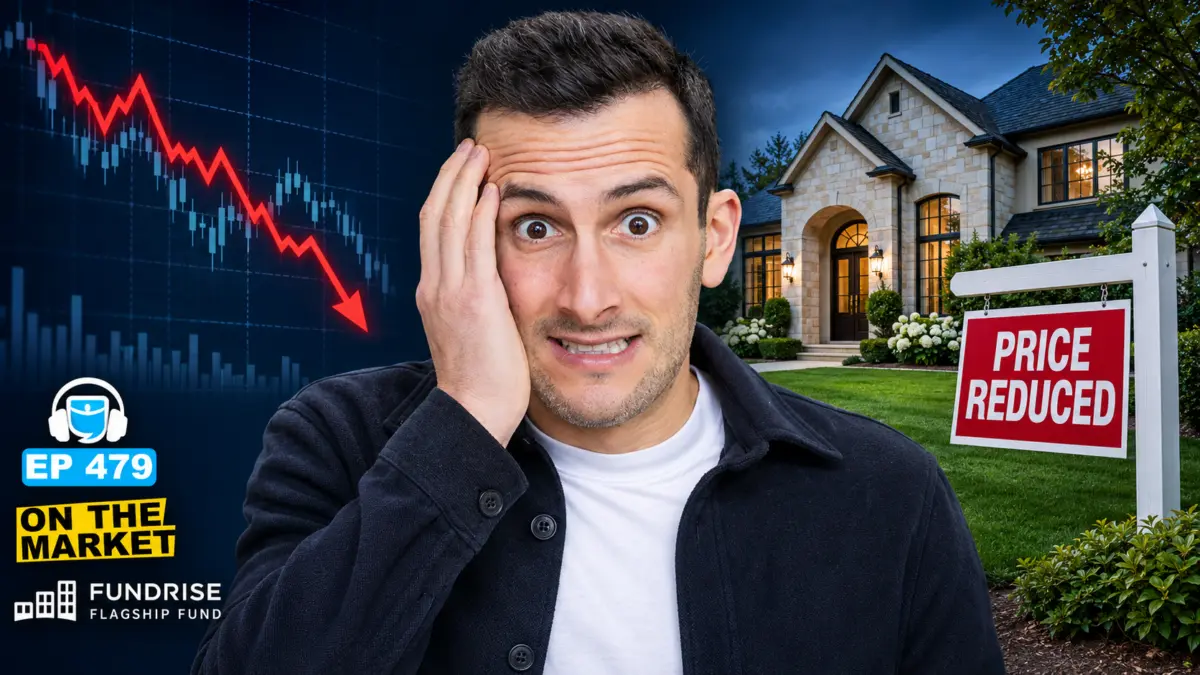
The financial landscape in late 2024 has been defined by a period of profound uncertainty, as a series of rapid-fire shocks to the equities market raises urgent questions regarding the resilience of the U.S. real estate sector. Following a significant tech-led selloff that erased trillions of dollars in market capitalization in a single day, economists and housing analysts are closely monitoring the "wealth effect" that has historically linked stock market performance to housing demand. While conventional economic wisdom suggests that a stock market decline often leads to lower mortgage rates as investors flee to the safety of bonds, the current environment of persistent inflation and hawkish Federal Reserve policy suggests a more complex and potentially more damaging outcome for real estate investors and homeowners alike.
The Equities Catalyst: From AI Euphoria to Market Correction
The recent volatility in the stock market has been characterized by a sharp reversal of the artificial intelligence (AI) trade that dominated the first three quarters of the year. The NASDAQ, a tech-heavy index that has served as the primary barometer for AI-related growth, recently entered official correction territory, defined as a 10% decline from its peak. This downturn was punctuated by a single-day loss of $2.5 trillion in market value, a figure reminiscent of the market turbulence seen at the onset of the 2020 global pandemic.
Two primary catalysts have accelerated this decline. First, the political uncertainty following the midterm elections triggered a broad selloff, particularly in sectors tied to data center infrastructure and high-growth technology. Second, a high-profile scandal involving the leadership of Nvidia, the world’s most valuable company and the cornerstone of the AI boom, sent shockwaves through the market. Reports of the resignation and ouster of CEO Jensen Huang amid a complex spy scandal led to a 24% decline in the company’s valuation within a single month, wiping out $1.5 trillion in market value.
These events have punctured the "veneer of perfection" that many analysts believe had been priced into the stock market. According to the S&P 500 Shiller CAPE (Cyclically Adjusted Price-to-Earnings) ratio, which measures stock prices relative to average earnings over the previous decade, the market remains significantly overvalued. The current ratio stands at 41, more than double the long-term historical average of 17 and dangerously close to the 44-point peak observed just before the 2000 dot-com bust.
The "Quiet Engine" of the Housing Market
For the past two years, the stock market has functioned as a silent driver of the housing market’s unexpected resilience. Despite elevated mortgage rates and a general lack of affordability for the average consumer, home prices have remained high, supported largely by wealthy buyers who have leveraged stock market gains to fund down payments and all-cash offers.
This "wealth effect" has been particularly pronounced in the luxury segment of the real estate market. Data indicates that the top 10% of earners in the United States own approximately 90% of all stocks and mutual funds and are responsible for roughly 50% of total consumer spending. As stock portfolios surged, these high-net-worth individuals continued to transact in the real estate market, even as middle-market activity slowed to its lowest levels since 2014.
The luxury housing market has seen median prices rise by nearly 5% year-over-year, even as pending sales for more affordable homes plummeted across all 50 major metropolitan areas. However, if the stock market correction deepens into a bear market—a decline of 20% or more—this wealth-driven demand is expected to evaporate. Analysts warn that tech-heavy metros such as San Francisco, Austin, and Seattle, which are highly sensitive to equities valuations, could face a significant hit to home prices as the primary source of buyer capital diminishes.
Breaking the Historical Playbook: The Inflation Variable
In previous economic cycles, such as the 2001 dot-com crash and the 2008 financial crisis, a stock market collapse served as a catalyst for a rebound in the housing market. Historically, when equities fall, investors move their capital into the bond market. This increased demand for bonds drives down treasury yields, which in turn leads to lower mortgage rates. During the 2001 crash, 30-year treasury yields fell from 7% to 5.8%; in 2008, they dropped from 6.3% to 4.7%.
However, the current economic climate is complicated by "supply shock" inflation, largely driven by disruptions in global energy markets and oil supply constraints. Unlike the demand-driven inflation of previous decades, supply-side inflation is resistant to traditional interest rate adjustments.
If the stock market continues to decline while inflation remains above the Federal Reserve’s 2% target, the central bank may be forced to keep interest rates "higher for longer" to prevent a 1970s-style inflationary spiral. During the recession of 1973-1975, treasury yields actually rose from 8% to 9.2% despite a bear market in stocks, because inflation was running hot. This scenario, known as stagflation, represents the greatest risk to the modern real estate market. In a stagflationary environment, the housing market loses its traditional silver lining of lower rates during a downturn, leading to a period of flat or declining prices coupled with low transaction volume.
A Divergent Housing Market: Luxury vs. Affordability
As the stock market correction unfolds, real estate experts anticipate a "reversal of fortunes" between different segments of the housing market. The luxury segment, which has been the strongest performer in recent years, is now viewed as the most vulnerable. High-end short-term rentals and luxury flips in tech-centric markets are likely to face decreased demand as stock-funded buyers retreat.
Conversely, the more affordable end of the housing spectrum may find a path to stability. If the stock market decline eventually leads to even a modest reduction in mortgage rates—perhaps into the low-to-mid 6% range—it could entice "normal" buyers back into the market. These buyers, whose wealth is typically tied to stable employment rather than stock portfolios, have been sidelined by the affordability crisis. A cooling of the broader economy could provide the necessary opening for first-time homebuyers and middle-income investors to re-enter the market, provided they are not impacted by rising unemployment.
Chronology of the 2024 Market Shift
The current market instability can be traced through several key milestones over the final quarter of the year:
- Early October: Equities reach local highs before signs of a tech slowdown begin to emerge.
- Post-Midterm Elections: A broader market selloff begins as investors react to political shifts and the prospect of continued high interest rates.
- November 12: The Nvidia leadership crisis breaks, leading to a massive loss in market capitalization for the AI sector.
- Late November: The NASDAQ officially enters correction territory, and the S&P 500 registers its most volatile month in years.
- December Forecast: The Federal Reserve signals another potential rate hike to combat "sticky" inflation, further dampening hopes for a quick recovery in the equities market.
Broader Implications and Strategic Analysis
The intersection of a declining stock market and high inflation suggests three primary scenarios for the real estate market moving into 2025 and 2026:
- The Stagflationary Bear Market (Most Likely): Stocks fall by 20-30%, but inflation prevents the Fed from cutting rates. Luxury real estate prices decline significantly, while the broader market remains stagnant with low transaction volume. National home prices may see a year-over-year decrease as tech-heavy metros drag down the average.
- The Classic Recession: A sharp stock market crash leads to a rapid increase in unemployment, which finally "breaks" inflation. The Fed pivots to rate cuts, mortgage rates drop into the 5% range, and housing demand returns quickly as affordability improves.
- The "Soft Landing" or Great Stall: The stock market stabilizes and trades sideways. Mortgage rates remain near 7%, and the housing market continues its current trend of high prices and low activity, with luxury remaining the only active segment.
For real estate investors, the current environment necessitates a shift in strategy. Analysts recommend prioritizing cash flow over appreciation and focusing on affordable markets in the Midwest and Northeast that are less dependent on stock market wealth. Conservative underwriting—assuming today’s interest rates with no expectation of a near-term refinance—has become the industry standard.
The primary takeaway for the market at large is that the era of "easy growth" driven by tech-sector gains and low interest rates has concluded. As the "quiet engine" of stock market wealth stalls, the housing market must find a new equilibrium based on fundamental affordability and real-world income rather than equities-driven speculation. While the risk of a correction is high, it also creates opportunities for disciplined investors to acquire assets at a discount, particularly in the luxury segment where motivated sellers may soon outnumber buyers.
