

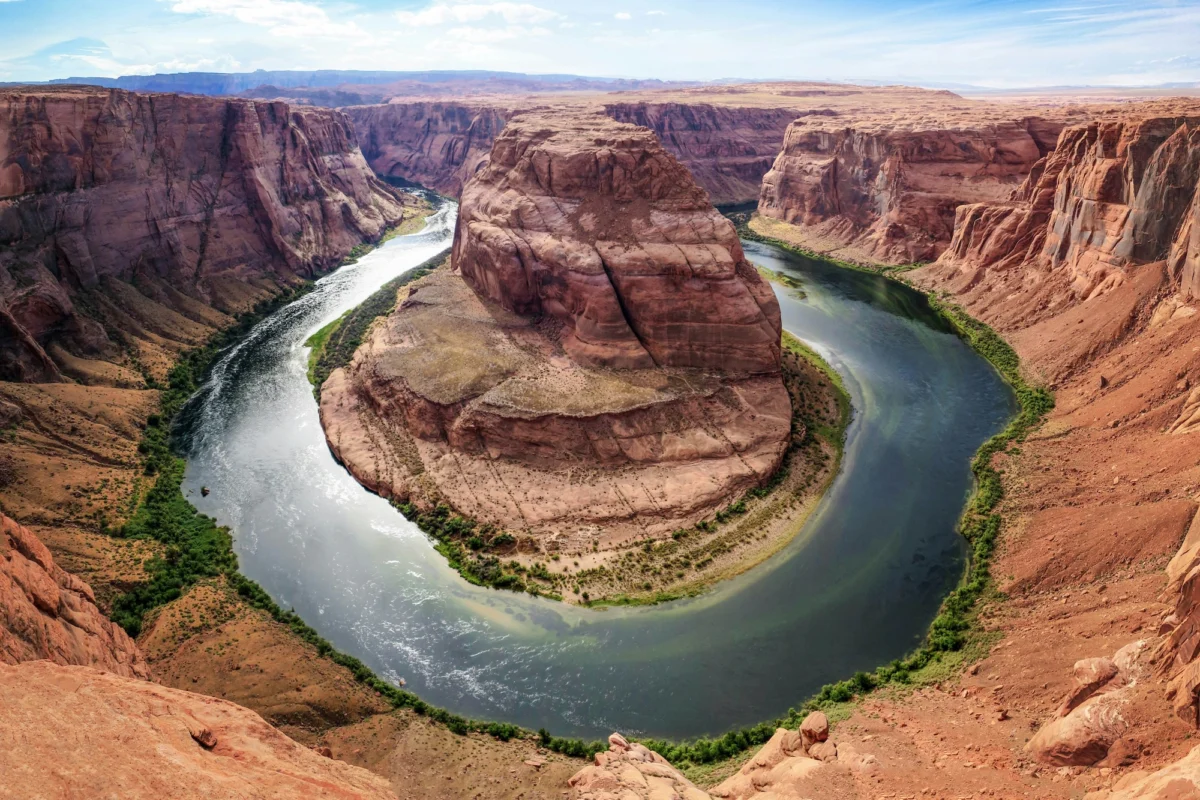
As the American Southwest grapples with the most severe drought in over a millennium, new research suggests that the aggressive water conservation strategies adopted by major metropolitan centers may no longer be sufficient to stave off a looming supply crisis. For decades, cities like Phoenix, Las Vegas, and Denver have been hailed as models of "demand management," successfully decoupling population growth from water consumption. However, a comprehensive study conducted by researchers at the Pennsylvania State University and Arizona State University indicates that the accelerating pace of climate change is rapidly outpacing the benefits of these conservation efforts. The findings, published in the journal Water Resources Research, warn that the region must transition from simple conservation to radical structural changes in how water is sourced, allocated, and reused.
The Colorado River serves as the primary lifeblood for approximately 40 million people across seven U.S. states and two Mexican states, while also providing irrigation for more than 5.5 million acres of agricultural land. Despite this critical importance, the river’s flow has declined by roughly 20 percent over the last century. Researchers Renee Obringer and Dave White argue that while individual actions—such as installing low-flow showerheads and replacing grass lawns—have provided a temporary buffer, the "conservation floor" is fast approaching. Under moderate to high-emission climate scenarios, even a 25 percent further reduction in per-capita water use may not be enough to prevent severe shortages as upstream flows continue to dwindle.
A Century of Management: The Evolution of the Law of the River
To understand the current crisis, one must look back to the foundational legal framework known as the "Law of the River." The centerpiece of this framework is the 1922 Colorado River Compact, which divided the basin into two halves: the Upper Basin (Colorado, New Mexico, Utah, and Wyoming) and the Lower Basin (Arizona, California, and Nevada). At the time of the agreement, the river’s annual flow was estimated based on an unusually wet period, leading to a structural over-allocation of water that has plagued the region for 100 years.
Throughout the mid-20th century, the construction of massive infrastructure projects, such as the Hoover Dam and Glen Canyon Dam, allowed for the creation of Lake Mead and Lake Powell. These reservoirs were designed to provide a steady supply of water and hydroelectric power during dry years. However, the onset of a "megadrought" around the year 2000—the driest 22-year period in at least 1,200 years—has seen these reservoirs drop to record-low levels. In 2021, the U.S. Bureau of Reclamation declared the first-ever Tier 1 water shortage on the Colorado River, triggering mandatory delivery cuts to Arizona and Nevada.
As the states prepare for a critical 2026 deadline to renegotiate the current operating guidelines for the river, the research by Obringer and White provides a sobering backdrop. The negotiations are expected to be contentious, as states must decide how to share the burden of further cuts that are now viewed as inevitable.

The Success and Limits of Urban Demand Management
The study focused on three pivotal cities: Phoenix, Las Vegas, and Denver. Each has historically employed different strategies to manage water demand, with varying degrees of success.
Las Vegas: The Paradigm of Efficiency
Las Vegas is often cited as the gold standard for urban water management in an arid environment. Since 2002, the Southern Nevada Water Authority (SNWA) has implemented some of the nation’s strictest water regulations. The city famously pays residents to remove "non-functional" turf, a program that has resulted in the removal of millions of square feet of grass. Consequently, Las Vegas has reduced its per-capita water use by nearly 60 percent, even as its population surged by more than 50 percent.
A key factor in the Las Vegas model is the recycling of indoor water. Nearly 100 percent of the water used indoors in Las Vegas is treated and returned to Lake Mead through the Las Vegas Wash, earning the city "return flow credits" that allow it to pull more water from the reservoir. However, the study notes that even this high level of efficiency may hit a wall if the lake’s elevation drops below the "dead pool" level, where water can no longer flow downstream to the Hoover Dam.

Phoenix: Xeric Transformation
Phoenix has followed a similar trajectory, focusing on xeric (desert-friendly) landscaping and the adoption of smart meters and leak-detection technology. Over the last two decades, the city has seen a 20 percent reduction in total water use despite a 40 percent increase in population. Phoenix has also invested heavily in underground aquifers, storing excess water during wet years for use during droughts.
Despite these proactive measures, the new modeling suggests that Phoenix’s available surface water supply could drop below historical averages by 2060. The researchers found that even if participation in conservation programs increased significantly, the gains would likely be neutralized by the reduction in upstream flows caused by rising temperatures and reduced snowpack in the Rocky Mountains.
Denver: The Challenges of the Upper Basin
Denver represents the unique challenges of the Upper Basin. Unlike the desert cities of the Lower Basin, Denver relies heavily on snowpack and trans-mountain diversions. While Denver Water has successfully promoted "Water Use It Wisely" campaigns and reduced overall consumption, the city faces increasing pressure from both climate change and the legal obligations to ensure enough water flows downstream to the Lower Basin states.

Data Analysis: The Looming Supply-Demand Gap
The researchers utilized a combination of social survey data and sophisticated hydrological modeling to project future scenarios. The survey component revealed a significant "conservation gap": while a large majority of residents in the Southwest express support for water conservation and acknowledge the reality of climate change, a much smaller percentage actively participates in municipal conservation programs.
The modeling software integrated these behavioral patterns with climate projections. Under a "moderately high" emissions scenario (SSP3-7.0), the results were stark. The study indicated that by mid-century, the reduction in river flow due to increased evaporation and decreased runoff would surpass the maximum possible savings achievable through urban demand management.
"Individual actions are powerful, but they have a ceiling," the researchers noted. The data suggests that once a city has eliminated ornamental turf and maximized indoor recycling, there are few "easy" cuts left to make without impacting basic quality of life or economic stability. This phenomenon, often referred to as "demand hardening," means that in future emergencies, cities will have less flexibility to reduce use further because they have already trimmed the fat from their water budgets.

Reactions and the Path Toward Structural Solutions
While state and local officials have not yet officially responded to the specific findings of the Penn State and ASU study, the sentiment aligns with recent shifts in policy. The Bureau of Reclamation has increasingly signaled that the "status quo" is no longer sustainable. In 2023, the federal government reached a landmark, albeit temporary, agreement with Arizona, California, and Nevada to conserve an additional 3 million acre-feet of water through 2026, largely through compensated conservation where the federal government pays users to use less.
However, critics and analysts argue that these short-term fixes do not address the long-term reality of a shrinking river. The implications of the research point toward three primary "supply-side" or "sectoral" shifts:
- Agricultural Realignment: Agriculture accounts for approximately 70 to 80 percent of Colorado River water use. Inferred reactions from agricultural unions suggest a high level of anxiety regarding "fallowing" programs, where farmers are paid to leave fields unplanted. Experts suggest that a shift toward high-value, low-water crops and advanced drip irrigation will be mandatory to preserve municipal supplies.
- Large-Scale Water Reuse and Desalination: The study highlights the need for massive investment in infrastructure. This includes "Direct Potable Reuse" (DPR) systems—often colloquially called "toilet-to-tap"—which bypass environmental buffers to turn wastewater directly into drinking water. Additionally, while expensive, seawater desalination remains a topic of discussion. The Carlsbad Desalination Plant in California serves as a cautionary tale of high costs (US$1 billion), yet it provides a drought-proof supply that many believe will eventually be necessary for the inland Southwest via water exchange agreements with coastal California or Mexico.
- The Water-Energy Nexus: There is an increasing awareness of how water scarcity impacts energy. As reservoir levels drop, the ability of the Hoover and Glen Canyon dams to produce hydroelectric power diminishes. This necessitates a transition to solar and wind energy, which require significantly less water for cooling than traditional fossil fuel or nuclear power plants.
Broader Impact and Future Implications
The crisis in the Colorado River Basin is a bellwether for water-stressed regions globally. From the Murray-Darling Basin in Australia to the Tigris-Euphrates in the Middle East, the struggle to balance urban growth with a dwindling natural resource is becoming a defining challenge of the 21st century.

The research by Obringer and White underscores a fundamental shift in the narrative of environmental stewardship. For decades, the message to the public has been that "every drop counts" and that individual conservation can solve the problem. While every drop does indeed count, the data now proves that individual virtue cannot compensate for systemic climatic shifts.
As the 2026 renegotiations approach, the focus is shifting from how much water people want to use to how much the river can actually provide. The transition will likely involve higher water rates to fund expensive infrastructure, the permanent retirement of some agricultural lands, and a complete reimagining of the Western urban landscape. The era of the lush, green lawn in the desert is over; the era of the reclaimed, recycled, and highly regulated drop has begun. Without these "bigger solutions," the vibrant cities of the Southwest may find themselves facing a future where the taps simply cannot keep up with the heat.
