

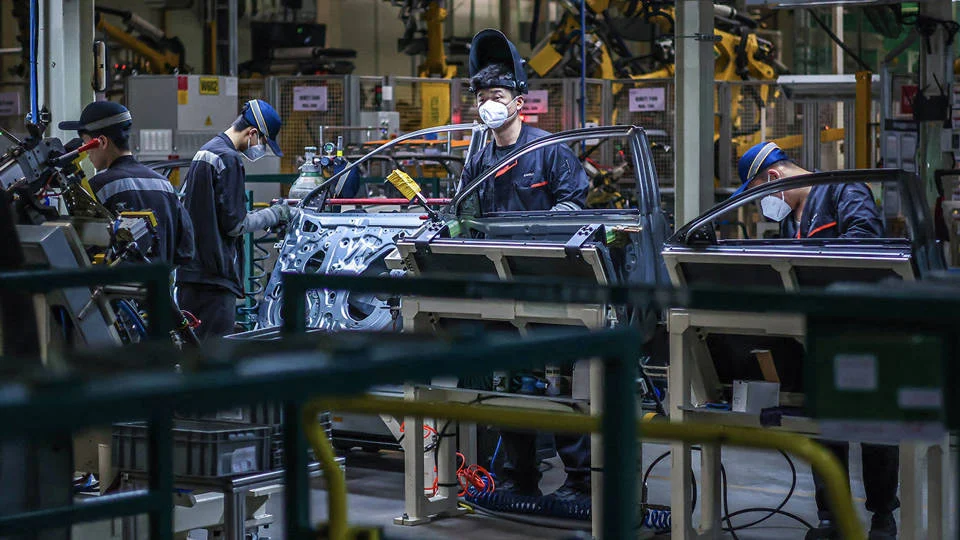
The balance of global investment has shifted dramatically over the past three decades, with China emerging as the leading destination for productive capital. Europe and the United States can still narrow the gap, but only by making it cheaper and easier to build, operate, and innovate.
ZURICH – Ask what makes a country competitive, and you will drown in answers. Existing frameworks, including those used by the World Bank, rely on hundreds of indicators. In new research, my coauthors and I propose a simpler measure: investment. Where companies choose to build their next factory, laboratory, research center, or power plant is the clearest indicator—and the ultimate test—of competitiveness.
This fundamental shift in the global allocation of productive capital represents a significant recalibration of economic power and influence. For decades, Western economies, particularly the United States and Western Europe, were the primary magnets for foreign direct investment (FDI) and domestic business expansion. This was driven by factors such as robust legal frameworks, advanced infrastructure, skilled workforces, and established consumer markets. However, the landscape has been progressively reshaped by globalization, technological advancements, and the rise of new economic powerhouses.
The Ascendancy of China: A New Investment Epicenter
China’s transformation from a developing economy to a global manufacturing and innovation hub has been nothing short of extraordinary. Over the past thirty years, the People’s Republic has strategically leveraged its vast labor force, significant government investment in infrastructure, and a policy environment that, while evolving, has consistently prioritized attracting and nurturing productive enterprises. This has resulted in an unprecedented influx of capital aimed at building factories, research and development facilities, and advanced manufacturing capabilities.
Data from various international organizations, including the United Nations Conference on Trade and Development (UNCTAD), consistently shows China at or near the top of global FDI recipient rankings for much of the past two decades. This investment has not been solely in low-cost manufacturing; it has increasingly diversified into higher-value sectors such as automotive, electronics, pharmaceuticals, and renewable energy technologies. The scale and speed of this industrialization have allowed China to not only become the "world’s factory" but also a significant driver of global technological progress and a formidable competitor in key strategic industries.
The Challenge for Europe and the United States
In contrast, while Europe and the United States remain significant destinations for investment, their relative positions have been challenged. The research by Jan Mischke, Anna Kortis, and Chris Bradley, as highlighted in their recent publication, underscores a crucial point: the ability to attract and retain productive investment is the ultimate arbiter of economic dynamism and long-term competitiveness.
The implication for Western economies is clear: simply possessing advanced technology, a highly educated workforce, or a large consumer market is no longer sufficient. The ease and cost-effectiveness of establishing and operating businesses are becoming paramount. This involves a complex interplay of regulatory environments, tax policies, labor market flexibility, and the efficiency of physical and digital infrastructure.
Historical Context: A Shifting Tide
To understand the current situation, it’s essential to look at the historical trajectory. In the late 20th century, the dominant narrative of global economic development often centered on the transfer of technology and capital from developed Western nations to emerging markets. This was largely a one-way street, with multinational corporations from the US and Europe spearheading outward investment.
The early 2000s marked a turning point. China’s accession to the World Trade Organization (WTO) in 2001 further integrated it into the global economy, unlocking its potential as a manufacturing powerhouse and a massive market. Simultaneously, other emerging economies, particularly in Asia, began to attract significant investment, diversifying the global investment map.
However, China’s trajectory has been distinct due to the scale of its state-led development initiatives, its commitment to building comprehensive industrial ecosystems, and its proactive approach to fostering innovation. This has led to a concentration of productive investment that has outpaced many traditional investment destinations.
Key Indicators of Investment Competitiveness
The research suggests that the "clearest indicator" of competitiveness is where companies choose to invest their capital in physical assets – factories, labs, and power plants. This type of investment is often long-term, substantial, and indicative of a company’s strategic vision and confidence in a location’s future.
Several factors influence these investment decisions:
- Cost of Capital and Operations: This includes labor costs, energy prices, raw material availability, and financing costs.
- Regulatory Environment: The ease of obtaining permits, navigating zoning laws, and the overall predictability and fairness of the legal system are critical.
- Infrastructure: The quality and availability of transportation networks (ports, roads, rail), energy grids, and digital connectivity are essential for efficient operations.
- Innovation Ecosystem: Access to skilled talent, research institutions, and a culture that fosters R&D and technological adoption plays a vital role, especially in higher-value sectors.
- Market Access: Proximity to end markets, both domestic and international, is a significant consideration.
- Political Stability and Predictability: Investors seek environments where their assets and operations are secure and where policy frameworks are stable.
Quantifying the Shift: Supporting Data and Trends
While precise, real-time data on "productive capital investment" can be challenging to isolate from broader FDI figures, several trends and indicators provide strong evidence of China’s ascendance and the challenges faced by Western economies.
- Manufacturing Output: China has long surpassed other nations in manufacturing output. According to data from the United Nations Industrial Development Organization (UNIDO), China’s share of global manufacturing output has grown exponentially, often exceeding 25-30% in recent years.
- FDI Inflows: UNCTAD’s World Investment Report consistently highlights China as one of the top destinations for FDI. While flows can fluctuate annually due to global economic conditions, China’s long-term trend has been robust. For example, in 2020, amidst a global FDI decline, China was the only major economy to see an increase in inflows, reaching $149 billion. In 2021, China’s FDI inflow reached $173 billion, making it the largest recipient in the world.
- R&D Spending: China has rapidly increased its investment in research and development, becoming a global leader in patent applications and scientific publications. This signals a growing commitment to innovation-driven growth and attracts investment in high-tech sectors.
- Infrastructure Development: China’s massive investments in high-speed rail, ports, airports, and digital infrastructure over the past two decades have created a highly efficient logistical backbone that facilitates manufacturing and trade.
Conversely, the United States and many European countries, while still attracting significant investment, have faced challenges in maintaining the pace of growth in certain manufacturing sectors and have seen increased competition for R&D investments. Regulatory hurdles and sometimes higher operational costs have been cited as contributing factors.
The Path Forward: Streamlining for Competitiveness
The core message from the research is a call to action for Europe and the United States. To narrow the investment gap with China, these economies must focus on making it "cheaper and easier to build, operate, and innovate." This is not a call for deregulation in a haphazard sense, but rather for intelligent reforms that enhance efficiency and reduce friction for businesses.
Key Areas for Improvement:
- Permitting and Zoning Reforms: Streamlining the process for obtaining permits for new construction and expansion can significantly reduce project timelines and costs. This involves digitalizing application processes, setting clear deadlines for approvals, and fostering inter-agency coordination.
- Regulatory Simplification: A thorough review of existing regulations to identify and eliminate unnecessary bureaucratic burdens and complexities can make a substantial difference. This includes ensuring regulatory frameworks are predictable and transparent.
- Labor Market Flexibility: While maintaining worker protections, exploring reforms that allow for greater adaptability in labor deployment can enhance operational efficiency for businesses.
- Infrastructure Modernization: Continued investment in and maintenance of physical and digital infrastructure are crucial. This includes upgrading energy grids, expanding broadband access, and improving transportation networks to reduce logistical costs.
- Tax Policy Optimization: Ensuring competitive corporate tax rates, coupled with incentives for investment in productive assets and R&D, can attract and retain capital.
- Fostering Innovation Ecosystems: Strengthening linkages between universities, research institutions, and industry, coupled with supportive policies for startups and scale-ups, is vital for driving innovation.
Inferred Reactions and Broader Implications
While the article does not provide direct quotes from policymakers or business leaders, the findings of the research would likely elicit a range of responses:
- Government Officials: Leaders in Europe and the US would likely acknowledge the findings as a call to re-evaluate domestic economic policies. There would be pressure to implement targeted reforms aimed at improving the business climate. Discussions around "reshoring" and "nearshoring" might intensify, driven by both economic competitiveness and national security considerations.
- Business Leaders: CEOs and industry associations would likely welcome a focus on reducing regulatory burdens and improving operational efficiency. They would advocate for policies that lower the cost of doing business and enhance predictability.
- Economists and Think Tanks: The research would likely stimulate further academic and policy debate on the metrics of competitiveness and the effectiveness of different policy interventions. Comparative studies of regulatory environments and investment incentives across different regions would become more prominent.
The broader implications of this investment shift are profound:
- Geopolitical Realignment: The concentration of productive capital in China reinforces its economic and, by extension, geopolitical influence. It impacts global supply chains, trade patterns, and the balance of power in international economic institutions.
- Technological Development: Where investment flows, innovation tends to follow. A continued concentration of R&D and manufacturing in specific regions can accelerate technological progress in those areas, potentially creating technological divides.
- Job Creation and Economic Growth: The location of new factories, laboratories, and operational centers directly influences job creation, skills development, and overall economic prosperity in a region.
- Supply Chain Resilience: The increasing reliance on a few dominant locations for critical manufacturing raises questions about supply chain resilience and the need for diversification.
Conclusion: A Call for Strategic Action
The research presented by Mischke, Kortis, and Bradley offers a compelling and actionable perspective on global competitiveness. It moves beyond abstract indicators to focus on the tangible decisions that drive economic growth: where companies choose to invest their productive capital. For Europe and the United States, the message is stark but clear. The era of assuming their dominance in attracting investment is over. The challenge now is to undertake the necessary reforms to make their economies more attractive, efficient, and dynamic. By streamlining the processes for building, operating, and innovating, these traditional economic powers can indeed narrow the gap and reassert their position as leading destinations for global investment. The future of their economic vitality hinges on their ability to adapt and respond to this evolving global landscape.
