

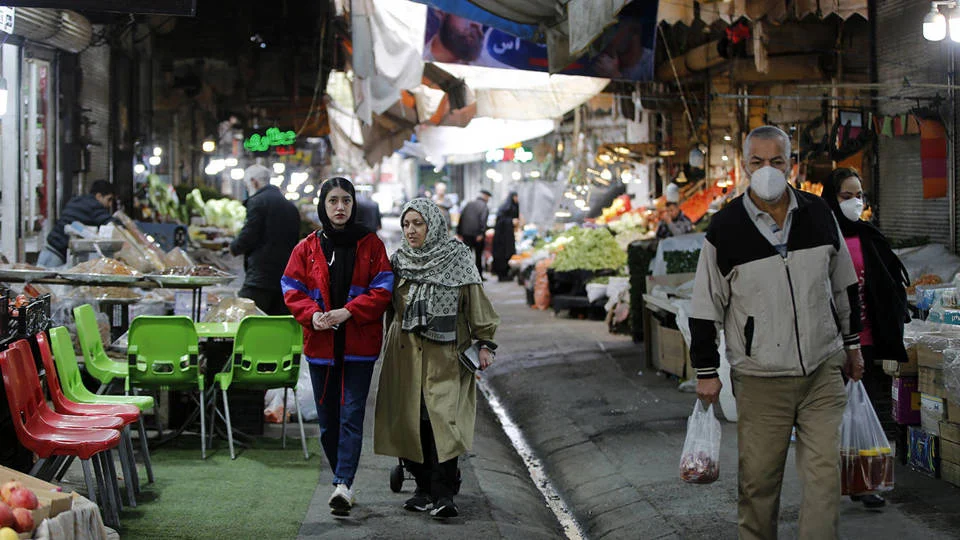
BEIRUT/LOUISVILLE – August 28, 2026 – The prevailing narrative surrounding comprehensive financial sanctions, particularly those levied against nations like Russia and Iran, often posits that the resulting popular suffering is an acceptable, even necessary, byproduct for compelling governmental change. This argument, however, faces persistent scrutiny as evidence increasingly suggests that while such measures undeniably inflict widespread hardship on civilian populations, their efficacy in translating that suffering into genuine political transformation remains demonstrably limited.
The notion that economic sanctions can be wielded as a precise tool, a "scalpel rather than a sword," to target ruling elites while ostensibly sparing ordinary citizens, has been a cornerstone of justifications for extensive economic coercion. This portrayal, exemplified by the "economic D-Day" strategy described by former US President Donald Trump in relation to Iran, presents sanctions as a refined instrument of foreign policy. Yet, the fundamental premise underpinning this assertion – that economic pain directly correlates with political capitulation – is increasingly being challenged by historical precedent and contemporary analysis.
Historical Context and the Evolving Landscape of Sanctions
The use of economic sanctions as a tool of statecraft dates back centuries, with early examples including blockades and trade embargoes. However, the post-World War II era witnessed a significant escalation in their application, particularly during the Cold War, as a non-military means of exerting pressure. The United Nations, and individual nations, have employed sanctions to address a wide array of perceived transgressions, from human rights abuses and nuclear proliferation to acts of aggression and terrorism.
The late 20th and early 21st centuries have seen a dramatic increase in the scope and complexity of sanctions regimes. Advances in financial technology and global interconnectedness have created more intricate networks for economic interaction, which in turn offer more potential leverage points for sanctioning bodies. The United States, in particular, has become a leading architect of unilateral sanctions, often leveraging its dominant position in the global financial system to enforce its objectives. Russia’s annexation of Crimea in 2014 and its subsequent full-scale invasion of Ukraine in 2022, for instance, triggered a cascade of unprecedented sanctions from a broad coalition of Western nations. Similarly, Iran has been subjected to extensive sanctions for decades, primarily related to its nuclear program and regional policies.
The Economic Impact: A Broad Brushstroke on Civilian Lives
The immediate and undeniable consequence of sweeping financial sanctions is a tangible deterioration in the economic well-being of the targeted population. This impact manifests in several key areas:
- Currency Devaluation and Inflation: Sanctions often lead to a sharp decline in the value of the target country’s currency. This makes imports prohibitively expensive, driving up the cost of essential goods such as food, medicine, and fuel. For example, following the imposition of severe sanctions on Russia after its 2022 invasion of Ukraine, the ruble experienced significant volatility, and inflation surged, impacting the purchasing power of ordinary Russians.
- Trade Disruptions and Supply Chain Collapse: Restrictions on imports and exports cripple domestic industries that rely on foreign inputs or export markets. This can lead to factory closures, job losses, and a general scarcity of goods. The Iranian economy, for instance, has faced chronic challenges in accessing vital medical supplies and spare parts due to sanctions, impacting healthcare access for its citizens.
- Reduced Foreign Investment and Capital Flight: The perceived risk associated with investing in a sanctioned country deters foreign direct investment. Existing foreign businesses may withdraw, taking their capital and expertise with them, further stagnating economic growth.
- Humanitarian Concerns: Perhaps the most devastating impact is on humanitarian access. Sanctions, even those with explicit humanitarian exemptions, can create significant bureaucratic hurdles and deter international organizations and businesses from engaging in trade that could alleviate suffering. The debate surrounding sanctions on countries like Venezuela has frequently highlighted the severe shortages of food and medicine that disproportionately affect the most vulnerable populations.
The Disconnect: Suffering vs. Political Change
Despite the profound economic distress experienced by civilian populations under sanctions, the direct correlation to meaningful political concessions from the targeted government has proven elusive. Several factors contribute to this disconnect:
- Consolidation of Power: In authoritarian or semi-authoritarian regimes, economic hardship can paradoxically strengthen the grip of the ruling elite. Governments can exploit the crisis to consolidate control over scarce resources, suppress dissent by blaming external forces for domestic woes, and foster a siege mentality that rallies nationalist sentiment. For instance, despite years of stringent sanctions, the Iranian government has largely maintained its political structure, using the external pressure to justify its domestic policies and rally hardliners.
- Resilience of State Structures: Many targeted states have developed strategies to circumvent sanctions or mitigate their impact. This can include developing parallel economies, relying on illicit trade networks, or seeking support from other nations not participating in the sanctions regime. Russia, for example, has sought to reorient its trade eastward and develop domestic alternatives for goods previously imported from the West.
- Lack of Unified Opposition: Sanctions are often intended to catalyze popular uprisings or internal dissent. However, the lack of a cohesive and organized opposition within a targeted state, coupled with government repression, can render widespread economic discontent politically ineffective. Furthermore, the suffering caused by sanctions can be so all-encompassing that it paralyzes rather than mobilizes the population.
- The "Rally Around the Flag" Effect: External pressure can sometimes backfire, leading citizens to unite behind their government in defiance of foreign interference. This phenomenon can strengthen the legitimacy of the ruling regime, even as the economy falters.
Case Studies: Russia and Iran
The experiences of Russia and Iran offer compelling, albeit complex, insights into the efficacy of modern sanctions.
Russia: Following the 2022 invasion of Ukraine, the international community imposed a comprehensive suite of sanctions on Russia, targeting its financial institutions, energy sector, technology imports, and key individuals. While these sanctions have undoubtedly inflicted significant economic pain, leading to recession, inflation, and reduced access to Western markets and technologies, they have not achieved the stated goal of forcing a withdrawal from Ukraine. Instead, Russia has sought to adapt, pivoting its energy exports to Asia and leveraging its vast natural resources to weather the storm. The political elite, while facing economic challenges, has largely maintained its control, and public sentiment, heavily influenced by state media, has shown considerable resilience.
Iran: Iran has been under various forms of international sanctions for decades. The "maximum pressure" campaign initiated by the Trump administration in 2018 aimed to cripple the Iranian economy and force concessions on its nuclear program and regional activities. While the sanctions undoubtedly caused severe economic hardship, including currency depreciation and inflation that eroded living standards, they did not lead to the collapse of the clerical regime or a fundamental shift in its foreign policy. The Iranian government, despite facing immense economic pressure, has continued to pursue its strategic objectives, albeit with greater difficulty. The humanitarian consequences, particularly concerning access to medicine, have been a recurring concern, with critics arguing that the sanctions disproportionately harmed ordinary Iranians.
Analysis and Implications
The persistent failure of sweeping financial sanctions to reliably achieve their intended political outcomes raises critical questions about their utility as a primary foreign policy tool.
- Ethical Considerations: The ethical implications of deliberately inflicting widespread suffering on civilian populations, even with the stated aim of political change, are profound. The principle of proportionality – that the harm caused should not outweigh the good achieved – is frequently invoked in debates about sanctions.
- Alternative Strategies: The limitations of sanctions necessitate a broader consideration of alternative or complementary strategies. These might include targeted diplomacy, support for civil society, information warfare, and the judicious use of limited, precisely aimed sanctions on individuals and entities directly responsible for illicit activities, rather than broad-based measures.
- The Need for Realistic Expectations: Policymakers must temper expectations regarding the direct and swift impact of sanctions on political systems. Understanding the complex internal dynamics of targeted states, their resilience mechanisms, and the potential for unintended consequences is crucial for crafting effective policy.
- The Role of International Cooperation: While unilateral sanctions can exert significant pressure, their effectiveness is often amplified when implemented through broad international coalitions. However, achieving and maintaining such unity can be challenging, as seen in the varying degrees of participation in sanctions regimes against Russia and Iran.
The Future of Financial Coercion
As the international landscape continues to evolve, the debate surrounding the efficacy and ethics of financial sanctions will undoubtedly persist. The evidence suggests that while sanctions can be a potent force for economic disruption, their ability to translate that disruption into desired political change is far from guaranteed. The narrative of sanctions as a precise instrument designed to spare civilians is often a convenient simplification, masking a reality where the brunt of economic hardship is borne by ordinary citizens, with political outcomes remaining stubbornly unpredictable. A more nuanced and evidence-based approach, acknowledging the limitations and potential for adverse consequences, is essential for developing foreign policy tools that are both effective and ethically defensible. The pursuit of political change through economic coercion requires a deeper understanding of its complexities and a commitment to exploring a wider spectrum of diplomatic and strategic options.
