

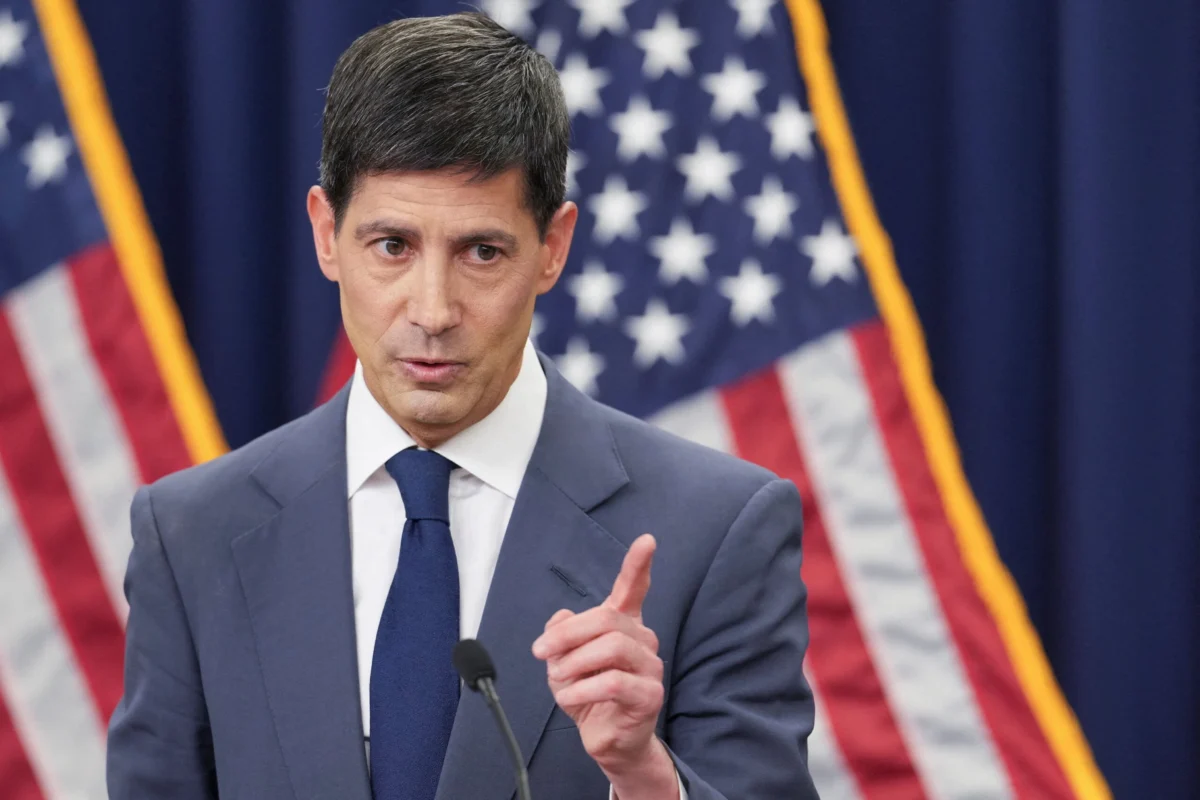
Washington D.C. – In a move that underscored a commitment to maintaining the benchmark interest rate at its current level, the Federal Reserve, under the leadership of Chairman Kevin Warsh, concluded its latest Federal Open Market Committee (FOMC) meeting on Wednesday. While the decision on rates followed closely anticipated parameters, the accompanying statements and Chairman Warsh’s subsequent press conference introduced a series of strategic nuances that have left market participants scrutinizing the future trajectory of U.S. monetary policy. The immediate market reaction was palpable, with major stock indices experiencing significant declines following the FOMC announcement and Warsh’s remarks, indicating a period of heightened uncertainty and a recalibration of investor expectations.
The Federal Reserve’s decision to hold the federal funds rate steady, a widely predicted outcome, masked a more profound undercurrent of strategic re-evaluation within the institution. This re-evaluation, highlighted by Chairman Warsh’s pronouncements, suggests a potential departure from established monetary policy frameworks. The market’s sharp response indicates that investors were not fully prepared for the depth of the impending strategic shifts, prompting a reassessment of asset valuations and future economic outlooks.
The Warsh Fed’s Strategic Pivot: Five Key Takeaways
The FOMC meeting and Chairman Warsh’s subsequent press conference offered several critical insights into the evolving thinking at the helm of the nation’s central bank. These points are likely to shape the Fed’s operational strategies and market interactions for the foreseeable future.
1. Ushering in a "New Era" of Monetary Policy:
Rick Rieder, head of fixed income at BlackRock, encapsulated the sentiment among many observers by stating, "Today we believe that the Federal Reserve’s FOMC ushered in a new era of monetary policy in the United States." This assertion points to a fundamental rethinking of the Fed’s approach, potentially driven by lessons learned from recent economic cycles and a desire to enhance the effectiveness and clarity of its policy tools. This "new era" could encompass adjustments to how the Fed communicates its intentions, manages its balance sheet, and responds to evolving economic conditions.
2. A Renewed Emphasis on Price Stability:
Krishna Guha, head of central bank strategy and economics at Evercore ISI, noted the distinct tone of the new Fed Chair. "New Fed Chair Warsh sounded a bit like old hawkish Fed governor Warsh at his press conference today repeating multiple times the need for the Fed to deliver on its mandate for price stability," Guha observed. This emphasis on price stability, a core tenet of central banking, suggests a potential shift in the Fed’s tolerance for inflation or a recalibration of its dual mandate. In an environment where inflation has been a persistent concern in various economies, a strong commitment to price stability from the Fed could influence global inflationary trends and central bank policies worldwide.
3. Active Review and Anticipated Framework Changes:
Jason Pride, chief of investment strategy at Glenmede, highlighted the institutional introspection underway. "The [task force] announcements signal an institution in active review rather than steady state, and investors should expect the operating framework of the Fed to look meaningfully different over Warsh’s tenure than it did under his predecessor," Pride stated. This indicates that the Fed is not merely making incremental adjustments but is actively examining its foundational operating principles. Such a review could lead to significant changes in how the Fed conducts open market operations, manages its reserve levels, and sets forward guidance, all of which have profound implications for financial markets and the broader economy.
4. The "Reformer" Image and Increased Fed Watching Complexity:

Dario Perkins, managing director of global macro at TS Lombard, offered a forward-looking perspective on Chairman Warsh’s strategic positioning. "Warsh wants his first impression to be as ‘the reformer.’ We’ll see what that means later this year. In terms of the policy outlook, Fed watching just got harder," Perkins commented. This suggests that Chairman Warsh is intent on making his mark by enacting significant reforms, potentially aiming to modernize the Fed’s approach to monetary policy in response to the complexities of the 21st-century economy. The increased difficulty in "Fed watching" implies that the Fed’s actions and communications may become less predictable, demanding greater analytical effort from market participants.
5. The Unchanged Benchmark Rate:
The most immediate and tangible outcome of the FOMC meeting was the decision to maintain the federal funds rate within its existing target range. This decision, while expected, serves as a backdrop against which the Fed’s broader strategic discussions are unfolding. The continued stability in the benchmark rate suggests that the Fed believes current economic conditions, while evolving, do not yet warrant an immediate adjustment to the cost of borrowing. However, the emphasis on future policy shifts implies that this period of stability may be a prelude to more decisive action later on.
Background and Context: The Evolving Economic Landscape
The Federal Reserve’s policy decisions are always made within the context of the prevailing economic conditions. In recent years, central banks globally have grappled with a confluence of factors, including persistent inflation, supply chain disruptions, geopolitical tensions, and the lingering effects of the COVID-19 pandemic. These forces have created a complex and often unpredictable economic environment, prompting a re-evaluation of traditional monetary policy tools and strategies.
The appointment of Chairman Kevin Warsh marked a significant transition for the Federal Reserve. His tenure began with an implicit mandate to navigate these complex challenges and potentially to modernize the Fed’s operational framework. The FOMC’s recent meeting and the subsequent pronouncements from Chairman Warsh signal a proactive approach to addressing these evolving economic realities, rather than a passive response.
Historically, the Federal Reserve has adjusted interest rates as a primary tool to manage inflation and promote economic growth. However, the effectiveness of these tools in the face of unprecedented global economic shocks has been a subject of intense debate. The Fed’s balance sheet policies, forward guidance, and other unconventional measures have become increasingly important components of its monetary policy toolkit. Chairman Warsh’s emphasis on a "new era" suggests that the Fed may be exploring new ways to leverage these tools and perhaps even developing entirely new ones to effectively guide the economy.
Chronology of Key Events
- Pre-FOMC Meeting Preparations: Leading up to the FOMC meeting, economists and market analysts engaged in extensive speculation regarding the Fed’s potential policy path. Data releases on inflation, employment, and economic growth were closely scrutinized for any clues about the committee’s thinking.
- FOMC Meeting Concludes (Wednesday): The Federal Open Market Committee (FOMC) convened to discuss monetary policy. The primary outcome was the decision to keep the federal funds rate unchanged.
- Chairman Warsh’s Press Conference: Following the FOMC statement, Chairman Kevin Warsh held a press conference to elaborate on the committee’s decision and provide insights into the Fed’s future policy direction. This is where many of the strategic nuances and forward-looking statements emerged.
- Market Reaction: Immediately following the FOMC announcement and Chairman Warsh’s press conference, financial markets reacted with significant volatility. Major stock indices experienced sharp declines, reflecting investor uncertainty and a reassessment of risk premiums.
- Expert Analysis and Commentary: Following the events, financial analysts, economists, and strategists from various institutions began releasing their interpretations and analyses of the Fed’s actions and statements, as evidenced by the quotes provided.
Supporting Data and Economic Indicators
While the article does not provide specific data points, the Federal Reserve’s decisions are invariably informed by a broad array of economic indicators. These typically include:
- Inflation Data: Consumer Price Index (CPI) and Personal Consumption Expenditures (PCE) price index figures are crucial for assessing inflationary pressures. Recent data has shown a persistent challenge in bringing inflation back to the Fed’s target.
- Employment Statistics: Nonfarm payroll growth, unemployment rates, and wage growth provide insights into the health of the labor market, a key component of the Fed’s dual mandate.
- Gross Domestic Product (GDP) Growth: Quarterly GDP figures offer a broad measure of economic activity and growth trends.
- Consumer Spending and Confidence: Retail sales data and consumer confidence surveys indicate the strength of domestic demand.
- Manufacturing and Services Sector Data: Purchasing Managers’ Indexes (PMIs) for both manufacturing and services sectors offer a snapshot of business activity and sentiment.
- Housing Market Indicators: Housing starts, existing home sales, and home price indices provide insights into a significant sector of the economy.
The Fed’s decision to hold rates steady suggests that, on balance, these indicators point to an economy that is neither overheating to the point of requiring immediate tightening nor weakening to the extent that a rate cut is warranted. However, the forward-looking statements indicate that the Fed is preparing for potential future shifts based on how these indicators evolve.
Official Responses and Broader Implications
The Federal Reserve, as the U.S. central bank, operates with a significant degree of independence, but its decisions have far-reaching implications for domestic and international economies, as well as for financial markets.
- Domestic Economic Impact: Holding interest rates steady can provide a degree of stability for businesses and consumers, particularly for those with variable-rate debt. However, if inflation remains elevated, this could erode purchasing power over time. The prospect of future policy shifts creates uncertainty, which can temper investment and consumer spending.
- Global Financial Markets: U.S. monetary policy has a profound impact on global capital flows, exchange rates, and asset prices. A signal of potential future tightening or a change in policy framework from the Fed can trigger significant movements in international markets. Emerging market economies, in particular, are sensitive to shifts in U.S. monetary policy due to their reliance on foreign investment.
- Investor Behavior: The market’s swoon following the FOMC meeting suggests that investors are recalibrating their portfolios and expectations. The increased complexity of "Fed watching" means that investors will need to devote more resources to understanding the Fed’s evolving strategies and potential policy responses. This could lead to a period of heightened volatility as markets attempt to decipher the Fed’s new direction.
- Other Central Banks: The Federal Reserve’s policy actions often influence the decisions of other central banks around the world. If the Fed signals a more hawkish stance or a significant shift in its operational framework, other central banks may feel pressure to adjust their own policies accordingly to manage their respective economies and currency values.
The Path Forward: A Period of Strategic Refinement
The Federal Reserve under Chairman Warsh appears to be embarking on a period of significant strategic refinement. The decision to hold interest rates steady at this juncture, while maintaining a focus on price stability and signaling a willingness to explore new policy frameworks, creates a complex environment for market participants. The coming months will be crucial in observing how these announced intentions translate into concrete policy actions and how the Fed’s "new era" of monetary policy unfolds. Investors and policymakers alike will be watching closely for further clarity on the Fed’s evolving approach to managing the U.S. economy in an increasingly dynamic global landscape. The emphasis on being a "reformer" suggests that the Fed is not content with the status quo and is actively seeking to enhance its effectiveness in achieving its mandated goals.
