

European businesses are voicing a clear and urgent demand for a revitalized economic landscape, characterized by simplified regulations, accelerated permitting processes, accessible and affordable energy, robust infrastructure, and a truly seamless single market. The persistent failure of European policymakers to decisively address these critical areas is steadily eroding the continent’s global standing, presenting a formidable and escalating competitiveness challenge.
The Copenhagen Competitiveness Summit: A Crucial Dialogue
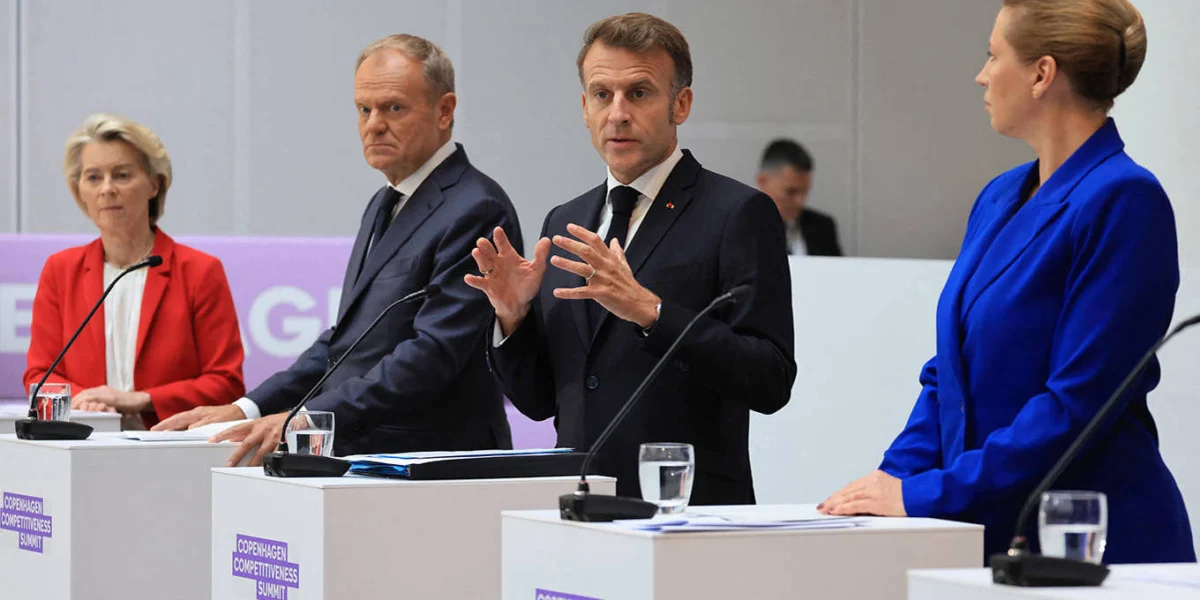
The urgency of this situation was underscored last October at the Copenhagen Competitiveness Summit. French President Emmanuel Macron, alongside European Commission President Ursula von der Leyen, Polish Prime Minister Donald Tusk, Danish Prime Minister Mette Frederiksen, and a delegation of executives representing 28 of Europe’s leading corporations, convened in the Danish capital. The summit’s objective was singularly focused: to engage in a candid discussion about the strategies necessary for Europe to maintain and enhance its competitive edge in a global economy marked by intensifying rivalry.
This high-profile gathering, held on October 17, 2025, served as a critical platform for bridging the gap between policy aspirations and the practical realities faced by European enterprises. The presence of both heads of state and industry leaders signaled a recognition at the highest levels of the European Union that immediate and concerted action was required to safeguard the continent’s economic future. The summit aimed to move beyond theoretical discussions and towards actionable policy recommendations that could translate into tangible improvements for businesses operating within the European Union.
Underlying Economic Pressures and Business Concerns
The calls for reform stem from a complex interplay of global economic shifts and domestic policy challenges. European businesses have consistently pointed to a labyrinthine regulatory environment that often stifles innovation and slows down crucial investments. The disparity in permitting times across member states, for instance, creates significant delays for new projects, from renewable energy installations to critical infrastructure upgrades. This bureaucratic inertia not only increases project costs but also makes Europe a less attractive destination for both domestic and international investment compared to regions with more streamlined processes.
Furthermore, the issue of affordable and reliable energy remains a persistent concern. While the European Union has made significant strides in its transition to renewable energy sources, the cost of this transition, coupled with geopolitical volatilities affecting traditional energy supplies, has led to elevated energy prices for businesses. This directly impacts their operational costs, reducing their ability to compete on price in global markets. The need for a secure, diverse, and cost-effective energy mix is paramount for sustaining industrial competitiveness.
Infrastructure development, while ongoing, is often perceived as lagging behind the demands of a modern digital and green economy. Investments in high-speed digital networks, advanced transportation links, and resilient energy grids are crucial for facilitating trade, fostering innovation, and attracting talent. The fragmented nature of infrastructure development across member states, however, can lead to inefficiencies and a lack of cohesive strategic planning, further exacerbating the competitiveness gap.
The Imperative of a Fully Functioning Single Market
Perhaps the most fundamental demand articulated by European businesses is for a truly integrated and fully functioning single market. While the concept of the single market has been a cornerstone of European integration for decades, its full potential remains unrealized. Barriers, both overt and subtle, continue to hinder the free movement of goods, services, capital, and labor across member states. These barriers can manifest as differing national standards, complex cross-border tax regimes, and protectionist tendencies that favor domestic players.
The Copenhagen summit served as a stark reminder that without addressing these systemic issues, the vision of a powerful and unified European economic bloc will remain an aspiration rather than a reality. The executives present represented a cross-section of critical industries, from manufacturing and technology to finance and energy, all of whom share a common interest in a more fluid and integrated European economic space. Their collective voice amplified the long-standing grievances of the business community regarding the fragmented nature of the European market.
A Timeline of Growing Concerns
The issues raised at the Copenhagen summit are not new; they represent a culmination of years of observation and growing frustration within the European business community.
- Early 2010s: Initial discussions around increasing regulatory burdens and the perceived slowdown in permitting processes begin to gain traction.
- Mid-2010s: The increasing volatility in global energy markets and rising costs begin to impact European industrial competitiveness more acutely.
- Late 2010s: Concerns about aging infrastructure and the need for significant digital and green investment become more prominent.
- Early 2020s: The COVID-19 pandemic and subsequent geopolitical events, including the war in Ukraine, highlight vulnerabilities in supply chains and energy security, further intensifying the focus on competitiveness.
- 2023-2024: A series of reports from business associations and economic think tanks underscore the widening gap between Europe and its global competitors, particularly in areas of innovation and manufacturing. This period sees a crescendo of calls for policy reform from various industry sectors.
- October 2025: The Copenhagen Competitiveness Summit is convened, bringing together key political leaders and business executives to directly address these pressing concerns.
The summit, therefore, was not an isolated event but rather a focal point for articulating long-standing anxieties and seeking concrete policy commitments. The date of the summit, October 17, 2025, is now etched as a significant marker in the ongoing debate about Europe’s economic future.
Supporting Data and Evidence
The urgency of the calls for reform is substantiated by various economic indicators. For instance, data from the European Commission has frequently highlighted the significant disparities in the time taken to obtain permits for renewable energy projects across member states. In some countries, these processes can take several years, while in others, they are completed within months. This inconsistency creates a significant drag on the EU’s green transition goals and its ability to attract investment in clean energy technologies.
Productivity growth in the EU has also been a subject of concern. While not solely attributable to regulatory issues, studies by organizations like the OECD have indicated that factors such as an aging workforce, insufficient investment in research and development, and an inefficient regulatory environment can all contribute to slower productivity gains compared to international peers. For example, between 2010 and 2020, average annual labor productivity growth in the EU lagged behind that of the United States and several Asian economies.
Furthermore, the cost of doing business in Europe, particularly regarding energy, has been a recurring theme. Data from Eurostat has consistently shown higher industrial electricity prices in many EU member states compared to the US and some Asian competitors, directly impacting the cost-competitiveness of European manufacturers. The price of natural gas, a key input for many industries, has also seen significant fluctuations, adding to the uncertainty and cost pressures.
The performance of the EU’s single market in facilitating cross-border trade and investment also presents areas for improvement. Despite the existence of the single market, internal trade barriers persist, estimated by various studies to cost the EU economy billions of euros annually in lost potential. The complexity of VAT regimes, differing national standards for products and services, and restrictions on public procurement opportunities for foreign EU companies all contribute to these inefficiencies.
Reactions and Inferred Statements from Related Parties
While direct transcripts of all private discussions at the Copenhagen summit are not publicly available, the statements made by participating leaders and executives, as well as subsequent policy pronouncements, offer insight into the tenor of the discussions.
President Macron, known for his reformist agenda, has consistently advocated for greater European economic sovereignty and has been a vocal proponent of simplifying regulations and boosting investment in strategic sectors. His presence in Copenhagen alongside other leaders likely signaled a united front in pushing for these reforms.
European Commission President von der Leyen has repeatedly emphasized the need for the EU to become more competitive and resilient. Her office has been instrumental in proposing legislative initiatives aimed at streamlining processes and strengthening the single market. It can be inferred that the summit provided her with direct feedback from industry leaders, reinforcing the Commission’s policy priorities.
The business executives present, representing diverse sectors, would have undoubtedly brought specific examples of the challenges they face. For instance, a representative from the energy sector might have highlighted the complexities of obtaining permits for new renewable energy infrastructure, while a manufacturing executive could have focused on the impact of high energy costs and regulatory hurdles on their global pricing strategies. The consensus among these leaders would have been a clear call for tangible policy shifts.
Danish Prime Minister Frederiksen, hosting the event, would have underscored Denmark’s commitment to fostering a competitive business environment and its proactive approach to renewable energy and green transition. Her role would have been to facilitate a constructive dialogue and ensure that the summit’s outcomes translated into concrete actions.
Broader Impact and Implications
The failure to address the core issues of regulatory simplification, faster permitting, affordable energy, robust infrastructure, and a fully functioning single market carries significant implications for Europe’s future.
Firstly, eroded economic growth and job creation: Continued competitiveness challenges can lead to slower economic growth, reduced investment, and consequently, fewer job opportunities for European citizens. Industries that are unable to compete globally may scale back operations or relocate, leading to job losses and a decline in regional economic vitality.
Secondly, diminished innovation and technological leadership: A complex and inefficient business environment can stifle innovation. Start-ups and established companies alike may find it harder to bring new products and services to market, potentially ceding technological leadership to competitors in other regions. This could impact Europe’s ability to address future challenges, from climate change to healthcare.
Thirdly, reduced geopolitical influence: Economic strength is intrinsically linked to geopolitical influence. A Europe that is less competitive may find its voice diminished on the global stage, with its ability to shape international norms and policies curtailed. This could lead to a greater reliance on other global powers and a reduced capacity to act autonomously.
Fourthly, a less attractive investment destination: If Europe continues to be perceived as a difficult place to do business, it risks losing out on crucial foreign direct investment. This could hinder its ability to fund new ventures, create jobs, and upgrade its industrial base.
The Copenhagen Competitiveness Summit served as a critical juncture, bringing together key stakeholders to acknowledge these challenges and, hopefully, to galvanize the political will necessary for meaningful reform. The coming years will be decisive in determining whether Europe can translate these urgent calls into tangible policy actions that will secure its economic prosperity and global standing. The business community has clearly articulated its needs; the onus is now on policymakers to deliver.
