

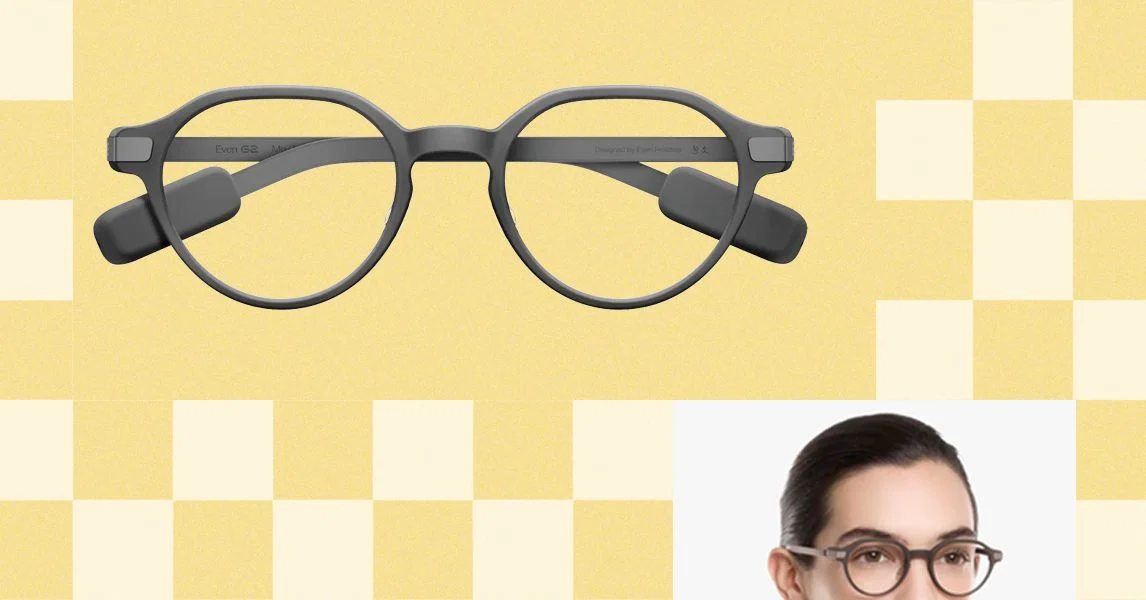
The landscape of assistive technology is undergoing a radical transformation as augmented reality (AR) moves beyond gaming and industrial applications into the realm of personal accessibility. For the millions of individuals globally living with hearing impairments or language barriers, a new generation of captioning smart glasses promises to bridge the communication gap by providing real-time, heads-up transcriptions of spoken dialogue. Recent industry evaluations of the leading hardware in this sector—including the Even G2, Leion Hey 2, XRAI AR2, AirCaps, and Captify Pro—reveal a market defined by rapid innovation, complex subscription models, and a significant divide between hardware capabilities and software execution.
In the current market, the Even G2 has emerged as a notable disruptor by challenging the prevailing trend of "software-as-a-service" in wearable hardware. Unlike its primary competitors, the Even G2 is sold as a comprehensive package with no mandatory subscription plan, providing all features "out of the box." While technical assessments note that the G2 is largely devoid of offline features—requiring a constant internet connection to maintain functionality—the trade-off is often viewed as acceptable given the device’s balance of power and affordability. This positioning places the Even G2 at the forefront of a movement toward consumer-friendly accessibility tools that avoid the recurring costs typically associated with high-end AR transcription.
The Technological Context of AR Captioning
The rise of captioning glasses coincides with a broader shift in the World Health Organization’s (WHO) data regarding global hearing health. With approximately 1.5 billion people worldwide experiencing some degree of hearing loss, a figure projected to rise to 2.5 billion by 2050, the demand for discreet, effective communication aids has never been higher. Traditional hearing aids and cochlear implants, while effective for many, do not always provide the clarity needed in noisy environments or for complex linguistic translations.
AR captioning glasses address this by utilizing micro-OLED displays and waveguide optics to project text onto the user’s field of vision. This allows the wearer to maintain eye contact and observe non-verbal cues during a conversation, a critical component of human interaction that is lost when looking down at a smartphone for transcriptions. However, as the following analysis of current hardware suggests, the industry is still grappling with the physical constraints of battery life, weight, and the economic sustainability of the AI engines that power these devices.
Hardware Commonalities: The Leion and XRAI Partnership
A significant trend in the AR sector is the utilization of shared hardware platforms, as evidenced by the Leion Hey 2 and the XRAI AR2. Both devices utilize the same manufacturer for their frames, resulting in identical physical specifications. Both sets of glasses weigh approximately 50 grams without lenses and 60 grams with prescription inserts. This weight is a critical factor for long-term wearability, as traditional eyeglasses typically weigh between 20 and 30 grams.
The Leion Hey 2 has positioned itself as the price leader in the current market. Its software interface is designed for versatility, offering four distinct modes: captioning, translation, "free talk" (facilitating two-way translation), and a teleprompter feature. The device supports nine languages for free, with the option to expand to 143 languages through a "Pro" plan. Notably, Leion utilizes a pay-per-minute model rather than a monthly subscription, with pricing tiers such as $10 for 120 minutes or $200 for 6,000 minutes. While the app is praised for its cleanliness and utility, technical evaluations have noted inconsistencies in AI-generated summaries, which occasionally default to Chinese regardless of the input language.
Conversely, the XRAI AR2, while sharing the same chassis, offers a different software experience. XRAI claims its display is significantly brighter than its competitors, though real-world testing suggests this difference is negligible in daily use. The XRAI app provides an exhaustive 300 language options, though only 20 are included in the base package. To access the full suite of features, users must subscribe to Pro plans ranging from $20 to $40 per month. Unlike Leion, XRAI includes a rudimentary offline mode, providing a layer of utility in environments with poor connectivity, though it lacks the teleprompter and AI summary features found in the Leion ecosystem.
Weight and Power: The AirCaps Dilemma
AirCaps represents a different architectural philosophy, prioritizing a simplified user interface at the cost of physical comfort. The AirCaps frames are the heaviest in the tested category, weighing 53 grams before the addition of lenses. The device’s battery life is also among the shortest, providing only two to four hours of operation on a single charge. To combat this, the company offers "Power Capsules"—13-gram rechargeable units that clip onto the arms of the glasses to provide an additional 12 to 18 hours of power.
The AirCaps interface is centered around a single-button operation, making it highly accessible for users who prefer a streamlined experience. While it offers free transcription and translation in nine languages, its Pro package ($20/month) unlocks 60+ languages and AI-on-demand summaries. One significant hurdle for AirCaps is its lack of integrated prescription lens services. Users must purchase $39 lens holders and coordinate with an independent optician for custom inserts. This additional step, combined with the bulk of the frames, has led many testers to conclude that while the software and offline modes are robust, the hardware is not yet optimized for extended daily use.
The Premium Tier: Captify Pro
At the highest end of the price spectrum sits the Captify Pro, which can cost up to $1,399 when outfitted with prescription lenses. The Captify Pro is the lightest of the high-performance models, weighing 40 grams (52 grams with lenses). However, this reduced weight comes at a functional cost: the device lacks a charging case, requiring users to charge the frames directly via a USB dongle.
While Captify Pro supports approximately 80 languages and offers offline transcription, its performance varies significantly. Technical reviews have highlighted that offline accuracy suffers compared to cloud-based processing, and translation features often fail entirely without an internet connection. Furthermore, the quality of the prescription optics has been a point of contention, with some users reporting blurriness that impedes the readability of the captions. For a $15 monthly subscription, users gain access to enhanced accuracy, speaker differentiation, and AI-generated summaries, yet the high entry price remains a significant barrier for many potential adopters.
Comparative Analysis and Market Implications
The divergence in pricing and feature sets across these five models highlights the "early adopter" phase of the AR captioning market. The industry is currently divided into three distinct approaches:
- The All-In Model (Even G2): Prioritizes a one-time purchase price and simplicity, betting that users will trade offline functionality for the absence of a subscription.
- The Modular Hardware Model (Leion/XRAI): Leverages shared manufacturing to reduce costs while competing on software features and linguistic diversity.
- The Specialized/Premium Model (AirCaps/Captify): Targets specific niches, such as those requiring maximum battery life (via external modules) or the lightest possible frame weight, despite higher costs or bulk.
The transition toward subscription-based models (XRAI, AirCaps, Captify) reflects the high ongoing costs of the Large Language Models (LLMs) and Speech-to-Text (STT) engines required for accurate real-time transcription. As AI processing becomes more efficient, the industry may see a shift back toward on-device processing, which would improve privacy and enable more robust offline functionality.
Chronology of Development
The journey toward viable captioning glasses has been a decade in the making.
- 2013-2015: The launch of Google Glass introduced the concept of heads-up displays but failed to find a foothold due to privacy concerns and limited use cases.
- 2018-2021: Specialized startups began focusing on "subtitles for the real world," utilizing tethered connections to smartphones to handle processing.
- 2022-2023: The integration of advanced AI (such as OpenAI’s Whisper) revolutionized transcription accuracy, allowing for the development of the current generation of glasses.
- 2024: The market has matured into a competitive landscape where battery density and weight are the primary engineering hurdles remaining.
Broader Impact and Future Outlook
The implications of this technology extend far beyond personal use. In a professional setting, AR captioning glasses can empower employees with hearing loss to participate fully in meetings without the need for a dedicated human transcriber. In education, they provide a vital tool for students who are deaf or hard of hearing to follow lectures in real-time.
However, for these devices to achieve mainstream adoption, manufacturers must address the "social friction" of wearing bulky, tech-heavy eyewear. The current weight of 50-60 grams remains a significant impediment to all-day comfort. Furthermore, the reliance on cloud-based AI raises important questions regarding data privacy and the security of recorded conversations.
As the market continues to evolve, the success of these devices will likely depend on their ability to blend seamlessly into the user’s life—both physically and financially. The Even G2’s refusal to adopt a subscription model may force other manufacturers to reconsider their pricing structures, while the hardware innovations seen in the Leion and XRAI partnership suggest that economies of scale will eventually bring the cost of these life-changing tools within reach of a broader population. For now, the "best" device remains a subjective choice based on the user’s specific needs for language support, offline reliability, and physical comfort.
