

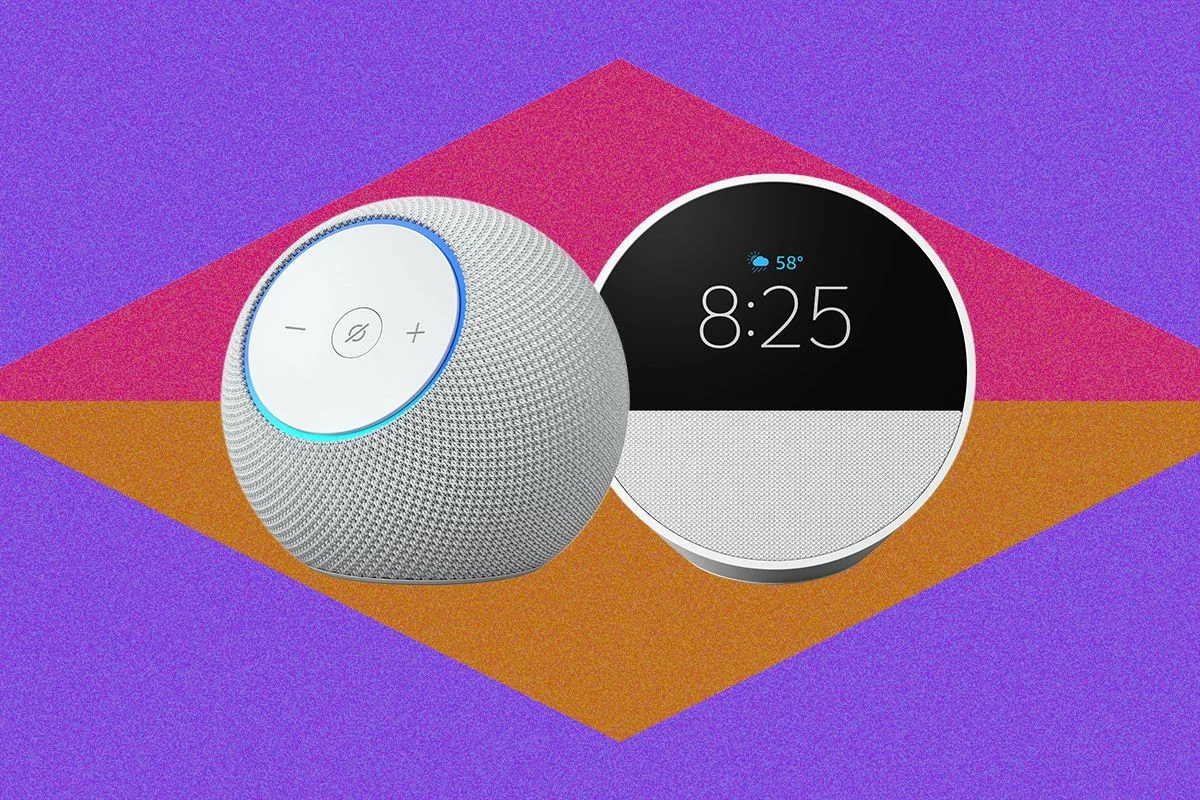
Amazon’s smart home division is currently undergoing its most significant transformation since the original Echo launched a decade ago, characterized by a dual strategy of hardware refinement and a fundamental shift in its economic and technological model. This evolution is marked by the introduction of generative AI-powered services, a series of price increases across the Echo lineup, and a controversial change in privacy policies regarding how voice data is processed. As the company seeks to turn its ubiquitous voice assistant into a profitable venture, consumers are faced with a diverse but increasingly expensive array of devices, ranging from audiophile-grade speakers to specialized bedside companions.
The High-Fidelity Frontier: Echo Studio and Premium Sound
At the pinnacle of Amazon’s current audio offerings sits the second-generation Echo Studio. Positioned as the company’s primary answer to high-end competitors like the Apple HomePod and the Sonos Era 300, the Studio remains the gold standard for sound quality within the Alexa ecosystem. Despite its footprint being comparable to the Echo (4th Gen), its internal architecture is significantly more robust, featuring three 1.5-inch mid-range speakers and a 3.75-inch woofer.
Technical testing reveals that the Echo Studio is capable of filling large, open-concept spaces without reaching peak volume, maintaining clarity across diverse genres. In comparative benchmarks, the device often outperforms the Apple HomePod in sheer output and bass response, while remaining a more cost-effective option even after recent market adjustments. Beyond audio, the Studio serves as a sophisticated smart home hub, supporting Zigbee and Matter protocols, and offering spatial audio and Dolby Atmos processing. It is also among the first devices designated for early access to Alexa+, Amazon’s next-generation AI assistant.
Specialization in the Home: Bedside and Child-Centric Models
Amazon has moved away from a "one-size-fits-all" approach, instead developing hardware tailored for specific rooms and demographics. The 2024 revival of the Echo Spot (2nd Gen) exemplifies this trend. Discontinued for several years, the new Spot has been redesigned as a dedicated bedside companion. It eschews the intrusive cameras and constant video carousels of the Echo Show series in favor of a minimalist semi-circular screen focused on time, weather, and alarm management.
A critical feature of the new Spot is its adaptive display, which dims to a non-disruptive red hue in dark environments, addressing a common complaint regarding light pollution in bedrooms. While its audio capabilities are modest compared to the Echo Studio, it is optimized for casual listening and vocal clarity.
For younger users, the Echo Dot Kids (5th Gen) continues to dominate the market. This model is essentially an Echo Dot housed in child-friendly aesthetic designs, such as owls or dragons, but with a significantly different software layer. The device includes a one-year subscription to Amazon Kids+, providing access to thousands of Audible books and educational games. Crucially, it features robust parental controls that allow for the filtering of explicit content, time limits, and activity monitoring. Following the initial year, the service transitions to a $3 monthly fee, reflecting Amazon’s broader push toward subscription-based revenue.
The Smart Display Spectrum: From Echo Show 5 to Echo Show 21
The Echo Show lineup remains the most complex segment of Amazon’s hardware portfolio, spanning from the compact Echo Show 5 to the massive Echo Show 21. Recent evaluations suggest a diverging level of utility across these models. The Echo Show 5 (3rd Gen), despite its affordability, is often criticized for a screen too small for meaningful content consumption and the presence of a camera that makes it less desirable for private spaces like bedrooms.
In contrast, the larger format displays, specifically the Echo Show 15 and the newly introduced Echo Show 21, are being positioned as central household command centers. These devices are designed for wall mounting and feature expansive widget galleries for family calendars, shopping lists, and smart home controls. While Amazon has attempted to market these as secondary televisions by integrating Fire TV software, performance in this area remains inconsistent. The Echo Show 21, however, offers a notable upgrade in audio quality over the Show 15, justifying its higher price point for users intending to use it as a primary kitchen media hub.
A specialized addition to this category is the Echo Hub. Unlike the Show series, the Hub is a thin, tablet-like device focused exclusively on smart home management. It lacks high-quality speakers for music but serves as a dedicated interface for controlling lights, locks, and cameras, making it an ideal companion for homes already saturated with high-quality audio hardware.

Strategic Price Increases: The Economic Reality of 2024-2025
In late 2024, Amazon implemented a sweeping price hike across its hardware divisions, affecting not only Echo speakers but also Kindle e-readers, Fire TV sticks, and Eero routers. Price increases ranged from $20 for entry-level devices to $100 for premium smart displays.
Amazon’s official stance, articulated by a company spokesperson, attributes these changes to rising costs in storage and memory components, alongside general inflationary pressures in the semiconductor supply chain. However, industry analysts suggest this move is part of a broader corporate mandate to improve the "Echo-nomics" of the hardware division, which has historically operated at a loss to facilitate data collection and ecosystem lock-in. The price hikes have altered the consumer landscape, making traditional sales events like Prime Day and Black Friday even more critical for price-sensitive buyers.
The Alexa+ Revolution and the End of Local Processing
The most significant technological shift in the ecosystem is the transition to Alexa+, a generative AI version of the assistant built on large language models (LLMs). Alexa+ offers a more conversational experience, capable of handling complex, multi-part requests without the need for repetitive wake words.
This advancement comes with two major caveats:
- Subscription Model: Following a 30-day trial, Alexa+ requires a $20 monthly subscription, though it is bundled with Amazon Prime memberships to incentivize retention.
- Privacy Paradigm Shift: To facilitate the processing power required for generative AI, Amazon has discontinued the "Do Not Send Voice Recordings" privacy feature as of March 28, 2025. Previously, users could opt for local processing of certain commands. Now, all voice interactions are transmitted to Amazon’s cloud servers for processing. This change applies even to users who do not opt-in to the Alexa+ tier, marking a significant departure from previous privacy-centric marketing.
Third-Party Integration: The Role of JBL and Sonos
Recognizing that some consumers prefer specialized audio engineering, Amazon continues to support Alexa integration in third-party speakers. The JBL Authentics 200 has emerged as a unique offering, as it supports both Amazon Alexa and Google Assistant simultaneously—a rarity in a market often defined by "walled gardens." This allows households with mixed ecosystems to use either assistant without reconfiguring settings.
Similarly, the Sonos Era 100 remains a top choice for users who prioritize multi-room audio synchronization and premium acoustics over Amazon’s native hardware. However, the reliance on the Sonos app, which has faced its own stability challenges in recent updates, remains a point of consideration for potential buyers.
Timeline of Key Developments
- September 2024: Amazon announces price increases across the Echo, Kindle, and Fire TV lines.
- Late 2024: Launch of the Echo Show 21 and the second-generation Echo Show 15.
- Early 2025: Wide rollout of Alexa+ generative AI features.
- March 28, 2025: Official discontinuation of local voice processing; all recordings mandated for cloud transmission.
Broader Impact and Market Implications
Amazon’s hardware strategy reflects a broader trend in the tech industry: the transition from selling hardware at a loss to a "hardware-as-a-service" model. By increasing device prices and introducing subscription tiers for AI features, Amazon is testing the ceiling of consumer loyalty.
The removal of local processing options represents a calculated risk regarding user privacy. While the improved capabilities of Alexa+ may satisfy users seeking a more capable digital assistant, the requirement for constant cloud connectivity may alienate privacy-conscious demographics. Furthermore, as Apple and Google continue to refine their own AI integrations (Siri with Apple Intelligence and Google Assistant with Gemini), Amazon’s aggressive move toward a paid AI model will determine whether Alexa remains the dominant force in the smart home or becomes a premium niche service.
For the average consumer, the choice of an Alexa speaker is no longer just about audio quality or screen size; it is an entry into an evolving ecosystem that increasingly demands a recurring financial and data-driven commitment. As the hardware matures, the value proposition has shifted from the novelty of voice control to the utility of a truly intelligent, albeit more expensive, home assistant.
