

In October 2025, the Canadian mineral exploration firm PTX Metals successfully closed a private placement, raising $2.25 million through a specialized financial instrument known as "charity flow-through" shares. While this method of financing has become a cornerstone for junior mining companies seeking to fund high-risk exploration, the transaction has reignited a fierce debate over the intersection of Canadian tax policy, philanthropic ethics, and Indigenous sovereignty. The financing comes at a critical juncture for PTX Metals as it seeks to advance its flagship W2 property in the "Ring of Fire" region of Northern Ontario, a move that is being met with direct opposition from the Neskantaga and Nibinamik First Nations.
The use of charity flow-through shares represents a sophisticated intersection of the Canadian tax code and the mining sector’s capital needs. Under this arrangement, an exploration company issues shares at a premium to the market price. This premium reflects the value of tax deductions that the company, which often has no immediate income to offset, agrees to "flow through" to the investor. In the specific "charity" iteration of this model, a donor purchases these shares and immediately gifts them to a registered charity. The charity then sells the shares to a pre-arranged "end buyer"—usually an institutional investor or a company insider—at a significant discount. The result is a multi-layered benefit: the mining company receives exploration capital, the charity receives a substantial cash donation, the end buyer acquires shares at a discount, and the original donor utilizes a combination of the Charitable Donation Tax Credit and the Critical Mineral Exploration Tax Credit (CMETC) to nearly eliminate the out-of-pocket cost of their philanthropy.
The Financial Mechanics of the PTX Placement
To understand the scale of the subsidies involved, one must look at the specific figures associated with the PTX Metals placement. By converting income into capital gains and leveraging specialized tax credits, philanthropists who participated in the $2.25 million raise saved an estimated $2.22 million in taxes. This effectively reduced the private cost of a multi-million-dollar donation to less than $30,000. For PTX Metals, the mechanism allowed the company to raise approximately 75% more capital than would have been possible through traditional equity markets.
The Critical Mineral Exploration Tax Credit, introduced by the federal government to bolster the supply chain for the "green transition," provides a 30% non-refundable tax credit for expenditures on specific minerals like nickel, copper, and lithium—all of which are believed to be present at the W2 site. When combined with provincial credits and the standard charitable deduction, the effective subsidy rate often exceeds 90% of the initial investment. While proponents argue this is a vital tool for national resource security and economic development, critics contend it creates a "conflict-industrial complex" where public funds are used to bypass the necessity of obtaining social license from affected communities.
A History of Conflict: From Platinex to PTX Metals
The controversy surrounding PTX Metals is deeply rooted in its corporate history. Before rebranding in 2024, the company operated as Platinex Inc., a name that remains synonymous with one of the most significant legal battles in the history of Ontario mining. In 2008, the company was at the center of a standoff with the Kitchenuhmaykoosib Inninuwug (KI) First Nation. Despite a moratorium on mining declared by the KI community, the company attempted to proceed with exploratory drilling, eventually leading to a court injunction against the First Nation’s leadership.
The resulting legal battle saw six KI leaders, known as the "KI-6," sentenced to six months in jail for civil contempt after they refused to allow the company access to their traditional lands. The incarceration sparked international outrage and became a catalyst for reforms in the Ontario Mining Act. Eventually, the sentence was overturned on appeal, and in 2009, the Ontario government paid Platinex $5 million to settle the dispute and surrender its claims. The province subsequently withdrew over 23,000 square kilometers of the KI homeland from further mineral staking.
The rebranding to PTX Metals was intended to signal a shift toward critical minerals, yet the company’s operational strategy remains strikingly similar to its past. The current focus on the W2 property in the Ring of Fire—a region of immense ecological sensitivity and cultural importance—has placed the company back on a collision course with Indigenous governments that assert their inherent jurisdiction over the land.
Chronology of the Current Standoff
The timeline of the recent escalation underscores the persistent nature of the jurisdictional dispute:
- December 2024: The Ontario government grants PTX Metals exploration permits for the W2 property, despite formal objections from the Neskantaga and Nibinamik First Nations.
- October 2025: PTX Metals announces the final closing of its $2.25 million charity flow-through private placement, securing the funds necessary to begin drilling.
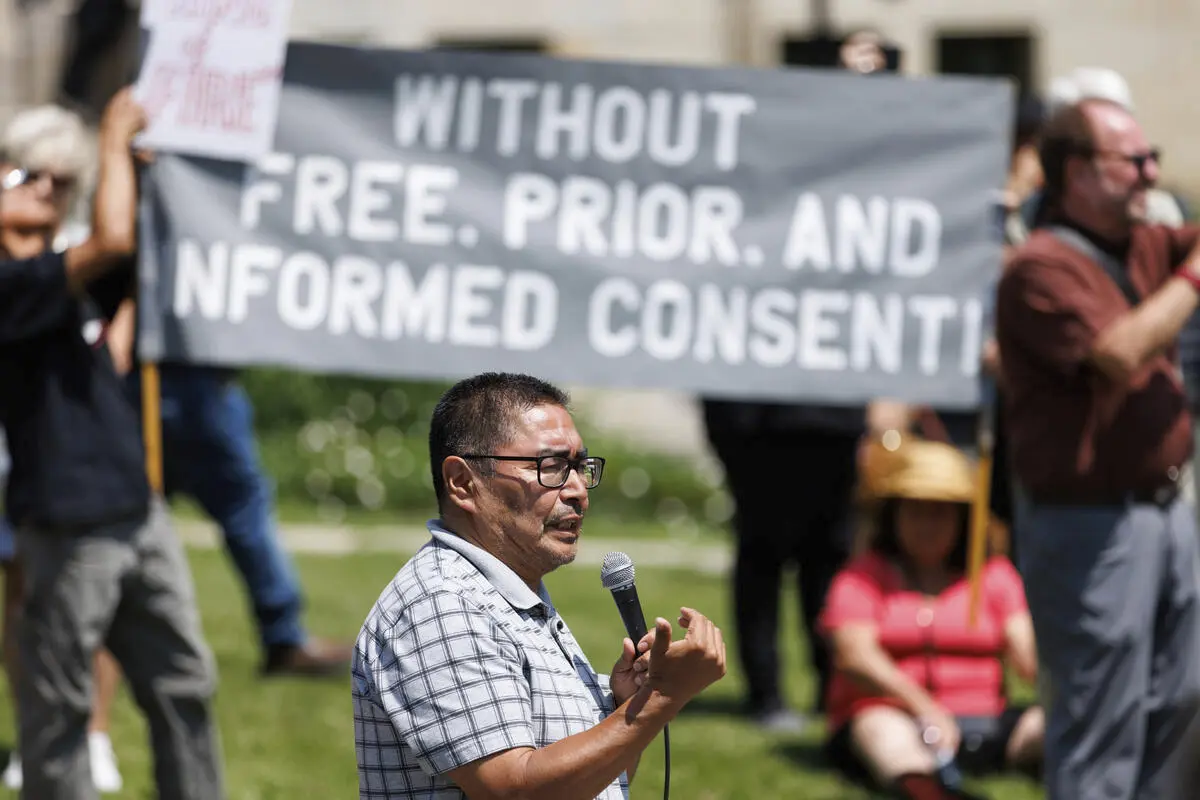
- November 2025: Neskantaga First Nation issues multiple public statements and letters to the Crown, reiterating that the company does not have "Free, Prior, and Informed Consent" (FPIC) to operate on their territory.
- December 2025: In a dramatic escalation, the Chief and members of the Neskantaga Council travel by snowmobile to the PTX drilling site to hand-deliver a cease-and-desist letter. The letter explicitly warns that the community is prepared to engage in "direct land defense" to protect their homelands.
Despite these warnings, PTX Metals has signaled its intent to proceed, bolstered by the capital raised through the flow-through mechanism. This has led to accusations that the tax-advantaged financing acts as a "shield," allowing junior miners to ignore the financial risks of Indigenous resistance that would otherwise deter conventional investors.
The Question of Indigenous Consent and Reconciliation
Architects of charity flow-through financing, such as firms like PearTree Canada, have frequently framed these transactions as acts of "reconciliation." They argue that by providing capital for exploration in remote areas, the financing brings jobs, infrastructure, and economic engagement to Indigenous communities. This narrative suggests a symbiotic relationship where philanthropic capital fuels northern development.
However, many Indigenous leaders and legal scholars argue that this framing is a fundamental misrepresentation of reconciliation. They point out that the W2 project is proceeding in the face of a clearly articulated moratorium by Neskantaga and other First Nations in the Ring of Fire. These nations have called for a complete halt to industrial development until a comprehensive, Indigenous-led environmental assessment and a true partnership framework are established.
"The conflation of tax-sheltered mining finance with reconciliation is not just inaccurate; it is a colonial dynamic," says Anna Stanley, a research fellow at the Broadbent Institute. "It subsidizes exploration on land where consent has been denied, effectively weaponizing the tax code against Indigenous rights. It allows companies to operate as if Indigenous jurisdiction does not exist, provided they can find enough donors willing to take a tax break."
Financial Risks and Shareholder Indemnification
Beyond the ethical and human rights concerns, the PTX placement raises significant questions regarding financial risk for the donors and "end buyers" involved. Flow-through shares are predicated on the company’s ability to spend the raised capital on "qualifying exploration expenses" within a specific timeframe—usually one year. If a company is prevented from conducting exploration due to blockades, legal challenges, or environmental factors, it may fail to meet these spending requirements.
If the capital is not spent as promised, the Canada Revenue Agency (CRA) can deny the tax relief previously claimed by the investors. Most flow-through agreements include an "indemnification" clause, where the company agrees to compensate investors for any lost tax benefits. For a junior miner like PTX Metals, which operates with limited cash reserves, a large-scale indemnification claim could lead to insolvency.
Historical precedents suggest this is a tangible threat. During the Platinex-KI dispute, a judge noted that the company’s pending insolvency was "self-created" because it chose to raise flow-through capital despite knowing that the KI First Nation would resist the drilling. At one point, the company was forced to carry a liability of over $633,000 for shareholder indemnification—a debt that nearly crippled the firm before a 2015 CRA reversal. With Neskantaga promising "direct land defense" in late 2025, PTX Metals faces a similar risk: the inability to execute the work for which it has already accepted millions in tax-advantaged investment.
Implications for Public Policy and the Charitable Sector
The PTX Metals case highlights a systemic gap in Canadian resource and fiscal policy. While the federal government has committed to implementing the United Nations Declaration on the Rights of Indigenous Peoples (UNDRIP), its tax policies continue to incentivize exploration in contested territories. The "charity flow-through" model, in particular, draws the non-profit sector into these conflicts, often without the charities themselves fully understanding the geopolitical and human rights implications of the shares they are processing.
Critics are increasingly calling for reforms that would tie the eligibility of flow-through tax credits to the demonstration of Indigenous consent. Under such a proposal, companies would be unable to renounce tax benefits to investors unless they can provide evidence of a signed exploration agreement or a Memorandum of Understanding with the affected First Nations.
As the demand for critical minerals grows in the race toward a low-carbon economy, the tension between resource extraction and Indigenous sovereignty is expected to intensify. The case of PTX Metals serves as a cautionary tale of how financial innovation, when divorced from the principles of consent, can exacerbate social conflict and create profound financial instability for companies and investors alike. For now, as the snowmobile tracks of the Neskantaga leadership remain fresh at the W2 site, the "gold mine" of donor capital remains at odds with the "inherent jurisdiction" of the people who have lived on the land for millennia.
