

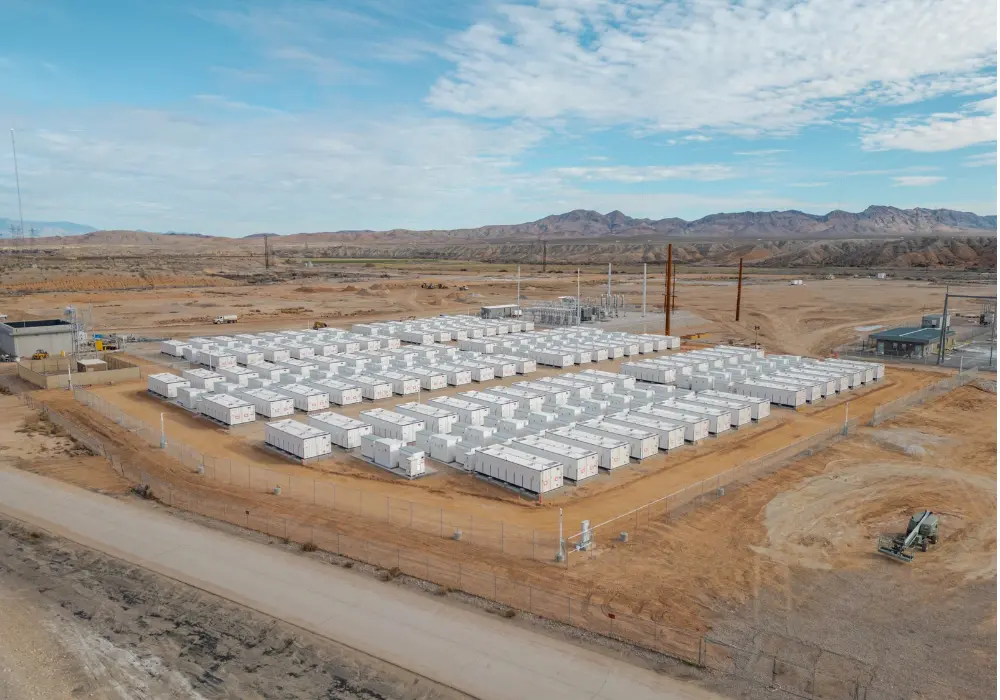
The rapid expansion of artificial intelligence and high-performance computing has triggered an unprecedented surge in electricity demand, leading utilities and developers to propose a massive build-out of natural gas-fired generation. This shift toward fossil fuels, intended to provide the "always-on" power required by modern data centers, presents a dual threat: it jeopardizes international climate goals and creates significant financial risks for utility ratepayers. However, a new comprehensive analysis from researchers at Georgetown and Duke universities suggests that energy storage, particularly in the form of large-scale battery systems, offers a cleaner, more flexible, and increasingly cost-competitive alternative to the current gas-heavy trajectory.
As the tech industry grapples with the energy intensity of generative AI, the choice between traditional combustion-based power and advanced storage solutions has become a pivotal point of contention for regulators, environmentalists, and grid operators. While natural gas has long been the default solution for firm power, the modularity and falling costs of lithium-ion batteries are beginning to challenge the status quo, offering a pathway to balance the grid without locking in decades of carbon emissions.
The Scale of the Gas Expansion and the AI Surge
The scale of the proposed fossil fuel expansion is staggering. According to recent industry data, U.S. utilities are currently planning more than 60 gigawatts (GW) of new gas-fired power plants specifically to meet the projected demand from data centers. Beyond utility-scale projects, approximately 90 GW of "behind-the-meter" gas generators—units installed directly on-site at data center campuses—have been proposed across the country.
This rush to gas is driven by the unique requirements of the AI era. Unlike traditional data centers, which primarily handle storage and basic web traffic, AI training and inference require massive clusters of Graphics Processing Units (GPUs) that consume vast amounts of electricity around the clock. A single AI-focused data center can now require as much power as a medium-sized city, often exceeding 500 megawatts (MW) or even 1 gigawatt at a single site.
Ian Hitchcock, report co-author and senior program coordinator at the Duke Initiative for Science and Society, notes that the industry is currently fighting against "inertia and status quo pressure." For decades, the energy sector has viewed natural gas as the only viable solution for 24/7 reliability. This mindset has led many developers to view gas as a "single package" solution, despite the long-term environmental and economic liabilities associated with methane leakage and carbon dioxide emissions.
The Economic Risk of Stranded Assets
One of the most pressing concerns highlighted by the Georgetown and Duke researchers is the risk of "stranded assets." This occurs when large-scale infrastructure, such as a multi-billion dollar natural gas plant, is built to serve a specific industrial demand that may not materialize or may dissipate before the plant has paid for itself.
The AI sector is currently characterized by explosive growth, but some economists and market analysts warn of a potential "AI bubble." If computing demand shifts, if hardware becomes significantly more efficient, or if the current venture capital-fueled growth slows down, data centers could be decommissioned or downsized. If a utility has built a 30-year gas plant to serve a data center that closes in 10 years, the remaining costs of that plant often fall on residential and small business ratepayers.
Batteries act as a hedge against this volatility. Unlike a massive centralized power plant, battery storage is inherently modular. A developer can install 50 MW of storage today and add another 50 MW next year as demand grows. If demand drops, batteries can be more easily repurposed or even relocated to other parts of the grid where they are needed for frequency regulation or renewable energy integration. This flexibility reduces the "all-or-nothing" risk inherent in fossil fuel infrastructure.
Technological Advantages of Battery Storage
While lithium-ion batteries are currently limited in their duration—typically providing four to eight hours of discharge—they offer several technical advantages over gas turbines that are particularly relevant to data centers.
- Rapid Deployment: Constructing a new natural gas plant can take five to ten years when accounting for permitting, pipeline construction, and environmental reviews. In contrast, large-scale battery projects can often be deployed in one to two years, allowing utilities to keep pace with the fast-moving tech sector.
- Grid Services: Data centers create massive, fast-changing loads that can strain local grids. Batteries can act as "shock absorbers," smoothing out these fluctuations and providing instantaneous power to prevent voltage drops or outages.
- Cost Efficiency: In many jurisdictions, the levelized cost of energy (LCOE) for battery storage paired with renewables is already lower than the cost of running gas peaker plants. As battery prices continue to fall—dropping nearly 90% over the last decade—the economic argument for storage becomes even more compelling.
Jackson Ewing, director of energy and climate policy at Duke University’s Nicholas Institute, emphasizes that batteries are a "now" solution. While "future-forward" technologies like small modular nuclear reactors (SMRs) or deep geothermal are promising, they are not yet ready for mass deployment. Batteries, however, are already showing a massive upward trajectory in adoption.
The Shifting Market: Forecasts and Industry Adoption
The transition toward storage is already gaining momentum. A new forecast from BloombergNEF (BNEF) recently upgraded its projections for U.S. energy storage deployment by 30% compared to its forecast from just six months prior. BNEF now expects U.S. storage capacity to surpass 11,000 gigawatt-hours (GWh) by 2036.
This growth is being fueled by a mix of utility-scale storage and "behind-the-meter" installations. Some of the world’s largest tech companies, often referred to as "hyperscalers," are leading this charge. Companies like Google, Microsoft, and Amazon have set ambitious net-zero or carbon-free energy goals, which are increasingly at odds with the gas-heavy plans of their utility providers.
For instance, Google has been a pioneer in advocating for "Clean Transition Tariffs." These regulatory structures allow large customers to pay for the development of carbon-free energy and storage specifically to meet their own demand, rather than relying on the utility’s existing fossil fuel mix. Google has already signed onto such agreements in Nevada and Minnesota, paving the way for large-scale battery projects to replace or defer the need for new gas generation.
Policy Recommendations and Regulatory Pathways
The Georgetown and Duke report outlines several strategies that state regulators and policymakers can use to prioritize storage over fossil fuels. The approach varies depending on whether a state has a regulated or "restructured" energy market.
In regulated markets, where state commissions have direct oversight of utility investments, regulators can mandate "Bring Your Own Clean Energy" (BYO) programs. These programs require data center developers to procure a certain percentage of their power from new carbon-free sources, including energy storage. This ensures that the tech boom does not result in an overall increase in grid emissions.
In restructured (deregulated) markets, the path is more complex because utilities do not own the generation assets. In these regions, states can implement energy storage mandates, similar to those enacted in Illinois, Maryland, and New Jersey. These mandates require grid operators to procure a specific amount of storage capacity by a certain date, providing the market certainty needed for developers to secure financing.
Furthermore, the report suggests that states should engage in more integrated energy planning. By coordinating with regional grid operators (RTOs/ISOs), states can identify locations where batteries can provide the most value—such as congested transmission corridors where a battery could eliminate the need for a costly new power line.
Chronology of the Data Center Energy Crisis
- Late 2022: The release of ChatGPT and other Large Language Models (LLMs) triggers a global race for AI supremacy, leading to a massive spike in orders for power-hungry GPUs.
- 2023: Utilities in regions like Northern Virginia (Data Center Alley) and the Columbus, Ohio, area report that projected power demand from data centers has doubled or tripled, leading to emergency proposals for new gas plants.
- Early 2024: Major tech firms report that their greenhouse gas emissions are rising despite their "green" pledges, largely due to the energy-intensive nature of AI hardware and the reliance on fossil-fuel-heavy grids.
- Mid-2024: The Georgetown and Duke report is released, providing a roadmap for state regulators to pivot toward energy storage as a viable alternative to gas.
- Late 2024: BloombergNEF significantly raises its energy storage forecasts, citing data center demand as a primary driver of the 30% increase in projected capacity.
Implications for the Future
The choice between gas and batteries will have long-lasting implications for the global climate. If the current 60 GW of planned gas generation is built, it will lock in millions of tons of CO2 emissions for decades, making it nearly impossible for the U.S. to meet its 2050 net-zero targets.
Moreover, the reliance on gas introduces fuel price volatility into the tech sector’s operating costs. Natural gas prices are subject to global market fluctuations, whereas the "fuel" for a battery (sunlight or wind) is free once the initial infrastructure is built. By opting for storage, data center operators can achieve more predictable long-term energy costs while simultaneously meeting their corporate sustainability goals.
The Georgetown-Duke report concludes with a call to action for state leaders. Ian Hitchcock notes that "there is not a jurisdiction that has no potential action items." Whether through direct regulation, tax incentives, or grid planning, states have the tools to ensure that the AI revolution is powered by the technology of the future rather than the fuels of the past. As the data center boom continues to reshape the American energy landscape, the integration of energy storage will be the defining factor in whether that growth is sustainable or a costly environmental setback.
