

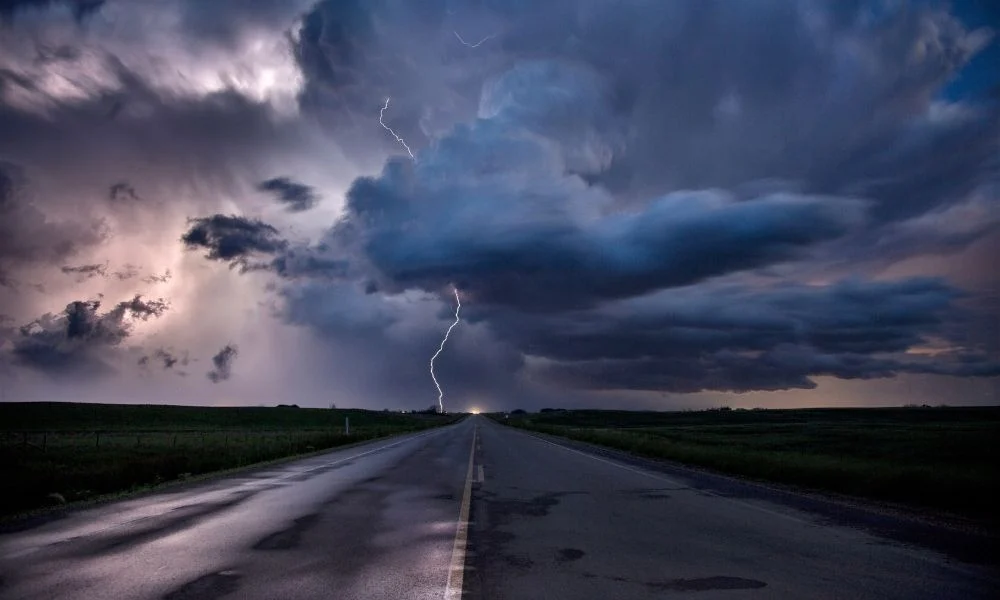
Extreme weather events are no longer abstract environmental concerns; they have evolved into tangible financial realities that are compelling insurers, investors, and governments worldwide to reassess their risk management strategies and investment portfolios. The escalating financial impact of these phenomena is starkly illustrated by data from the United States National Centers for Environmental Information. In the year 2000, the U.S. experienced five distinct disaster events, each incurring costs exceeding one billion dollars, adjusted for inflation. By 2024, this number had surged to 27 such events. This dramatic increase is reflected in the average annual cost of natural disasters and extreme weather in the U.S., which has ballooned from $23.8 billion (USD) at the dawn of the 21st century to a staggering $149.3 billion (USD) in 2024. This trend is not confined to the United States. A recent report from Statistics Canada highlighted a significant rise in Canadian home and mortgage insurance premiums, which have increased by 45 percent over the past six years. This escalation is largely attributed to the mounting costs associated with extreme weather events. In 2024 alone, catastrophic claims in Canada reached a record $8.6 billion (CAD), underscoring the widespread and growing financial burden of climate-related disasters.
Tim Pickering, the Founder, Chief Investment Officer, and President of Auspice Capital Advisors, a firm specializing in commodity markets, acknowledges that extreme weather events have been a persistent feature of human history. However, he emphasizes that the recent intensification and frequency of these events have profound and potentially transformative impacts on commodity markets, particularly for agricultural commodities like grains. Pickering identifies agriculture and grains as one of the three core commodity sectors poised for significant change in the current year, alongside the disruptive forces of artificial intelligence, electrification, and deglobalization.
"The outlook we put out starting this year was focused on 3 core sectors," Pickering stated in a recent interview. "We felt that AI and electrification was a game changer. We felt deglobalization was a game changer. And then we also felt that something was forgotten, and that was [agriculture] and grains. We thought they were really askew with the long-term fundamentals, but even more so the value of land." Pickering elaborates on the fundamental pressures affecting agricultural commodities: "When I look at the supply and demand factors, they haven’t really improved. Logistics are a huge problem. Arable land is actually arguably deteriorating because of weather phenomenon. And what it does is it puts more pressure on concentrated producing areas." This intensification of pressure on limited, productive land due to environmental degradation is a critical factor for investors to monitor.
The Cantillon Effect, Geopolitical Shocks, and Agricultural Vulnerabilities
While Pickering’s initial forecast for 2024 predicted a rise in grain prices during the first quarter, the global investment landscape experienced a significant recalibration due to the sudden escalation of geopolitical tensions between Iran and Israel. The ensuing conflict and the potential closure of the Strait of Hormuz, a critical chokepoint for global oil trade, redirected a substantial portion of commodity investment capital towards hydrocarbons. This phenomenon, described by Pickering as an illustration of the Cantillon effect, demonstrates how the influx of new money into the financial system preferentially favors certain assets over others. In this instance, the heightened focus on energy markets led to a relative neglect of agricultural commodities. This diversion of attention was further compounded by the significant volume of Russian grain entering global markets. As Russia sought to bolster its agricultural revenues to finance its ongoing conflict with Ukraine, its substantial grain exports temporarily stabilized global prices, masking some of the underlying pressures.
However, the resilience of these grain markets is beginning to show cracks, largely exacerbated by significant weather events that are impacting key logistical arteries. The prolonged period of low water levels in Gatun Lake, a crucial component of the Panama Canal, has presented considerable challenges and increased the cost of shipping through this vital waterway. This logistical bottleneck directly constrains the movement of key agricultural goods and essential agricultural inputs like fertilizers, adding another layer of pressure on global supply chains.
Beyond the direct impact of weather, geopolitical tensions continue to cast a long shadow over commodity markets. The Strait of Hormuz, a critical transit route for a substantial portion of global fertilizer exports, has been a focal point of concern. Gulf states are major producers of fertilizers, and in February and March, as the war between Iran and Israel intensified, considerable attention was paid to the potential for constrained supply. While the immediate impact on global agricultural prices was less dramatic than some had speculated, this was partly due to the availability of alternative fertilizer sources and the timing of the conflict relative to planting and harvest seasons in key importing regions. Nevertheless, as time progresses and logistical disruptions persist, the impact of these supply shortages is expected to become more pronounced.
Soft Commodities and the Strategic Positioning for Shortages
While broad macro-economic drivers suggest a long-term upward trend for grain prices, Pickering notes that the sheer volume of global arable land available for grain production can act as a moderating force, particularly when "swing producers" like Russia enter the market. In contrast, agricultural commodities with more geographically concentrated growing regions, especially those situated in areas highly susceptible to extreme weather events such as hurricanes and prolonged droughts, can experience significantly greater price volatility. Pickering specifically identifies coffee, cocoa, and sugar as commodities that are more vulnerable to the impacts of extreme weather. Coffee, in particular, has recently demonstrated this susceptibility with a substantial price movement observed in July. These commodities typically operate with high existing demand and relatively tight supply, meaning that even minor disruptions to production can trigger significant upward spikes in their futures markets.
From a commodities management perspective, Pickering outlines Auspice Capital Advisors’ approach as one of remaining "agnostic." The firm employs long strategies designed to capitalize on upward price movements in commodity markets and long-short strategies that can exploit opportunities arising from outlier market moves, all dependent on the specific investment mandate. Pickering emphasizes that a "wheel of factors" influences commodity prices, with weather being just one of many. Managers like Auspice adopt a patient approach, waiting for the next influential factor to reveal itself. Their strategy involves closely monitoring price action and volatility. A significant spike in price volatility, for instance, can serve as an immediate signal to enter a position.
"How did we participate in coffee at the beginning of July? It looked pretty soft, and then all of a sudden it started to tick up, and it looked like an outlier move. We got long within a week," Pickering explained. "We were already cutting our risk because volatility had exploded. And so, we’re taking our money off the table because we don’t know how long that event’s going to last. And if volatility goes up, the probability of keeping our mark-to-market gains is diminishing." This illustrates a core tenet of effective commodity trading: adaptability and risk management in the face of unpredictable market dynamics.
Pickering concludes with a crucial piece of advice for investors navigating this increasingly volatile landscape: "The point of all this: you have to remain nimble, available. You have to have capital ready to go and really focus on what the price is telling you as opposed to what the common narrative is." This underscores the importance of data-driven decision-making and a willingness to adapt strategies in real-time, moving beyond prevailing market sentiment to identify genuine opportunities and manage inherent risks. The interplay of climate change, geopolitical instability, and evolving global supply chains presents a complex and challenging environment for commodities investors, demanding a sophisticated and responsive approach. The long-term implications of these trends suggest that extreme weather events will continue to be a defining characteristic of the commodities landscape, offering both significant risks and potential rewards for those who can effectively navigate its complexities.
