

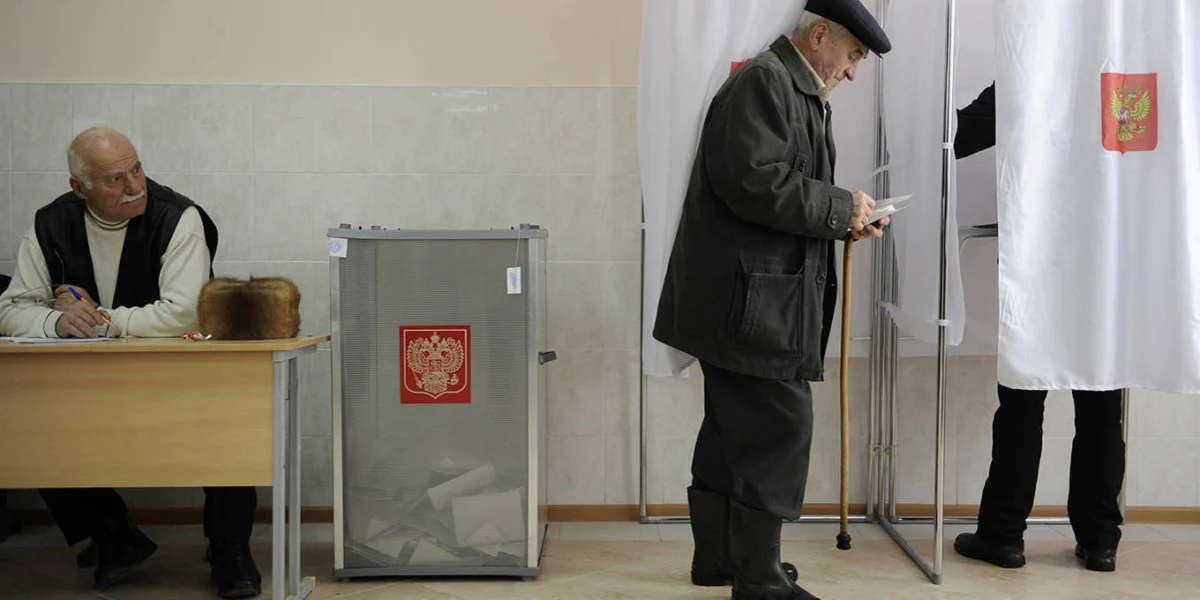
Ever since the American and French Revolutions, which took markedly different paths, democracy has grown most steadily when it has been rooted in local politics. Those who want to see a genuine democracy develop in Russia should begin there.
CHICAGO – As Hungarians celebrate their defeat of authoritarian populism and Americans mark 250 years of freedom, Russians may also look forward to an end to President Vladimir Putin’s corrupt dictatorship. But they would do well to remember that America’s Declaration of Independence, for example, was not just an idealistic proclamation of rights. It was also a practical statement about the importance of empowering local councils elected by the people. The echoes of these revolutionary ideals, though originating in disparate contexts, offer a potent blueprint for democratic aspirations in contemporary Russia, a nation grappling with decades of centralized power and the erosion of civic participation.
The Historical Genesis of Local Democratic Roots
The American Revolution, culminating in the Declaration of Independence in 1776, was not solely an abstract assertion of natural rights against a distant monarch. It was fundamentally a movement to reclaim and assert self-governance at the most immediate level. The colonial structures, while under British rule, had established local assemblies and town meetings where citizens directly participated in decision-making regarding taxation, infrastructure, and law enforcement. The Declaration, therefore, can be interpreted as a radical endorsement of these existing local democratic practices, extending their legitimacy and scope. The subsequent U.S. Constitution, with its emphasis on federalism and the division of powers, further enshrined the importance of state and local governments, creating a layered system of democratic accountability.
In contrast, the French Revolution, beginning in 1789, initially aimed for a more sweeping, top-down transformation of society and government. While it championed universal rights and the sovereignty of the people, its early phases were marked by intense centralized power shifts and a degree of revolutionary fervor that sometimes bypassed or overwhelmed local initiatives. The Reign of Terror, a stark reminder of the dangers of unchecked revolutionary zeal, underscored the potential for centralized power, even when ostensibly wielded in the name of the people, to devolve into authoritarianism.
Despite these divergent paths, a critical lesson emerged over centuries of democratic evolution: enduring democratic stability and genuine citizen engagement are most robust when they are cultivated from the ground up. This principle holds particular relevance for nations like Russia, where historical power structures have consistently favored centralized authority.
The Russian Context: A Legacy of Centralization
For much of its history, Russia has been characterized by a strong, centralized state. From the Tsarist autocracy to the Soviet era, power has predominantly resided in Moscow, with regional and local administrations often serving as instruments of central policy rather than autonomous bodies accountable to their constituents. The collapse of the Soviet Union in 1991 presented an opportunity for decentralization and the fostering of local democratic institutions. However, the subsequent years have seen a gradual re-consolidation of power under President Vladimir Putin, with a rollback of regional autonomy and a weakening of independent local governance.
This legacy of centralized control has had profound implications for the development of a robust civil society and a culture of democratic participation in Russia. Citizens have often been conditioned to expect directives from above, rather than to actively shape their communities through local political engagement. The current political climate, marked by restrictions on political opposition, media, and public assembly, further stifles the emergence of genuine local democratic movements.
The Case for Local Democracy in Russia
The argument for prioritizing local democracy in Russia is not merely theoretical; it is grounded in the practical experience of successful democracies worldwide and offers a tangible pathway for incremental democratic reform.
1. Fostering Civic Engagement and Political Education: Local government provides the most accessible and immediate arena for citizens to engage with the political process. When people can elect their local representatives, influence decisions about their schools, parks, and public services, and hold these officials accountable, they develop a vested interest in democracy. This direct experience serves as a crucial form of political education, demystifying governance and empowering individuals to see themselves as active participants rather than passive subjects. In Russia, where civic engagement has been historically suppressed, revitalizing local councils could serve as a vital incubator for democratic consciousness.
2. Building Trust and Accountability: Centralized governance, especially in an authoritarian context, often breeds distrust and a sense of powerlessness. Local democracy, by contrast, can foster greater trust between citizens and their government. When local officials are elected by and accountable to their communities, they are more likely to be responsive to local needs and concerns. This direct line of accountability is difficult to maintain in a top-down system, where grievances can easily be lost in bureaucratic layers.
3. Developing Democratic Institutions Incrementally: The establishment of a fully functioning national democracy is a complex and often protracted process. Attempting to leapfrog directly to a robust national democratic system without a strong foundation of local democratic practice can be precarious. By focusing on strengthening local governance, Russia could gradually build the institutional capacity, democratic norms, and citizen experience necessary for broader democratic reforms. This incremental approach reduces the risk of instability and allows for the organic growth of democratic culture.
4. Countering Corruption: Corruption often thrives in environments where power is concentrated and accountability is weak. Local democratic institutions, with their inherent transparency and direct oversight by citizens, can serve as a powerful bulwark against corruption. When local officials are subject to the scrutiny of their neighbors and are directly elected, they face greater pressure to act ethically and in the public interest.
Supporting Data and Historical Parallels
The efficacy of local democracy is not an untested hypothesis. Numerous studies and historical examples underscore its importance.
- Post-Soviet Transitions: Countries that have successfully transitioned to stable democracies after the collapse of the Soviet Union often exhibit strong traditions of local governance. For instance, the Baltic states, while facing their own challenges, have generally maintained more decentralized political structures compared to some other former Soviet republics.
- Decentralization Reforms: International organizations like the World Bank and the United Nations Development Programme have long advocated for decentralization as a key component of good governance and democratic development. Reports consistently highlight the positive correlation between effective local governance and citizen satisfaction with public services and political institutions.
- Historical Case Studies: The success of local self-governance in various European cities during the Middle Ages, and the subsequent development of national democracies that built upon these foundations, provides a historical precedent for the power of localized democratic experimentation.
Potential Reactions and Broader Implications
The prospect of a genuine resurgence of local democracy in Russia would likely elicit varied reactions.
- From Citizens: Many Russians, particularly those disillusioned with the current regime, would likely welcome opportunities for greater self-determination at the local level. Grassroots movements, if allowed to flourish, could emerge to advocate for local empowerment.
- From the Current Government: Any moves towards genuine decentralization and local accountability would likely be viewed with suspicion by the Kremlin. The current leadership has consistently prioritized centralized control, and any perceived erosion of this power could be met with resistance, including further restrictions on local autonomy or the co-option of local bodies.
- From the International Community: Democratic nations and international organizations would likely support efforts to strengthen local democratic institutions in Russia, viewing it as a positive step towards broader democratic reform. However, such support would need to be carefully calibrated to avoid being perceived as external interference.
The broader implications of prioritizing local democracy in Russia are significant. It could lead to:
- Increased Social Cohesion: Empowered local communities can foster a greater sense of belonging and shared purpose among citizens.
- More Responsive Governance: Local solutions can be tailored to the specific needs and contexts of different regions, leading to more effective and equitable service delivery.
- A More Resilient Democracy: A democracy built on a strong foundation of local participation is likely to be more resilient to shocks and authoritarian pressures.
A Gradualist Approach: The Path Forward
The journey towards a genuine democracy in Russia is undeniably long and fraught with challenges. However, by drawing inspiration from the historical lessons of the American and French Revolutions, and by focusing on the practical and enduring power of local democracy, a viable path forward can be envisioned. This involves a gradualist approach that prioritizes:
- Strengthening local electoral processes: Ensuring free and fair elections at the municipal and regional levels.
- Granting genuine fiscal and administrative autonomy: Empowering local governments with the resources and authority to make independent decisions.
- Protecting the rights of local assembly and association: Allowing citizens to organize and advocate for their local interests.
- Promoting transparency and accountability mechanisms: Ensuring that local officials are answerable to their constituents.
While the grand pronouncements of national independence were crucial historical moments, the steady growth of democracy has often been nurtured in the fertile soil of local engagement. For Russia, the future of genuine democratic development may well lie in the empowerment of its towns, cities, and villages, allowing the seeds of self-governance to take root and flourish from the ground up. This is not a call for immediate upheaval, but a strategic vision for building a democratic future from its most fundamental building blocks.
