

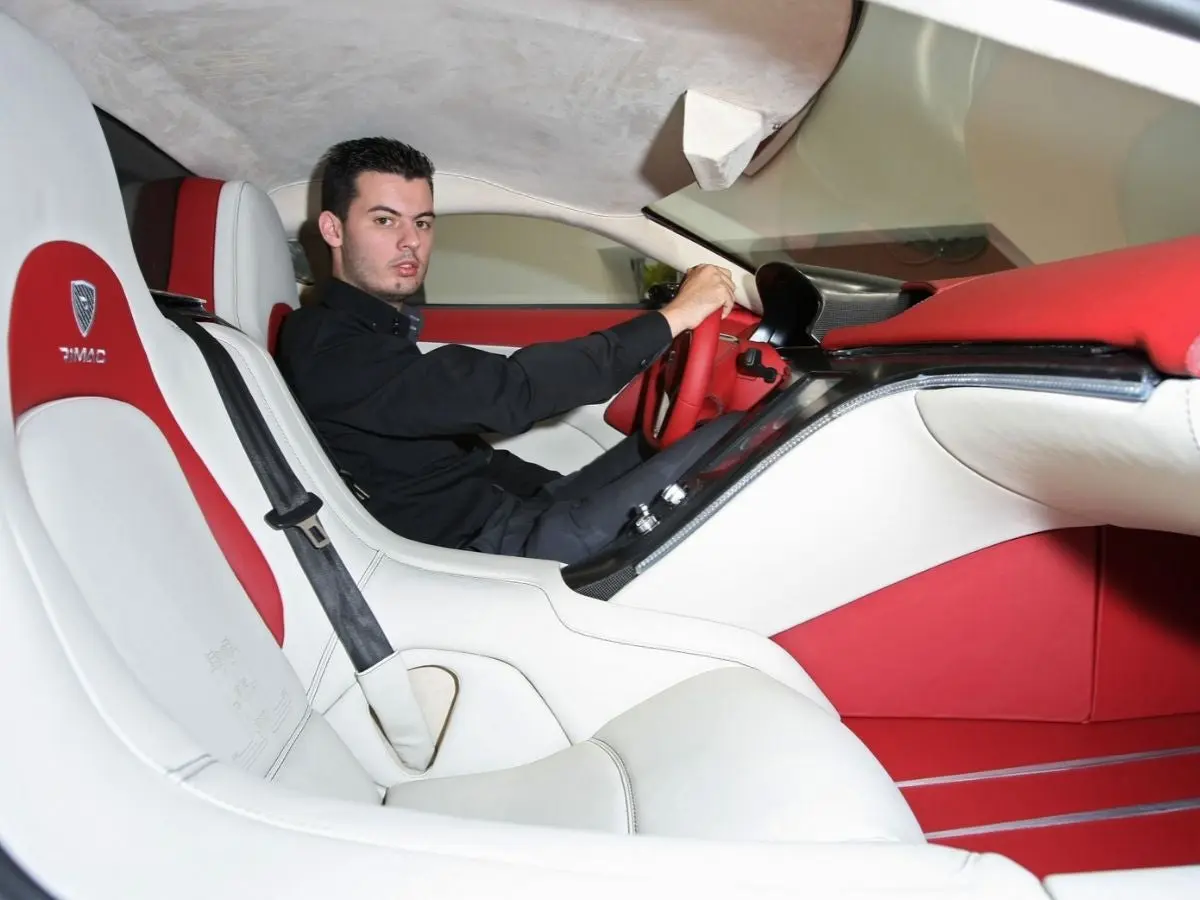
The genesis of a horsepower arms race that would fundamentally reshape the supercar industry for the next decade was, in retrospect, as improbable as it was audacious. In 2011, a 23-year-old Mate Rimac, armed with the vision of his nascent Croatian startup, unveiled the Concept One at the Frankfurt Motor Show. This 1088bhp electric hypercar was not merely a vehicle; it was a harbinger of a seismic shift, a declaration that the future of automotive performance was to be powered by electrons, not explosions. Little did the industry, or indeed Rimac himself, realize the profound impact this single debut would have, sparking a technological and philosophical revolution that would challenge established titans and redefine the very essence of automotive desire.
This pivotal moment in automotive history, chronicled in Spear’s 20th-anniversary issue, serves as a potent case study in innovation, market dynamics, and the enduring allure of performance. The story of the electric hypercar, from its electrifying beginnings to its eventual recalibration, is a narrative of ambition, technological leaps, and the complex interplay of market forces and consumer psychology.
The Spark: Rimac’s Concept One and the Dawn of Electric Performance
Mate Rimac’s early foray into the world of electric hypercars was a bold statement against the prevailing internal combustion engine (ICE) orthodoxy. The Concept One, with its staggering horsepower figures and cutting-edge electric powertrain, was a technological marvel that defied conventional wisdom. At a time when electric vehicles (EVs) were largely perceived as utilitarian and range-limited, Rimac demonstrated their potential for exhilarating performance, capable of rivaling and even surpassing the most potent supercars of the era.

The timing of Rimac’s unveiling was prescient. The nascent Formula E championship, launched in 2014, began to imbue electric vehicle performance with a degree of sporting legitimacy. This was further amplified by the seismic "Dieselgate" scandal in 2015, which rocked the German automotive industry and prompted a critical re-evaluation of traditional powertrains. The scandal eroded consumer trust in diesel technology and accelerated regulatory pressures, creating a fertile ground for the adoption of cleaner alternatives. This confluence of factors – sporting validation for EVs and a crisis of confidence in established ICE technologies – created a powerful tailwind for the electric vehicle revolution that Rimac’s Concept One had so dramatically foreshadowed.
The Horsepower Arms Race: A Decade of Electric Ambition
The success of the Concept One, coupled with the evolving market landscape, ignited a fierce competitive spirit among established automotive manufacturers and ambitious startups alike. By 2018, the industry’s trajectory was undeniably clear. Porsche, a marque synonymous with performance, signaled its commitment to electrification by investing in Rimac and announcing its own groundbreaking EV, the Taycan. This endorsement from a venerable sports-car maker was a watershed moment, validating the potential of battery-electric powertrains for high-performance vehicles.
The floodgates then opened. Lotus, a brand with a rich racing heritage, unveiled the Evija, a 2000bhp electric hypercar that pushed the boundaries of power output. Other players, including Pininfarina, NIO, and Faraday Future, emerged with their own ambitious EV projects, each vying to showcase superior power figures and technological prowess. It seemed that every month brought news of a new electric hypercar with horsepower figures that dwarfed those of traditional gasoline-powered supercars.
To put these numbers into perspective, consider the pinnacle of motorsport. In 2006, when Fernando Alonso clinched the Formula 1 World Championship with the Renault R26, the car produced approximately 750bhp. A mere decade later, the automotive industry was proposing to equip road-going vehicles, accessible to ordinary millionaires, with over 2000bhp, relying heavily on sophisticated software to manage such immense power. This rapid escalation in power output highlighted the industry’s intense focus on electrification as the primary driver of future performance.

The Tesla Phenomenon and the Valuation Anomaly
Amidst this burgeoning electric hypercar race, a significant market anomaly emerged: Tesla. In 2020, the American EV manufacturer, despite selling a fraction of the vehicles produced by established giants like Toyota, surpassed the Japanese automaker to become the world’s most valuable car company. This valuation was driven by investor enthusiasm for Tesla’s disruptive technology, its perceived leadership in the EV market, and its visionary CEO, Elon Musk. However, it also underscored a disconnect between traditional automotive metrics, such as sales volume and production scale, and the burgeoning investor sentiment towards future-oriented technologies. This anomaly suggested that the market was valuing potential and innovation over established manufacturing might, further fueling the race for technological dominance in the EV space.
A Divergent Path: Rimac’s Strategic Evolution
While the industry collectively charged towards an electric future, Mate Rimac’s personal journey took an unexpected and strategic turn. In 2021, in a move that signaled a significant shift in the automotive landscape, Porsche deepened its involvement with Rimac by investing in a new joint venture: Bugatti Rimac. Crucially, the young Croatian entrepreneur was appointed as the CEO of this new entity. This appointment placed Rimac at the helm of two iconic automotive brands, one representing the pinnacle of electric hypercar technology and the other, the legendary heritage of Bugatti.
This strategic alliance saw Rimac not only continuing his pioneering work in electric powertrains but also inheriting the mantle of a storied marque known for its magnificent internal combustion engines. The first tangible outcome of this new era was the unveiling of a new Bugatti model, not as a silent electric offering, but as a testament to the enduring appeal of the internal combustion engine, featuring a naturally aspirated V16 engine. This decision sent a powerful message: the internal combustion engine, while facing immense pressure, was far from obsolete and could still command a significant place in the high-performance automotive world, particularly for brands steeped in its legacy.
The Electric Dream Fades: Market Realities and Consumer Psychology
By 2025, the initial euphoria surrounding the electric supercar dream began to dissipate, replaced by a more pragmatic assessment of market realities. Projects faced delays, ambitious startups struggled to gain traction, and the demand for EVs, while still growing, began to cool from its initial fever pitch. For manufacturers that had made substantial bets on rapid EV adoption, the consequences were becoming apparent.

Porsche, for instance, experienced significant depreciation in the residual values of its Taycan model, a stark indicator that the market’s initial optimism might have outpaced practical considerations of supply and demand. The automotive industry’s substantial investments, once seen as visionary, now appeared to be built on a foundation of aggressive forecasting rather than established market trends. This recalibration was further underscored when Porsche announced a €3.9 billion write-down, citing a "strategic realignment" of its business. This move suggested a need to re-evaluate its electrification strategy in light of evolving market conditions and financial realities.
The Enduring Allure of Emotion Over Engineering
The core of the electric supercar’s perceived misstep, according to industry observers, lay in a fundamental misunderstanding of consumer desire in the ultra-luxury segment. The mistake wasn’t technical; the engineering and performance capabilities of these electric machines were undeniable. Instead, manufacturers seemed to have overlooked a crucial truth: the purchase of a supercar, much like a superyacht or a haute horlogerie timepiece, transcends purely rational decision-making.
No one acquires a multi-million-dollar superyacht based solely on a spreadsheet of operational efficiency. Similarly, the appeal of a Patek Philippe watch is not derived from its statistical accuracy in telling time, but from its craftsmanship, heritage, and the emotional connection it fosters. Supercars, in this context, occupy a similar domain of beautifully irrational purchases. Customers investing upwards of £2 million on a hypercar are not primarily buying battery chemistry, advanced thermal management systems, or even the visceral thrill of extreme acceleration. They are, in essence, purchasing theatre, an experience, a statement – an embodiment of passion rather than pure science.
Ferrari’s Strategic Pivot: Embracing Emotion in the Electric Age
Ferrari’s strategic decisions in 2026 offered a compelling insight into this evolving understanding of the supercar market. When the legendary Italian marque finally unveiled its first fully electric vehicle, it was not another aggressively styled, ultra-powerful electric wedge designed to out-spec the competition. Instead, Ferrari introduced the Luce, a four-door model that, while electric, prioritized elegance and usability over raw, track-focused performance.

The internet buzzed with debate, but Ferrari’s approach suggested a keen understanding of its clientele. The company appeared to recognize that for many of its customers, the desire for an electric vehicle did not necessarily translate to a demand for an electric supercar that replicated the raw, visceral experience of its gasoline-powered counterparts. Furthermore, Ferrari’s simultaneous unveiling of the 12Cilindri Manuale, featuring a V12 engine and a simulated manual gearbox, further underscored this point. The inclusion of a physical gear lever, even if it simply actuated an automatic transmission, was a nod to the emotional connection and engagement that many enthusiasts still crave. It was a deliberate act of providing theatre, a tangible link to the brand’s heritage, something that could not be easily quantified by a performance metric or a line of code.
The Legacy of Rimac and the Future of Performance
Mate Rimac’s journey from a young innovator with an audacious electric supercar to the CEO of a combined Bugatti Rimac entity is a testament to his vision and adaptability. He not only ignited the electric hypercar revolution but also played a crucial role in shaping its future, demonstrating that innovation can coexist with heritage. The era of the purely electric horsepower arms race, characterized by ever-increasing, often impractical, power figures, appears to be giving way to a more nuanced understanding of what constitutes a desirable and emotionally resonant supercar.
The industry’s flirtation with extreme electric performance has undoubtedly accelerated technological development and pushed the boundaries of what is possible. However, as the market matures, it is becoming increasingly clear that for the ultra-luxury automotive segment, the ultimate driving machine is not solely defined by its horsepower or its battery capacity. It is a complex alchemy of engineering, design, heritage, and, most importantly, the intangible, irrational, and deeply emotional connection it fosters with its owner. The story of the electric hypercar, as told through Rimac’s remarkable career, is a powerful reminder that in the pursuit of ultimate performance, the heart often plays a more significant role than the spreadsheet.
This article first appeared in the 20th anniversary edition of Spear’s Magazine (Issue 101). Click here to subscribe.
