

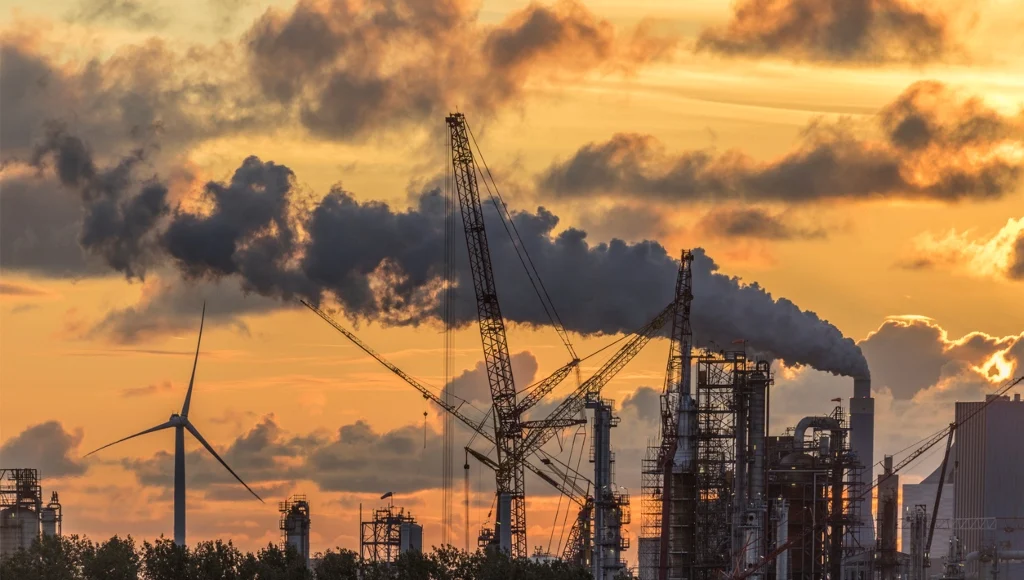
London Climate Action Week has commenced with a primary focus on the technological and financial mechanisms required to scale renewable energy and accelerate global electrification. However, a growing consensus among economists and climate strategists suggests that building a low-carbon energy system represents only one-half of the necessary global transformation. The other, more politically sensitive half involves the managed contraction of the existing fossil fuel infrastructure, a process that experts argue requires the same level of policy rigor and investor scrutiny as the deployment of clean technologies.
This perspective gained significant momentum following the recent Santa Marta conference, where international leaders and financial experts gathered to discuss the ethical and economic imperatives of transitioning away from coal, oil, and gas. The conference underscored a shift in the climate narrative, moving from a sole focus on "green growth" to a more complex discussion on "managed decline." As the global energy landscape faces unprecedented volatility due to conflicts in the Middle East and Eastern Europe, the debate over whether fossil fuels provide security or create systemic vulnerability has reached a critical juncture.
The Geopolitical Context and the Energy Security Paradox
The urgency of the transition is currently framed by a volatile geopolitical backdrop. Recent escalations in the Middle East have once again sent shockwaves through global oil and gas markets, mirroring the disruptions seen following the 2022 invasion of Ukraine. In response to these fluctuations, several governments have faced domestic pressure to expand fossil fuel production under the banner of energy security.
However, market analysts point out that the lessons of the past three years—stretching from the Iranian energy sanctions to the European gas crisis—demonstrate that fossil fuel dependency is often the primary driver of economic insecurity. When energy systems are built around internationally traded commodities, price shocks originating thousands of miles away are transmitted directly into the cost of living, business overheads, and national inflation rates. For instance, the International Monetary Fund (IMF) noted that energy price spikes were a major contributor to the global inflation surge in 2022-2023, which forced central banks to raise interest rates, subsequently increasing the cost of capital for renewable energy projects.
The policy response in many Western nations, including the United Kingdom, has been paradoxical. While committing to Net Zero targets, administrations have simultaneously proposed expanded drilling in regions like the North Sea. Proponents argue this ensures a "steady supply" and an "orderly transition," but critics suggest this reflects an outdated understanding of transition risk. By doubling down on fossil fuel supply, nations may be tethering their economies to a declining asset class that offers no protection against global price volatility.
Evolution of Transition Risk: From Stranded Assets to Systemic Obstruction
For over a decade, the primary concern for investors regarding fossil fuels was the concept of "stranded assets." This term, popularized by organizations like Carbon Tracker, refers to investments in fossil fuel infrastructure that would lose their value if climate targets were met, leaving companies with worthless reserves and infrastructure.
While the risk of stranded assets remains a multi-trillion-dollar concern, a more immediate systemic risk has emerged: the "transition brake" effect. This occurs when an oversupply of fossil fuels suppresses energy prices in the short term, thereby weakening the relative economic attractiveness of electrification and renewable alternatives. When fossil fuel prices are artificially low or subsidized, the "payback period" for electric vehicles (EVs), heat pumps, and industrial battery storage lengthens, delaying the necessary turnover of infrastructure.
According to the International Energy Agency (IEA), for the world to stay within the 1.5°C warming limit, there can be no new long-lead-time fossil fuel projects. Continued investment in expansion does not act as a bridge; rather, it extends the lifespan of incumbent carbon-intensive systems and crowds out the capital needed for the clean energy shift. A successful transition requires fossil fuels to move from being the primary driver of energy costs to being a marginal, managed supplier within an economy increasingly powered by domestic, low-cost renewables.
Supporting Data: The Economic Case for Clean Energy
The economic data increasingly supports a rapid shift away from fossil fuels, despite the challenges of managing decline. According to the International Renewable Energy Agency (IRENA), nearly 86% (187 gigawatts) of the newly commissioned renewable capacity in 2022 had lower costs than fossil fuel-fired electricity.
Key data points illustrating the momentum include:
- Cost Reductions: The Levelized Cost of Energy (LCOE) for solar PV has fallen by approximately 89% since 2010, while onshore wind has seen a 69% decrease.
- Investment Shifts: The IEA’s World Energy Investment 2024 report indicates that for every dollar currently spent on fossil fuels, 1.7 dollars are now spent on clean energy. Just five years ago, this ratio was one-to-one.
- EV Market Penetration: Global electric car sales reached nearly 14 million in 2023, a 35% increase from the previous year, signaling a structural shift in oil demand for the transport sector.
Despite these figures, fossil fuel subsidies reached a record $7 trillion in 2022 (inclusive of explicit and implicit costs), according to the IMF. These subsidies create a distorted market where the true environmental and social costs of carbon are not reflected in the pump or utility price, further complicating the efforts of policymakers to manage a contraction.
Chronology of the Global Energy Shift
To understand the current state of the transition, it is essential to look at the timeline of events that have shaped the current "managed decline" debate:
- 2011: Carbon Tracker publishes "Unburnable Carbon," introducing the concept of the "carbon bubble" and stranded assets to mainstream finance.
- 2015: The Paris Agreement is signed, providing a legal and political framework for limiting global temperature rises.
- 2021: The IEA releases its landmark "Net Zero by 2050" roadmap, explicitly stating that no new oil and gas fields are required under a 1.5°C scenario.
- 2022: The Russian invasion of Ukraine triggers a global energy crisis, leading to a temporary resurgence in coal use but also accelerating the EU’s "REPowerEU" plan to decouple from gas.
- 2023: COP28 in Dubai concludes with the "UAE Consensus," which, for the first time in the history of UN climate summits, explicitly calls for "transitioning away from fossil fuels in energy systems."
- 2024: The Santa Marta conference and London Climate Action Week emphasize the financial and geopolitical necessity of managing the contraction of fossil fuel supply chains.
Financial Frameworks and the Role of Debt Markets
As the transition progresses, the financial sector is under increasing pressure to refine its investment criteria. Mark Campanale, CEO of Carbon Tracker, has argued that investors, particularly those in debt markets, must distinguish between financing "residual supply" and financing "expansion."
Financing residual supply involves providing the capital necessary to maintain existing fields as they naturally decline, ensuring that energy needs are met during the transition period without creating new, long-term dependencies. Conversely, financing expansion through new fields and pipelines locks in carbon emissions for decades and ignores the reality of long-term demand destruction.
New financial instruments are being developed to address this. "Transition bonds" and sustainability-linked loans are increasingly tied to specific decommissioning targets or emissions reduction milestones. However, there is a growing call for stronger scrutiny of fossil fuel capital expenditure (CAPEX). Analysts suggest that if oil and gas majors continue to divert the majority of their profits into new exploration rather than diversified energy services, they face not only environmental criticism but also a significant threat to their long-term creditworthiness.
The UK Context: A Microcosm of the Global Debate
The United Kingdom serves as a significant case study in the tension between fossil fuel expansion and climate leadership. The debate over the Rosebank oil field and the issuance of new North Sea drilling licenses has become a focal point for political and economic tension.
Proponents of North Sea expansion argue that domestic production reduces the carbon footprint of imported fuels and provides jobs. However, energy experts point out that North Sea oil is traded on global markets; therefore, increased domestic production has a negligible impact on the prices paid by UK consumers. The real "energy security" for the UK lies in the development of its offshore wind capacity—which is among the largest in the world—and the modernization of its National Grid to handle decentralized, renewable power.
The transition is increasingly being reframed as a "competitiveness story." Nations that successfully transition to a low-cost, domestic clean energy base will likely have a significant industrial advantage over those still tethered to the price volatility of the global fossil fuel market.
Broader Impact and Implications for Global Policy
The shift toward managing the contraction of fossil fuels requires a "whole-of-government" approach. Climate policy can no longer be siloed within environment ministries; it must be integrated into economic, financial, and national security planning.
The implications of failing to manage this contraction are twofold. First, there is the "disorderly transition" scenario, where a sudden collapse in fossil fuel demand leads to financial contagion, mass unemployment in energy-dependent regions, and stranded assets that destabilize pension funds. Second, there is the climate risk, where continued oversupply leads to a breach of the 1.5°C threshold, resulting in catastrophic physical and economic damage from extreme weather events.
Conversely, the prize for a managed and well-funded transition is substantial. It includes more stable energy costs for households, reduced exposure to geopolitical blackmail, and the creation of new industrial sectors focused on storage, green hydrogen, and grid technology.
As London Climate Action Week continues, the message from financial experts and climate strategists is clear: the energy transition is not merely an addition of new technology, but a systematic and intentional replacement of the old. Managing the decline of fossil fuels is not an admission of defeat, but a necessary strategy for ensuring long-term economic resilience and global security. The focus must now turn to creating the financial and regulatory frameworks that allow the old system to contract in a way that is stable, predictable, and aligned with the scientific realities of the 21st century.
