

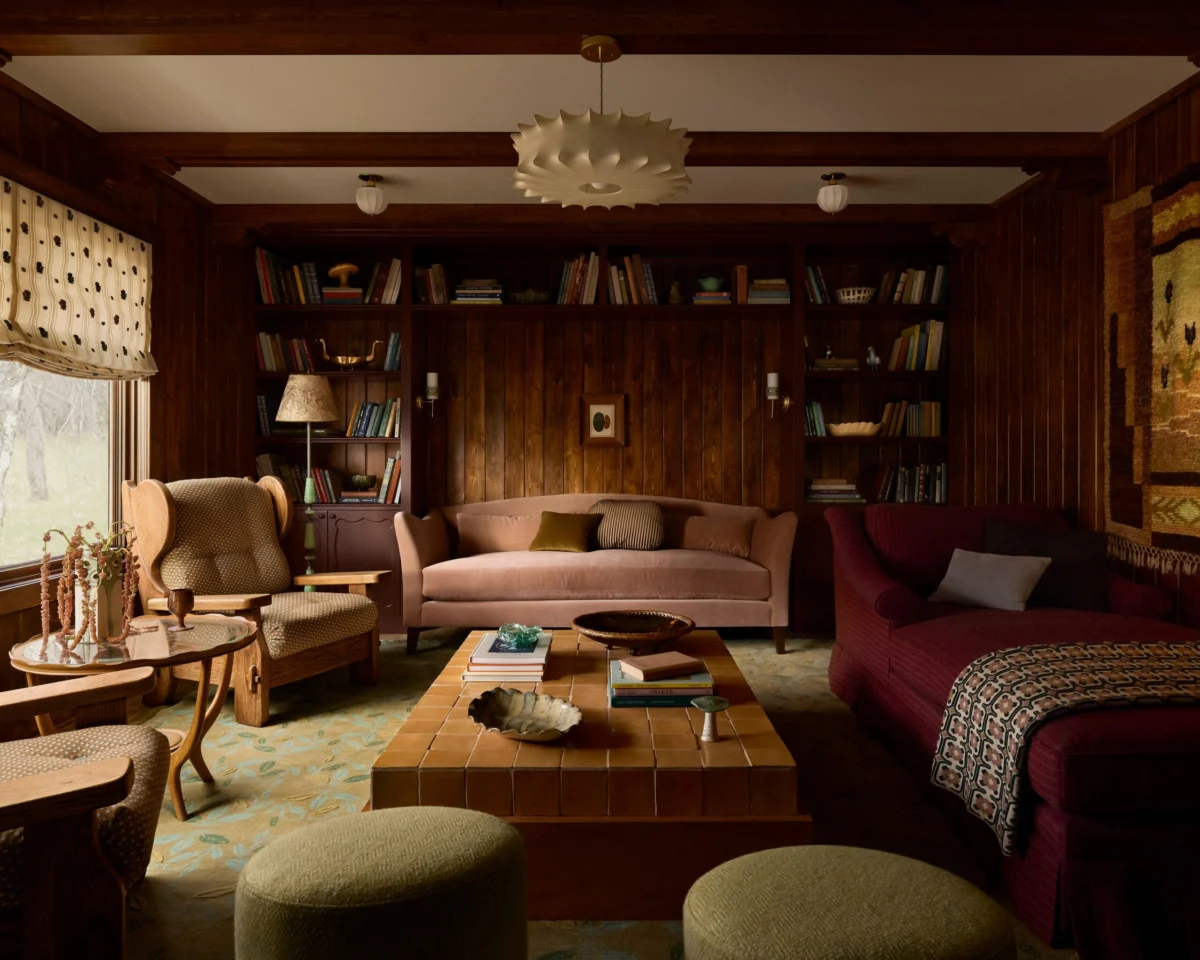
The renovation of a residential lake cabin in Minnesota’s storied Iron Range has emerged as a landmark study in sensory-driven interior design, blending the disparate cultural heritages of its owner into a cohesive architectural narrative. Gina Henkemeyer, the homeowner, presented a renovation brief that prioritized atmosphere and olfactory memory over traditional aesthetic checklists. Her vision—described as the intersection of Italian cinema icon Sophia Loren and the transcendentalist simplicity of Henry David Thoreau’s Walden Pond—challenged the design team at Yond Interiors to translate abstract "spirits and scents" into a functional, multi-generational family retreat.

A Synthesis of Heritage and Sensory Design
The project, led by Julia Miller of the AD PRO Directory firm Yond Interiors, began with a directive that many traditional designers might find daunting. Rather than requesting a specific color palette or a mid-century modern revival, Henkemeyer asked for a space that evoked the "olfactory memory of cedar wood and pasta water." This request was deeply rooted in her personal history, specifically childhood summers spent in the Iron Range near Lake Superior. Her lineage—a blend of Italian and Finnish ancestry—served as the primary blueprint for the cabin’s transformation.
The Iron Range of northern Minnesota is a region defined by its rugged landscape and a unique immigrant history. During the late 19th and early 20th centuries, the area’s iron ore mines attracted thousands of workers from Finland and Italy, creating a cultural microcosm where Nordic pragmatism met Mediterranean warmth. By invoking this heritage, Henkemeyer sought to honor the duality of her grandparents’ influences: the stoic, nature-focused lifestyle of the Finnish "sauna culture" and the vibrant, culinary-centered traditions of Italian domestic life.

Julia Miller embraced this esoteric approach, focusing on "synthesizing highly specific and yet abstract ideas into a tangible home." The resulting design avoids the "catalog-ordered" look common in modern renovations, opting instead for a "heritage feel" characterized by finishes and furnishings that appear to have been collected over several decades.
Architectural Continuity and the Second-Floor Expansion
A significant portion of the project involved the construction of a second-floor addition, which required Miller to establish architectural continuity between the existing lower level and the new living quarters. The design team utilized the original dark-stained pine paneling as a foundational element, extending it into the new spaces to provide a sense of "groundedness" and history.

The color palette for the addition was informed by a previously renovated kitchen on the lower level, which featured deep olive cabinetry and rust-toned stone counters. Miller expanded this "forest-and-earth" base by layering in secondary hues of blue, yellow, and brown. According to Miller, the integration of these colors was a matter of maintaining integrity while pushing the design "a couple steps further" in the newer sections of the home.
The entryway serves as a transitional node, featuring terracotta and white checkerboard tile floors—a nod to classic Italian villas—paired with 1920s-style leafy wallpaper from Bradbury & Bradbury. The staircase, a focal point of the vertical expansion, features an alpine handrail with a hand-carved Lily of the Valley motif. As the national flower of Finland, the Lily of the Valley symbolizes purity and a "return to happiness," serving as a literal and metaphorical bridge between the floors.

Curating the ‘Collected’ Aesthetic Through Global Sourcing
To achieve the "Venn diagram" of Italian glamour and lakeside rusticism, Yond Interiors relied heavily on vintage sourcing. This approach aligns with a growing trend in the high-end residential market toward "slow design," where sustainability is achieved through the reuse of high-quality antiques rather than the procurement of mass-produced goods.
Key pieces throughout the cabin reflect this global search:

- Italian Influence: Vintage nightstands sourced from Italy anchor the primary bedroom, while a 1960s Italian wingback chair—recovered in Rosemary Hallgarten’s surf-blue pebble bouclé—creates a reading nook in the living area.
- Scandinavian Influence: The home is peppered with Danish-style tapestries and Finnish flush-mount lighting. A 1970s Swedish pine sconce in the bathroom complements the Nordic-inspired wood cladding.
- Custom Craftsmanship: Miller designed several bespoke pieces to fill functional gaps, including a blue-pigmented oak console and a custom chaise upholstered in Pierre Frey burgundy wool check.
The living room was specifically tailored to the physical needs of the family. The custom chaise was built with extra legroom to accommodate Henkemeyer’s husband, Jim, while the Jura Coffee Table from Ah Um—topped with durable dandelion tiles—was selected to withstand the rigors of a household with young children. Miller noted that every item was chosen based on its ability to tell both an "aesthetic story" and a "functional story," prioritizing pieces that could eventually be passed down as heirlooms.
The Finnish Sauna: A Cultural Non-Negotiable
Perhaps the most significant architectural manifestation of Henkemeyer’s Finnish roots is the integrated sauna. In Finnish culture, the sauna is not merely a luxury amenity but a site of social bonding, physical health, and spiritual reflection. Statistics from the Finnish Sauna Society suggest that there are approximately 3.3 million saunas in Finland—a country with a population of 5.5 million—underscoring its central role in domestic life.

In the Minnesota cabin, the sauna was treated as a primary architectural requirement. Miller and her team positioned the heated chamber at the front of the house, oriented toward the lake. This placement allows for a tranquil water view, facilitating a "return to roots" for Henkemeyer. The interior of the sauna features traditional wood cladding, while the exterior bathroom area is defined by sea-blue glazed terracotta tiles from Zia Tile. This "wet room" concept, common in Nordic design, seamlessly blends the utility of a modern shower with the ritualistic atmosphere of the sauna.
Market Trends and the Rise of Storytelling Interiors
The Henkemeyer cabin reflects a broader shift in the interior design industry. According to data from the 2023 Houzz & Home Study, homeowners are increasingly investing in "forever homes," with a 15% increase in renovations aimed at personalizing spaces for long-term residency rather than immediate resale. Furthermore, the "Grandmillennial" and "Coastal Grandmother" trends of recent years have paved the way for "Heritage Chic," where younger homeowners embrace the "clutter" and "character" of previous generations.

The success of the "Sophia Loren meets Walden Pond" brief suggests that clients are moving away from the "minimalist gray" palettes that dominated the 2010s. Instead, there is a demand for "maximalist storytelling," where every texture and scent serves a purpose. The use of pigment-dyed woods, patterned wallpapers (such as the Jagged Stripe from The Pattern Collective in the kids’ room), and mixed-metal fixtures (like the Rachel Donath brass mirrors) demonstrates a sophisticated rejection of uniformity.
Broader Impact and Regional Implications
Beyond its aesthetic achievements, the renovation contributes to the preservation of the Iron Range’s unique cultural identity. As many historic lake cabins in Minnesota are demolished to make way for modern "McMansions," the Henkemeyer project offers an alternative model: the thoughtful expansion of existing structures that honors regional history.

The project also highlights the economic impact of the "design-build" sector in the Midwest. Firms like Yond Interiors are part of a growing network of professional designers who are revitalizing rural and vacation properties, often bringing urban-level sophistication to remote locations. This "urban-to-rural" design transfer is supporting local craftspeople—from the carvers of the Lily of the Valley handrail to the installers of the intricate Mosaic House geometric tiles.
In conclusion, the Henkemeyer cabin stands as a testament to the power of a clear, albeit abstract, vision. By eschewing traditional design templates in favor of a sensory-based brief, Julia Miller and Gina Henkemeyer have created a space that is both a cinematic tribute to Italian elegance and a quiet sanctuary in the Minnesota woods. It is a home where the smell of cedar and pasta water is not just a memory, but a daily reality—a successful synthesis of two worlds meeting on the shores of a northern lake.
