

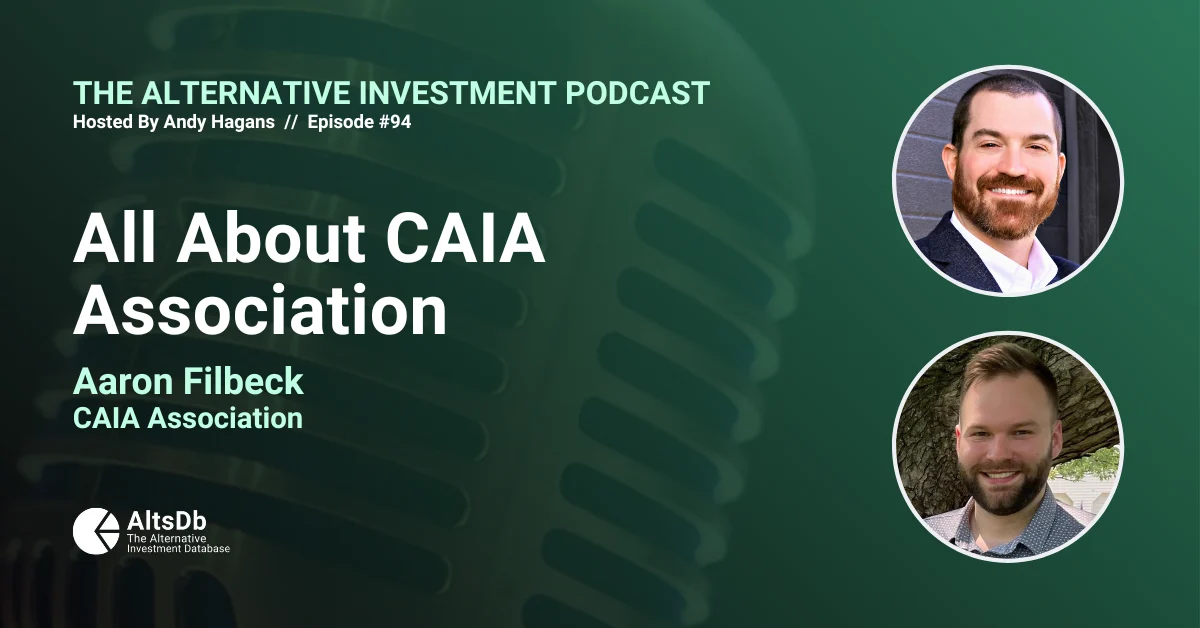
For financial advisors aiming to enhance client portfolios and improve business outcomes, alternative investments present a compelling opportunity. However, navigating this complex landscape, often described as a "beast," is hindered by a significant education gap within the advisor community. Aaron Filbeck, Managing Director and Head of UniFi at CAIA, recently joined "The Alternative Investment Podcast" hosted by Andy Hagans to discuss how the CAIA Association is actively working to bridge this knowledge deficit, with the ultimate goal of improving financial outcomes for clients and society at large.
The conversation underscored a recurring theme that has emerged consistently throughout the history of Hagans’ podcast: the critical need for enhanced education surrounding alternative investments. As the industry grapples with the increasing demand for these sophisticated strategies from both institutional and retail investors, the CAIA Association stands at the forefront of providing the necessary educational infrastructure.
CAIA Association: A Global Leader in Alternative Investment Education
The CAIA Association, a global professional body, is dedicated to fostering greater alignment, transparency, and knowledge for all investors, with a particular emphasis on alternative investments. With approximately 13,000 members spread across nearly 100 countries, the organization offers a diverse range of resources and educational programs.
"We’re really focused on education," explained Filbeck. "As we’re trying to raise the bar for the industry and execute upon our mission, which is creating that better alignment and transparency and knowledge, we’re doing that through a number of different ways. One is through formal education programs that we offer, and we also do a lot of thought leadership and advocacy."
The CAIA membership base is notably diverse, encompassing limited partners (LPs), general partners (GPs), financial advisors, regulators, and distribution professionals. This broad representation highlights the pervasive need for understanding alternatives across various facets of the financial ecosystem. Filbeck emphasized that regardless of their specific role, the ultimate beneficiary of this knowledge is the end client, whether an individual investor or an institutional entity like a pension fund.
Bridging the Global and Local Divide in Alternative Investment Knowledge
The global nature of alternative investments presents a unique challenge, particularly concerning regulatory landscapes and tax codes that can vary significantly from one jurisdiction to another. While core investment strategies like private equity may share fundamental similarities across regions, the specifics of implementation, such as tax implications for direct investments or the availability of certain vehicles, are often localized.
"There is a lot of overlap in the regions," Filbeck noted. "Private equity as a strategy has a lot of similarities in the U.S. and Canada as it might have in Europe or Asia. So, from our perspective, we try to cover a lot of the similarities across the board." He further elaborated that the CAIA Association leverages its global network of 33 chapters in major financial centers to deliver localized ongoing continuing education. This dual approach, combining global strategic insights with localized practical knowledge, is central to the association’s educational philosophy.
The CAIA Charter Program: A Deep Dive into Institutional Alternatives
The flagship offering of the CAIA Association is the CAIA Charter program, a rigorous, two-level examination process designed to provide a comprehensive understanding of institutional-quality alternative investments. Candidates typically dedicate 400 to 500 hours to self-study to master the curriculum.
Level I of the program introduces candidates to a broad spectrum of alternative strategies, including private equity, real assets, hedge fund strategies, and structured credit. It focuses on the fundamental principles, risk-return profiles, and operational aspects of these asset classes. Level II then shifts to an allocator’s perspective, emphasizing portfolio construction, risk management, investment and operational due diligence, and environmental, social, and governance (ESG) considerations.
"The focus of the program is on what we deem ‘institutional quality’ alternative investments that are in the marketplace today," Filbeck explained. "So, as we look at what are the big asset owners and institutional investors allocating towards within their portfolios, the endowments, the pensions, the sovereign wealth funds, and so on."
The program is designed not just for those who are directly allocating capital but also for professionals who need to understand how these investments function within a broader portfolio context. This includes GPs aiming to better understand how institutional investors evaluate their funds, advisors seeking to integrate alternatives into client portfolios, and distribution professionals who need to articulate the value proposition of these complex products.
UniFi by CAIA: Democratizing Alternative Investment Education for Wealth Management
Recognizing the distinct needs of the private wealth management industry, the CAIA Association launched UniFi by CAIA, a learning platform specifically designed to educate financial advisors and their clients on alternative investments. UniFi offers a more accessible, online, and self-directed learning experience compared to the in-depth CAIA Charter program.
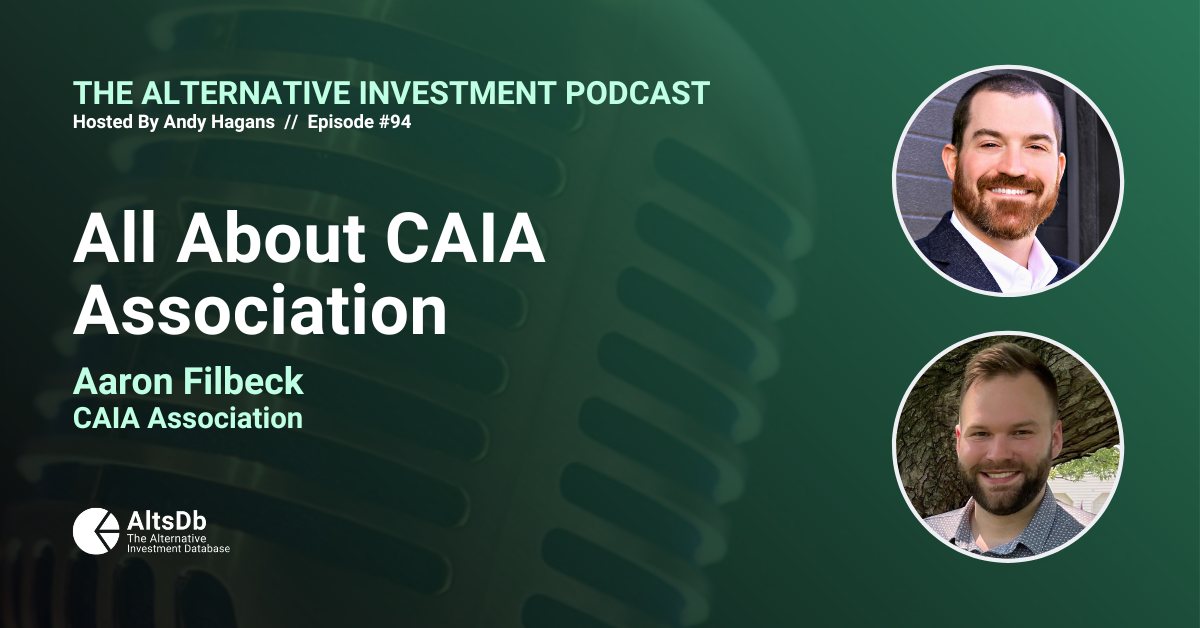
"UniFi by CAIA is a learning platform that was announced by CAIA Association last year, 2022, and is really designed to educate the private wealth management industry on alternatives," stated Filbeck. The platform caters to asset managers looking to upskill their distribution teams, intermediaries and wirehouses seeking to better equip their advisors, and individual RIAs and advisors who directly serve clients.
Currently, UniFi offers a flagship certificate program, "Fundamentals of Alternative Investments," a 20-hour course providing a 101 overview of alternative strategies. The platform is also expanding its offerings with micro-credentials, shorter, focused programs delving into specific topics like private debt and digital assets. These micro-credentials are designed for professionals who need to gain a deeper understanding of particular areas without committing to the extensive CAIA Charter curriculum.
"UniFi is much more for the individual client wealth management industry," Filbeck clarified. "If you don’t need the level of depth, you don’t need the level of rigor but you need to at least be conversant in this stuff, the UniFi platform is probably gonna be most appropriate for you." This approach acknowledges that not every financial professional needs to be an expert allocator, but many require a solid understanding to effectively serve their clients.
The FDP Charter: Navigating the Intersection of Data Science and Finance
In addition to its alternative investment-focused programs, CAIA also offers the Financial Data Professional (FDP) Charter. This program addresses the growing importance of data science and analytics within financial services. The FDP Charter bridges the gap between data scientists and financial professionals, equipping individuals with the skills to understand and apply data science techniques in finance.
"The program is really the intersection of data science and financial services," Filbeck explained. "As you’ve probably seen…the rise of data science, data analytics, computer programming, computer science, and that intersection with finance, new training strategies, new ways to look at RIF [risk, investment, and finance], that has become a very, very popular tool."
The FDP Charter aims to enable financial professionals to better interpret data, collaborate effectively with data scientists, and avoid common pitfalls such as overfitting data or developing algorithms that lack practical relevance. This program is particularly relevant for professionals in quantitative roles, as well as those seeking to enhance their analytical capabilities in an increasingly data-driven industry.
Addressing the Education Gap: Progress and Future Outlook
The conversation also delved into the progress made in addressing the alternative investment education gap over the past decade. Filbeck characterized the emergence of liquid alternatives around 2010 as the "1.0 of this democratization wave," noting that it was primarily product-led and lacked sufficient educational support.
"Compared to what we saw 10 years ago with this move in private capital, which has really accelerated over the past couple of years, I would say that we’ve done a much better job than we did, but I think there’s still a lot of ground to cover in terms of providing education," he stated.
Filbeck highlighted that a crucial shift is occurring: the focus is moving from leading with the product to starting with the client’s objectives. "The point isn’t really that I understand the product…the point is that I understand how all this stuff is a part of improving outcomes for clients," he articulated. This client-centric approach is seen as the most effective way to integrate alternatives thoughtfully into investment portfolios.
Optimistic educational trends include the advancements in technology that facilitate more engaging and accessible learning experiences. Furthermore, Filbeck observes a growing willingness among financial professionals to acknowledge and address their knowledge gaps. "I think people are much more willing to say, ‘I really need to learn about this. I need to find something’," he noted, citing an increase in inquiries from individuals and teams seeking to upskill.
This increased demand for education is also being driven by clients themselves. As alternative investments gain prominence and large institutions increasingly allocate capital to these strategies, retail investors are becoming more curious and are approaching their advisors with questions about incorporating these asset classes into their portfolios. This proactive client engagement serves as a powerful motivator for advisors to seek out the necessary knowledge.
In conclusion, the CAIA Association, through its comprehensive suite of programs like the CAIA Charter, UniFi, and the FDP Charter, is playing a pivotal role in equipping financial professionals with the knowledge and skills required to navigate the complex world of alternative investments. As the industry continues to evolve, the emphasis on client-centric education and the growing accessibility of learning resources signal a promising future for both advisors and the clients they serve.
For those seeking to learn more about the CAIA Association and its educational offerings, the primary resource is their website, caia.org. The organization is also active on social media platforms including Twitter, LinkedIn, and Instagram.
