

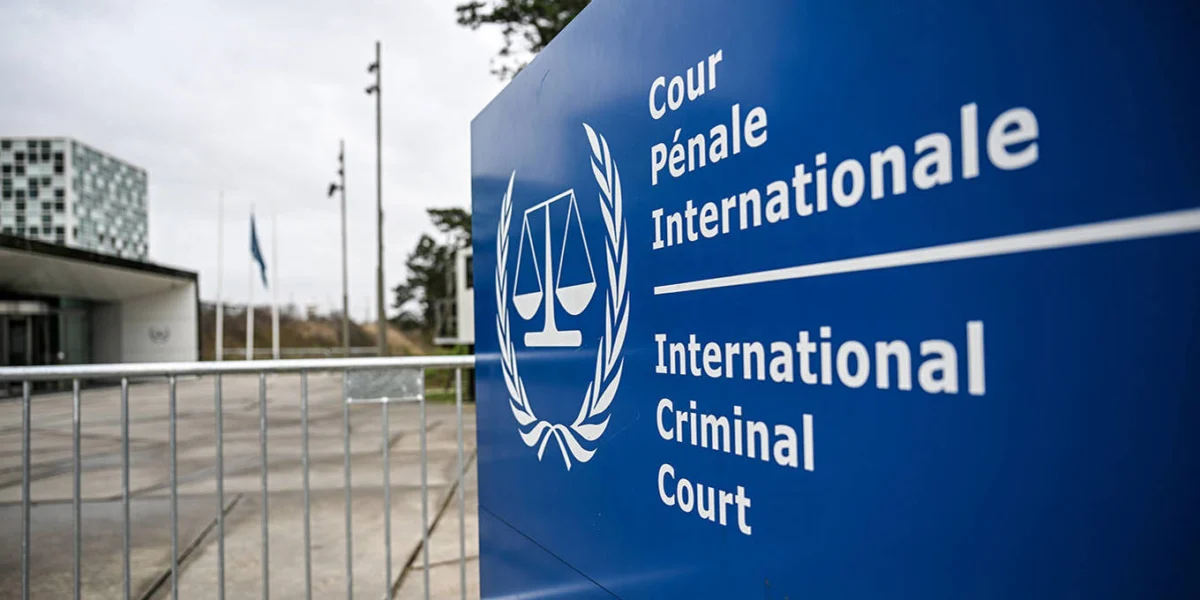
MADRID – The chief prosecutor of the International Criminal Court (ICC), Karim Khan, finds himself in a precarious position, not only grappling with existing United States sanctions for his role in seeking arrest warrants against Israeli Prime Minister Benjamin Netanyahu and other Israeli officials, but now also facing the specter of potential removal from his post. This escalating situation poses a critical test for the principle of judicial independence, with experts warning that a failure by member states to decisively defend the court’s autonomy could set a dangerous precedent with far-reaching implications for international justice.
The current crisis, while seemingly a procedural matter, is being characterized by observers as an act of subtle sabotage, cloaked in the language of legitimate inquiry and accountability. The insidious nature of such institutional failures, which unfold through deliberate procedural maneuvers rather than overt scandal, means that by the time the full extent of the damage becomes apparent, it may be too late to effectively reverse it. This unfolding situation demands a thorough examination of the political pressures on international legal institutions and the critical importance of safeguarding their impartiality.
Background: The ICC and the Netanyahu Arrest Warrant
The International Criminal Court, established by the Rome Statute in 2002, is an independent international organization tasked with investigating and prosecuting individuals accused of the most serious crimes of international concern: genocide, war crimes, crimes against humanity, and the crime of aggression. Its jurisdiction extends to crimes committed by nationals of its member states, or on the territory of its member states, when national courts are unwilling or unable to prosecute.
Karim Khan, a British barrister, assumed the role of ICC Prosecutor in June 2021. His tenure has been marked by significant, and at times controversial, investigations into alleged atrocities in various conflict zones. One of the most significant actions of his office was the application for arrest warrants in May 2024 against Israeli Prime Minister Benjamin Netanyahu, Israeli Defense Minister Yoav Gallant, and three Hamas leaders – Yahya Sinwar, Mohammed Deif, and Ismail Haniyeh – in connection with alleged war crimes and crimes against humanity stemming from the October 7th attacks and Israel’s subsequent military response in Gaza.
This decision immediately drew sharp condemnation from the United States, which, while not a member state of the ICC, has historically expressed strong opposition to the court’s jurisdiction over nationals of countries that have not ratified the Rome Statute, particularly its allies. The US State Department, under Secretary Antony Blinken, announced sanctions against Khan in July 2024, citing his actions as an "unwarranted" attempt to target Israel. These sanctions, which can include asset freezes and travel bans, represent a significant political and financial pressure point on an international judicial official.
Escalation: The Threat of Removal
The recent developments suggest that the pressure on Karim Khan is intensifying beyond the initial sanctions. While the specifics of the mechanisms for his potential removal are not yet fully detailed in public discourse, the implication is that certain member states, possibly influenced by geopolitical alignments and the US sanctions, are exploring or actively pursuing avenues to oust him from his position.
The Rome Statute outlines specific grounds for the removal of the Prosecutor, which typically involve gross misconduct, dereliction of duty, or a serious breach of the obligations of office. Any such process would likely involve a vote or a formal inquiry by the Assembly of States Parties (ASP), the governing body of the ICC, which comprises representatives from the 124 countries that have ratified the Rome Statute.
Timeline of Key Events (Inferred and Contextual)
- 2002: The Rome Statute enters into force, establishing the International Criminal Court.
- May 2024: The ICC Prosecutor’s office, led by Karim Khan, announces its application for arrest warrants against Israeli Prime Minister Benjamin Netanyahu, Defense Minister Yoav Gallant, and Hamas leaders for alleged war crimes and crimes against humanity.
- June 2024: The ICC Pre-Trial Chamber reviews the arrest warrant applications.
- July 2024: The United States imposes sanctions on ICC Prosecutor Karim Khan for his role in seeking arrest warrants against Israeli officials.
- Early July 2024: Reports and analyses begin to emerge, suggesting that Khan is facing increased pressure and potential threats to his tenure beyond the US sanctions, with discussions about his removal gaining traction among certain member states.
- July 17, 2026: (Date of original article) The article is published, highlighting the immediate risk to Khan’s position and the broader implications for judicial independence.
Supporting Data and Legal Frameworks
The ICC’s authority is derived from the Rome Statute, a foundational treaty for international criminal law. Article 16 of the Statute addresses the deferral of investigations, allowing the UN Security Council to defer an investigation or prosecution for a period of 12 months, renewable, if it has requested the Court to defer an investigation into a matter within the jurisdiction of the Court for the purpose of affording the Security Council the opportunity to undertake measures to fulfil its responsibilities under the Charter of the United Nations. This article has been a point of contention, particularly when the Security Council is divided due to veto powers.
The Assembly of States Parties (ASP) plays a crucial role in the governance of the ICC. It is responsible for overseeing the Court’s activities, electing judges and the Prosecutor, and amending the Rome Statute. The ASP’s decisions are typically made by consensus or by a two-thirds majority vote. The removal of a Prosecutor would likely require a significant consensus or vote within the ASP, reflecting the gravity of such an action.
Reactions and Statements (Inferred and Typical)
While specific official statements regarding the potential removal of Karim Khan may be guarded or undisclosed, typical reactions to such a scenario from various stakeholders would likely include:
- International Human Rights Organizations: Groups like Human Rights Watch and Amnesty International would almost certainly express deep concern, emphasizing the imperative of protecting the ICC’s independence from political interference. They would likely call upon member states to uphold the rule of law and the principles of justice.
- Legal Scholars and Experts: Academics specializing in international law and human rights would likely issue statements or analyses highlighting the dangers of politicizing international judicial bodies. They would underscore the potential for such actions to undermine the credibility and effectiveness of the ICC and other international tribunals.
- Member States (Pro-ICC): Countries that are strong supporters of the ICC, such as many European nations, would likely reaffirm their commitment to the court’s independence and express solidarity with the Prosecutor, even if they do not publicly comment on specific internal processes. They would likely advocate for due process and adherence to the Rome Statute.
- Member States (Critical of ICC or Aligned with US): Countries that have expressed reservations about the ICC’s jurisdiction or are closely aligned with the US position might remain silent or subtly support actions that weaken the Prosecutor’s office, viewing it as a necessary check on perceived overreach.
- The United States: The US government, having already imposed sanctions, would likely continue to articulate its position that the ICC has exceeded its mandate, particularly concerning investigations into non-member states or their nationals without their consent.
Broader Impact and Implications: A Crisis of Judicial Independence
The potential removal of the ICC Prosecutor, Karim Khan, transcends the immediate political machims surrounding the Israeli-Palestinian conflict. It represents a critical juncture for the future of international justice.
- Erosion of Judicial Independence: If the Prosecutor can be removed based on decisions that are perceived by some powerful states as politically inconvenient, it sets a dangerous precedent. It signals that international judicial bodies are not truly independent but are subject to the will of political powers. This could paralyze future investigations into grave international crimes.
- Weakening of Accountability Mechanisms: The ICC is one of the few global institutions capable of holding individuals accountable for the most heinous crimes when national systems fail. If its ability to function is compromised by political pressure, perpetrators of war crimes and crimes against humanity may feel emboldened, knowing that accountability is less likely.
- Geopolitical Influence on Justice: The situation highlights the persistent tension between national sovereignty and international legal obligations. The US sanctions and the pressure on Khan illustrate how geopolitical interests can be wielded to influence or undermine international legal processes. This raises questions about the universality and impartiality of international law.
- Test for Member States: The coming period will be a crucial test for the commitment of ICC member states to the principles enshrined in the Rome Statute. Their collective response – whether they stand firm in defending the court’s institutional integrity or succumb to external pressures – will shape the future trajectory of international justice. A divided or passive response could signal a decline in support for multilateralism and international law.
- Impact on Victim Justice: For victims of mass atrocities, the ICC represents a beacon of hope for justice and redress. Any action that weakens the court’s ability to investigate and prosecute undermines this hope and can perpetuate cycles of impunity.
The current situation surrounding Karim Khan and the ICC is more than a legal dispute; it is a profound challenge to the international legal order. The principle of judicial independence is not merely an abstract concept; it is the bedrock upon which any credible system of justice, domestic or international, is built. The coming months will reveal whether the international community is prepared to defend this principle, even when faced with formidable political opposition. The choices made now by the states parties to the Rome Statute will echo through the halls of international justice for decades to come.
