

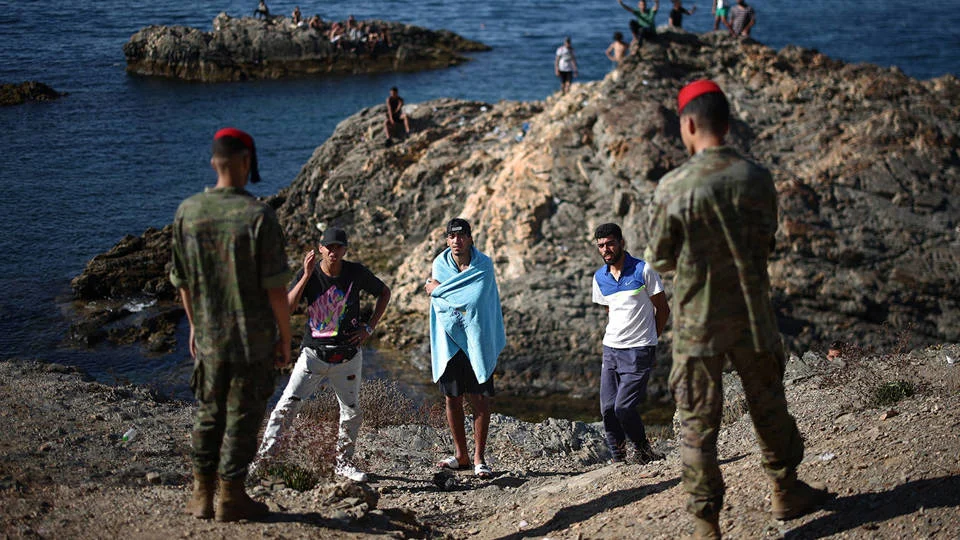
European Union leaders should have received several messages during the recent surge of migrants into the Spanish exclave of Ceuta. In particular, cohesion without trust is fragile; dependence without limits leads to vulnerability; and selective enforcement of international law risks eroding a pillar of Europe’s strategic identity.
Madrid – The late summer of 2026 witnessed a dramatic surge in migration as tens of thousands of individuals, primarily from sub-Saharan Africa, crossed from Morocco into Ceuta, a Spanish autonomous city located on the northern coast of Africa. This unprecedented influx, occurring at the end of July, presented Spanish authorities and the wider European Union with a complex humanitarian, security, and diplomatic challenge. While the immediate crisis has largely subsided, the event has exposed deep-seated vulnerabilities within the EU’s border management, its relationships with neighboring countries, and its commitment to a unified approach to international law.
The sheer scale of the crossing, with reports indicating that over 8,000 people, many of them minors, entered Ceuta in a single day, overwhelmed local resources. This rapid escalation was reportedly triggered by a temporary easing of Moroccan border controls, a move widely interpreted as a response to geopolitical tensions and diplomatic disagreements with Spain. While the majority of those who entered have since been repatriated to Morocco under bilateral agreements, thousands, including a significant number of unaccompanied minors, remain in Ceuta, creating a protracted humanitarian situation and straining Spanish administrative capacities.
Background to the Ceuta Crisis
Ceuta, along with the neighboring Spanish exclave of Melilla, has long been a focal point of migration attempts into Europe. Situated on the Strait of Gibraltar, these enclaves represent the only land borders the EU shares with Africa. For years, thousands of individuals have attempted to scale the high fences surrounding these cities or reach them by sea, driven by a confluence of factors including poverty, conflict, and political instability in their home countries, coupled with the allure of economic opportunity and security in Europe.
However, the scale and speed of the July 2026 influx were exceptional. The incident was not a spontaneous event but appeared to be linked to a deliberate, albeit temporary, shift in Moroccan border policy. Analysts suggest this was a strategic maneuver by Rabat to exert pressure on Madrid amidst ongoing disputes, potentially related to Western Sahara or other bilateral issues. This instrumentalization of migration flows by a third country is a recurring concern for the EU, highlighting the precariousness of its external border management and its reliance on cooperation with transit countries.
Chronology of the Influx and its Aftermath
The events unfolded rapidly in late July and early August 2026:
- Late July 2026: Reports begin to emerge of a significant increase in migrant arrivals in Ceuta. Initially, a trickle, the numbers quickly escalated to thousands per day, with individuals swimming across the border or using small boats to circumvent the fortified perimeter.
- July 27-29, 2026: The peak of the influx. Tens of thousands of migrants, including many young people and children, reportedly entered Ceuta. Spanish Guardia Civil and military personnel, along with Moroccan security forces on the other side, struggled to manage the situation.
- Early August 2026: Spanish authorities, in coordination with Moroccan counterparts, began the process of returning many of the arrivals. Bilateral agreements allowing for rapid repatriation were invoked. However, the process was complex, particularly for minors and those claiming asylum.
- Mid-August 2026: The immediate crisis subsides as border controls are reportedly reinforced. Thousands of migrants remain in Ceuta, housed in temporary facilities. Humanitarian organizations raise concerns about living conditions and the long-term welfare of unaccompanied minors.
- Late August 2026: Political fallout begins. EU leaders convene to discuss the implications of the event, emphasizing the need for a more robust and unified approach to migration and border security. Diplomatic channels are activated to address the underlying causes and the role of Morocco.
Supporting Data and Scale of the Event
While precise figures can vary due to the fluid nature of such events, credible reports from the time paint a stark picture:
- Total Arrivals: Estimates suggest that between 8,000 and 10,000 individuals entered Ceuta during the peak of the crisis.
- Demographics: A significant proportion of the arrivals were identified as minors, with some reports suggesting this group constituted as much as 30-40% of the total. This presented a particularly challenging aspect for repatriation and care.
- Repatriation: Over the weeks following the influx, thousands of migrants were voluntarily or involuntarily returned to Morocco. However, a substantial number, particularly those with protection needs or under the age of 18, remained in Spanish care.
- Historical Context: While Ceuta and Melilla regularly experience migratory pressures, the July 2026 event dwarfed previous incidents in terms of the speed and volume of arrivals within such a short timeframe. For comparison, previous significant surges in a single day rarely exceeded a few hundred.
Official Responses and Diplomatic Maneuvers
The immediate response from Spanish authorities was one of crisis management. Security forces were deployed to patrol the border and manage the arrivals, while social services and NGOs worked to provide humanitarian aid. Spain also invoked bilateral agreements with Morocco for the repatriation of those who did not qualify for international protection.
On the European level, the incident triggered urgent consultations among member states and with the European Commission. Key reactions and statements included:
- European Commission: President Ursula von der Leyen expressed solidarity with Spain and reiterated the EU’s commitment to managing its external borders effectively and humanely. Discussions focused on strengthening external border controls, enhancing cooperation with North African partners, and addressing the root causes of migration.
- EU Interior Ministers: An emergency meeting was convened to assess the situation and coordinate a collective response. Debates centered on burden-sharing, the future of the EU’s migration pact, and the need for a unified stance against the instrumentalization of migration by third countries.
- Morocco: Moroccan authorities, while cooperating with repatriation efforts, also used the situation to highlight their role as a key partner in managing migration flows and to underscore their own security concerns. The incident underscored Morocco’s significant leverage in its relationship with the EU.
- Human Rights Organizations: Groups like Amnesty International and Human Rights Watch voiced concerns about the treatment of migrants, particularly minors, and called for adherence to international refugee law and human rights standards during repatriation processes. They emphasized the need for due process and protection for vulnerable individuals.
Broader Impact and Implications
The Ceuta crisis serves as a critical case study, revealing several profound vulnerabilities and raising urgent questions for the European Union:
- Fragility of Cohesion without Trust: The incident highlighted that EU solidarity is tested when faced with immediate, large-scale challenges. While member states expressed support for Spain, the underlying reliance on individual member states to manage their external borders, coupled with differing national interests and capacities, can undermine a truly cohesive response. Trust between member states, and between the EU and its partners, is paramount for effective border management.
- Dependence without Limits Leads to Vulnerability: The EU’s reliance on external partners, such as Morocco, to control migration flows, while often necessary, creates a significant point of vulnerability. When these partnerships are strained or when transit countries strategically alter their policies, the EU’s border security can be directly impacted. This dependence necessitates a more strategic and balanced approach to external relations, moving beyond purely transactional arrangements.
- Selective Enforcement of International Law: The crisis brought into sharp focus the tension between the pragmatic realities of border control and the principles of international law, particularly the right to seek asylum and the prohibition of refoulement (the forced return of refugees to a country where they face persecution). The ability of third countries to leverage migration flows to achieve political aims raises questions about the EU’s consistent application of its own values and legal frameworks. The perception of selective enforcement, where legal obligations are met or ignored based on political expediency, risks eroding the EU’s credibility as a champion of the rule of law and human rights on the global stage.
The long-term implications of the Ceuta surge are significant. It underscores the persistent need for comprehensive EU migration policies that address both the immediate management of borders and the underlying drivers of migration. This includes investing in development aid, conflict resolution, and legal pathways for migration in origin and transit countries. Furthermore, it necessitates a robust and unified diplomatic strategy towards key partners, ensuring that cooperation on migration is not held hostage by other geopolitical considerations.
The events of July 2026 in Ceuta were not merely a border incident; they were a potent reminder that Europe’s security and identity are inextricably linked to its ability to manage its external frontiers effectively, uphold its legal and ethical commitments, and foster genuine cohesion among its member states. The lessons learned, if acted upon, could pave the way for a more resilient and principled approach to one of the defining challenges of the 21st century.
