

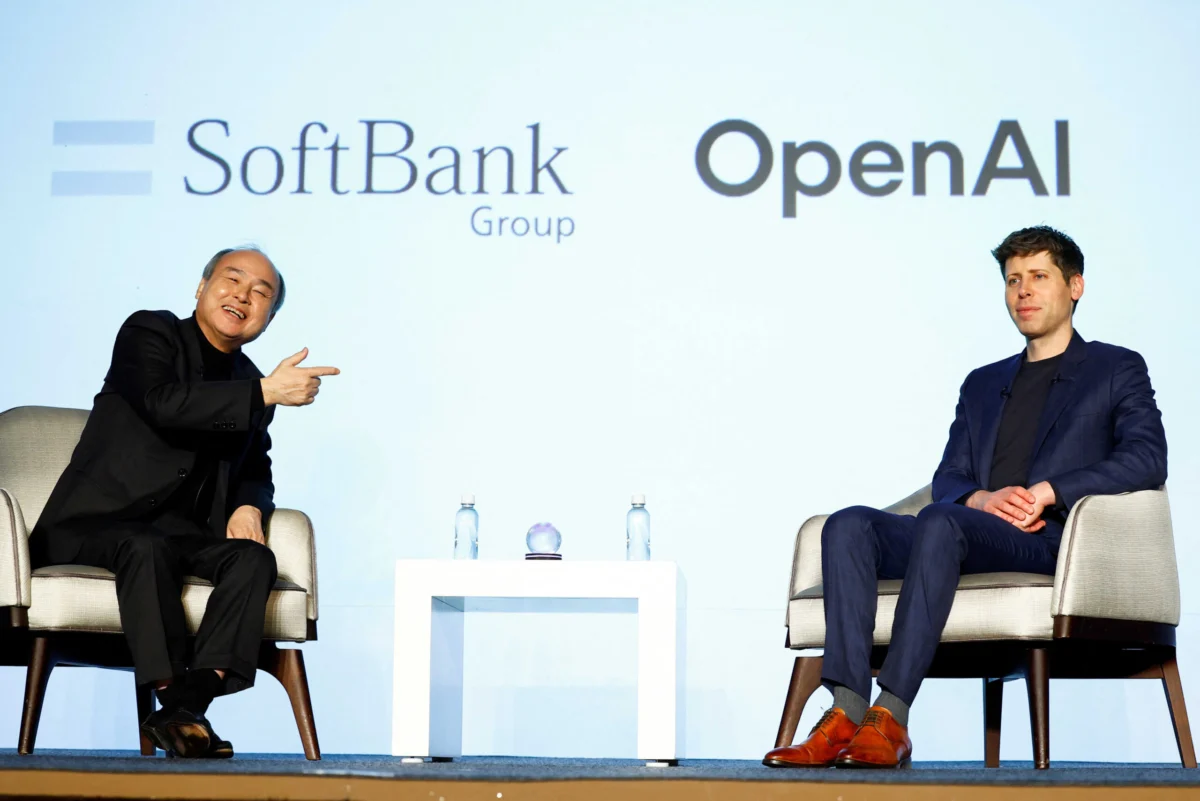
Silicon Valley titans, from the visionary Elon Musk to the architect of advanced artificial intelligence, OpenAI CEO Sam Altman, have consistently painted a future where AI ushers in an era of unprecedented abundance and economic deflation. Altman himself has articulated this vision, stating that "intelligence too cheap to meter is well within grasp." Similarly, Musk, the ubiquitous CEO of Tesla and SpaceX and a figure synonymous with technological disruption, has posited that AI and robotics will fundamentally reshape economies, driving down costs through extreme abundance. SoftBank’s Masayoshi Son, a prominent investor in disruptive technologies, echoed these sentiments, anticipating a significant 40% drop in prices and the obsolescence of "unnecessarily hard work."
However, the burgeoning reality of AI integration into the global economy suggests these optimistic projections are, at least for now, premature. Instead of the promised deflationary spiral, many sectors are encountering a significant hurdle: corporate inertia. This widespread adoption challenge, coupled with the colossal multi-trillion-dollar investments in AI infrastructure, is creating near-term inflationary pressures, with little tangible evidence of a sustained, economy-wide productivity boom.
The widespread adoption of AI within established businesses has proven far slower and more complex than the most ardent proponents had predicted. Simultaneously, the tech industry’s insatiable appetite for data centers and cutting-edge AI hardware has strained global supply chains. The immense capital expenditure required to build out AI capabilities is already driving up prices in critical sectors, most notably electricity. These mounting costs are accumulating before the full-scale economic benefits of AI are realized, presenting a complex dilemma for central banks like the U.S. Federal Reserve, which are tasked with managing inflation.
The Tangible Costs of an Intangible Revolution
Ronnie Chatterji, chief economist for OpenAI, acknowledged that "for it to impact the economy, it has to be adopted by organizations. Those organizations have to realize value." He further conceded that "it’ll still be a little while before we see it sort of clearly for productivity statistics." This sentiment underscores a critical disconnect: the theoretical potential of AI versus the practical challenges of its implementation.
The sheer scale of investment in AI infrastructure is staggering. Goldman Sachs Research estimates that capital expenditure on the AI buildout will reach $581 billion in the U.S. alone this year, with global spending projected to hit a colossal $1 trillion in 2026. In the U.S., this spending already represents 1.8% of the nation’s gross domestic product, a figure the firm anticipates will rise to 2.8% by 2028. This surge in demand for computing power and specialized hardware is directly impacting resource availability and pricing.

While AI adoption is increasing, its penetration remains uneven. A recent Census Bureau survey indicated that between 17% and 20% of U.S. businesses reported using AI, with larger corporations demonstrating significantly higher adoption rates than their smaller counterparts. This disparity suggests that the widespread economic benefits, and potentially the deflationary impacts, are still concentrated within a segment of the market.
Peter Boockvar, of One Point BFG Wealth Partners, draws a parallel to the internet revolution, a period that also promised profound productivity gains. Even during that transformative era, U.S. productivity saw a modest 1.5% increase over three decades, averaging 2.5% over 50 years. Boockvar expresses skepticism about generative AI’s ability to deliver a significantly higher level of economic enhancement compared to the internet, stating, "Technology has always made people more productive. But is generative AI multiple step functions higher? We just don’t know."
Navigating Corporate Inertia and the "Weak Links"
The optimistic forecasts from Silicon Valley often overlook the complex realities of integrating advanced technology into large, established organizations. Julie Averill, former chief information officer at Lululemon, who spearheaded AI adoption within the company, offers a grounded perspective: "The reality is that the technology is there. The hype is around the ease of the technology in a large organization."
Lululemon, for instance, leveraged AI to enhance its ability to predict product demand at a granular level, a sophisticated application far removed from simple chatbot interactions. Averill highlights the enduring challenges: "The things that have always made implementations in large companies difficult still exist, which is people. Getting people to change their behaviors, taking them along the journey with you, and getting them to trust the model, that’s hard." This emphasis on human factors—change management, trust, and behavioral adaptation—remains a significant impediment to widespread AI deployment.
Chatterji’s observations at OpenAI reveal a widening chasm in AI utilization. He notes that "the power users of AI deploy it at eight times the rate of average companies, measured by tokens per user." This gap has reportedly doubled in just three months, illustrating a growing divide between "frontier firms" that are actively reorganizing their workflows around AI and "typical firms" that are not. "The companies that are reorganizing their workflows around it and changing the way they work around AI, they’re having more success," Chatterji stated.
Economists studying AI have identified a phenomenon known as "weak links" to explain these implementation challenges. These refer to tasks within a job that are not easily automated. While AI excels at automating specific, well-defined tasks, such as analyzing medical scans, most jobs are comprised of a complex bundle of activities. Stanford professor Charles Jones, a leading scholar on AI’s impact on economic growth, currently on leave at Anthropic, explains that AI tools can significantly enhance productivity by automating a portion of a professional’s tasks.

A striking example is the case of radiologists. Nobel laureate Geoffrey Hinton predicted in 2016 that radiologists would become obsolete within a decade. However, their numbers have continued to grow. Jones elaborates, "It turns out that radiologists do more than just read scans, and AI tools complement those other skills by automating a fraction of the tasks that radiologists perform." The human-centric aspects of their role, such as patient communication and interdisciplinary collaboration, represent these "weak links" that AI, in its current form, cannot fully replicate. The full impact of these weak links on the broader economy will only become apparent as AI adoption scales across more industries.
The Federal Reserve’s AI Quandary: Inflationary Pressures and Policy Decisions
The complex interplay between AI’s economic impact and broader inflationary trends has drawn the attention of policymakers. Fed Chairman Kevin Warsh recently appointed Charles Jones to a task force designed to inform the Federal Reserve’s understanding of AI’s economic implications. The task force also includes venture capitalist Marc Andreessen, a prominent investor in AI startups who has publicly predicted an era of "hyper-deflation."
When Jones, Andreessen, and other experts on the task force present their findings in the coming months, they will contribute to an ongoing, robust debate within the Federal Reserve. Before his confirmation as Chairman, Warsh himself argued in November that the Fed should raise its growth forecasts to account for AI, stating, "AI will be a significant disinflationary force, increasing productivity and bolstering American competitiveness." This stance aligned with a political narrative favoring lower interest rates.
However, not all Fed officials share this optimistic outlook regarding AI’s immediate deflationary potential. In July, the Federal Open Market Committee (FOMC) voted to maintain interest rates at their current range of 3.5% to 3.75%. This decision was not unanimous, as some officials voiced concerns that the economy might require tighter monetary policy to curb AI-driven price increases.
Minneapolis Fed President Neel Kashkari, explaining his dissent in favor of a higher interest rate, highlighted the inflationary impact of the massive investments in data centers. He stated, "The massive investment in data centers has also added a new demand element to the high inflation Americans are experiencing." The burgeoning demand for energy-intensive data centers is contributing to rising utility costs for consumers. Data from the Bureau of Labor Statistics reveals that household electricity prices increased by 10.1% in the two years leading up to June, significantly outpacing the overall 6.3% inflation rate during the same period.
Further complicating the picture are supply chain constraints affecting the hardware essential for advanced AI models. AI companies are intensely competing for the latest chips from manufacturers like Nvidia, overwhelming the production capacity of chipmakers. This scarcity is driving up prices for critical components. JPMorgan Chase estimates that the cost of dynamic random-access memory (DRAM) will have risen by 400% by the end of the year compared to 2024. Similarly, CPI data shows a substantial 22.9% increase in the cost of computer software and accessories since June 2024, with a 17.4% jump in the past year alone.

These mounting cost pressures have led Chairman Warsh to adopt a more cautious tone. While acknowledging that companies’ vast AI investments are laying the groundwork for future growth, he stated in July that "the precise timing and magnitude of effects on the supply side remain hard to predict."
Boockvar summarized the challenge: "The cost and inflationary aspect is really complicating Kevin Warsh’s job. He wants to believe in the productivity enhancements down the road — but it’s not something he can react to." The current economic landscape suggests that while AI may eventually fulfill its transformative potential, the immediate future is characterized by tangible costs and inflationary headwinds, creating a complex environment for policymakers and businesses alike.
This article was compiled using information from a Reuters report and data from CNBC, Goldman Sachs Research, the Census Bureau, and the Bureau of Labor Statistics. Reporting contributed by Drew Troast.
