

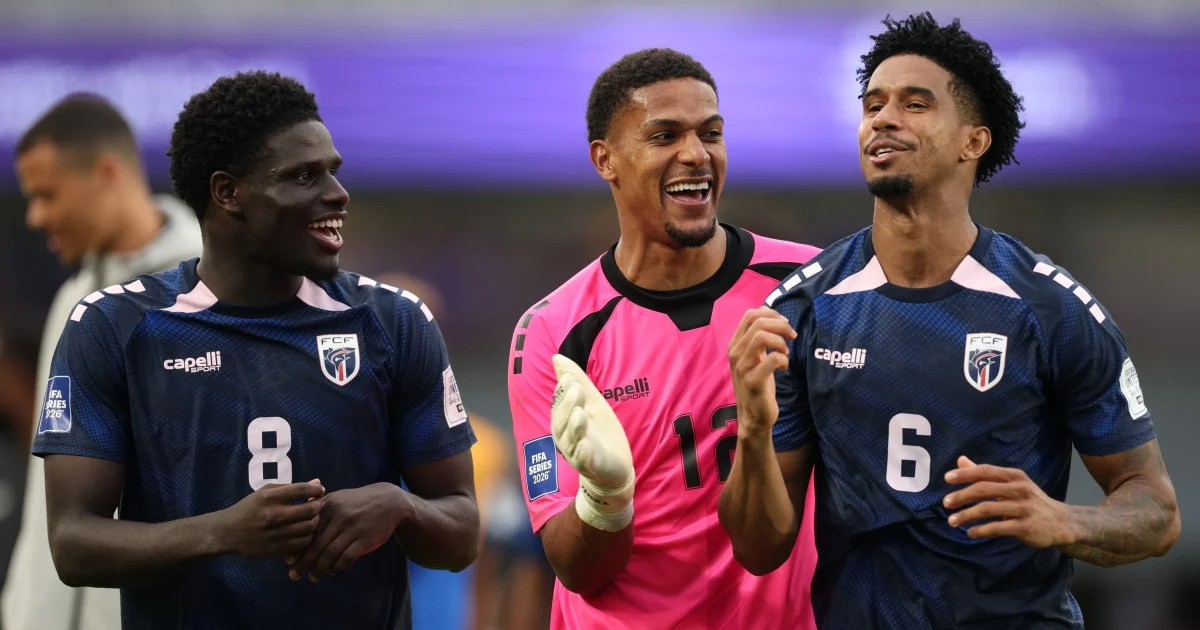
Football’s world governing body, FIFA, has heralded the expansion of the World Cup from 32 to 48 teams for the 2026 tournament in North America as a transformative moment for global inclusivity. This unprecedented enlargement of the world’s most prestigious football competition is designed to open doors for nations that have historically found qualification challenging, fostering greater participation and development across all confederations. Indeed, the upcoming tournament will witness a historic occasion as four nations — Cape Verde, Curacao, Jordan, and Uzbekistan — prepare to make their inaugural appearances on football’s grandest stage. Their qualification not only marks a personal milestone for each country but also serves as a tangible demonstration of FIFA’s commitment to broadening the geographical reach of the sport’s pinnacle event.
This guide delves into the remarkable journeys of these debutant nations, offering a comprehensive look at their rise, their key figures, and the aspirations they carry into the 2026 FIFA World Cup.
The Genesis of Expansion: FIFA’s Vision for a Global Game
The decision to expand the FIFA World Cup to 48 teams was formally approved by the FIFA Council in January 2017, following extensive debate and analysis. The concept, championed by FIFA President Gianni Infantino, aimed to democratize access to the tournament, which had maintained a 32-team format since 1998. Proponents argued that an expanded format would inject new life into qualifying campaigns, provide greater financial opportunities for participating federations, and inspire football development in regions traditionally underrepresented.
Under the new structure, the number of qualification slots for each confederation has increased significantly:
- AFC (Asia): From 4.5 to 8.5 slots
- CAF (Africa): From 5 to 9.5 slots
- CONCACAF (North, Central America, and Caribbean): From 3.5 to 6.5 slots (including three host nations)
- CONMEBOL (South America): From 4.5 to 6.5 slots
- OFC (Oceania): From 0.5 to 1.5 slots
- UEFA (Europe): From 13 to 16 slots
The remaining two slots will be determined by a six-team intercontinental playoff tournament, ensuring that even more nations have a pathway to qualification. While some critics voiced concerns about a potential dilution of quality and increased logistical complexities, FIFA maintained that the benefits of global engagement and developmental impetus far outweighed these considerations. For the four debutants of 2026, this expansion was not merely an abstract policy change but a concrete pathway to realizing long-held national dreams.
Cape Verde: The Blue Sharks Make a Splash
With a population of approximately 525,000, the small archipelago nation of Cape Verde, nestled off the coast of Senegal, is set to become one of the least populous countries ever to participate in a FIFA World Cup, surpassed only by Curacao and Iceland. Their qualification is a testament to years of consistent improvement and a strategic reliance on their extensive diaspora talent.
A Decade of Rising Fortunes: Cape Verde’s footballing ascent has been gradual but steady. The "Blue Sharks," as they are affectionately known, have become a formidable force in African football over the past decade. Their journey to the 2026 World Cup was meticulously crafted, culminating in a historic 3-0 victory over Eswatini in October, which sealed their place. This achievement was not an isolated incident but rather the culmination of a series of impressive performances. In the 2023 Africa Cup of Nations (AFCON), Cape Verde defied expectations by topping a group that included continental giants Ghana, eventually reaching the quarterfinals where they were narrowly defeated by South Africa in a penalty shootout. Furthermore, they continued their strong form by topping their 2026 World Cup qualifying group, finishing ahead of the historically dominant Cameroon.
Key Figures and Diaspora Influence: Central to Cape Verde’s success is their 35-year-old captain, Ryan Mendes. Despite playing for second-tier Igdir in Türkiye, Mendes is the heartbeat of the team, his experience and leadership proving invaluable. As Mendes himself articulated to AFP, "We have taken part in four African Cup of Nations tournaments, and we were also very close to qualifying for the 2014 World Cup. A lot has been achieved over the years. And today, we can say that this is the logical outcome."

The squad’s strength is significantly bolstered by its Portuguese colonial heritage and a thriving diaspora. Many players have roots in Portugal and the Netherlands, with some even hailing from unexpected places like Ireland. Roberto Lopes, the 33-year-old Shamrock Rovers defender, with a Cape Verdean father and Irish mother, was famously recruited via LinkedIn, highlighting the innovative approach to talent identification. While perhaps not a "mega-star" in global terms, 35-year-old winger Garry Rodrigues, with stints at Galatasaray and Olympiacos, is arguably the team’s most recognizable name. His experience and attacking prowess add vital depth.
National Pride and Aspirations: The qualification has ignited a wave of national pride across the islands. For a nation grappling with the challenges of small island development, football offers a powerful unifying force and a platform for international recognition. The Blue Sharks are not merely content with participation. As Mendes emphatically stated, "One thing’s for sure: we’re not going there just to play three games and come home." This bold statement reflects a collective ambition to make a significant impact, echoing the fighting spirit that has defined their journey to the global stage.
Curacao: Small Island, Big Dreams on the Blue Wave
The Caribbean island of Curacao, with its population of approximately 160,000, holds the distinction of being the smallest country by population ever to qualify for the FIFA World Cup. Their incredible journey, dubbed the "Blue Wave," culminated in a hard-fought 0-0 draw against Steven McClaren’s Jamaica in November, securing their place in history. This achievement has sent ripples of euphoria through the Dutch constituent country, famed globally for its eponymous sapphire liqueur.
A Dutch Connection and Coaching Acumen: Curacao’s footballing identity is intrinsically linked to its historical ties with the Netherlands. As a self-governing entity within the Dutch Kingdom, the island benefits immensely from its Dutch-based diaspora. Gilbert Martina, president of Curacao’s football federation, openly acknowledges this vital connection: "All the players on the national team play in foreign leagues." This reliance on players nurtured within the robust Dutch football system has been a cornerstone of their development.
The most famous individual associated with Curacao’s qualification is their venerable manager, Dick Advocaat. The 78-year-old former Netherlands, PSV, and Rangers boss guided the Curacaoans to this unprecedented success and is set to become the oldest manager ever at a World Cup. His vast experience and tactical acumen have been crucial in molding a cohesive unit capable of competing on the international stage.
Notable Players and Inspirational Figures: Perhaps the best-known player in the squad is Tahith Chong, currently with Championship side Sheffield United. The 26-year-old winger or attacking midfielder, known for his pace, dribbling, and potent left foot, moved to the Netherlands at the age of 13 and is the only team member born on Curacao. His journey embodies the diaspora’s contribution.
The island’s most famous footballing son, though not a current player, is undoubtedly Patrick Kluivert, the former Ajax and Barcelona star, whose mother hailed from Curacao. Kluivert, who coached the Curacaoan side between 2015 and 2016, expressed his delight: "It’s fantastic that the island is in the World Cup. In my day, [football] was not that big on the island, but the players have given Curacao visibility. It’s important for the future, for the next generation." His words underscore the profound impact this qualification will have on inspiring young talent on the island.
Challenges and Optimism: For Curacao, the World Cup represents an immense challenge but also an unparalleled opportunity. Their qualification is a source of immense pride and a testament to what can be achieved with strategic investment in diaspora talent and experienced leadership. The "Blue Wave" is more than just a football team; it’s a symbol of a small nation daring to dream big on the global stage, aiming to leave a lasting impression.
Jordan: The Chivalrous Take on the World
Jordan’s qualification for their first FIFA World Cup marks a significant milestone for football in the Middle East. The "Chivalrous," as the national team is known, enter the tournament with a blend of underdog spirit and an ambitious mindset, drawing inspiration from regional success stories.

Emulating Regional Success: Jordan head coach Jamal Sellami has openly challenged his players to emulate Morocco’s historic run to the semifinals of the 2022 World Cup. "In big competitions, many teams can surprise. My country, Morocco, reached the semifinals in the last World Cup," Reuters quoted him as saying during a training camp in Antalya, Türkiye. "That gives us belief." This belief is palpable within the squad, as midfielder Noor Al-Rawabdeh articulated: "For us, we are not going just for participation. We are aiming to go as far as we can in the tournament. To be honest, sometimes we don’t sleep when we think about it. It’s a dream come true for us."
A Strong Asian Cup Showing: Jordan’s journey to the World Cup was underpinned by a formidable performance in the 2024 AFC Asian Cup, where they defied expectations to reach the final, eventually losing 3-1 to hosts Qatar. This deep run showcased their tactical discipline, resilience, and individual brilliance, providing a strong foundation for their World Cup qualifying campaign. They secured an automatic berth at the World Cup after finishing second behind South Korea in their Asian qualifying group, demonstrating their capability to compete with Asia’s elite.
Key Players and Strategic Preparation: The team’s standout player is undoubtedly Musa Al-Taamari, the dynamic winger from French club Rennes. His creative flair, dribbling ability, and eye for goal were instrumental in Jordan’s qualification and their impressive Asian Cup run. He represents the attacking spark that could trouble opponents in North America.
Coach Sellami emphasizes the importance of meticulous preparation. The training camp in Antalya, featuring matches against strong international opponents like Costa Rica and Nigeria, was designed to build crucial experience. "We are preparing step by step. We’ve played against different football cultures," he noted. "We are collecting experience and, Inshallah [God willing], we will surprise many people." This strategic approach highlights Jordan’s commitment to arriving at the World Cup well-prepared and ready to challenge preconceived notions about their capabilities. The nation is united behind its team, hopeful that the Chivalrous can indeed write another memorable chapter in their footballing history.
Uzbekistan: A Dream Realized After Decades of Waiting
For the Central Asian nation of Uzbekistan, qualification for the 2026 FIFA World Cup is the culmination of a 34-year-long dream, a persistent pursuit since gaining FIFA membership in 1994 following the dissolution of the Soviet Union. This inaugural appearance marks a pivotal moment for Uzbek football, symbolizing its maturation on the international stage.
A Long and Arduous Road: Uzbekistan’s journey to the World Cup has been characterized by near misses and valiant efforts across seven previous qualifying campaigns. Ravshan Irmatov, Vice President of the Uzbekistan FA and a veteran referee at three World Cups, perfectly encapsulates the national sentiment: "Qualifying for the World Cup has been a dream for 38 million people for 34 years. You can understand how important it was for the Uzbek nation, we waited so long." This qualification is not just a sporting achievement; it’s a moment of profound national pride and collective vindication.
Coaching Transitions and Homegrown Talent: The path to qualification involved a significant coaching transition. Slovenian coach Srecko Katanec initially guided a team built primarily on home-based talent to the cusp of the finals. However, health issues necessitated his stepping down, with Olympic team coach Timur Kapadze taking the reins to successfully secure the coveted ticket for the 2026 tournament. This continuity within the coaching structure, leveraging local expertise, underscores the depth of talent within Uzbek football development.
Star Players and Defensive Solidity: The team’s attacking spearhead is captain Eldor Shomurodov, currently on loan at Istanbul Basaksehir from Roma. With 44 goals in 90 games, he stands as the country’s all-time top scorer, having also netted 21 Turkish Super League goals this season. His clinical finishing and leadership are vital to Uzbekistan’s offensive strategy.
However, the team’s most globally recognized player is arguably Abdukodir Khusanov of Manchester City. The 22-year-old center-back has rapidly become a key component of his club’s defense, earning accolades for his positional play, pace, strength, and quiet leadership. His presence in the Premier League signifies the growing quality of Uzbek talent and provides inspiration for aspiring young footballers. Khusanov’s emergence marks a significant milestone, making him the first Uzbek to play in England’s top flight.
A New Era Under Cannavaro: Uzbekistan officially confirmed their place at the finals with a 0-0 draw against the United Arab Emirates in June. Since then, the team has welcomed a new, high-profile coach: former Italian World Cup winner Fabio Cannavaro. His appointment brings a wealth of elite experience and tactical knowledge to the squad. Cannavaro’s philosophy emphasizes mental fortitude, urging his players to embrace the moment without undue pressure. "I’ll tell you what I always repeat to my players: for the first time you will play in a World Cup, you have nothing to lose," Cannavaro was quoted as saying by The Mirror in March. "Approach every match with maximum calm, enjoy yourselves as much as possible, and if you feel anxiety, let it be positive anxiety." This mindset will be crucial as Uzbekistan navigates its maiden World Cup voyage, aiming to showcase the spirit and skill of Central Asian football to a global audience.

Broader Impact and Implications of the Expanded World Cup
The inclusion of these four debutant nations—Cape Verde, Curacao, Jordan, and Uzbekistan—serves as a powerful validation of FIFA’s decision to expand the World Cup. Their presence on the global stage is not merely a statistical anomaly but a symbol of deeper, structural shifts within international football.
Diversifying the Global Football Landscape: The expanded format undeniably diversifies the competitive landscape. For decades, the World Cup was largely dominated by established footballing powers from Europe and South America, with occasional breakthroughs from African or Asian nations. The 48-team format ensures a broader geographical spread, allowing different styles of play, cultural narratives, and underdog stories to emerge. This increased representation can foster greater engagement from new fan bases and inspire investment in football development in regions that previously felt perpetually on the periphery.
Economic and Developmental Boost: For national football federations like those in Cape Verde, Curacao, Jordan, and Uzbekistan, World Cup qualification brings an invaluable financial windfall through prize money, increased sponsorship opportunities, and enhanced media rights. This revenue can be reinvested into grassroots programs, youth academies, coaching education, and infrastructure development, creating a virtuous cycle for sustainable growth. The visibility gained also elevates the national leagues and attracts more talent to the sport, promising a brighter future for generations to come.
Inspiring the Next Generation: The most profound impact might be on the aspiring young footballers in these nations. Witnessing their national heroes compete against the world’s best provides an unparalleled source of inspiration and proof that dreams can indeed be realized. It creates a new generation of fans and players, bolstering the sport’s long-term health and popularity. The stories of diaspora players like Roberto Lopes and Tahith Chong also highlight the global interconnectedness of modern football and the potential for talent to be harnessed from diverse backgrounds.
Challenges of Competition and Logistics: While the benefits are clear, the expanded format also presents challenges. Critics continue to debate whether the quality of play will be diluted with more teams, potentially leading to more one-sided matches in the group stage. Logistically, hosting 48 teams across three nations (USA, Canada, Mexico) in 2026 will be an unprecedented undertaking, demanding meticulous planning for travel, accommodation, and training facilities. For the debutant teams themselves, adapting to the intensity and pressure of a World Cup, against potentially vastly more experienced opponents, will be a significant test of character and tactical discipline.
Conclusion: A New Chapter in Football History
The 2026 FIFA World Cup stands poised to write a new chapter in football history. The inclusion of Cape Verde, Curacao, Jordan, and Uzbekistan is more than just a footnote; it is a powerful narrative of perseverance, strategic development, and the enduring appeal of the beautiful game. These nations embody the spirit of the expanded tournament – a vision where dreams are no longer confined to the traditional powerhouses but are accessible to every corner of the globe. As the countdown to 2026 continues, the football world eagerly anticipates the debut of these four nations, ready to witness new heroes emerge and new stories unfold on the grandest stage of all. Their participation is a testament to the fact that with ambition, astute planning, and a bit of hope, even the smallest or historically overlooked nations can stand shoulder to shoulder with football’s giants.
