

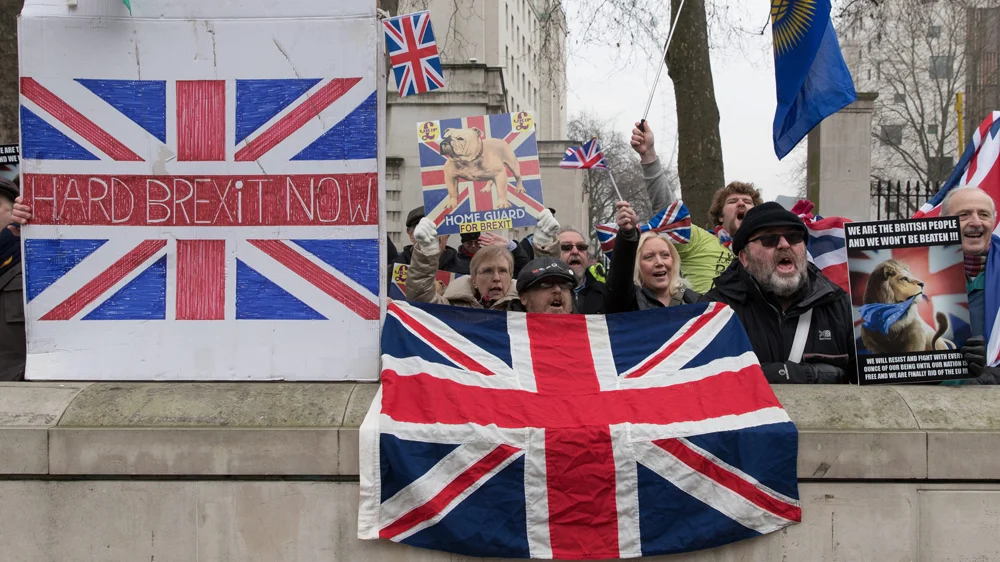
A decade has passed since the United Kingdom voted to leave the European Union on June 23, 2016, a moment that fundamentally realigned the nation’s political, social, and economic trajectory. While contemporary polling suggests that a majority of the British public now views the decision with a degree of regret—often referred to in the media as "Bregret"—a significant and vocal portion of the population maintains that the fundamental arguments for leaving the bloc remain as valid today as they were ten years ago. For these supporters, Brexit was never a purely fiscal calculation but a restoration of national identity and democratic accountability.
Robert Tombs, a Professor of History at the University of Cambridge and a prominent supporter of the Leave campaign, argues that the core tenets of the movement have not changed. Speaking to Al Jazeera, Tombs noted that the primary drivers remain sovereignty, democracy, and the desire to "take back control." This phrase, which became the defining slogan of the 2016 campaign, encapsulated a broader desire to remove Britain from the jurisdiction of foreign supranational powers and return decision-making authority to Westminster.
The Ideological Foundation: Sovereignty and Democracy
The "Leave" campaign successfully framed the European Union as an out-of-touch, bureaucratic institution dominated by middle-class elites who were disconnected from the concerns of ordinary citizens. By voting to exit, proponents argued that Britain was reclaiming its right to self-governance. This sentiment was rooted in a historical perception of the UK as an "Atlanticist" power, one that looked outward to the global stage and the Commonwealth rather than being tethered to a continental project.
Tombs suggests that Britain’s discomfort within the EU was not unique, though the UK was the only nation to act upon it. He observed that while Britain was never particularly settled within the union, other member states like Greece and Italy have also faced significant friction with Brussels. The argument for leaving was bolstered by the belief that the UK’s cultural and economic ties were naturally closer to English-speaking nations and global markets than to its immediate European neighbors.

For those who remain committed to the Brexit project, the perceived failures of the last decade are not attributed to the act of leaving itself, but to the execution by successive governments. These supporters argue that the UK has been too timid in utilizing its newfound freedoms to deregulate and reform the economy. Furthermore, they point out that many of the direst predictions made by the "Remain" camp—collectively labeled "Project Fear"—failed to materialize in the catastrophic manner originally suggested.
A Chronology of the Brexit Decade
To understand the current state of the UK, it is essential to trace the timeline of its departure and the subsequent challenges faced by the government:
- June 23, 2016: The UK holds a national referendum, with 51.89% of voters choosing to leave the European Union.
- March 29, 2017: Prime Minister Theresa May formally triggers Article 50, beginning the two-year countdown to departure.
- 2017–2019: Years of parliamentary deadlock follow, as the government struggles to negotiate a withdrawal agreement that satisfies both the EU and a divided House of Commons.
- December 2019: Boris Johnson wins a landslide general election victory on a platform to "Get Brexit Done."
- January 31, 2020: The UK officially withdraws from the EU, entering a transition period.
- December 24, 2020: The UK and EU agree on the Trade and Cooperation Agreement (TCA), ensuring tariff-free trade in goods but introducing significant barriers for services and new customs checks.
- 2022–2023: Post-pandemic economic pressures and the war in Ukraine coincide with record-high migration figures, leading to intense debate over the government’s control of UK borders.
- June 2026: Ten years after the vote, the UK continues to navigate its regulatory independence while debating its long-term relationship with the Single Market.
The Migration Paradox: Control vs. Reality
One of the most contentious issues of the Brexit campaign was the promise to regain control over immigration. During the lead-up to the referendum, figures like Nigel Farage, then leader of the UK Independence Party (UKIP) and later the Reform Party, used provocative imagery to suggest that EU membership left Britain’s borders vulnerable to uncontrolled migration.
However, the statistical reality of the post-Brexit era has surprised many. While the UK ended the "freedom of movement" for EU citizens, net migration actually reached historic highs under Conservative administrations. According to government data, net migration rose from approximately 224,000 in 2019 to over 600,000 in 2022. By 2023, that figure surged to 906,000, representing a 302 percent increase from pre-Brexit levels.
David Goodhart, head of demography at the Policy Exchange think tank, suggests that while the UK did technically regain control over its borders, the government chose to use that control to expand migration to meet labor demands in sectors like social care and higher education. This "Boriswave," named after former Prime Minister Boris Johnson, has left many Leave voters feeling disillusioned. Goodhart notes that those who felt abandoned by the political system before 2016 do not feel any more included today, as social anxiety has been further exacerbated by the COVID-19 pandemic and the cost-of-living crisis.

Economic Performance and the "Project Fear" Narrative
Economically, the impact of Brexit remains a subject of intense debate. Critics point to the loss of frictionless trade with the UK’s largest partner and a decline in business investment since 2016. However, proponents of Brexit argue that the UK has avoided the total economic collapse predicted by opponents.
The "Remain" campaign had forecast that a Leave vote would trigger an immediate recession, massive job losses, and a flight of capital from the City of London. While the UK economy has faced stagnation and low growth, many analysts argue these are global trends exacerbated by the pandemic and energy shocks rather than Brexit alone.
Kristian Niemietz, editorial director at the Institute of Economic Affairs (IEA), suggests that the UK has been "too timid" to capitalize on the opportunities of Brexit. He notes that while the UK has signed new trade deals—such as joining the Comprehensive and Progressive Agreement for Trans-Pacific Partnership (CPTPP)—and implemented mild deregulation in areas like gene editing and fintech, these steps have been insufficient to offset the disruptions caused by leaving the Single Market.
"Free trade and light-touch regulation are the way to make Brexit a belated success," Niemietz told Al Jazeera. The argument from the free-market wing of the Brexit movement is that the UK has yet to fully embrace the "Singapore-on-Thames" model of a low-tax, low-regulation economy that many hoped would follow the exit.
Broader Implications and the European Landscape
Looking beyond Britain’s borders, the long-term impact of Brexit on the European Union itself is still being assessed. At the time of the vote, there were fears of a "domino effect" where other nations might seek to leave. While this has not happened, the sentiment of dissatisfaction with Brussels remains a potent force in European politics.

Robert Tombs points out that the primary difference between the UK and other EU member states is that the British public was actually given a choice. He cited comments by French President Emmanuel Macron, who suggested that if the French people were given a similar referendum, they might also vote to leave. The fact that the UK has survived a decade outside the bloc, despite significant political and economic turbulence, serves as a point of pride for Brexit supporters.
Conclusion: An Unfinished Chapter
Ten years after the landmark referendum, Brexit remains the defining fault line of British politics. The UK has successfully asserted its legal sovereignty and established its own independent trade policy, yet the promised "sunlit uplands" of rapid economic growth and reduced migration have remained elusive for many.
The legacy of the 2016 vote is a nation that is more independent but also more uncertain of its place in a rapidly changing global order. For the proponents of Brexit, the last decade has been about survival and the reclamation of democratic rights. For its critics, it has been a decade of missed opportunities and self-inflicted economic friction. As the UK moves into the second decade of its post-EU existence, the focus is likely to shift from the merits of the original decision to the practicalities of how to make a "Global Britain" work in an increasingly fragmented world.
