

Zen Technologies Limited, a prominent player in the Indian defence simulation and anti-drone technology sector, is poised for significant market attention following the announcement of a substantial new contract from the Government of India. The company officially disclosed that it has secured a fresh order valued at approximately ₹295 crore from the Ministry of Defence (MoD) for the supply of advanced training simulators. This contract, which is mandated for execution within a twelve-month timeframe, underscores the accelerating pace of indigenous procurement within the Indian armed forces and solidifies Zen Technologies’ position as a critical contributor to the nation’s "Atmanirbhar Bharat" (Self-Reliant India) initiative in the defence domain.
The latest contract win comes at a pivotal moment for the Hyderabad-based firm, as it continues to build a robust pipeline of domestic and international orders. According to the company’s regulatory filings, the new order is purely a commercial transaction with the Ministry of Defence, and the company has explicitly clarified that no promoter or promoter group entities have any vested interest in the awarding authority. Furthermore, the contract does not fall under the purview of related-party transactions, ensuring transparency in its procurement processes. This announcement is expected to provide a positive catalyst for the company’s stock price as investors react to the enhanced revenue visibility for the upcoming fiscal year.
Strategic Strengthening of the Order Book
The ₹295 crore order is the latest in a series of successful bids that have significantly expanded Zen Technologies’ order backlog. At the conclusion of the June quarter (Q1FY27), the company reported a consolidated order book standing at ₹1,239.02 crore. This figure was further bolstered in July 2026, when the company secured an additional simulator order worth ₹177.50 crore. That specific contract focused on the comprehensive upgradation and integration of tank and crew gunnery simulators, highlighting the Ministry of Defence’s focus on modernizing existing training infrastructure to meet contemporary warfare standards.
With the inclusion of the most recent August award, the company’s total order visibility has reached unprecedented levels. Management has indicated that the majority of these orders are slated for conversion into revenue starting from the second quarter of the 2026-27 fiscal year (Q2FY27). This backlog provides a stable foundation for the company’s financial performance over the next 18 to 24 months, mitigating concerns regarding the cyclical nature of defence procurement. The company remains confident in its ability to meet delivery schedules, citing optimized manufacturing processes and a streamlined supply chain.
Analysis of Financial Performance for Q1FY27
Despite the positive momentum in order inflows, Zen Technologies’ financial results for the first quarter ending June 2026 showed a period of transition. The company reported a consolidated revenue of ₹161 crore for Q1FY27, representing a decline from the ₹180 crore recorded in the same period of the previous year. On a sequential basis, revenue also saw a dip from the ₹200 crore achieved in the final quarter of the 2025-26 fiscal year (Q4FY26).
The bottom-line performance reflected this temporary slowdown in execution. Profit After Tax (PAT) for the June 2026 quarter was reported at ₹34.5 crore, a decrease of approximately 28% compared to the ₹47.75 crore earned in the June 2025 quarter. However, a sequential comparison offered a more nuanced view, as PAT actually improved from the ₹31.53 crore recorded in Q4FY26, suggesting an improvement in operational efficiency or a shift in the product mix toward higher-margin offerings.
Operating metrics also faced headwinds during the quarter. Earnings Before Interest, Taxes, Depreciation, and Amortization (EBITDA) declined by 33% year-on-year to ₹58 crore, down from ₹86 crore in the prior year’s corresponding quarter. This led to a contraction in the EBITDA margin by 1,380 basis points, settling at 40.9%. Market analysts attribute this margin compression to increased investments in Research and Development (R&D), higher employee costs associated with scaling up operations, and the timing of milestone-based revenue recognition common in large-scale defence contracts.
Expansion of Product Portfolio and Technological Innovation
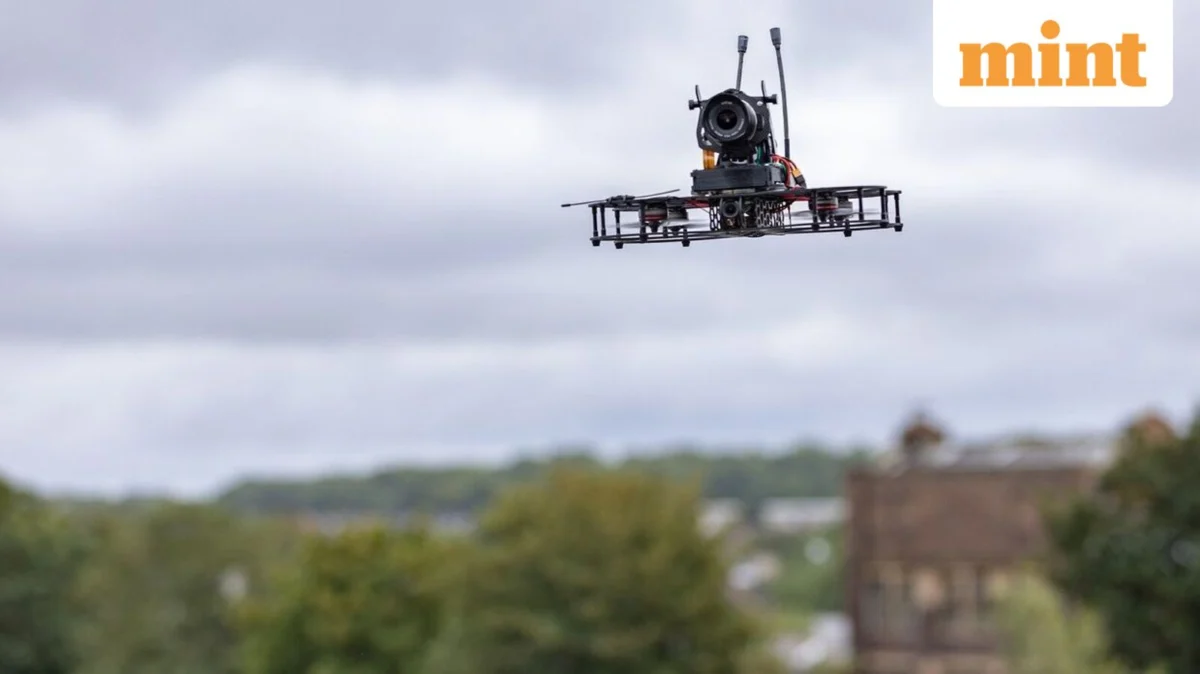
Zen Technologies is aggressively diversifying its product suite to address emerging threats in modern combat environments. In the first quarter of FY27, the company introduced several cutting-edge platforms that have expanded its total addressable market. Key among these is an AI-powered anti-drone system designed to detect, track, and neutralize unmanned aerial vehicles (UAVs) with high precision.
The company also unveiled the "Hyperstrike" interceptor drone, a high-speed kinetic solution for neutralizing rogue drones, and the "Zen Vrishab," an unmanned ground vehicle (UGV) designed for reconnaissance and logistics support in hazardous environments. Additionally, the "Integrated Smart Border Suite" was launched to provide comprehensive surveillance and security solutions for national borders, integrating various sensors and AI-driven analytics.
In late July 2026, Zen Technologies further strengthened its counter-UAS (Unmanned Aircraft System) portfolio with the launch of the High-Altitude Man-Portable Anti-Drone System (MPADS). This indigenous, lightweight solution is specifically engineered for troops operating in mountainous regions and remote terrains where traditional, vehicle-mounted systems cannot easily maneuver. The MPADS is expected to see significant interest from the Indian Army, given the ongoing security requirements along the country’s high-altitude frontiers.

Strategic Entry into Air Force Training and Simulation
A major strategic shift for Zen Technologies is its expansion into the Air Force training segment. Having already established a dominant presence in simulator solutions for the Army and the Navy, the company has successfully completed the R&D phase for its first dedicated product offering for the Indian Air Force (IAF).
The company is currently in advanced negotiations with several global Original Equipment Manufacturers (OEMs) to formalize partnerships that will facilitate its entry into the complex air simulator domain. These collaborations are expected to be finalized within the current fiscal year, allowing Zen Technologies to provide end-to-end training solutions for fighter pilots and transport aircraft crews. This move not only diversifies the company’s revenue streams but also positions it as a holistic provider of tri-services simulation technology.
Contextual Background: The Indian Defence Landscape
The surge in orders for Zen Technologies must be viewed within the broader context of India’s defense modernization program. The Ministry of Defence has consistently increased its capital outlay for domestic procurement, aiming to reduce reliance on foreign imports which have historically dominated the Indian defense budget.
Simulators play a vital role in this modernization strategy. They offer a cost-effective and safe environment for training personnel on expensive and sophisticated military hardware. By using simulators, the armed forces can significantly reduce the wear and tear on actual equipment, lower fuel and ammunition consumption, and allow for the simulation of complex combat scenarios that would be too dangerous or logistically difficult to replicate in real-world exercises.
Furthermore, the rise of drone warfare, as seen in recent global conflicts, has created an urgent demand for anti-drone technologies. Zen Technologies, with its early-mover advantage in this niche, is well-positioned to capture a significant share of the domestic market as the Indian military seeks to protect its assets from the growing threat of loitering munitions and surveillance drones.
Market Outlook and Future Implications
The long-term outlook for Zen Technologies remains optimistic, supported by a combination of high entry barriers in the defence tech sector and the company’s proven track record of delivery. The management’s focus on R&D ensures that the company stays ahead of the technological curve, particularly in AI and robotics.
Investors and market analysts will be closely monitoring the company’s execution capabilities in the coming quarters. The transition of the current ₹1,200+ crore order book into recognized revenue will be the primary driver of stock performance. If the company can successfully navigate the margin pressures observed in Q1 and leverage its new Air Force and anti-drone products, it stands to benefit from the sustained "buy local" push in Indian defence spending.
While the decline in Q1 profits initially caused some caution, the subsequent order wins in July and August have largely reassured the market of the company’s growth trajectory. The emphasis on indigenous design and manufacturing (IDDM) makes Zen Technologies a prime beneficiary of government policies like the Defence Acquisition Procedure (DAP) 2020, which prioritizes Indian-developed technology.
As the company prepares for Tuesday’s trading session, the ₹295 crore MoD order serves as a reminder of the steady demand for home-grown defense solutions. With a robust order book, a diversifying product range, and a strategic roadmap for tri-service expansion, Zen Technologies continues to be a key stock to watch in the burgeoning Indian defence and drone sector.
Disclaimer: The information provided in this article is for informational purposes only and does not constitute financial advice. Investors are encouraged to consult with certified financial experts and conduct their own research before making any investment decisions in the stock market.
