

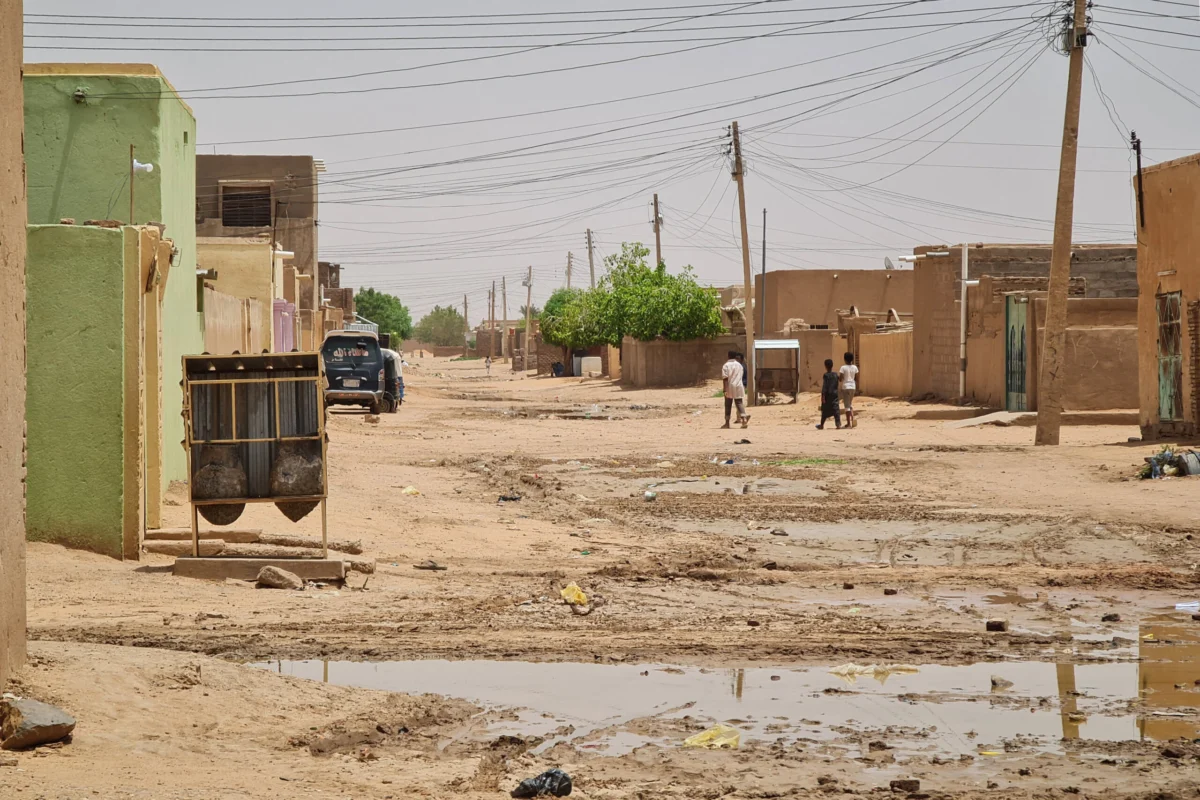
The devastating conflict in Sudan reached a grim new milestone on Saturday as an airstrike ripped through a densely populated residential neighborhood in the capital city of Khartoum, claiming the lives of at least 17 people. Among the dead were five children, according to local health officials, marking one of the deadliest single incidents in the urban warfare that has gripped the nation since mid-April. The strike targeted the Yarmouk district in southern Khartoum, an area that has become a central flashpoint in the violent power struggle between the Sudanese Armed Forces (SAF), led by General Abdel Fattah al-Burhan, and the paramilitary Rapid Support Forces (RSF), commanded by General Mohamed Hamdan "Hemedti" Dagalo.
The Ministry of Health confirmed the casualties via a statement on social media, noting that the bombardment destroyed at least 25 homes and left dozens of others wounded. The Yarmouk neighborhood is home to a major military industrial complex, making it a high-stakes target for both factions. While the military possesses a functional air force, the RSF has increasingly utilized drones and anti-aircraft weaponry, leading to a lethal cycle of aerial and ground-based exchanges that frequently catch civilians in the crossfire.
The Devastation in Yarmouk and the Urban Battlefield
Witnesses and local volunteer groups, known as "Emergency Rooms," described scenes of chaos as residents dug through the rubble of flattened houses to recover bodies. The Emergency Room of southern Khartoum reported that at least 11 people were hospitalized with severe injuries. Images circulating on social media, verified by local activists, showed the aftermath of the strike: charred structures, blood-stained streets, and the harrowing sight of civilians carrying the remains of children wrapped in blankets.
The RSF issued a statement shortly after the attack, accusing the Sudanese military of deliberately targeting civilian areas with warplanes. The paramilitary group also claimed to have shot down a military MiG fighter jet during the engagement, though these claims could not be independently verified. The Sudanese Armed Forces have consistently maintained that their operations target RSF "rebel" positions and accused the paramilitary group of using residential buildings as shields and occupying private homes to evade aerial detection.
Since the outbreak of hostilities on April 15, 2023, Khartoum has been transformed from a bustling African metropolis into a fragmented battlefield. The city’s infrastructure has been decimated; water and electricity services are intermittent at best, and the banking system has largely collapsed, leaving millions without the means to purchase food or medicine.
A Chronology of the Crisis: From Political Tension to Civil War
The roots of the current violence lie in the fractured transition to civilian rule that followed the 2019 ousting of longtime autocrat Omar al-Bashir. The alliance between the SAF and the RSF, which jointly orchestrated a coup in October 2021 to sideline civilian politicians, began to crumble in late 2022.
- December 2022: A "framework agreement" was signed to return the country to civilian leadership, but it left the timeline for integrating the RSF into the regular army unresolved.
- March 2023: Tensions peaked as the SAF demanded a two-year integration period, while the RSF insisted on a ten-year window, maintaining its independent command structure.
- April 15, 2023: Heavy gunfire and explosions erupted in Khartoum as both sides blamed the other for initiating hostilities. Fighting quickly spread to the neighboring city of Omdurman and the western region of Darfur.
- May 2023: The United States and Saudi Arabia brokered several short-term ceasefires in Jeddah, but these were repeatedly violated within hours of taking effect.
- June 2023: The conflict entered a more intensive phase, with the SAF utilizing heavy artillery and airstrikes to dislodge RSF fighters who had entrenched themselves in residential quarters and seized control of the national museum, hospitals, and government ministries.
The Tragedy of West Darfur and the Death of Governor Abkar
While the world’s attention has often been fixed on the capital, the situation in the western region of Darfur has taken an even more ominous turn. The conflict has reignited long-standing ethnic tensions between Arab and non-Arab communities. In Genena, the provincial capital of West Darfur, the violence has been described by the United Nations as having "ethnic dimensions" that echo the genocide of the early 2000s.
On Wednesday, the governor of West Darfur, Khamis Abdalla Abkar, was abducted and killed shortly after giving a televised interview in which he accused the RSF and allied Arab militias—historically known as the Janjaweed—of committing "genocide" against the Masalit people. Video footage later appeared to show Abkar in the custody of men wearing RSF uniforms. The RSF denied responsibility for his slaying, attributing it to "tribal outlaws," but the international community, including the UN and the African Union, condemned the killing as a major escalation and a war crime.
The involvement of the Janjaweed militias on the side of the RSF has led to reports of mass killings, sexual violence, and the systematic burning of villages. Tens of thousands of survivors have fled across the border into Chad, arriving with harrowing accounts of being targeted based on their ethnicity during their escape.
Humanitarian Impact and Global Response
The humanitarian toll of the conflict is staggering. According to the International Organization for Migration (IOM), more than 2.2 million people have been displaced. This includes approximately 1.7 million people internally displaced within Sudan and over 500,000 who have sought refuge in neighboring countries such as Egypt, Chad, South Sudan, and Ethiopia.
The healthcare system in Khartoum and Darfur is on the brink of total collapse. The World Health Organization (WHO) reports that nearly 80% of hospitals in conflict zones are out of service. Those that remain open are operating with severe shortages of oxygen, blood, and basic surgical supplies. The strike in Yarmouk on Saturday further strained these dwindling resources, as local clinics struggled to treat the influx of blast victims.
International reactions have been swift but have so far failed to produce a lasting peace. UN Secretary-General António Guterres expressed horror at the escalating violence and the targeted killing of civilians. The United States has imposed sanctions on key companies linked to both the SAF and the RSF, aiming to choke off the financial resources used to fund the war. However, analysts suggest that as long as both generals believe they can achieve a total military victory, diplomatic pressure remains ineffective.
Analysis: Implications of a Protracted Stalemate
The strike in southern Khartoum underscores a grim reality: the conflict has entered a war of attrition. The Sudanese Armed Forces, despite their superior air power and heavy weaponry, have struggled to regain control of Khartoum’s streets from the highly mobile and decentralized RSF. Conversely, while the RSF controls significant portions of the ground in the capital, they lack the legitimacy and administrative capacity to govern.
There are three primary implications of the current trajectory:
- State Fragmentation: Sudan faces the very real risk of becoming a failed state. With the central government unable to provide security or services, local militias and tribal leaders are filling the vacuum, potentially leading to a "Libyan-style" scenario of multiple competing administrations.
- Regional Instability: The exodus of hundreds of thousands of refugees into fragile neighboring states like Chad and South Sudan threatens to destabilize the entire Horn of Africa and Sahel regions. There are also concerns that the conflict could draw in regional actors, as various powers have historical ties to the rival generals.
- Famine and Disease: With the planting season disrupted and humanitarian aid corridors frequently blocked by fighting, the Integrated Food Security Phase Classification (IPC) has warned of a looming famine. The combination of malnutrition and the lack of clean water increases the risk of cholera and other waterborne diseases as the rainy season begins.
As the smoke clears over the Yarmouk neighborhood, the death of 17 civilians—including five children whose lives were cut short in a struggle they did not choose—serves as a painful reminder of the cost of political intransigence. The international community continues to call for a permanent ceasefire, but for the residents of Khartoum and Darfur, peace remains a distant and fading hope amidst the relentless sound of gunfire and the shadow of warplanes overhead.
