

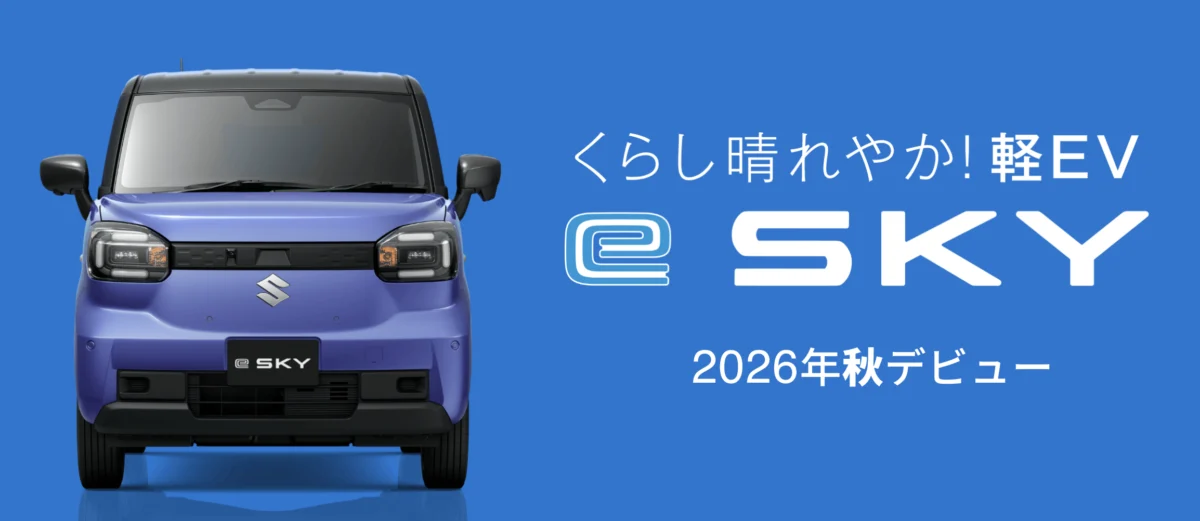
Suzuki Motor Corporation has officially introduced the e-SKY, its first dedicated battery-electric passenger vehicle within the critically important "kei car" segment, marking a pivotal shift in the company’s domestic electrification strategy. Unveiled on August 24 through preliminary technical releases, the e-SKY is positioned as a direct response to the growing demand for affordable, urban-centric electric mobility in Japan. With a reference driving range of 310 kilometers, the vehicle represents a significant leap in efficiency for the ultra-compact class, as Suzuki prepares for a formal commercial launch scheduled for autumn 2026. While final pricing and localized production specifications remain under wraps, the e-SKY serves as the production-ready evolution of the Vision e-Sky concept, which garnered substantial attention at the Japan Mobility Show in late 2025.
The introduction of the e-SKY is not merely a product launch but a strategic maneuver within Japan’s unique automotive landscape. Kei cars, or "light automobiles," are a regulated category of small vehicles that enjoy tax and insurance benefits, making them the backbone of Japanese transportation, particularly in rural areas and crowded city centers. By entering this segment with a high-efficiency electric powertrain, Suzuki is challenging the early dominance established by the Nissan Sakura and Mitsubishi eK X EV alliance, while also bracing for new competition from international players like BYD.
Evolution from Concept to Production Reality
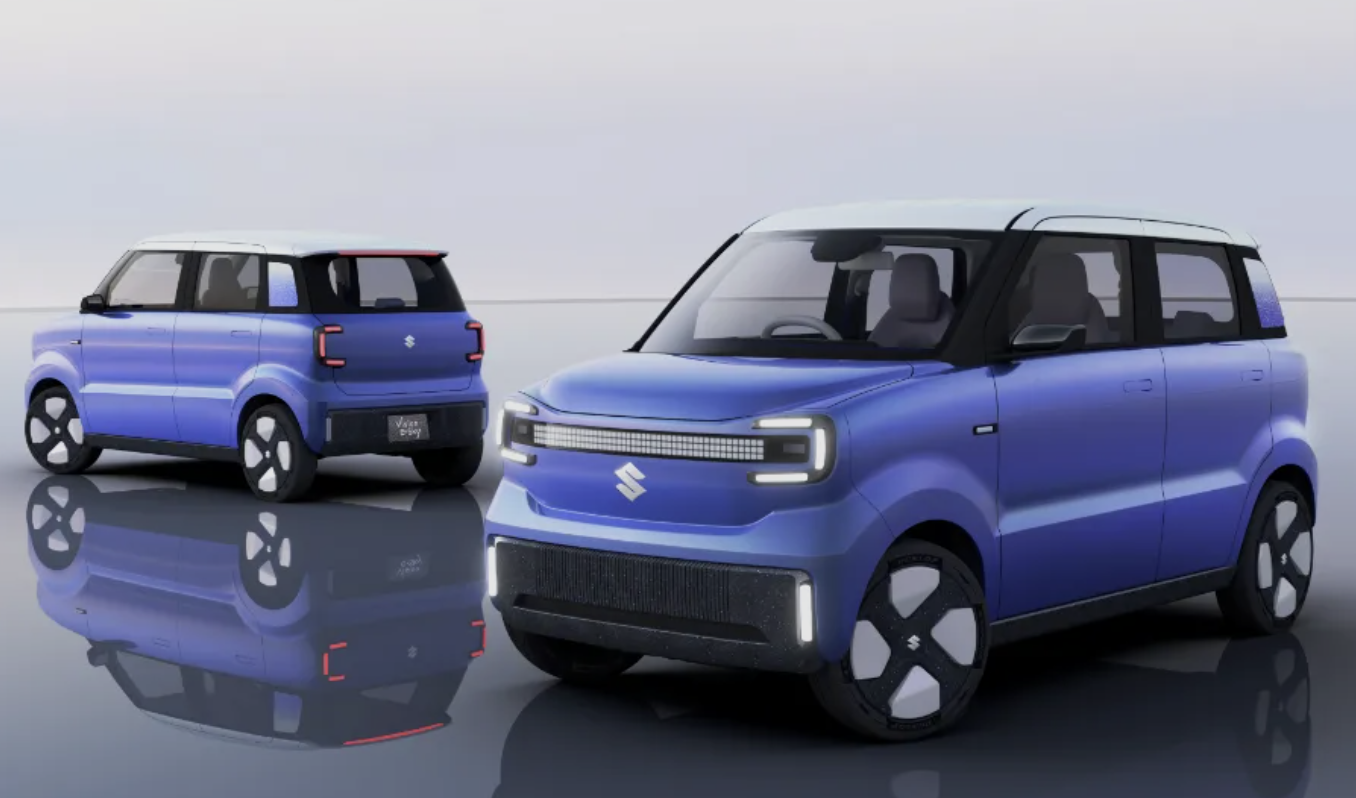
The journey of the e-SKY began publicly at the 2025 Japan Mobility Show in Tokyo, where Suzuki presented the Vision e-Sky concept. At the time, the prototype was showcased with a projected range of approximately 270 kilometers. However, in the months following the exhibition, Suzuki’s engineering teams focused on optimizing the vehicle’s energy management systems rather than increasing the physical footprint of the battery. This development cycle has resulted in a 15% improvement in range, bringing the reference figure to 310 kilometers for the production-intent model.

Crucially, the physical dimensions of the vehicle have remained consistent with the strict limitations imposed by Japanese kei car regulations. The e-SKY measures 3,395 millimeters in length, 1,475 mm in width, and 1,625 mm in height, with a 2,460-mm wheelbase. These dimensions ensure the vehicle remains eligible for the legal benefits of the "yellow-plate" category while providing a familiar silhouette for traditional Suzuki customers. The decision to maintain the 2025 concept’s dimensions while extending the range highlights Suzuki’s focus on "invisible" innovation—improving aerodynamics, drivetrain friction, and battery chemistry rather than resorting to larger, heavier components.
Technical Architecture and the HEARTECT-e Platform
At the core of the e-SKY is the HEARTECT-e electric vehicle architecture, a specialized adaptation of Suzuki’s global lightweight platform. This architecture is designed to maximize interior space despite the presence of a battery pack. The drivetrain utilizes a sophisticated e-Axle, which integrates the electric motor, power electronics (inverter), and reduction gears into a single, compact unit. This integration reduces the overall weight and complexity of the system while freeing up room for passengers and cargo.
The energy storage system is a 26-kilowatt-hour (kWh) lithium iron phosphate (LFP) battery. Suzuki’s choice of LFP chemistry is a calculated move aimed at balancing cost, safety, and longevity. LFP batteries are known for their thermal stability and their ability to withstand frequent charging cycles with minimal degradation compared to nickel-cobalt-based chemistries. Furthermore, by avoiding the use of scarce materials like cobalt and nickel, Suzuki can better manage its supply chain costs, which is essential for maintaining the price competitiveness required in the kei car segment.
The e-SKY’s efficiency is further evidenced by its energy consumption figure of 97 watt-hours per kilometer (Wh/km). To put this in perspective, this level of efficiency allows the vehicle to travel roughly 10 kilometers for every kilowatt-hour of energy consumed, a benchmark that places it among the most efficient electric vehicles globally. This high efficiency is supported by a curb weight of approximately 1,030 kilograms, an impressively low figure for a battery-electric vehicle (BEV), achieved through the use of high-tensile steel and a minimalist design philosophy.

The "Easy to Switch" Concept and Urban Utility
Suzuki has developed the e-SKY under the guiding principle of "Easy to Switch." This philosophy recognizes that many potential EV buyers in Japan are transitioning from decades of driving gasoline-powered kei cars. To ease this transition, the e-SKY maintains a driving experience and interior layout that mirrors Suzuki’s internal combustion engine (ICE) models, such as the WagonR or Alto. The goal is to eliminate the "technology shock" that sometimes accompanies the switch to electric propulsion.
The vehicle is optimized for daily routines, including commuting, school runs, and local shopping trips. Suzuki’s market research indicates that the average daily driving distance for a kei car user in Japan is well under 50 kilometers. With a 310-km range, the e-SKY could theoretically operate for a full week on a single charge for many users. For those who require faster turnarounds, the vehicle supports DC fast charging at rates up to 50 kW, allowing the battery to reach 80% capacity in approximately 25 minutes.
Standard home charging is also accommodated, with a 6-kW AC connection requiring about 4.5 hours for a full charge, while a standard 3-kW outlet completes the task in roughly eight hours. Additionally, the e-SKY includes a Vehicle-to-Load (V2L) function, allowing the car to act as a mobile power source. Through a 100-volt, 1,500-watt outlet, users can power electrical appliances during outdoor activities or, more importantly, use the vehicle as an emergency power supply during Japan’s frequent natural disasters.
Aerodynamics and Climate Management
One of the primary challenges in designing a tall, boxy kei car for electric efficiency is aerodynamic drag. Suzuki’s engineers have implemented several "under-the-skin" aerodynamic improvements to the e-SKY. This includes a flat underbody tray that smoothes airflow beneath the vehicle and specialized wheel designs that reduce turbulence. These features allow the e-SKY to retain the practical "tall boy" proportions that Japanese consumers favor for interior headroom while minimizing the energy required to push through the air at suburban speeds.
Climate control is another area where Suzuki has sought to preserve range. The e-SKY is equipped with a high-efficiency heat-pump system for cabin heating and cooling. Unlike traditional resistive heaters, which can drastically drain an EV’s battery in winter, a heat pump moves thermal energy from the outside air into the cabin, consuming significantly less electricity. This is a critical feature for the Japanese market, where regional climates vary from the humid heat of Tokyo summers to the heavy snows of Hokkaido and the Sea of Japan coast.
Competitive Landscape and Market Implications
The e-SKY enters a market that is no longer empty. The Nissan Sakura, launched in 2022, has been a runaway success, proving that there is a massive appetite for electric kei cars if the price and performance are right. Honda has also recently entered the fray with the N-ONE e:, and the arrival of the BYD Racco signifies that international manufacturers view Japan’s small-car segment as a viable entry point.
Suzuki’s late entry into the segment—launching in 2026 compared to competitors who are already on the road—suggests a strategy of "refined following." By observing the real-world usage patterns of early Sakura and eK X EV adopters, Suzuki has been able to tailor the e-SKY to address specific pain points, such as the desire for a slightly longer range and more robust fast-charging capabilities.
Industry analysts suggest that Suzuki’s focus on the 310-km reference range is a direct attempt to outclass the 180-200 km ranges typically found in current electric kei cars. If Suzuki can achieve this range while maintaining a price point close to its competitors, the e-SKY could rapidly become the new benchmark for the segment.

Broader Impact on Suzuki’s Global Electrification
While the e-SKY is primarily a Japanese domestic product, its development has broader implications for Suzuki’s global operations, particularly in India, where Suzuki’s subsidiary, Maruti Suzuki, dominates the market. The HEARTECT-e platform and the lessons learned in LFP battery integration and e-Axle efficiency are expected to serve as the foundation for future electric models in other emerging markets.
The e-SKY demonstrates a pragmatic approach to the energy transition. By focusing on reducing the vehicle’s energy requirements through weight reduction and aerodynamic refinement, Suzuki is showing that "small is beautiful" in the EV era. This philosophy contrasts with the trend in North America and Europe toward larger batteries and heavier SUVs, offering a template for sustainable urban mobility that prioritizes resource efficiency.
As the autumn 2026 launch approaches, the automotive industry will be watching closely to see if Suzuki can translate these impressive preliminary figures into a commercial success. The e-SKY represents more than just a new car; it is a test of whether the traditional strengths of the Japanese auto industry—miniaturization, efficiency, and reliability—can be successfully translated into the age of the battery-electric vehicle. Final pricing and trim levels, expected to be announced in early 2026, will ultimately determine if the e-SKY can fulfill its promise of making the switch to electric "easy" for the millions of kei car drivers across Japan.
