

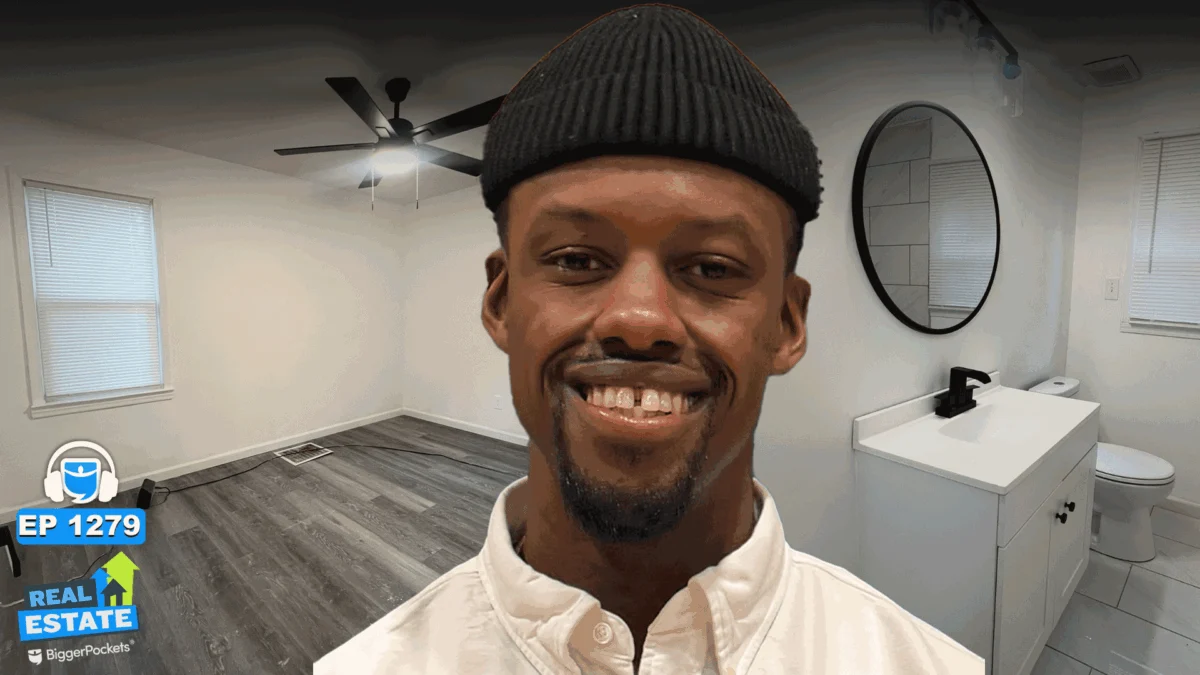
The emergence of the "Rust Belt" as a viable frontier for real estate investors has found a new champion in Nick Burke, a New Jersey-based tech recruiter who transformed a decade of theoretical research into a high-yield rental portfolio in just two years. Facing a domestic market in New Jersey characterized by high entry costs and compressed cap rates, Burke pivoted his strategy toward Detroit, Michigan—a city once synonymous with urban decay that is now experiencing a significant economic and demographic resurgence. By leveraging the "Buy, Rehab, Rent, Refinance, Repeat" (BRRRR) method and employing unconventional financing tools, including zero-percent interest credit cards and private equity partnerships, Burke has successfully scaled his holdings to seven properties, challenging the long-standing stigma associated with the Detroit real estate market.
The New Jersey Barrier and the Search for Yield
For many aspiring real estate investors in the Tri-State area, the primary obstacle to entry is the prohibitive cost of local inventory. In the New Jersey market, where median home prices often exceed $500,000 in desirable corridors, the ability to generate positive cash flow on single-family rentals has become increasingly difficult. High property taxes and stringent regulatory environments further squeeze margins, forcing investors to choose between low-yield stability or high-risk speculation.
Burke, who had spent nearly ten years consuming real estate literature and podcasts, recognized that his local market did not align with his goal of rapid portfolio scaling. His initial foray into the sector involved converting his personal condominium into a rental unit in 2021. While the "accidental landlord" experiment proved that property management was feasible, it also highlighted the limitations of the New Jersey market for those seeking "infinite" returns or high equity upside. To achieve his objectives, Burke identified a set of non-negotiable criteria for a target market: affordability (specifically homes under $100,000), documented population growth, and a clear trajectory for forced appreciation through renovation.
The Detroit Resurgence: From Bankruptcy to Investment Hub
The selection of Detroit as an investment destination represents a calculated bet on urban recovery. Following the city’s historic bankruptcy filing in 2013, Detroit became a "no-go zone" for institutional and retail investors alike. However, the last decade has seen a dramatic shift. According to recent U.S. Census Bureau data, Detroit’s population increased in 2023 for the first time in decades, signaling a reversal of the "white flight" and industrial decline that plagued the city for half a century.
The city has benefited from billions of dollars in corporate investment from entities like Dan Gilbert’s Rocket Companies and the development of the Michigan Central innovation hub by Ford Motor Company. These macro-economic drivers have trickled down into the residential sector, creating a "rent-to-price ratio" that is among the most favorable in the United States. For an investor like Burke, Detroit offered the "front of the wave" opportunity—the ability to buy assets at a low basis before the broader market fully acknowledges the city’s stabilization.
The BRRRR Method and Unconventional Financing
Burke’s rapid scaling is attributed to the BRRRR strategy, a methodology designed to minimize "out-of-pocket" capital by recycling equity. The process involves purchasing a distressed property, rehabilitating it to increase its value, renting it to a qualified tenant, and then performing a cash-out refinance based on the new After-Repair Value (ARV).
What distinguishes Burke’s execution is his use of creative financing to overcome the "capital gap." In his first Detroit acquisition, Burke utilized 0% introductory interest credit cards to fund the purchase and renovation. While financial advisors often warn against using high-interest revolving credit for illiquid assets, Burke utilized the 12-month interest-free window as a bridge loan. By completing the renovation and refinancing within that period, he avoided the backdated interest penalties that typically accompany such cards, effectively using the bank’s money as interest-free startup capital.
Chronology of a Portfolio Build
Deal 1: The Proof of Concept
In early 2024, Burke purchased a two-bedroom, one-bathroom home with a detached garage for $59,000. He invested approximately $18,000 in cosmetic renovations, bringing his total basis to $77,000. The property subsequently appraised for $89,000. Although this deal required Burke to leave $15,000 of his own capital in the property after the refinance, it served as a vital educational milestone, proving that remote management and the Detroit market were viable.
Deal 2: The Perfect BRRRR
Applying lessons from his first deal, Burke adjusted his "buy box" to target higher-value neighborhoods. He acquired a three-bedroom, one-bathroom home for $62,000. To fund this, he tapped into a private money lender—a friend seeking better returns than the volatility of the stock market. Burke covered the $19,000 renovation cost out of pocket. Upon completion, the home appraised for $128,000. This allowed Burke to refinance at 75% of the ARV ($96,000), enabling him to pay back the private lender in full, recoup his renovation costs, and pocket a surplus of cash while retaining significant equity.
Deal 3: The Partnership Model
By his third acquisition, Burke shifted to an equity-share partnership. He identified a property for $52,000 that required a more extensive $42,000 renovation. By partnering 50/50 with an investor who provided the capital while Burke provided the "sweat equity" and project management, he was able to scale without further depleting his personal cash reserves. Despite a setback involving an unsatisfactory contractor—which necessitated a mid-project change—the property appraised for $155,000.
Remote Operations and Team Assembly
A critical component of Burke’s success is his ability to manage properties from 500 miles away while maintaining a full-time career in tech recruitment. He emphasizes that out-of-state investing is less about the real estate and more about "team assembly."
Using the BiggerPockets Agent Finder tool, Burke connected with an investor-friendly real estate agent in Detroit who became his primary "boots on the ground." This agent provided not only market insights but also access to a vetted network of contractors and leasing agents. Burke’s operational model includes:
- Leasing Agents: Utilizing licensed professionals to screen and place tenants, rather than attempting to show properties personally.
- Management Software: Implementing tenant portals to automate rent collection and maintenance requests, reducing his weekly workload to approximately three to five hours.
- Honor System with Verification: Managing contractors through daily digital touchpoints and photo updates, supplemented by occasional site visits for "blue tape" walkthroughs.
Professional Analysis: Risks and Implications
Burke’s trajectory offers a blueprint for the modern "W2 Investor"—individuals who utilize their corporate salaries as a launchpad for wealth creation rather than seeking an immediate exit from the workforce. However, his strategy is not without inherent risks.
The use of credit cards for real estate acquisition requires extreme fiscal discipline. If a renovation exceeds the 0% interest window or if the appraisal comes in lower than expected (an "appraisal shortfall"), the investor could be saddled with 20% to 29% interest rates on a five-figure debt. Furthermore, the Detroit market, while improving, still possesses "block-by-block" volatility. Investing in the wrong pocket of the city can result in high vacancy rates or difficulty in securing appraisals that support a cash-out refinance.
Despite these risks, the broader implication of Burke’s story is the democratization of real estate. By looking beyond high-priced local markets and utilizing the digital tools available for remote management, the barrier to entry for real estate wealth is shifting from "how much money you have" to "how well you can build a system."
Future Outlook and Financial Flexibility
As of late 2024, Nick Burke continues to expand his Detroit portfolio, with six homes closed and a seventh under contract. His goal remains "financial flexibility"—the ability to generate supplemental income that provides a safety net for his family without the pressure of abandoning a career he enjoys.
His success reflects a growing trend of "geographic arbitrage," where investors earn high wages in expensive coastal cities (like New Jersey or New York) and deploy that capital into high-yield, lower-cost markets in the Midwest or South. For Detroit, the influx of such investors provides much-needed capital for the renovation of the city’s aging housing stock, contributing to the very "resurgence" that makes the investment viable in the first place. Burke’s journey from a decade of "analysis paralysis" to a seven-property portfolio serves as a case study in the power of calculated action and the shifting landscape of American real estate.
