

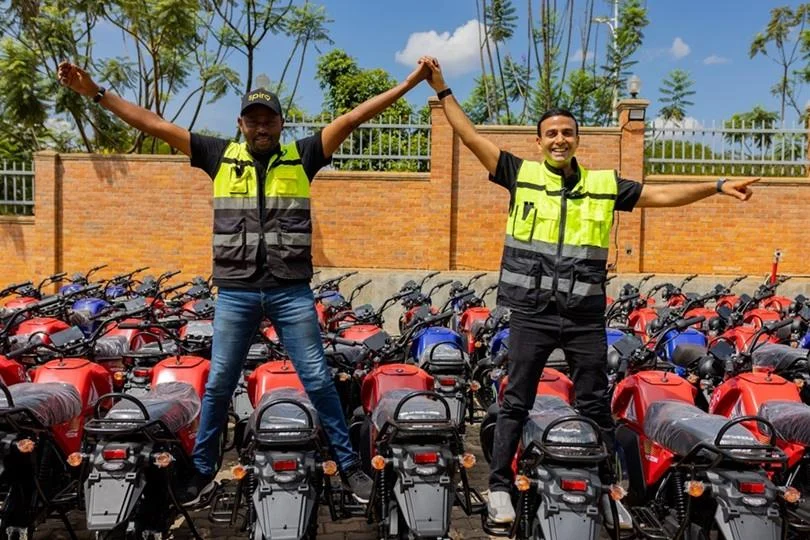
Nairobi-based electric mobility platform Spiro has successfully secured $215 million in a fresh equity investment round, marking a significant milestone for the continent’s green energy transition. The substantial capital injection is earmarked for the aggressive scaling of the company’s electric motorcycle fleet and the expansion of its sophisticated battery-swapping infrastructure across high-growth African markets. This funding round represents one of the largest private equity commitments to the African electric vehicle (EV) sector to date, signaling robust investor confidence in the commercial viability of sustainable transport solutions within the region.
The funding round attracted a diverse consortium of institutional investors, led by Impact Fund Denmark and Equitane. The capital arrives at a critical juncture as African nations grapple with the dual challenges of rapid urbanization and volatile global energy markets. By pivoting toward domestic electric mobility, these economies aim to insulate themselves from the price fluctuations of imported fossil fuels while simultaneously addressing the urgent need for cleaner urban environments.
Strategic Objectives and the Scaling of Infrastructure
Since its inception in 2019, Spiro has positioned itself as a frontrunner in the race to electrify Africa’s two-wheeled transport sector. The company’s business model is built around a "Battery-as-a-Service" (BaaS) framework, which utilizes swappable battery technology to overcome the traditional barriers to EV adoption, such as high upfront costs and "range anxiety." With the new $215 million infusion, Spiro intends to broaden its operational footprint beyond its current strongholds, focusing on the deployment of next-generation electric vehicles and the densification of its smart-swap station network.
The company already boasts an impressive operational scale, with 100,000 electric motorcycles currently on the road. These vehicles are supported by a network of over 2,500 swapping stations, which have facilitated more than 30 million battery swaps since the company began operations. The new capital will be used to transition from these initial milestones to a continental-scale operation, targeting millions of riders who currently rely on internal combustion engine (ICE) motorcycles for their livelihoods.
The Economic Context: Energy Sovereignty and Industrial Growth
The move toward electrification is not merely an environmental endeavor; it is an economic necessity for many African states. Sub-Saharan Africa remains heavily dependent on imported refined petroleum, which consumes a significant portion of foreign exchange reserves and leaves local economies vulnerable to global supply chain disruptions. Spiro’s expansion aligns with a broader continental push toward energy and industrial sovereignty.
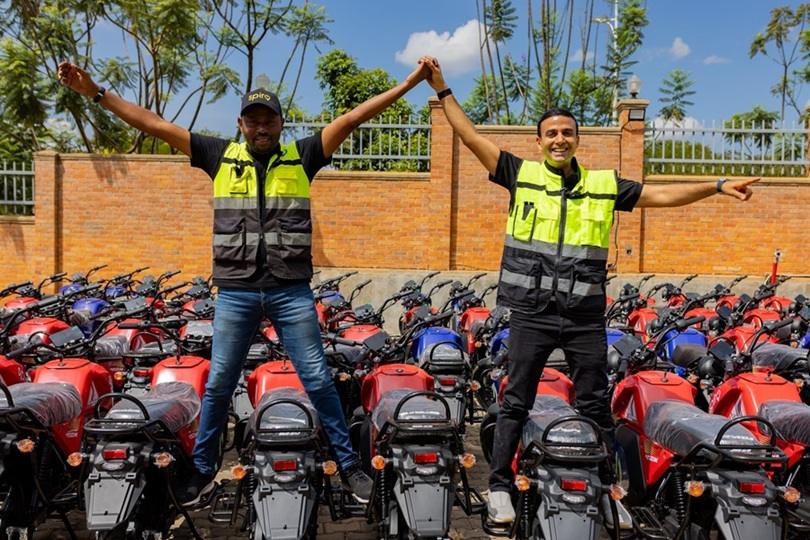
By establishing manufacturing plants in Kenya, Rwanda, and Uganda, Spiro is contributing to the development of a local industrial base. These facilities do more than just assemble imported kits; they foster a domestic supply chain for EV components and create high-skilled jobs in the green economy. Furthermore, the company’s state-of-the-art battery recycling facility in Nigeria addresses the end-of-life cycle of lithium-ion batteries, ensuring that the transition to green energy does not create a new legacy of environmental waste.
"Reducing dependence on imported fuel, strengthening energy and industrial sovereignty, and modernizing urban transport systems are becoming strategic priorities across the continent," a spokesperson for Spiro noted. "This positions EV infrastructure as a key pillar of Africa’s economic resilience and industrial development."
Quantifying the Impact: Environmental and Socio-Economic Gains
The adoption of electric motorcycles offers immediate and measurable benefits to the individual rider and the broader community. According to data provided by Spiro, operators of their electric vehicles experience a reduction in daily mobility costs of up to 40%. In practical terms, this translates to savings of approximately $2 per day compared to traditional fossil-fuel motorcycles. For the average "boda boda" (motorcycle taxi) driver, whose daily earnings are often modest, a $2 saving represents a transformative increase in disposable income and household stability.
From an environmental perspective, the benefits are equally profound. An independently verified lifecycle assessment (LCA) conducted on Spiro’s operations in Kenya revealed that its electric bikes deliver a 72% reduction in climate impact compared to their fossil-fuel counterparts. This is equivalent to avoiding approximately 19 tons of CO2 emissions over the lifespan of a single vehicle.
Beyond carbon sequestration, the transition to EVs addresses the critical issue of urban air pollution. The study found an 80% reduction in ozone depletion potential and a 20% reduction in particulate matter (PM) emissions. In cities like Nairobi, Lagos, and Kampala, where traffic congestion and aging vehicle fleets contribute to hazardous air quality, the large-scale deployment of electric motorcycles could significantly reduce public health risks and associated healthcare costs.
Leadership Perspectives and Investor Confidence
Gagan Gupta, the Founder of Spiro and Chairman of Equitane, emphasized that the company’s success is rooted in making sustainable mobility an "affordable, everyday reality." Gupta’s vision involves leveraging the unique characteristics of the African market—specifically the high density of commercial motorcycle usage—to create a blueprint for electrification that can be replicated in other emerging economies.

"Across seven active markets, our deployment of 100,000 electric vehicles and 2,500 smart-swap stations has turned sustainable mobility into a reality," Gupta stated. "Supported by our global pool of investors, we are entering our next growth chapter to deliver clean, cost-effective energy and transport alternatives to millions of riders across the continent."
The involvement of Impact Fund Denmark highlights a growing trend of European institutional capital seeking high-impact opportunities in Africa’s climate-tech sector. These investors are increasingly looking for scalable platforms that offer both competitive financial returns and verifiable ESG (Environmental, Social, and Governance) outcomes.
Chronology of Growth: From Startup to Market Leader
The journey of Spiro (formerly known as M Auto) began in 2019 with a pilot program aimed at testing the durability of electric bikes in the rugged terrain and demanding usage patterns of African cities.
- 2019-2021: Initial R&D and pilot phases. The company focused on designing a battery-swapping system that could withstand frequent use and variable power grid stability.
- 2022: Rebranding to Spiro and aggressive expansion into West and East African markets, including Benin and Togo. The company reached its first 10,000 bikes on the road.
- 2023: Strategic partnerships with local governments were formed to integrate EV charging and swapping into urban planning. Manufacturing facilities were commissioned in East Africa to reduce logistics costs and support local "Buy African" initiatives.
- 2024 (June): The announcement of the $215 million equity round, marking the transition from a regional player to a continental platform.
Broader Implications for the African Continent
Spiro’s success is likely to trigger a "halo effect" in the African tech ecosystem, attracting more venture capital to the e-mobility and renewable energy sectors. Currently, the transport sector is one of the largest contributors to greenhouse gas emissions in Africa, and the demand for mobility is expected to triple by 2050 as the population grows and urbanizes.
The scaling of battery-swapping infrastructure also has secondary benefits for the energy grid. Smart-swap stations can act as distributed energy storage units, helping to stabilize local grids by charging during off-peak hours and potentially discharging energy back into the grid during peak demand—a concept known as Vehicle-to-Grid (V2G) technology.
Furthermore, the focus on battery recycling in Nigeria sets a precedent for the circular economy in Africa. As the world faces a potential shortage of critical minerals like lithium, cobalt, and nickel, the ability to recover these materials locally will be a strategic advantage for African manufacturers.
Challenges and the Path Ahead
Despite the record-breaking investment, challenges remain. The success of Spiro’s platform depends on the continued expansion of reliable electricity access. In many parts of Africa, the power grid remains inconsistent, necessitating the use of solar-powered swapping stations in more remote or underserved areas.
Additionally, the regulatory environment for EVs is still in its infancy in many African nations. Governments will need to implement supportive policies, such as tax incentives for EV imports, subsidies for charging infrastructure, and clear standards for battery safety and recycling, to maintain the momentum generated by private players like Spiro.
However, with $215 million in new capital and a proven operational model, Spiro is well-positioned to navigate these hurdles. The company’s focus on the commercial motorcycle sector—a vital artery of African commerce—ensures a consistent and growing demand for its services. As Spiro scales, it is not just changing how people move; it is redefining the economic and environmental trajectory of the entire continent.
