

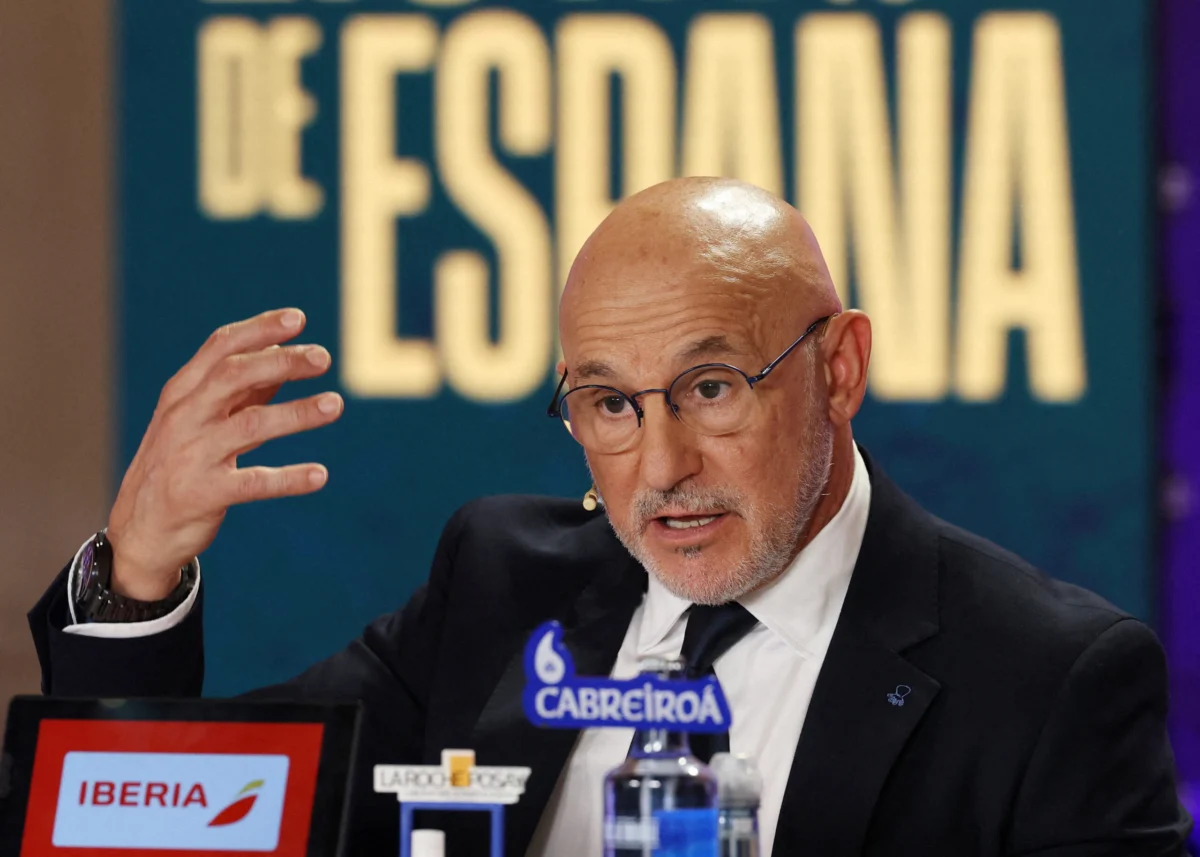
Luis de la Fuente, the head coach of the Spanish national football team, has ignited a fierce debate across the footballing world after unveiling a World Cup squad that features a distinct Barcelona emphasis and, for the first time in recent memory, not a single player from Real Madrid. The announcement, made on Tuesday, March 26th, has sent ripples through a nation where the rivalry between Spain’s two footballing giants, Real Madrid and FC Barcelona, often transcends the pitch, even impacting national team discourse. De la Fuente was resolute in his explanation, asserting that the national team’s badge and the concept of a "united nation" supersede any club affiliation, aiming to quell the inevitable criticisms from Real Madrid’s vast fanbase.
The European champions, fresh from their recent successes and carrying the weight of high expectations, are poised to enter next month’s global spectacle among the favourites. De la Fuente’s 26-man selection for the highly anticipated tournament is conspicuously built around a core of eight Barcelona players, a striking contrast to the complete absence of players from the Santiago Bernabéu. This imbalance immediately injected the fervent "El Clásico" rivalry directly into the heart of the national team’s preparations, raising questions about team dynamics, fan allegiance, and the coach’s strategic vision.
A Historic Omission and Coach’s Unwavering Stance
The decision marks a significant departure from historical norms. For decades, the Spanish national team, particularly during its most successful periods, has typically featured a robust blend of talent from both Real Madrid and Barcelona, reflecting the pinnacle of domestic football. Prominent figures like veteran defender Dani Carvajal, a consistent performer for Real Madrid and Spain, were notably absent from the list. Other Real Madrid players, including the promising young centre-back Dean Huijsen (currently on loan at a Serie A club, but still a Real Madrid asset), also failed to make the cut. Spain, a nation chasing its second World Cup title after their historic 2010 triumph in South Africa, faces the unique challenge of unifying a passionate fanbase divided by club loyalties.
During a breakfast meeting with media representatives organised by Spanish public broadcaster RTVE and news agency EFE, De la Fuente addressed the controversy head-on. He firmly dismissed any notion that his selection criteria were influenced by club politics or that the decision would cost him support among the legions of Real Madrid supporters. "For me, the greatest team there is – the very greatest – is the Spanish national team," De la Fuente declared, his tone unwavering. "I don’t look at where players come from or their background. What matters are Spanish players who are proud to represent their country’s national team and to be part of a united nation." His statement underscored a philosophy prioritising national identity and collective spirit over individual club allegiances, a mantra he hopes will resonate beyond the initial shockwaves of his squad announcement.
Barcelona’s Strong Contingent and Premier League Presence
The Barcelona contingent forming the backbone of De la Fuente’s squad includes promising talents such as Joan Garcia, Pau Cubarsi, Eric Garcia, the midfield maestros Gavi and Pedri, and the attacking flair of Dani Olmo, Lamine Yamal, and Ferran Torres. This selection not only highlights Barcelona’s rich academy system, La Masia, but also signals a potential tactical inclination towards a possession-based, fluid style of play often associated with the Catalan club.
Beyond the domestic giants, the squad also boasts a significant international flavour, with seven players plying their trade in England’s highly competitive Premier League. This diversified selection indicates De la Fuente’s willingness to scout talent across Europe’s top leagues, ensuring a blend of styles and experiences. The inclusion of players from outside La Liga’s traditional powerhouses also reinforces the coach’s message of looking beyond club crests.
Sporting Merit as the Guiding Principle
De la Fuente reiterated that his selection process was guided solely by sporting considerations, acknowledging that squad decisions inevitably carry a subjective element, but maintaining that his professional integrity was paramount. "The day I make a mistake, fail to make the right choice, or act in a way that might be beneficial just to get a result, I’m putting my job on the line," he asserted, emphasising the high stakes involved in managing a national team with World Cup aspirations. This declaration serves as a defence against accusations of bias, framing his choices as a direct reflection of his evaluation of player form, suitability for his tactical system, and overall contribution to the team’s cohesion and potential success.
Spain’s World Cup journey is set to commence in Group H, where they will face Cape Verde, Saudi Arabia, and Uruguay. While the fixtures present varying challenges, De la Fuente’s immediate focus extends to the fitness of key players. Concerns linger over the readiness of Lamine Yamal, Nico Williams, and Mikel Merino, all of whom are recovering from recent fitness issues. The coach, however, expressed optimism regarding their availability. "We’re in contact with all the clubs," he confirmed. "We know that these players are in good physical shape; each one is making good progress in their recovery process. I’m very optimistic; I think they’ll be available for the first match."
Despite the urgency of the opening fixtures, De la Fuente articulated a broader strategic outlook, emphasizing a long-term view for the tournament. "If we have to take a risk, mate, we’ll take it in a World Cup," he stated, acknowledging the high-stakes environment. "But our view goes beyond the first match and also the second. So, if we have to wait a little longer, we’ll wait." This measured approach suggests a willingness to prioritise player health and peak performance in the knockout stages, even if it means a cautious start for some key individuals.
The Rise of Lamine Yamal: A Teenage Sensation’s Moment

One of the most talked-about inclusions is undoubtedly Lamine Yamal, the 18-year-old Barcelona winger, who is expected to carry much of Spain’s attacking threat. De la Fuente spoke glowingly of the prodigious talent, highlighting his maturity despite his tender age. "Yamal is absolutely thrilled and raring to go," he said. "He’s a very young lad, just 18, but he has a remarkable sense of maturity and knows that this is his moment. You have to seize the moment. And he knows this is his moment." Yamal’s meteoric rise from La Masia to the national stage embodies the youthful exuberance and potential that De la Fuente clearly intends to harness. His ability to perform under pressure and his natural flair could be pivotal for Spain’s World Cup campaign.
Historical Context: El Clásico and the National Team
The current squad selection stands in stark contrast to previous eras where a balanced representation from both Real Madrid and Barcelona was often the norm, and sometimes even seen as a prerequisite for national team harmony. During Spain’s golden era, which saw them clinch the European Championship in 2008 and 2012, and the World Cup in 2010, the squads were typically a mosaic of talent from both clubs. The 2010 World Cup-winning squad, for instance, featured a strong Barcelona core including Xavi Hernández, Andrés Iniesta, Gerard Piqué, and Carles Puyol, but was equally bolstered by Real Madrid stalwarts like Iker Casillas, Sergio Ramos, Xabi Alonso, and Raúl Albiol. These players, despite their intense club rivalry, managed to forge a formidable collective spirit, famously setting aside their club differences for the national cause.
The absence of Real Madrid players is not entirely unprecedented in the distant past, but in the modern era of professional football and Spain’s consistent presence at major tournaments, it is a significant anomaly. This move by De la Fuente signals a definitive break from the unspoken tradition of ensuring a degree of parity, or at least representation, from both Spanish behemoths. It suggests a coach confident enough to withstand the political pressures and focus purely on what he perceives as the optimal tactical and personnel choices for the tournament ahead.
Potential Implications and Fan Reactions
The implications of De la Fuente’s decision are multifaceted. On one hand, a squad heavily influenced by one club’s philosophy, particularly Barcelona’s, could potentially foster greater tactical cohesion and understanding among players who regularly play together. This might allow Spain to implement a more consistent and refined style of play, leveraging established partnerships and familiar movements. The Barcelona players are accustomed to a specific brand of possession-based football, which could be an advantage in developing a coherent team identity.
On the other hand, the complete exclusion of Real Madrid players risks alienating a significant portion of the Spanish fanbase. Real Madrid boasts one of the largest and most passionate support bases globally, and their absence from the national team roster could lead to a dip in nationalistic fervour for some supporters. While De la Fuente’s message of national unity is clear, the deep-seated rivalry often means that club loyalties run incredibly deep. Pundits and fans alike are already debating whether this calculated risk will pay off, either by creating an undeniably cohesive unit or by inadvertently sowing seeds of discontent among the national team’s supporters.
The decision also places immense pressure on De la Fuente. Should Spain perform exceptionally well, his bold choices will be vindicated as visionary. However, any struggles or early exit from the tournament will undoubtedly invite intense scrutiny, with critics quick to point to the lack of balance and the omission of experienced Real Madrid players as potential contributing factors. The World Cup stage is unforgiving, and every decision, particularly one as high-profile as this, will be dissected with microscopic detail.
Tactical Considerations and Player Roles
The composition of the squad suggests a potential shift or reinforcement of Spain’s tactical approach. With a strong Barcelona contingent, the emphasis on short passing, intricate build-up play from the back, and controlling possession in midfield is likely to be paramount. Players like Gavi and Pedri are central to this philosophy, dictating tempo and providing creative outlets. The inclusion of wingers like Lamine Yamal and Dani Olmo suggests a desire for pace and directness in wide areas, providing both creative spark and goal-scoring threat.
The absence of Real Madrid’s typically more direct, often counter-attacking style, might mean Spain commits even more fully to a dominant possession game. While Real Madrid players like Carvajal offer vast experience and defensive solidity, De la Fuente has evidently opted for other profiles, perhaps prioritising technical ability and ball-playing capabilities in his defensive unit. The defensive lineup, featuring players like Pau Cubarsi and Eric Garcia, will be expected to be comfortable playing out from the back under pressure, a hallmark of Barcelona’s style.
The Road Ahead for La Roja
As the World Cup draws nearer, all eyes will be on Spain and how this uniquely constructed squad performs. The initial group stage matches against Cape Verde, Saudi Arabia, and Uruguay will provide the first real test of De la Fuente’s controversial but conviction-driven selections. The performance of the Barcelona players, in particular, will be under intense scrutiny, as will the overall team cohesion in the absence of Real Madrid representation.
De la Fuente’s gamble is a bold one, reflecting a desire to forge a national team identity independent of club politics. His assertion that the "Spanish national team" is the greatest of all teams, and his focus on players "proud to represent their country," serve as a powerful rallying cry. Whether this approach leads to a second World Cup trophy or sparks further debate remains to be seen, but one thing is certain: Spain’s journey to the World Cup will be one of the most compelling narratives of the tournament, watched closely by a nation eager for success but also deeply divided by the allegiances of their beloved clubs.
