

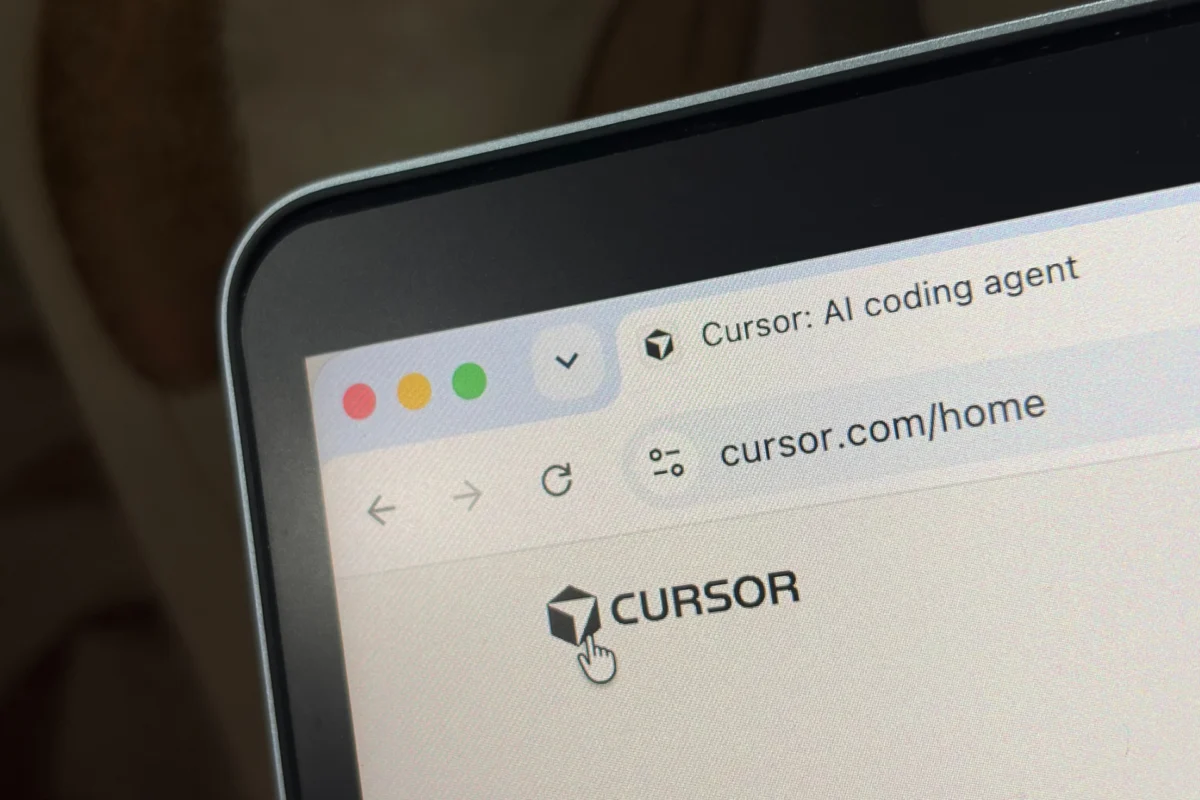
SpaceX has officially finalized its acquisition of the artificial intelligence coding startup Cursor, marking a transformative moment for both the aerospace industry and the global software development landscape. The deal, valued at approximately $60 billion and executed primarily through a stock-based transaction, follows months of strategic maneuvering that has seen Elon Musk’s primary aerospace venture pivot aggressively into the high-stakes arena of heavy-duty computing and artificial intelligence. The announcement, confirmed via an official statement on Cursor’s blog on August 15, 2026, signals the full integration of Cursor’s AI-native integrated development environment (IDE) into the broader SpaceX ecosystem, which now includes the previously acquired xAI.
The acquisition represents one of the largest software-focused deals in history, placing Cursor at the center of SpaceX’s burgeoning computational infrastructure. By absorbing Cursor, SpaceX aims to bridge the gap between massive hardware-based intelligence—represented by its sprawling data centers and GPU clusters—and the practical application of that intelligence in software engineering. According to Cursor’s leadership, the merger grants the startup immediate access to what is described as the "largest fleet of GPUs in the world," a resource base that SpaceX has been meticulously building to support its own navigation, simulation, and telecommunications needs.
A Strategic Chronology: From Partnership to Acquisition
The path to this $60 billion merger began in early 2026, during a period of rapid expansion for SpaceX’s non-launch business segments. On April 21, 2026, SpaceX and Cursor first announced a formal partnership intended to co-develop advanced coding assistants tailored for complex aerospace engineering tasks. As part of that initial agreement, SpaceX secured an exclusive option to acquire the startup for $60 billion, a figure that many analysts at the time considered a "pre-emptive strike" against competitors like Microsoft or Google, who were also looking to bolster their AI coding capabilities.
The momentum accelerated in June 2026, just days after SpaceX’s blockbuster Initial Public Offering (IPO). Transitioning into a public company provided SpaceX with the liquidity and stock-based leverage necessary to exercise its acquisition option. On June 16, the companies jointly announced that they were moving forward with the deal. The closing of the acquisition on August 15 serves as the final chapter in a four-month sprint to consolidate Cursor’s talent and technology under the SpaceX banner.
This timeline highlights a broader shift in SpaceX’s corporate identity. Once viewed solely as a launch provider and satellite internet operator, the company has increasingly positioned itself as a provider of "sovereign compute." By the time the Cursor deal closed, SpaceX had already established itself as a critical infrastructure partner for other AI giants, renting out massive amounts of compute power to companies like Anthropic and Google.
The Infrastructure Advantage: GPUs and Gas Turbines
A central pillar of the Cursor acquisition is the sheer scale of the computing power SpaceX now commands. In its post-acquisition statement, Cursor emphasized that SpaceX is building the capacity required to "scale intelligence far beyond what exists today." This refers to the massive data centers SpaceX has constructed, often in proximity to its launch facilities or within dedicated tech hubs.
Recent financial reports indicate that SpaceX’s revenue from compute-related services has nearly doubled in the last year. This growth is driven by a combination of Starlink’s global connectivity and the deployment of massive H100 and B200 GPU clusters. However, this rapid scaling of physical infrastructure has not been without controversy. SpaceX is currently embroiled in a significant legal battle regarding its data center operations. A lawsuit filed in June 2025 alleges that xAI and SpaceX operated over 400 megawatts of gas turbines without the necessary environmental permits to power their supercomputers.
Despite these regulatory hurdles, the integration of Cursor suggests that SpaceX intends to use its power and hardware dominance to redefine how software is written. By hosting the IDE (Cursor) on the same infrastructure that trains the underlying models, SpaceX can achieve unprecedented levels of latency reduction and model optimization, creating a "vertical stack" for AI development that few other companies can match.

Industry Implications and Market Reaction
The acquisition of Cursor for $60 billion is a clear signal that the market for AI-assisted development has reached a state of maturity where even non-traditional tech companies see it as a mission-critical asset. Cursor, which began as an AI-native fork of VS Code, has gained a cult following among developers for its ability to predict multi-line code changes, debug complex systems in real-time, and understand entire codebases through large language models (LLMs).
For SpaceX, the benefits are two-fold:
- Internal Engineering Efficiency: SpaceX manages millions of lines of code across its Falcon, Starship, and Starlink programs. Automating and optimizing this code via a proprietary, AI-enhanced IDE could significantly reduce the time between design iterations and successful launches.
- Commercial Software Dominance: By owning Cursor, SpaceX enters the developer tools market, potentially challenging Microsoft’s GitHub Copilot. With SpaceX’s massive GPU fleet backing it, Cursor could offer features—such as real-time training on a private codebase—that are currently too computationally expensive for other providers.
Market analysts have noted that this move further centralizes Elon Musk’s influence over the AI sector. With xAI providing the foundational models (like Grok) and Cursor providing the interface for developers, SpaceX is effectively building an end-to-end AI ecosystem. This synergy was highlighted in the acquisition announcement, which noted that Cursor would be the "place where that intelligence becomes useful."
Environmental and Regulatory Challenges Ahead
While the technological potential of the merger is vast, the environmental and legal costs remain a point of contention. The use of gas turbines to power the "largest fleet of GPUs in the world" has drawn the ire of environmental groups and local regulators. The ongoing lawsuit regarding the 400 MW of turbines highlights the friction between the high-energy demands of frontier AI and the regulatory frameworks governing industrial emissions.
SpaceX has argued that the speed of AI development necessitates unconventional energy solutions to avoid bottlenecks in the national power grid. However, as a newly public company, SpaceX will likely face increased pressure from ESG-focused (Environmental, Social, and Governance) investors to transition its data center operations to more sustainable energy sources. The success of the Cursor integration may partially depend on the company’s ability to resolve these infrastructure disputes without slowing down its computational roadmap.
The Future of AI-Driven Aerospace
Looking forward, the acquisition of Cursor is expected to catalyze a new era of "AI-first" aerospace engineering. Industry experts predict that the integration will lead to the development of specialized "Aerospace LLMs"—models trained specifically on orbital mechanics, material science, and propulsion physics—accessible directly within the Cursor environment.
Furthermore, the deal secures SpaceX’s position as a dominant force in the "Compute-as-a-Service" market. By bundling Cursor’s sophisticated software tools with SpaceX’s raw hardware power, the company can offer a comprehensive package to startups and research institutions that lack the capital to build their own data centers.
The closing of this deal marks the end of Cursor’s journey as an independent startup and the beginning of its role as the software engine for SpaceX’s grander ambitions. As the company looks toward Mars and beyond, the code powering those missions will now be written in an environment optimized by the very hardware that will track the rockets’ flight. "SpaceX is building the computing capacity needed to scale intelligence," Cursor’s team concluded in their farewell-and-commencement address. "And we are ready to put that intelligence to work."
As of the close of trading on the day of the announcement, SpaceX stock (NYSE: SPX) showed a modest increase of 2.4%, suggesting that investors are optimistic about the long-term value of bringing high-end AI development tools in-house, despite the staggering $60 billion price tag. The tech world now waits to see how the "SpaceX-Cursor-xAI" triad will compete against the established titans of Silicon Valley in the race for artificial general intelligence.
