

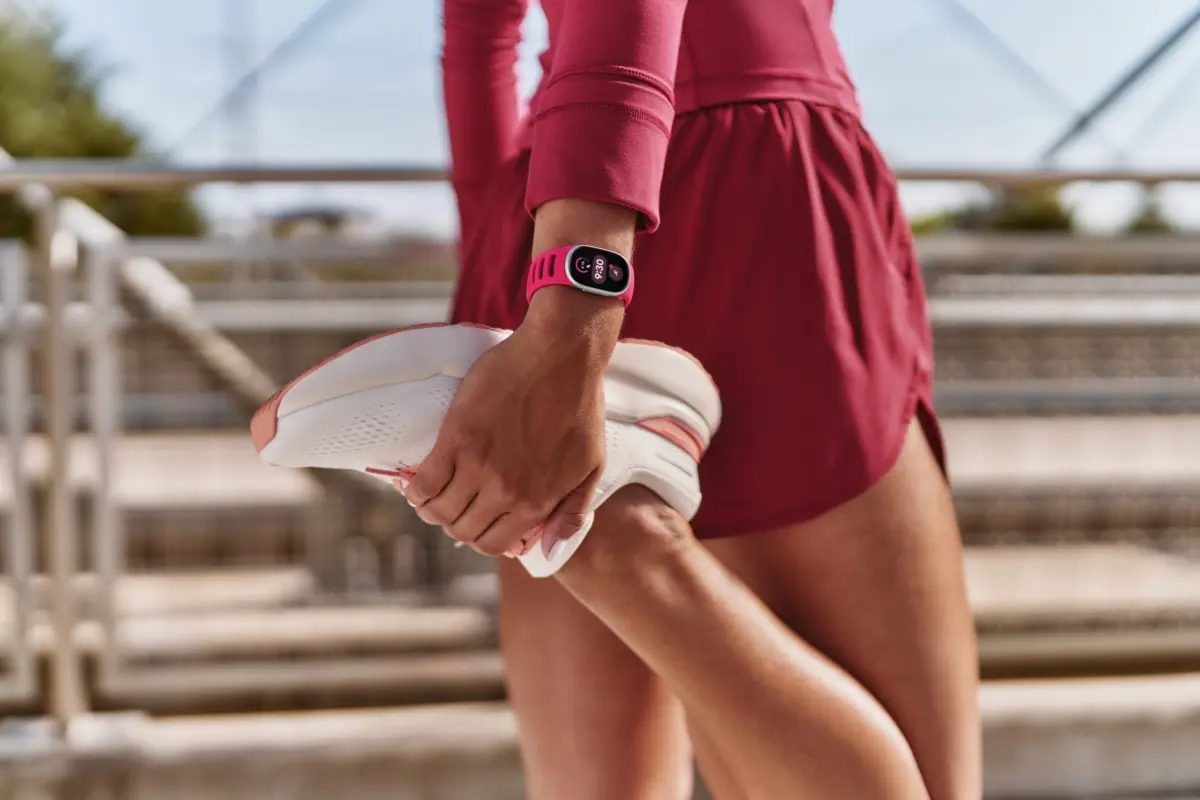
The release of the Fitbit Edge marks a significant pivot in Google’s wearable strategy, addressing long-standing criticisms regarding the physical profile and ergonomics of the flagship Pixel Watch series. While the Pixel Watch 5 has been lauded for its sophisticated integration of Google Health services—providing comprehensive metrics on sleep, stress, and physical readiness—its aesthetic and physical dimensions have remained a point of contention for users seeking a more discreet wearable experience. The Pixel Watch 5, characterized by its "bulbous" 12.3 mm thick frame, often stands in stark contrast to the sleeker profiles offered by competitors. By comparison, the Samsung Galaxy Watch maintains a profile of approximately 8.6 mm, and the Apple Watch Series 10 has reduced its thickness to 9.7 mm. The Fitbit Edge enters the market as a middle-ground solution, offering a streamlined 11.5 mm chassis that attempts to bridge the gap between a full-featured smartwatch and a minimalist fitness tracker.
The Evolution of the Google-Fitbit Ecosystem
To understand the positioning of the Fitbit Edge, one must look at the trajectory of Google’s wearable department since the acquisition of Fitbit in 2021. Initially, there was concern among industry analysts that the Fitbit brand would be subsumed entirely by the Pixel line. However, Google has instead maintained a tiered approach. The Pixel Watch serves as the premium, Wear OS-powered centerpiece, while the Fitbit line caters to users who prioritize battery life, specialized health tracking, and lighter form factors.
The Fitbit Edge is the latest iteration of this philosophy. It follows the release of the Fitbit Air, a screenless wearable designed for those who want the data without the distraction of a digital interface. While the Air was praised for its $99 price point and week-long battery life, it lacked the real-time feedback many athletes require during training. The Edge addresses this by incorporating a vibrant hybrid OLED display protected by Corning Gorilla Glass 3, allowing for the display of workout details, incoming notifications, and Google Maps directions without the excessive bulk of the Pixel Watch 5.
Technical Specifications and Design Innovations
The Fitbit Edge’s design is a calculated response to the "chunky" nature of modern smartwatches. At 11.5 mm, it is marginally thinner than the Pixel Watch 5, though it remains slightly thicker than the three-year-old Fitbit Charge 6, which measured 11.2 mm. Despite the incremental nature of these physical changes, the Edge introduces several hardware refinements that differentiate it from its predecessors.
One of the most notable additions is the physical side button. Drawing clear inspiration from the Apple Watch’s "Action Button," this tactile input allows users to quickly initiate workouts or navigate menus without relying solely on touch-screen gestures, which can be cumbersome during high-intensity exercise or in inclement weather.

Under the hood, Google has focused heavily on algorithmic improvements. The company claims a 15% increase in sleep tracking accuracy compared to previous Fitbit models. This improvement is largely attributed to refined sensor fusion technology and updated machine learning models that better interpret heart rate variability (HRV) and movement patterns during various sleep stages. The Edge continues to utilize the Google Health interface, which has become a cornerstone of the ecosystem due to its approachability and clear data visualization.
Battery Life and the Always-On Display Trade-off
In the wearable market, battery life remains the primary battleground. The Fitbit Edge is advertised with a seven-day battery life, a figure that significantly outperforms the 24-to-36-hour range typical of the Pixel Watch 5 or the Apple Watch. However, this longevity comes with a significant caveat: the use of the Always-On Display (AOD) feature.
When the AOD is enabled, the battery life of the Fitbit Edge drops precipitously from seven days to just two days. This 70% reduction in battery performance highlights the power-intensive nature of modern OLED panels on small-form wearables. For many users, this creates a dilemma. The "always-on" functionality is often cited as a requirement for a device to feel like a traditional watch, yet the loss of five days of charge makes the Edge’s battery advantage over the Pixel Watch nearly negligible. Comparatively, the screenless Fitbit Air maintains a consistent seven-day charge because it lacks the power draw of a display entirely.
A Milestone in Sustainability: The First Repairable Fitbit
Perhaps the most significant shift in Google’s manufacturing philosophy with the Edge is the emphasis on repairability. Historically, fitness trackers have been treated as disposable electronics; once the battery degraded or the screen cracked, the cost of repair often exceeded the cost of replacement. The Fitbit Edge is being marketed as Google’s first "repairable" Fitbit.
While specific details on the availability of replacement parts through outlets like iFixit are still forthcoming, the move aligns with the broader "Right to Repair" movement gaining traction in the United States and Europe. By designing the Edge with a modular approach that allows for screen or battery replacement, Google is attempting to extend the lifecycle of the device, thereby reducing electronic waste and offering better long-term value to the consumer. This feature alone may justify the $20 price increase over the Fitbit Charge 6 for environmentally conscious buyers.
Market Positioning and Comparative Value
The Fitbit Edge enters the market with a retail price approximately $20 higher than the Fitbit Charge 6. This pricing strategy has raised questions among tech analysts. If the primary upgrades are software-driven (sleep tracking) or structural (repairability and a side button), some wonder if the hardware justifies the premium.

When placed alongside the $99 Fitbit Air, the $179–$199 estimated price of the Edge represents an $80 to $100 jump for the addition of a screen and a button. For users who already carry a smartphone, the necessity of a secondary screen for Google Maps or text notifications is a matter of personal preference rather than a functional requirement. However, for the segment of the market that finds the Pixel Watch 5 too heavy for sleep tracking or too intrusive for formal wear, the Edge represents a necessary evolution. It is a device that aims to "disappear" on the wrist while still providing the high-level data metrics that Fitbit users have come to expect.
Chronology of Recent Google Wearable Releases
To see where the Fitbit Edge fits into the current timeline, one must look at the rapid-fire release schedule Google has maintained over the past year:
- Late 2023: Release of the Fitbit Charge 6, focusing on Google app integration (YouTube Music, Google Maps, Google Wallet).
- Early 2024: Launch of the Pixel Watch 5, introducing a larger display option but maintaining the thick, rounded "pebble" design.
- Mid-2024: Introduction of the Fitbit Air, a screenless, budget-friendly tracker aimed at the "minimalist" and "wellness" demographics.
- October 2024: Official announcement and pre-order window for the Fitbit Edge, positioned as the high-end fitness tracker for those who reject the smartwatch form factor.
Industry Implications and Future Outlook
The introduction of the Fitbit Edge suggests that Google is listening to ergonomic feedback, even if it is not yet ready to completely overhaul the design language of the Pixel Watch. By offering the Edge, Google provides a safety valve for users who love the Fitbit/Google Health data ecosystem but find the flagship hardware unwearable.
Furthermore, the focus on repairability could set a new standard for the fitness tracker industry. If successful, it may pressure competitors like Garmin and Xiaomi to rethink their own manufacturing processes. As the wearable market matures, the focus is shifting away from "more features" toward "better integration and better wearability."
The Fitbit Edge is available for pre-order immediately through major retailers and the Google Store. It is scheduled for a full global release on October 27. As the holiday shopping season approaches, the Edge will likely be positioned as the premier choice for fitness enthusiasts who want the power of Google’s health algorithms without the physical burden of a traditional smartwatch. Whether the two-day battery life with AOD enabled will deter potential buyers remains to be seen, but for now, the Edge stands as a testament to Google’s attempt to refine the "ideal platonic smartwatch" into a more wearable, repairable, and approachable form.
