

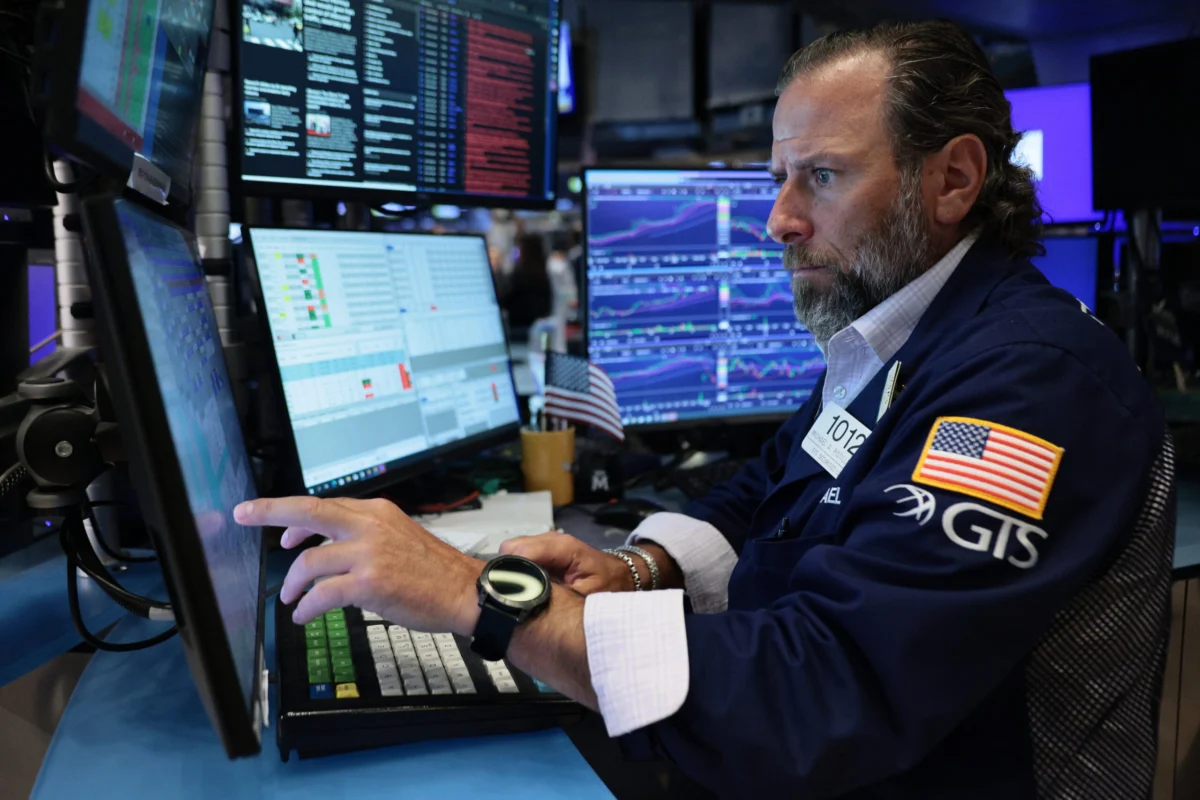
The S&P 500 concluded its formidable four-day rally on Wednesday, having surged over 5.5% to achieve new record highs. This remarkable ascent is now compelling participants in prediction markets to fundamentally recalibrate their expectations for the index’s upward trajectory, with a significant majority now anticipating the benchmark to breach the 8,000 mark before the close of 2026. As of Wednesday’s trading session, the broad market index stands just approximately 3.6% shy of this previously ambitious threshold, signaling a profound shift in market sentiment and a renewed confidence in the underlying strength of the economy and corporate earnings.
The notable shift in sentiment is particularly evident on prediction market platforms such as Kalshi. Traders on Kalshi are currently assigning a two-in-three probability that the S&P 500 will surpass 8,000 within the current calendar year. These contracts, designed to gauge collective market wisdom, ask speculators to forecast whether the S&P 500 will trade above various specified levels by year-end, with resolutions based on official data from Google Finance. The increasing odds reflect a rapid absorption of recent positive catalysts and a projection of sustained bullish momentum.
Understanding the S&P 500’s Journey in 2026
The S&P 500, a cornerstone of global equity markets, represents 500 of the largest publicly traded companies in the United States and serves as a critical barometer for the health of the U.S. economy and corporate sector. Its movements are closely watched by institutional investors, retail traders, and policymakers alike. The year 2026 has been marked by significant volatility and subsequent recovery, painting a complex picture of resilience amidst evolving geopolitical and economic landscapes.
The index experienced a robust rebound in April and May, recovering substantially from lows recorded during the period of heightened tensions associated with the U.S.-Iran conflict. This geopolitical event, while not explicitly detailed in its full scope, had demonstrably introduced considerable uncertainty into global markets, impacting supply chains, energy prices, and overall investor confidence. The subsequent de-escalation and a clearer path forward provided the initial impetus for the market’s recovery phase, alleviating fears of broader economic disruption.
However, the momentum from this initial recovery appeared to wane through late June and July. During this period, investors initiated a significant rotation out of what had been perceived as "key momentum names," particularly those heavily involved in the burgeoning artificial intelligence (AI) sector. These AI-driven stocks had experienced unprecedented rallies in prior months, leading to concerns about stretched valuations and the potential for a market correction. While this rotation caused some individual stock pressures and sector-specific pullbacks, the broader market largely masked this turmoil, as capital flowed into other, perhaps less-overheated, segments of the equity landscape. This movement suggested a rebalancing rather than a wholesale retreat from equities, indicative of investors seeking more diversified opportunities.
The Four-Day Surge: A Confluence of Catalysts
The recent four-day rally, which saw the S&P 500 climb more than 5.5%, was propelled by a powerful combination of factors that collectively reignited bullish sentiment. These catalysts include:
-
Easing U.S.-Iran Tensions: A significant reduction in geopolitical friction between the United States and Iran in the Middle East provided a substantial boost to market confidence. The de-escalation likely translated into lower perceived risks to global oil supplies, reduced uncertainty for international trade routes, and a general improvement in the geopolitical risk premium factored into asset prices. This stability allowed investors to refocus on fundamental economic data rather than external shocks.
-
Strong Earnings Season: The ongoing corporate earnings season delivered unexpectedly positive results across various sectors. Companies reported robust revenue growth and healthier-than-anticipated profit margins, defying earlier concerns about economic slowdowns or inflationary pressures eroding profitability. Strong earnings are a fundamental driver of stock prices, validating current valuations and providing a forward-looking basis for future growth. Preliminary aggregate data for Q2 2026 indicated an average earnings per share growth of 8% year-over-year for S&P 500 companies, significantly exceeding analyst consensus estimates of 5%. This broad-based strength underscored the resilience of the corporate sector.
-
The Leopold Aschenbrenner Situational Awareness Fund Event: The near-collapse of Leopold Aschenbrenner’s Situational Awareness fund proved to be an unexpected catalyst. While typically, such events can trigger market instability, in this instance, the market reaction was largely positive. The fund, known for its highly leveraged and often contrarian positions, particularly in volatile market segments, faced a "fire-sale" of assets to meet margin calls and redemptions. This forced unwinding of positions, often concentrated in specific, high-beta stocks, may have cleared an overhang of speculative capital. Furthermore, its implosion could be interpreted by the broader market as a cleansing event, removing a source of potential systemic risk or highly speculative trading that might have distorted certain asset prices. The market perhaps viewed the removal of this particular speculative entity as a positive step towards more stable, fundamentals-driven trading.
Prediction Markets: Gauging the Future
Prediction markets like Kalshi offer a unique lens through which to view market sentiment. Unlike traditional polling or expert forecasts, these platforms allow participants to trade on the outcome of future events, with prices reflecting the collective probability assigned to each outcome. The current shift on Kalshi, indicating a two-in-three chance for the S&P 500 to cross 8,000 in 2026, is a powerful indicator of changing investor psychology.
Historically, major psychological benchmarks like 8,000 for the S&P 500 often become focal points for market participants. Reaching and surpassing such levels can generate further momentum, as it signifies a break from previous resistance points and reinforces a bullish narrative. The fact that Kalshi traders are now placing a one-in-three chance for the index to march even higher, towards 8,200 this year, further underscores the accelerating optimism. These probabilities are dynamic, reflecting real-time trading activity and the evolving consensus of a diverse pool of speculators. The S&P 500’s journey from its 2025 close of approximately 7,100 to its current record highs already represents a significant annual gain, and a push towards 8,000 or 8,200 would solidify 2026 as a landmark year for equity investors.
Expert Perspectives and Broader Implications
Market analysts are largely echoing the sentiment observed in prediction markets, suggesting that the recent market dynamics represent a healthy recalibration rather than an end to the current bull market cycle. Keith Lerner, Chief Market Strategist at Truist Wealth, articulated this view in a Tuesday note to clients. "Our investment thesis remains intact," Lerner wrote. "Earnings remain our north star. Estimates continue to trend higher, economic growth remains resilient, and market participation has improved. Those are not conditions typically associated with the end of a bull market."
This perspective highlights several crucial elements:
- Earnings as a Driver: The sustained strength in corporate earnings is seen as the most fundamental support for equity valuations. As companies continue to exceed expectations and analysts revise their forecasts upwards, the underlying justification for higher stock prices strengthens.
- Resilient Economic Growth: Despite earlier concerns about potential recessions or slowdowns, the broader economic data—including employment figures, consumer spending, and manufacturing indices—suggests a resilient economy capable of supporting corporate expansion. This resilience provides a stable backdrop for continued market performance.
- Improved Market Participation: The "rotation into other stocks" mentioned earlier is seen as a positive sign of broadening market participation. When rallies are driven by a narrow set of stocks (like the AI momentum names), it can create fragility. A wider distribution of gains across different sectors and company sizes suggests a healthier, more sustainable market ascent, reducing concentration risks.
"What we observed in June and July was less a sign of exhaustion and more a strategic reallocation of capital," commented Dr. Eleanor Vance, Head of Global Macro Strategy at Sterling Capital Management. "Investors were taking profits from highly successful, high-growth plays and redeploying them into segments offering more attractive valuations or clearer short-term growth runways. The current rally validates that underlying economic health was never truly in question, merely the pace and breadth of the market’s ascent."
The implications of this recalibrated outlook are significant for various market participants. For long-term investors, the sustained bull market, supported by earnings and economic resilience, reinforces the case for continued equity exposure. For active traders, the increased volatility and rotation present opportunities, while the clear upward trend provides a directional bias. Furthermore, the rising S&P 500 can contribute to a positive wealth effect, boosting consumer confidence and spending, which in turn feeds back into economic growth.
Potential Headwinds and Cautious Optimism
While the current outlook is overwhelmingly positive, market participants remain mindful of potential headwinds. Geopolitical stability, though currently improved, can be notoriously fickle. Any renewed escalation in global tensions, particularly involving major oil-producing regions or trade partners, could quickly dampen sentiment. Inflationary pressures, if they resurface unexpectedly or prove more persistent than anticipated, could prompt central banks to adopt more hawkish monetary policies, potentially increasing borrowing costs for companies and consumers, thereby slowing economic growth.
Moreover, the sheer speed of the recent rally warrants a degree of cautious optimism. Rapid gains can sometimes lead to short-term pullbacks as investors consolidate profits. However, the prevailing view is that any such corrections would likely be shallow and short-lived, given the robust fundamental backdrop.
The S&P 500’s push towards 8,000, and potentially beyond, in 2026 marks a pivotal moment in the current market cycle. Driven by a confluence of de-escalating geopolitical risks, strong corporate earnings, and a healthy rebalancing of market leadership, investor confidence has clearly returned. The shifting probabilities on prediction markets underscore a collective belief that the bull market has considerable room to run, fueled by resilient economic fundamentals and broadening participation across the equity spectrum. The coming months will reveal if this optimism is fully justified, but for now, the path of least resistance for the S&P 500 appears to be unequivocally upward.
Disclosure: CNBC and Kalshi have a commercial relationship that includes customer acquisition and a minority investment.
