

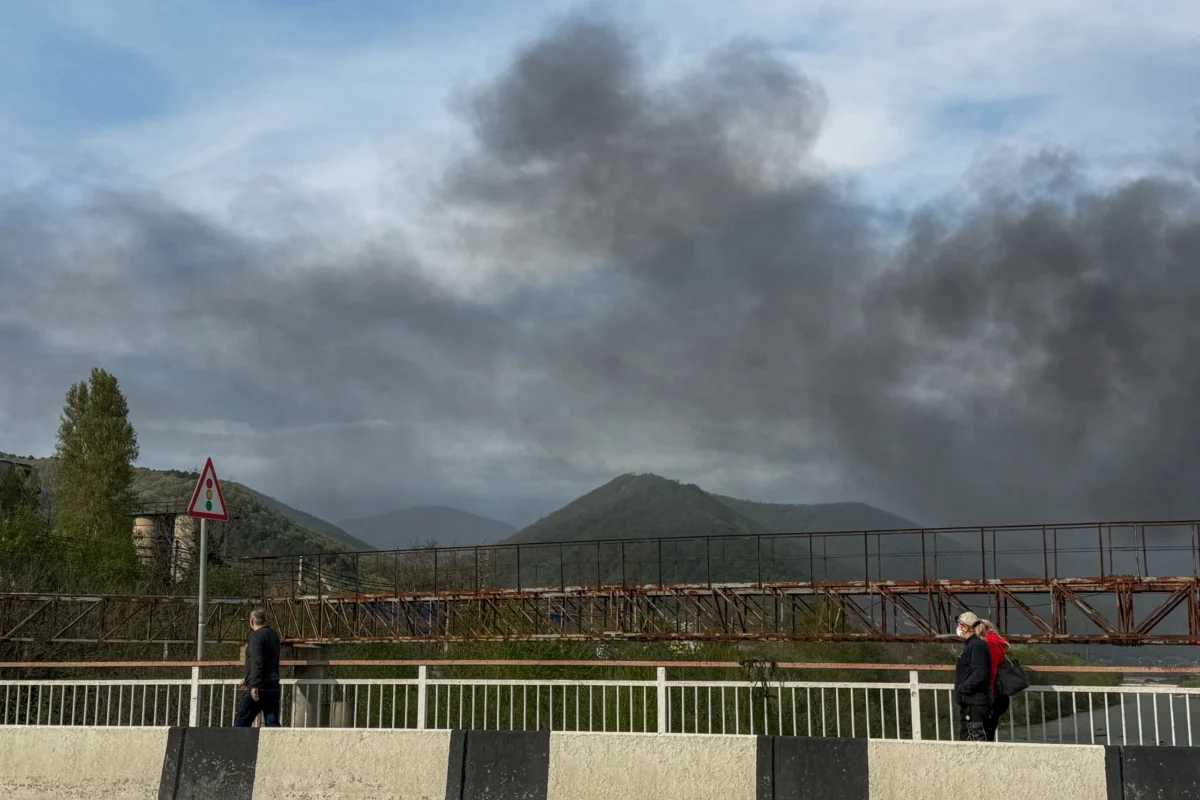
Southern Russia is currently experiencing what many describe as one of the most severe environmental disasters in its modern history, triggered by a series of Ukrainian strikes on vital oil infrastructure. In April, repeated drone attacks targeted the Tuapse oil refinery, a critical facility on the Black Sea coast, igniting massive fires and resulting in extensive oil spills. The immediate aftermath saw petroleum residue and thick smoke envelop the region, leading residents to report "black rain" falling from the sky, coating everything in a noxious film. Weeks later, the ecological fallout continues, with reports of widespread wildlife mortality, persistent pollution of pristine beaches, and volunteers facing significant obstruction in their efforts to mitigate the damage. In stark contrast to the escalating environmental crisis, authorities have reportedly focused less on confronting the scale of the catastrophe and more on silencing dissent and pushing for a swift, premature reopening of beaches for the tourist season.
The Unfolding Catastrophe: A Detailed Account
The initial strikes on the Tuapse oil refinery in April caused significant damage to its processing units and storage facilities. The refinery, strategically located on the Black Sea, is one of Russia’s largest and a key exporter of petroleum products, making it a high-value target in the ongoing conflict. The ensuing fires burned for extended periods, releasing vast plumes of smoke laden with harmful particulates and unburnt hydrocarbons into the atmosphere. This atmospheric contamination, combined with the direct spillage of crude oil and refined products into the Black Sea, has created a multifaceted environmental crisis.
Eyewitness accounts from residents of Tuapse, Sochi, and surrounding areas paint a grim picture. Many described the phenomenon of "black rain" – precipitation mixed with soot and oil residue – which left dark, oily stains on vehicles, buildings, and natural landscapes. The air quality deteriorated significantly, raising immediate health concerns for respiratory issues and exposure to carcinogens. Along the coastline, the visible impact of the oil spill became starkly apparent, with beaches typically popular with tourists now covered in tar and oily debris. Marine life has been severely affected; local reports, though often suppressed, indicate a surge in dead fish, birds, and other marine animals washing ashore, coated in oil or succumbing to toxic ingestion. The long-term effects on marine ecosystems, including vital fish stocks and protected species, are yet to be fully assessed but are anticipated to be devastating.
Official Response and Suppression
The official response to the disaster has drawn widespread criticism, both domestically and internationally. Rather than initiating a transparent and comprehensive environmental cleanup and assessment, Russian authorities have been accused of downplaying the severity of the situation and actively suppressing information. Local volunteers attempting to organize cleanup efforts and rescue wildlife have reported being obstructed, harassed, and, in some instances, detained. Journalists seeking to document the environmental damage and the official response have faced similar pressures, contributing to a tightly controlled narrative that minimizes the catastrophe.
This pattern of secrecy and delayed disclosure evokes historical parallels, most notably the Soviet Union’s initial handling of the Chornobyl nuclear disaster in 1986. In both instances, the prioritization of political control and maintaining an image of stability over public safety and environmental transparency exacerbated the human and ecological consequences. Despite the ongoing pollution and ecological damage, officials in the Krasnodar region, which includes Tuapse and Sochi, have reportedly begun discussions about reopening affected beaches and launching the summer tourist season. This move has been widely condemned by environmentalists and concerned citizens, who argue that such actions prioritize short-term economic gains over the long-term health of the environment and the safety of the public. The perceived lack of preparedness, regulation, and accountability from the authorities forms a significant part of the overall responsibility for the disaster’s scale.
The Broader Context: Russia’s Environmental Record
While the immediate trigger for this catastrophe was wartime strikes, experts contend that its magnitude is deeply rooted in Russia’s long-standing environmental policies and governance structures. Russia’s oil infrastructure, a cornerstone of its war economy, has operated for years within a framework of deregulation, diminished oversight, and the systematic dismantling of environmental protections. These trends have only intensified since the full-scale invasion of Ukraine, as environmental safeguards have increasingly been waived or weakened in the interest of sustaining military production and economic stability.
A salient example of this broader trend is the recent legislative changes impacting the protection of Lake Baikal. This unique ecosystem, a UNESCO World Heritage site, holds approximately 23 percent of the world’s unfrozen freshwater. Environmental experts have raised serious concerns that these new laws could lead to irreversible damage to the lake’s fragile ecology, highlighting a pattern where critical environmental concerns are sidelined for perceived economic or strategic imperatives. For years, independent environmental organizations in Russia have faced severe repression, labelled as "foreign agents" or declared "undesirable," effectively dismantling independent ecological movements and forcing activists into exile. This systemic suppression has created a vacuum where ecological disasters are frequently silenced rather than addressed transparently, making it difficult for civil society to act as a watchdog or advocate for environmental protection.
Wartime Environmental Destruction: A Global Dilemma
The Tuapse disaster also reignites a complex and increasingly urgent debate about environmental destruction during wartime. Ukraine, having endured countless environmental catastrophes due to Russia’s aggression, has been a leading voice in advocating for the recognition of "ecocide" as an international crime, although the concept remains to be formally codified in international law. However, following the April strikes, some environmental activists, both within Russia and internationally, have accused Ukraine of hypocrisy, arguing that strikes on oil infrastructure, while targeting an aggressor’s war economy, also cause long-term environmental harm. This raises difficult ethical and legal questions about the proportionality and justification of such actions, even in self-defense, given their potential decades-long ecological consequences.
The absence of robust international legal mechanisms to address large-scale environmental destruction in the context of armed conflict represents a significant gap in global governance. Recent events, such as the destruction of the Kakhovka Dam in June 2023, caused immense ecological damage across southern Ukraine, yet failed to generate sustained legal or political accountability at the international level. This incident, like the ongoing pollution from the Tuapse spills, underscores the urgent need for clearer international frameworks and enforcement mechanisms to prevent, mitigate, and hold perpetrators accountable for wartime environmental devastation. The war in Ukraine has become so heavily politicized globally that discussions surrounding its environmental consequences are often reduced, avoided, or absorbed into broader geopolitical narratives, leaving environmental activists with a deep sense of helplessness as these crucial issues struggle for attention amidst an overwhelming number of global crises.
Public Dissent and the Power of Environmental Grievances
Despite the tightening grip of censorship in Russia, the Tuapse disaster has triggered an unusual wave of discussion within the country, much of it unfolding online. This public reaction is particularly telling, as a significant portion of the discourse has taken place on platforms like Instagram, which is officially banned in Russia, with citizens using VPNs to access information and express their views. What is striking is that much of this discussion has not primarily focused on accusing Ukraine, but rather on criticizing the Russian authorities for their perceived lack of coordination, absence of transparency, and the broader political system that allows such crises to develop and be mishandled.
In a country where even referring to the "special military operation" as a "war" is effectively prohibited and carries severe penalties, environmental catastrophe has emerged as one of the few legitimate channels through which criticism of the government can still surface. This phenomenon highlights how environmental issues, often seen as apolitical, can become potent vehicles for broader social and political dissent when official narratives fail to align with lived realities. The public’s frustration with the authorities’ response to the Tuapse disaster underscores a growing distrust and a desire for accountability that transcends the immediate environmental damage.
A Deeper Structural Crisis: Colonialism, Extractivism, and Neglect
The environmental destruction witnessed in Tuapse is not an isolated incident but rather symptomatic of deeper structural problems within Russia, problems that extend beyond wartime damage. Environmental degradation across Russia, a country spanning one-tenth of the Earth’s land surface, often receives little international attention. This includes long-standing patterns tied to extractivism – an economic model heavily reliant on extracting natural resources – colonial governance in its national republics, and the systematic marginalization of Indigenous communities. These are not separate issues; they are intrinsically linked parts of an underlying problem that remains largely unaddressed.
Environmental exploitation in Russia’s regions has historically been tied to older imperial patterns of control and dispossession. These same southern regions, including the Black Sea coast, have a complex history, notably the Russian Empire’s genocide against the Indigenous Circassian people in the late 19th century, which led to the extermination and expulsion of over 95 percent of the local population. Today, what appears to concern Russian authorities most is not the environmental devastation itself, but the economic imperative of reopening beaches to sustain regional income, further illustrating a pattern of prioritizing resource extraction and economic gain over ecological health and indigenous rights.
International Neglect and the Shrinking Space for Expertise
The situation in Southern Russia also exposes a fundamental gap in how the international community addresses environmental crises within complex geopolitical contexts. While Europe and other global powers are investing hundreds of billions of euros to counter perceived Russian military threats, far less attention is directed towards the political and economic structures sustaining environmental destruction inside Russia itself. This disparity reveals a striking gap in understanding and addressing the root causes of such crises.
There is insufficient focus on the deeper structures that perpetuate environmental degradation: Russia’s colonial governance and its extractivist economic model in its diverse regions. These issues remain underexplored not only in political decision-making but also in academia and media coverage. This gap is particularly visible in the missed opportunities to engage with emerging Russian decolonial movements and Indigenous activists from national republics, who have long been raising precisely these concerns. Their perspectives, essential for a comprehensive understanding of both environmental destruction and political instability in the region, remain largely marginal.
Compounding this, many international organizations and NGOs have scaled down or abandoned work related to Russia’s internal environmental and human rights issues, as well as broader regional dynamics in Eastern Europe and Central Asia, following the full-scale invasion of Ukraine. As a result, entire areas of expertise are disappearing precisely when they are most needed. Voices that could contribute to a deeper understanding, and potentially to long-term solutions for these multifaceted crises, are increasingly sidelined or ignored. The catastrophic events in Tuapse, where oil literally fell from the sky, serve as a stark and tragic reminder of the profound consequences when environmental stewardship is systematically neglected and accountability is suppressed, leaving populations to grapple with the aftermath and question how such disasters become possible.
