

South Korea’s semiconductor exports have reached unprecedented heights, a phenomenon that has undeniably propelled Asia’s fourth-largest economy to record-breaking overall export figures. However, this meteoric ascent, while a cause for celebration, is also generating significant concern regarding the sustainability of such rapid growth and the potential ramifications should the current boom begin to wane. The nation’s economy, heavily reliant on its technological prowess, finds itself at a critical juncture, balancing the elation of a booming sector with the sober realities of potential economic headwinds.
A Record-Breaking August for Semiconductor Exports
The latest figures released by the Ministry of Trade, Industry and Resources paint a striking picture of the semiconductor industry’s dominance. In August, semiconductor exports experienced a staggering surge of 209% compared to the same period last year, reaching a colossal $46.65 billion. This impressive figure accounted for an overwhelming 47.5% of South Korea’s total goods exports for the month, which amounted to $98.25 billion. This remarkable performance underscores the indispensable role of semiconductors in the nation’s economic landscape.
The primary driver behind this exceptional growth, as highlighted by the ministry, is the insatiable demand for AI infrastructure. Major global cloud providers, including industry giants like Google and Amazon, have significantly ramped up their capital expenditures to bolster their AI capabilities. This surge in investment directly translates into increased orders for the high-performance memory chips and advanced processing units that South Korea, particularly its leading companies like SK Hynix and Samsung Electronics, specializes in producing.
The AI Boom: A Double-Edged Sword
Jeff Ng, head of Asia macro strategy at Sumitomo Mitsui Banking Corporation, elaborated on the profound impact of this trend, estimating that semiconductor exports were responsible for nearly 80% of South Korea’s overall export growth in August. He further noted that this growth was bolstered by a confluence of factors, including a robust performance in computers and higher petroleum product prices, creating a potent mix for export expansion.
While such soaring figures are typically viewed as unequivocally positive indicators of economic health, the sheer velocity of this growth is also a source of apprehension. The concern is not about the current prosperity, but rather about what lies ahead if the current trajectory falters. The fear is that an abrupt cessation of this boom could have a more destabilizing effect than a gradual deceleration.
Navigating Potential Downside Risks
Dave Chia, an economist at Moody’s Analytics, articulated this concern, stating, "A gradual slowdown would be manageable. An abrupt stall is a different matter, because the economy already runs at two speeds, and the sectors that would need to take up the slack are the ones under pressure today." This "two-speed" economy refers to the stark contrast between the high-flying semiconductor sector and other, more traditional industries that are currently facing challenges.
The potential for a rapid downturn is further amplified by the prevailing monetary policy environment. The Bank of Korea, in an effort to combat persistent core inflation, has been tightening its monetary stance. In August, the central bank raised its base rate to 3%, marking its second consecutive hike. This tightening of monetary policy could limit the economic cushion available should the semiconductor cycle turn downwards sooner than anticipated.
Chia cautioned that a scenario where chip demand cools while monetary policy remains restrictive could prove particularly challenging. "The windfall fades when domestic demand isn’t strong enough to take over," he warned, implying that a cooling in global chip demand, coupled with tighter domestic credit conditions, could leave South Korea vulnerable.
Challenges in Traditional Sectors
The struggles in other key export sectors highlight the potential void that could emerge if the semiconductor boom falters. Automobile exports, a historically significant pillar of the South Korean economy, experienced a notable decline of 29.8% in August compared to the previous year. While the Ministry of Trade, Industry and Resources attributed a portion of this decrease to seasonal factors like summer holidays and partial labor strikes, other persistent headwinds are also at play.
Chia pointed to ongoing concerns such as U.S. tariffs and the strategic shift of automotive production to American plants as more enduring challenges for the sector. These factors suggest that the automotive industry’s recovery may be a more protracted process, making it less equipped to absorb any shockwaves from a semiconductor downturn.
Signs of Resilience and Diversification
Despite the headwinds faced by traditional sectors, there are also indicators suggesting a degree of underlying resilience and diversification within the South Korean economy. The Bank of Korea, in its August monetary policy statement, acknowledged a gradual acceleration in the recovery of domestic consumption. Furthermore, data from the Ministry of Trade, Industry and Resources revealed that non-semiconductor exports saw a respectable increase of 20% in August, indicating that other sectors are also contributing to export growth, albeit at a less explosive rate.
Homin Lee, senior macro strategist at Swiss private bank Lombard Odier, offered a more optimistic perspective on the potential for sustained growth. He suggested that even if semiconductor momentum were to wane, a scenario where other cyclical sectors perform well could still enable South Korea to maintain annual real growth of around 2% to 3%. This outlook hinges on the ability of these other sectors to pick up the slack and contribute to overall economic expansion.
Analysts’ Near-Term Outlook Remains Positive
Looking ahead, analysts’ near-term base cases remain largely positive, tempered by an acknowledgment of potential moderating factors. SMBC’s Ng anticipates that overall export growth will continue to be positive over the next 12 months. However, he also foresees a moderation in this growth due to the inevitable "base effects" – the statistical impact of comparing current performance to an exceptionally strong previous period – and the anticipated stabilization of global prices for key commodities.
Lee, while acknowledging the exceptional nature of South Korea’s semiconductor and tech export boom, expressed a nuanced view on the concept of "over-reliance." He argued that the country possesses a diverse range of cyclical sectors that tend to thrive when the broader global economy is performing well. This suggests that the Korean economy is not solely dependent on the fortunes of the semiconductor industry, and a diversified economic base offers a degree of insulation against sector-specific downturns.
The Global Context: AI’s Central Role
The current boom is intrinsically linked to the global acceleration of artificial intelligence development and deployment. Companies across various industries are investing heavily in AI technologies, from generative AI for content creation and customer service to advanced AI for data analysis, drug discovery, and autonomous systems. This widespread adoption necessitates significant upgrades to computing infrastructure, particularly in data centers, which are the backbone of AI operations.
These data centers require vast quantities of high-bandwidth memory (HBM) and advanced processors. South Korean firms like SK Hynix and Samsung Electronics have emerged as global leaders in the production of HBM, a specialized type of DRAM designed for AI accelerators. SK Hynix, for instance, has been at the forefront of developing and mass-producing successive generations of HBM, including its advanced 12-layer HBM4E memory chips, crucial for powering the latest AI chips. Samsung Electronics, its major competitor, is also heavily invested in HBM production and research, vying for market share in this lucrative segment.
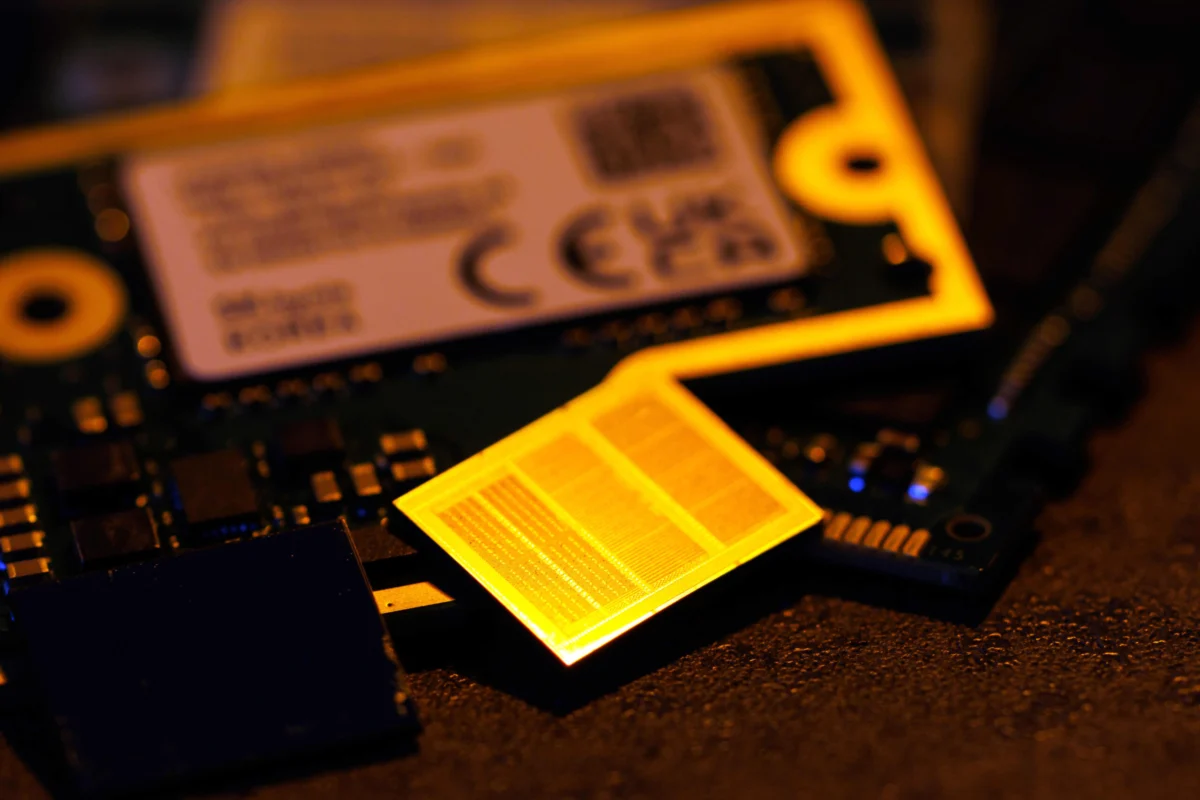
The image accompanying the original article, depicting SK Hynix’s advanced HBM4E memory chips on a LPDDR5X CAMM2 memory module, serves as a tangible representation of the cutting-edge technology driving this export surge. The fact that this image was captured in South Korea on July 24, 2026, and that Bloomberg noted the South Korean stock market as a "bellwether for global AI sentiment," further emphasizes the nation’s pivotal role in the global AI ecosystem. The violent swings in the stock market, driven by leveraged chip bets, underscore the speculative fervor and high stakes involved in this burgeoning sector.
A Timeline of Growth and Shifting Dynamics
The current semiconductor boom is not an overnight phenomenon but rather a culmination of years of strategic investment, technological innovation, and a global shift towards data-intensive computing. The roots of this surge can be traced back to the increasing demand for cloud computing services, the proliferation of smartphones, and the nascent stages of AI development that began gaining traction in the late 2010s.
However, the COVID-19 pandemic acted as an unexpected catalyst, accelerating digital transformation across industries and further amplifying the need for robust digital infrastructure. This led to a surge in demand for semiconductors for everything from personal computers and gaming consoles to enterprise servers and network equipment. While the industry experienced some cyclical downturns in the past, the current AI-driven demand has provided a sustained and powerful tailwind.
Looking at specific timelines, the past few years have seen significant announcements and breakthroughs:
- 2020-2022: Global supply chain disruptions due to the pandemic highlighted the critical importance of semiconductors, leading to increased governmental focus and investment in the sector worldwide. South Korea, already a dominant player, continued to invest heavily in R&D and capacity expansion.
- 2023: The rapid advancements and widespread adoption of generative AI models like ChatGPT brought the power of AI into the mainstream, creating an unprecedented surge in demand for AI-specific hardware, particularly HBM. SK Hynix and Samsung Electronics ramped up production and unveiled next-generation HBM solutions.
- 2024 (projected and ongoing): Continued expansion of AI applications across industries, from autonomous vehicles and advanced robotics to personalized medicine and scientific research, is expected to maintain strong demand for high-performance memory and processing. South Korea’s leading chipmakers are positioning themselves to capture this sustained growth.
Broader Implications for the Global Economy
The dominance of South Korean semiconductor exports has profound implications for the global economy. As a major supplier of essential components for advanced technologies, any disruption or significant shift in its export performance can have ripple effects worldwide. For instance, a slowdown in South Korean chip production could lead to shortages and price increases for AI hardware, potentially hindering the progress of AI development in other countries.
Conversely, South Korea’s continued success in this sector can fuel global innovation and economic growth. The nation’s technological leadership not only benefits its own economy but also contributes to the advancement of various industries reliant on cutting-edge semiconductors. The competitive landscape between SK Hynix and Samsung Electronics, while intense, ultimately drives innovation and offers a wider range of options for global tech companies.
The South Korean government recognizes the strategic importance of its semiconductor industry and has implemented policies to support its growth and resilience. These include tax incentives for R&D and facility investment, efforts to secure a skilled workforce, and initiatives to strengthen the domestic supply chain. The nation’s ambition to become a global semiconductor hub extends beyond manufacturing to encompass design, packaging, and R&D, aiming for a comprehensive ecosystem.
Conclusion: A Delicate Balance
South Korea stands at a pivotal moment. The current semiconductor export boom, fueled by the global AI revolution, presents an extraordinary opportunity for economic prosperity. However, the rapid ascent also carries inherent risks. The nation’s economic policymakers and industry leaders are tasked with navigating this delicate balance, ensuring that the current gains are sustainable and that the economy is resilient enough to withstand potential future volatilities.
While the immediate outlook remains positive, a proactive approach to diversification, investment in other growth sectors, and careful management of monetary policy will be crucial. The continued innovation and strategic positioning of South Korea’s semiconductor giants, alongside the resilience of its other export industries, will determine the nation’s economic trajectory in the years to come, solidifying its role as a linchpin in the global technological landscape.
