

London, a city historically defined by its relationship with the River Thames, is embarking on an ambitious and transformative mission to ensure that every resident lives within a 15-minute walk of a safe, swimmable body of water by 2035. This bold objective, championed by Mayor Sadiq Khan, transcends the scope of a single departmental program or budgetary allocation. It represents a profound public undertaking, one that necessitates the mobilization of all governmental ministries, a recalibration of market forces, and a fundamental shift in how urban water infrastructure is perceived and managed. The success of this endeavor hinges not on isolated projects, but on a cohesive, mission-driven approach that integrates diverse efforts into a unified strategic vision.
The impetus for this mission arises from a confluence of factors, including growing public awareness of climate change impacts, the recognized health and well-being benefits of access to "blue spaces," and a stark acknowledgment of existing inequalities in access to recreational water. While London boasts numerous public swimming pools, the post-COVID-19 era has seen a significant shift towards booking systems that often disadvantage those with less flexible schedules, limited financial resources, or fewer opportunities for daytime supervision. This has inadvertently created a barrier to a fundamental form of recreation for many Londoners.
A Strategic Shift Towards "Blue Infrastructure"
Mayor Khan’s commitment is underpinned by the recently launched Clean Rivers and Waterways Plan. This comprehensive strategy aims to significantly expand access to swimmable waters at ten key strategic locations by 2036. A substantial financial commitment of approximately £1.8 billion (roughly $2.4 billion) has been pledged by various partners through to 2030. However, the efficacy of this plan hinges on its execution. The author posits that the true test lies in whether these 48 distinct projects are managed as an integrated portfolio, driven by a singular overarching objective, rather than existing as disparate initiatives with independent ownership. This distinction between a mere "program" and a genuine "mission" is crucial for achieving the ambitious goal.
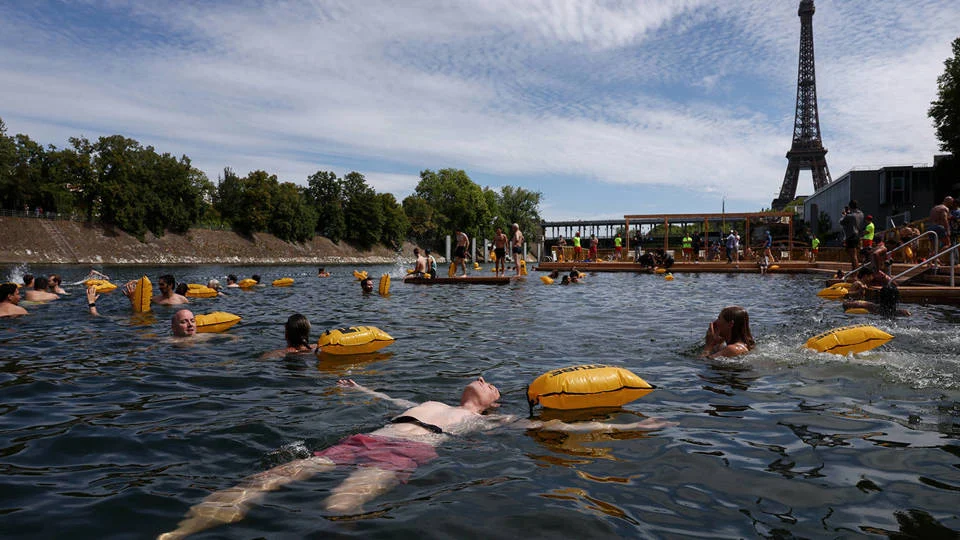
Cities globally are increasingly recognizing the critical role of natural and semi-natural water bodies – often referred to as "blue spaces" – as vital components of urban climate resilience and public health infrastructure. Copenhagen, for example, after decades of investment in sewer modernization and wastewater treatment facilities throughout the 1990s, pioneered the concept of accessible urban harbor bathing with the opening of Islands Brygge in 2002. This initiative proved so successful that it has served as a model for similar projects in Oslo and New York City. Paris has also made significant strides, investing €1.4 billion (approximately $1.6 billion) in cleaning up the Seine River, culminating in the re-establishment of public-access, lifeguarded bathing sites – the first legal opportunity for citizens to swim in the river since 1923. These pioneering cities share a common thread of ambitious vision and a developing capacity for coordinated delivery, offering valuable lessons for London’s undertaking.
Addressing Social Equity Through Water Access
The implications of improved water access extend far beyond environmental restoration; they are deeply intertwined with social equity and economic opportunity. Data from Sport England’s Active Lives survey starkly illustrates the disparities in swimming proficiency. It reveals that 82% of children from affluent households can swim 25 meters unaided, a figure that plummets to 39% for children from lower socioeconomic backgrounds. Similarly, the gap persists when examining children by geographic deprivation: 47% of children in the most deprived areas can swim 25 meters, compared to 69% in the least deprived areas.
Further highlighting this disparity, the Black Swimming Association reports that a staggering 96% of Black adults in England do not swim regularly, a figure notably higher than the 90% reported for white British adults. These statistics underscore a critical point: access to swimming skills and recreational water is heavily influenced by income levels and postal codes. The mission to make London swimmable directly addresses these inequalities, aiming to democratize access to a vital life skill and a healthy recreational activity.
Beyond the social imperative, the restoration of rivers and waterways represents a significant economic undertaking. The process demands a broad spectrum of expertise and labor, from the design of wetland ecosystems and the implementation of sustainable drainage systems to the construction and operation of treatment and reuse facilities. It involves ongoing water quality monitoring, bank maintenance, staffing of swimming areas, and the crucial task of teaching children to swim. The scale of public investment required for such a comprehensive effort necessitates a robust and well-defined procurement pipeline, which in turn has the power to actively shape and stimulate markets, fostering innovation and creating new industries and employment opportunities.
The Five Pillars of a Successful Mission
The author proposes that organizing London’s initiative as a "mission" – a goal ambitious enough to transcend departmental silos and concrete enough for public scrutiny – is paramount. This mission requires a coordinated effort involving health, environment, education, and transportation ministries, working in concert with local governments and water regulatory authorities. To achieve this, five critical elements must be addressed:
1. Governance: Centralized Authority and Shared Ownership
Effective governance is the bedrock of any successful mission. This requires the establishment of a cross-ministerial board endowed with genuine decision-making authority, capable of aligning budgets and sequencing actions. This is distinct from a mere information-sharing forum; it demands a body that is empowered to drive outcomes. Melbourne’s approach, for instance, began with a clear identification of the work streams directly under the council’s control, followed by the strategic formation of a coalition to secure commitments for the remaining elements. This ensures accountability and a unified strategic direction.
2. Procurement: Leveraging Public Spending as a Market-Shaping Tool
Public procurement power is an underutilized instrument for shaping markets. By shifting from a cost-saving-centric approach to an outcomes-oriented model, governments can redefine how services are commissioned. University College London’s work with Camden Council, for example, has demonstrated how judging contracts by the public value they deliver can fundamentally reshape the commissioning of everything from housing to leisure services. This approach has also been applied in New York City, where Mayor Zohran Mamdani has utilized public demand to foster supply in areas where private markets have failed, such as in food provision. Applying this principle to water infrastructure and recreational access can drive innovation and create a more responsive market.
3. Finance: Strategic Funding for Long-Term Impact
Securing sustainable and adequate funding is essential. The author suggests that issuing green-blue bonds at the national level could alleviate the pressure on local councils to compete for small, short-term grants, allowing them to focus on delivery rather than administrative burdens. The precedent for such financing exists: the European Bank for Reconstruction and Development successfully issued the world’s first dedicated climate-resilience bond in 2019, raising $700 million. Similarly, the UK’s green gilt program has been instrumental in financing significant flood defense investments by the Environment Agency. These mechanisms can provide the long-term financial stability required for a mission of this scale.
4. Conditionalities: Attaching Obligations to Public Support
When public finance, concessions, or discharge permits are granted to water companies and contractors, they must be accompanied by stringent obligations. These conditions should encompass pollution reduction targets, mandates for water reuse, requirements for apprenticeship programs, and commitments to reinvestment in infrastructure and environmental remediation. The independent review of the water sector by Jon Cunliffe highlighted chronic underinvestment and excessive shareholder payouts as key factors contributing to its failures. Therefore, public support must be contingent on tangible improvements and responsible corporate behavior.
5. Co-creation: Genuine Partnership with Communities
Co-creation is often reduced to superficial consultation. However, when genuinely implemented, it can profoundly influence the design and ownership of projects. Mexico City’s establishment of large public centers offering pools and sports facilities in its most underserved boroughs exemplifies effective co-creation. By involving residents in the planning and development process, these initiatives ensure that the built environment truly meets community needs and fosters a sense of shared responsibility for its upkeep.
The Broader Context: Water as a Common Good
The urgency of addressing water management issues is underscored by estimates from the Global Commission on the Economics of Water, which projects that failing to adopt more sustainable water management practices could cost high-income countries up to 8% of their GDP and lower-income countries as much as 15% by 2050. The interconnected nature of water systems, flowing across catchments, borders, and sectors, necessitates a governance framework that treats it not as a mere commodity, but as a "common good." This perspective advocates for missions that span agriculture, energy, industry, and urban resilience.
Cities are often at the forefront of this paradigm shift. Rotterdam, Utrecht, and Amsterdam’s water authority have collectively signed the Swimmable Cities Charter, with the Dutch water ministry actively supporting a national dialogue on "swimmability." Paris has embraced urban swimming as a public service, and a burgeoning global alliance of over 255 organizations across 121 cities in 39 countries is actively supporting municipalities and water authorities worldwide. Recent gatherings, such as the meeting of mayors in Basel to discuss the city’s success in making the Rhine swimmable, demonstrate a growing momentum for practical, city-to-city knowledge exchange, often bypassing traditional national governmental structures.
Conclusion: A Visible Form of Climate Resilience
Missions of this magnitude do not originate as easily defined budget line items. They emerge from an audacious yet attainable goal that no single department can accomplish alone, and they are concrete enough for citizens to measure progress against. The prospect of a child being able to swim safely in their local river by the end of this decade serves as a powerful and relatable benchmark. Achieving this would signify not only the refurbishment of London’s vital catchments and the development of the necessary expertise to maintain their cleanliness but also a resolution to the fundamental question of ownership and belonging concerning the city’s rivers, pools, and ponds. Climate resilience, often an abstract concept, can manifest in tangible ways. In the case of making London swimmable, it offers a visible, usable, and defensible form of resilience that directly benefits the lives of its citizens.
