

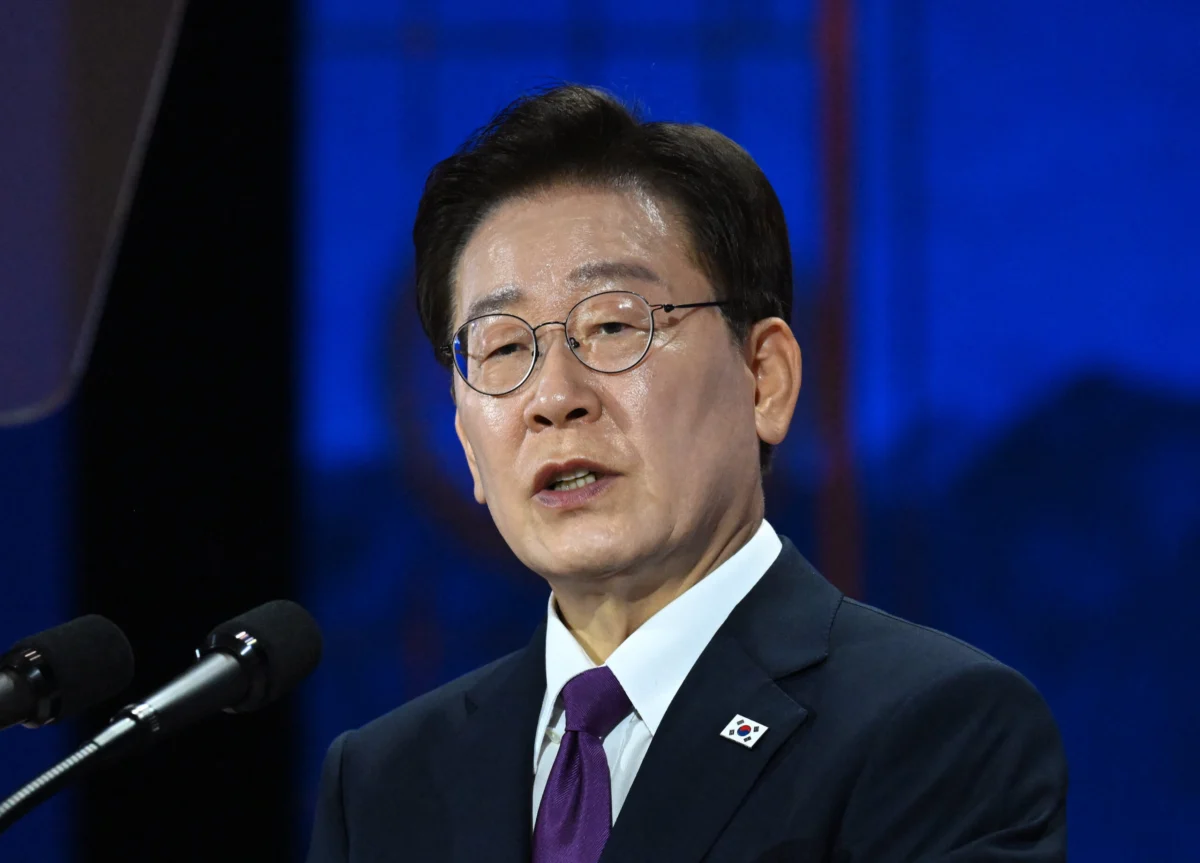
South Korean President Lee Jae Myung delivered a stark warning on the nation’s real estate market, invoking Japan’s devastating property crash of the early 1990s and its subsequent "lost decades." Speaking at the opening ceremony of the 48th session of the UNESCO World Heritage Committee at BEXCO in Busan on July 19, 2026, President Lee’s comments signaled heightened concerns within the government as it prepares to revise taxes aimed at stabilizing the housing sector. His remarks immediately ignited a nationwide debate, drawing parallels that economists cautiously assess, emphasizing both similarities and crucial differences between the two Asian economic powerhouses.
The Haunting Echoes of Japan’s Economic Bubble and the "Lost Decades"
President Lee’s reference to Japan’s "lost" 20 or 30 years resonated deeply, touching upon a painful period in economic history. Japan’s "lost decades" refer to the prolonged period of economic stagnation that followed the bursting of its asset price bubble in the early 1990s. This bubble, fueled by aggressive monetary easing, speculative lending, and an export-driven economy, saw land and stock prices soar to unsustainable levels throughout the late 1980s. The Nikkei 225 index reached nearly 39,000 points by December 1989, while urban land values tripled in the preceding five years.
The Bank of Japan, under pressure to curb inflation and stem speculative excesses, began a series of interest rate hikes in December 1989. This tightening of monetary policy, coupled with stricter lending regulations, proved to be the pin that burst the bubble. Property and stock markets plummeted, leading to a banking crisis, widespread corporate bankruptcies, and a protracted period of deflation and minimal economic growth. The Japanese economy, once seen as an unstoppable juggernaut, grappled with stagnant wages, corporate deleveraging, and demographic challenges, setting a cautionary tale for other rapidly developing Asian economies. President Lee explicitly highlighted this historical precedent, stating in a public discussion on real estate policy on Thursday that Tokyo’s housing market had "burst like a balloon" in the early 1990s, underscoring the potential fragility of South Korea’s own overheated market.
South Korea’s Housing Conundrum: A Nation’s Wealth Tied to Property
The South Korean real estate market has long been a focal point of economic policy and public anxiety. Characterized by rapid price appreciation, especially in metropolitan areas like Seoul, and a deep-seated cultural preference for homeownership as a primary form of wealth accumulation, the sector has shown signs of overheating. President Lee underscored this critical vulnerability, stating that real estate accounts for the largest share of South Korean household wealth. Data, he added, consistently ranks South Korea among the countries with the highest proportion of household wealth concentrated in real assets globally.
As of the end of March 2025, real assets constituted a staggering 75.8% of Korean household assets, dwarfing financial assets which made up only 24.2%. This heavy concentration means that fluctuations in property values have an outsized impact on household balance sheets, consumer confidence, and overall economic stability. The rapid rise in housing prices, particularly over the past decade, has exacerbated wealth inequality, making homeownership increasingly unattainable for younger generations and first-time buyers, while simultaneously burdening existing homeowners with substantial mortgage debt. This dynamic creates a delicate balancing act for policymakers, who must navigate the fine line between cooling a speculative market and avoiding a disruptive crash that could destabilize the broader economy.
President Lee’s Economic Vision and the Path to Tax Reform
President Lee Jae Myung’s administration has made economic stability and addressing wealth disparities central to its agenda. His invocation of Japan’s experience is not an isolated incident but rather a strategic communication aimed at galvanizing support for his proposed economic reforms, particularly in the housing sector. The government is poised to revise taxes designed to stabilize the housing market, a move anticipated to include measures to curb speculative investment and potentially adjust property holding or transaction taxes. While specific details of the tax revisions are still being finalized, the broad objective is to rebalance the market, reduce speculative demand, and make housing more affordable and accessible.
This focus on real estate is consistent with President Lee’s broader economic philosophy. A leader known for making bold pronouncements, Lee previously set an ambitious target of 5,000 for the Kospi index ahead of the 2025 presidential election. At the time, the benchmark index hovered near 2,500. He pledged to resolve the so-called "Korea discount," a phenomenon where South Korean companies are often undervalued compared to their global peers due to factors like opaque corporate governance and geopolitical risks. Remarkably, the Kospi briefly crossed the 5,000 mark in January 2026, just over six months into his term, propelled by the global AI-powered chip boom.
Following this achievement, the Lee government has sought to steer household wealth away from what it perceives as an overheated housing sector and towards financial markets, aiming for a more diversified and robust national asset portfolio. This strategy has seen partial success, with the South Korean benchmark index now hovering around 6,700. However, the market’s heavy dependence on tech giants like Samsung Electronics and SK Hynix has introduced significant volatility, highlighting the challenges of reallocating national wealth and building a resilient financial ecosystem. The proposed tax revisions on real estate are thus a crucial component of this larger economic strategy, seeking to address a fundamental imbalance in the nation’s financial landscape.

Expert Analysis: Are Concerns Overblown?
Despite President Lee’s cautionary tone, many economists believe that the comparison with Japan, while serving as a useful historical warning, may overstate the immediate danger to South Korea’s real estate market. Kang Min Joo, senior economist for South Korea and Japan at ING, offered a more optimistic outlook. "I think the probability of a real asset bubble burst in Korea is limited," Kang told CNBC, pointing to several mitigating factors.
Kang highlighted that mortgage lending conditions in South Korea have been relatively tight for several years. Authorities have maintained strict controls on loan-to-valuation (LTV) and debt-to-income (DTI) ratios, particularly in speculative areas. While the LTV ratio was previously as high as 80% in some instances, it has now fallen to below 40% and is even lower in the Seoul area, significantly reducing the financial leverage available to homebuyers. This conservative approach to lending acts as a crucial buffer against the kind of widespread speculative borrowing that characterized Japan’s bubble economy.
However, the nation’s household debt-to-GDP ratio remains a concern, standing at 90.14% as of 2024. While this figure has fallen from a record high of 98.67% in 2021, it still ranks as the second highest in Asia, trailing only Australia. Kang suggests that President Lee’s comments primarily reflect concerns about the recent rise in housing prices and the need for policy intervention, rather than an imminent real asset bubble burst.
This view is echoed by Gareth Leather, senior economist for Asia at Capital Economics, who asserted that "fears of a bubble appear exaggerated." Leather pointed out that the rapid increase in property prices is largely concentrated in Seoul, and even within the capital, prices are only about 10% above their January 2022 levels. In contrast, cities like Busan have seen prices fall to almost 80% of their January 2022 levels, indicating a more localized and less systemic overheating. Leather also emphasized that risks to financial stability are mitigated by the requirement for homebuyers to make substantial down payments, thereby reducing the likelihood of negative equity and potential difficulties for banks.
Distinguishing Factors: South Korea vs. Japan’s Pre-Crash Environment
While South Korea shares certain demographic and financial characteristics with Japan prior to its 1990s crash, experts highlight crucial differences that temper direct comparisons. Ma Tieying, senior economist at DBS Group Research, acknowledges that South Korea exhibits a high credit-to-GDP ratio and a significant stock market capitalization, similar to Japan before its bubble burst. These factors could expose the economy to vulnerabilities in the face of higher interest rates, tighter credit conditions, or external global shocks.
However, Ma also points to key distinctions. Unlike Japan in the years leading up to its bubble, South Korea is not currently experiencing large capital inflows or persistent currency appreciation. This difference provides the Bank of Korea with greater flexibility to calibrate its monetary policy without the added pressure of managing an appreciating currency that could hurt exports. Furthermore, Ma notes that the Bank of Korea has demonstrated a more preemptive approach to managing inflation and financial imbalances compared to the Bank of Japan’s actions before its bubble burst. Japan’s central bank was criticized for acting too late and too aggressively after years of accommodating speculative activity, contributing to the severity of the subsequent downturn.
The global economic environment also plays a role. While Japan’s bubble formed in a period of intense global financial liberalization and easy money, South Korea is navigating a post-pandemic world grappling with higher inflation, rising interest rates globally, and persistent geopolitical tensions. These factors create a different risk landscape, potentially limiting the extent of unchecked speculation seen in Japan’s past.
Broader Economic Repercussions and Future Outlook
The trajectory of South Korea’s real estate market carries significant implications for its broader economy. A stable, yet not overheated, housing sector is vital for household consumption, financial sector health, and overall investor confidence. An uncontrolled bubble burst could lead to a cascade of negative effects, including a decline in household wealth, a contraction in consumption, increased non-performing loans for banks, and a slowdown in economic growth. Conversely, a gradual and controlled cooling of the market, as envisioned by President Lee’s tax reforms, could redirect capital into more productive investments, strengthen financial markets, and improve intergenerational equity.
The government’s proactive stance, coupled with the insights from economists, suggests a nuanced approach is being taken. The challenge lies in implementing reforms that effectively address the structural issues in the real estate market without triggering an abrupt downturn. The global economic landscape, particularly the performance of the AI-powered chip sector which heavily influences South Korea’s exports and stock market, will also play a critical role in shaping the nation’s economic resilience. As South Korea strives to learn from history, particularly Japan’s "lost decades," its policymakers face the complex task of ensuring sustainable growth and equitable wealth distribution for its citizens, all while navigating the inherent volatility of a highly globalized economy. The coming months, as tax revisions are finalized and implemented, will be crucial in determining whether President Lee’s warnings pave the way for a managed correction or presage a more challenging period for the nation’s housing sector.
