

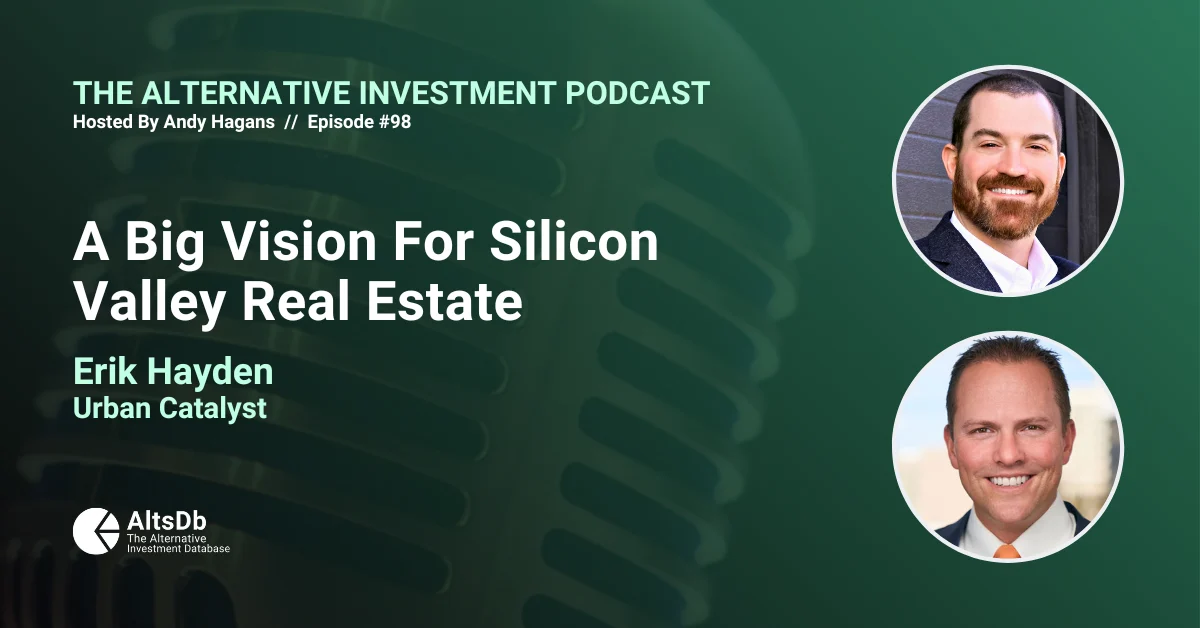
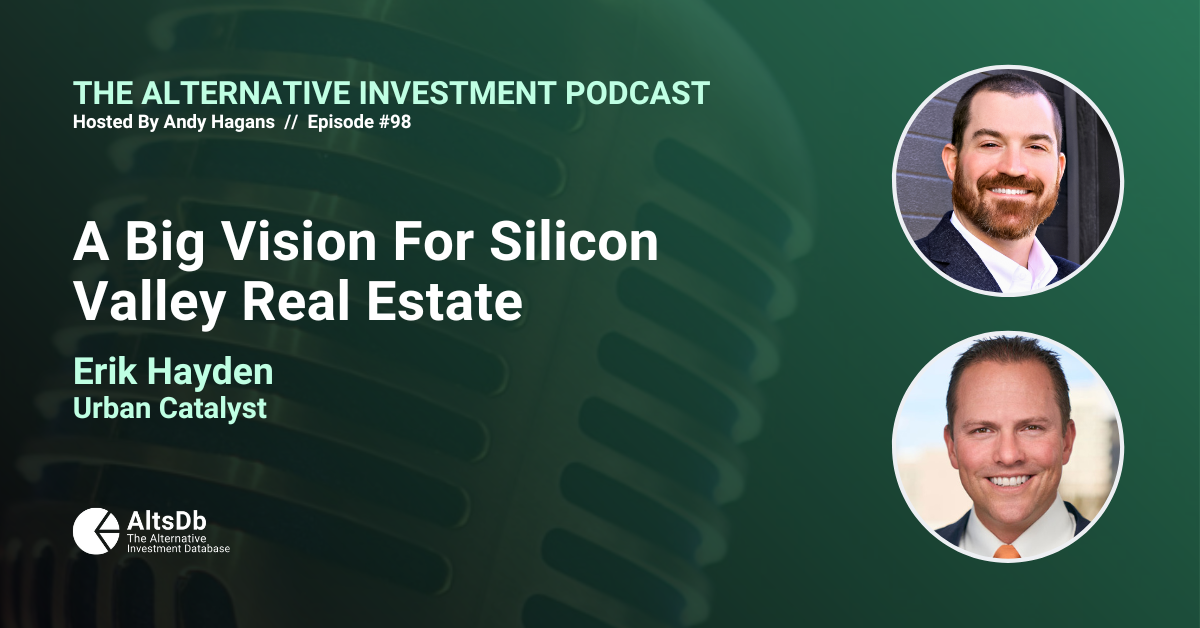
Silicon Valley, often a subject of both fervent optimism and stark pronouncements of decline, is experiencing a resurgence that promises sustained growth for decades to come, according to Erik Hayden, founder of Urban Catalyst. Hayden, recognized as one of Silicon Valley’s 100 most powerful individuals, shared his insights on how the region’s real estate market is positioned to generate significant long-term wealth for investors during a recent appearance on The Alternative Investment Podcast.
The narrative surrounding California real estate can often be dominated by concerns about housing affordability, regulatory challenges, and economic shifts. However, Hayden argues that a deeper analysis reveals a dynamic landscape fueled by innovation, significant capital investment, and strategic urban development, particularly in San Jose.
The Driving Force: Silicon Valley’s Economic Engine
Silicon Valley remains the undisputed epicenter of global technological innovation. In 2021 alone, California emerged as the fourth-largest economy in the world, surpassing Germany, with Silicon Valley being a primary driver of this economic powerhouse. The region experienced a historic year in 2021, marked by a surge in companies going public, rivaling the dot-com era, and unprecedented venture capital funding. Notably, the city of Menlo Park, with a population of just 45,000, attracted more venture capital than the entire state of Texas. This influx of capital underscores the region’s continued appeal to investors and entrepreneurs alike.
The presence of tech giants such as Meta, Google, and Apple, with their vast operations and ongoing expansion plans, solidifies Silicon Valley’s economic dominance. While there has been a narrative of people leaving California for other states, data suggests a more nuanced picture. California’s population has consistently grown for over a century, with a minor dip in 2020-2021 being offset by a return to growth. This demographic resilience is further bolstered by international migration, with individuals from around the globe drawn to California’s economic opportunities, climate, and lifestyle.
Urban Catalyst’s Strategic Entry into San Jose
Erik Hayden founded Urban Catalyst with a clear vision: to capitalize on the burgeoning development potential of downtown San Jose. His background in ground-up development across the San Francisco Bay Area provided him with a deep understanding of the market dynamics. Around 2018, Hayden observed a significant shift occurring in downtown San Jose, which he identified as the next logical expansion point for tech companies migrating southward from more established hubs like Palo Alto, Menlo Park, and Mountain View.
"If Palo Alto, Menlo Park, and Mountain View are kind of the center of the tech universe, they’re not really very big cities," Hayden explained on the podcast. "So we’ve seen a lot of expansion. Of course, these companies, Google, Apple, Meta, they’re expanding all over the country, all over the world, but in the Valley, we’ve seen the slow migration southward from that center of Silicon Valley, towards San Jose."
This strategic foresight allowed Urban Catalyst to acquire properties and establish relationships with property owners before the significant wave of development began. While many developers have since entered the San Jose market, Urban Catalyst’s early positioning proved advantageous. The company’s focus was not initially driven by the Opportunity Zone designation, but rather by the fundamental economic opportunity for development in San Jose. The fact that many of these prime development locations fell within Opportunity Zones presented an added benefit for investors, offering significant tax advantages.
Navigating the Startup Phase: Vision and Calculated Risk
Founding a company, especially in a high-cost, high-stakes market like Silicon Valley, involves inherent risks. Hayden emphasized that his approach to entrepreneurship was not about avoiding risk but about managing it through careful planning and a clear vision. He highlighted the substantial capital required to initiate Urban Catalyst, with an initial sponsor-level raise of approximately $4.5 million. This funding, primarily from friends and family who believed in Hayden’s track record, covered operational costs, legal fees for crucial documents like private placement memorandums (which could cost upwards of $300,000), office leases, and initial land acquisition efforts.
"Land acquisition is something I’ve done a lot," Hayden stated. "It’s a little harder than it sounds, right? You think, oh, you’ve gotta make an offer and close escrow. There’s no real trick to that. It’s understanding what the city’s gonna allow you to build, how much it costs, building out your financial models, and doing a sensitivity analysis, so that you can back into how much you can pay for it. And then doing all of the negotiation."
Hayden also challenged the notion that entrepreneurship is inherently riskier than employment. He argued that an employee’s livelihood is dependent on the success of their employer, whereas an entrepreneur, while facing the challenges of business failure, retains control and the ability to steer their own course.
Building a Brand Through Digital Marketing and Earned Media
Urban Catalyst’s approach to fundraising distinguished itself from traditional methods. Instead of relying solely on broker-dealers and registered investment advisors, which dominate the retail investor space, Hayden leveraged digital marketing strategies. By utilizing platforms like Google, LinkedIn, and Facebook, Urban Catalyst was able to drive potential investors to their website and capture leads. This direct-to-investor approach, enabled by SEC’s 506(c) regulations, proved highly effective, with the company raising $50 million in its first year.
"We raised money directly from investors," Hayden explained. "And raising money directly from investors, in our first year, we raised $50 million, and we did it through a way that a lot of folks had never tried, which, of course, is digital marketing, using Google, LinkedIn, Facebook, all that stuff, to drive investors to our website."
This strategy not only generated capital but also built a strong brand identity. The company’s consistent efforts in content creation and storytelling through various marketing channels have cultivated significant brand equity. Furthermore, Urban Catalyst has benefited immensely from "earned media" – organic press coverage generated by the progress and significance of its development projects. With over 250 media mentions in the last five years, including frequent features in the Silicon Valley Business Journal, the company has achieved a level of brand visibility that cannot be bought through advertising alone. This earned media reinforces the company’s credibility and drives further organic interest from investors.
Addressing Misconceptions About California Real Estate
Contrary to the prevalent "doom and gloom" narrative, Hayden presented a compelling case for the enduring strength of Silicon Valley’s real estate market. He highlighted the region’s substantial economic output and its consistent attraction of capital and talent. The perception of a mass exodus from California is, according to Hayden, an oversimplification. While some individuals have relocated, the state’s overall population growth, fueled by international immigration, remains robust.
The high cost of living and housing in California, particularly in Silicon Valley, is a significant challenge. San Jose, for instance, has been ranked as the most expensive big city in the United States and the fourth most expensive globally, with median home prices reaching $1.6 to $1.7 million. This housing crisis, driven by a severe mismatch between job creation and housing development (six jobs for every housing unit built over 30 years), also presents unique development challenges. Construction costs are driven up by a scarcity of skilled labor, as many individuals cannot afford to live in the region where they are needed to build.
However, Hayden pointed out that even amidst these challenges, the underlying economic fundamentals are strong. He drew a parallel to the initial skepticism surrounding Google’s IPO in 2004, where some traditional investors deemed it overpriced. Yet, the company’s future growth trajectory proved the initial assessment wrong, illustrating the principle that "price is what you pay, value is what you get." Similarly, past performance in California real estate, while not a guarantee of future success, demonstrates a long-standing history of positive market trends.
San Jose: A Pro-Development Hub
Despite statewide regulatory hurdles that can impede development, downtown San Jose stands out as a remarkably pro-development environment. Hayden credited the city’s planning and economic development departments for their understanding of urban growth and their ability to facilitate complex projects. This local support is crucial for navigating the intricate approval processes.
"The city of San Jose, and I do wanna give them their props, because their planning and economic development department is top-notch, and they really understand urban development, and what a city should be, and how to facilitate that," Hayden remarked.
This contrasts with other municipalities in California, such as Cupertino, which has faced significant political battles and referendums over development projects, even as major tech companies like Apple occupy a substantial portion of the city’s office space.
Urban Catalyst’s Diversified Project Portfolio
Urban Catalyst’s current Opportunity Zone Fund II encompasses four distinct projects in downtown San Jose:
- Echo: A high-rise multi-family development with approximately 400 units.
- Icon: A 500,000 square foot office building, strategically located near the future BART station and a short distance from Google’s expansive "Downtown West" campus.
- Keystone Hotel: A 172-key Marriott Townplace Suites, which is already under construction.
- Gifford Place: A senior living facility offering assisted living and memory care services.
The diversification across asset classes—multi-family, office, hotel, and senior living—provides a hedge against market fluctuations. The office sector, in particular, has faced scrutiny due to remote work trends. However, Hayden noted that Silicon Valley’s office market, even during the pandemic, demonstrated resilience, with strong transaction volumes and record prices for existing space. While return-to-office rates lag behind other regions, significant tech companies continue to lease space, and recent layoffs have, in some instances, increased employer leverage.
The Google Factor: A Powerful Synergistic Force
The development of Google’s "Downtown West" campus represents a transformative project for San Jose. This $19 billion, 10-year initiative will create one of Google’s largest campuses globally, encompassing 7 million square feet of office space and 6,000 residential units. Urban Catalyst’s projects are strategically situated to benefit from this massive investment. The Icon office building, for example, is located near the future BART station and within blocks of Google’s burgeoning campus, creating significant synergistic opportunities.
This proximity to a major catalyst like Google’s expansion underscores the strength of Urban Catalyst’s investment thesis: building in areas with significant, long-term economic growth drivers. The presence of multiple active developers in downtown San Jose, who collaborate and support each other’s efforts, further strengthens the region’s development ecosystem, leading to a collective enhancement of property values.
Expanding Horizons: The Delaware Statutory Trust (DST) Initiative
Urban Catalyst is also venturing into new investment avenues with the launch of its Delaware Statutory Trust (DST) offering. This initiative targets an industrial property in Dallas, Texas, marking a strategic expansion beyond their core focus on Silicon Valley development.
"We wanted to expand our fund platform to provide more opportunities for our investors," Hayden stated. "Delaware Statutory Trust, I mean, it fits right in our wheelhouse. Tax-advantaged real estate. That is what we do here at Urban Catalyst."
The choice of an industrial property in Dallas is rooted in a thorough market analysis. The Dallas-Fort Worth metroplex has experienced substantial population growth and is a major industrial market. The selected property offers a 10-year lease with 3% annual rent increases, providing a stable income stream and built-in value appreciation. This approach aligns with Urban Catalyst’s philosophy of investing based on a solid business plan rather than speculation, while still benefiting from potential market upside.
The DST product is designed to appeal to the same base of individual investors and wealth managers that Urban Catalyst has cultivated through its Opportunity Zone funds, leveraging the company’s established brand and direct investor relationships.
The Future of Silicon Valley Real Estate
Erik Hayden’s outlook for Silicon Valley real estate is one of sustained optimism, grounded in the region’s unparalleled capacity for innovation and its magnetic pull for capital and talent. While challenges such as housing affordability and regulatory complexities persist, strategic investments in areas like downtown San Jose, coupled with innovative fundraising and development strategies, position Urban Catalyst and its investors for long-term success. The region’s economic engine continues to churn, promising decades of growth and wealth creation for those who understand its enduring appeal.
For advisors and high-net-worth investors seeking to learn more about Urban Catalyst’s offerings, the company’s website, urbancatalyst.com, serves as a primary resource.
