

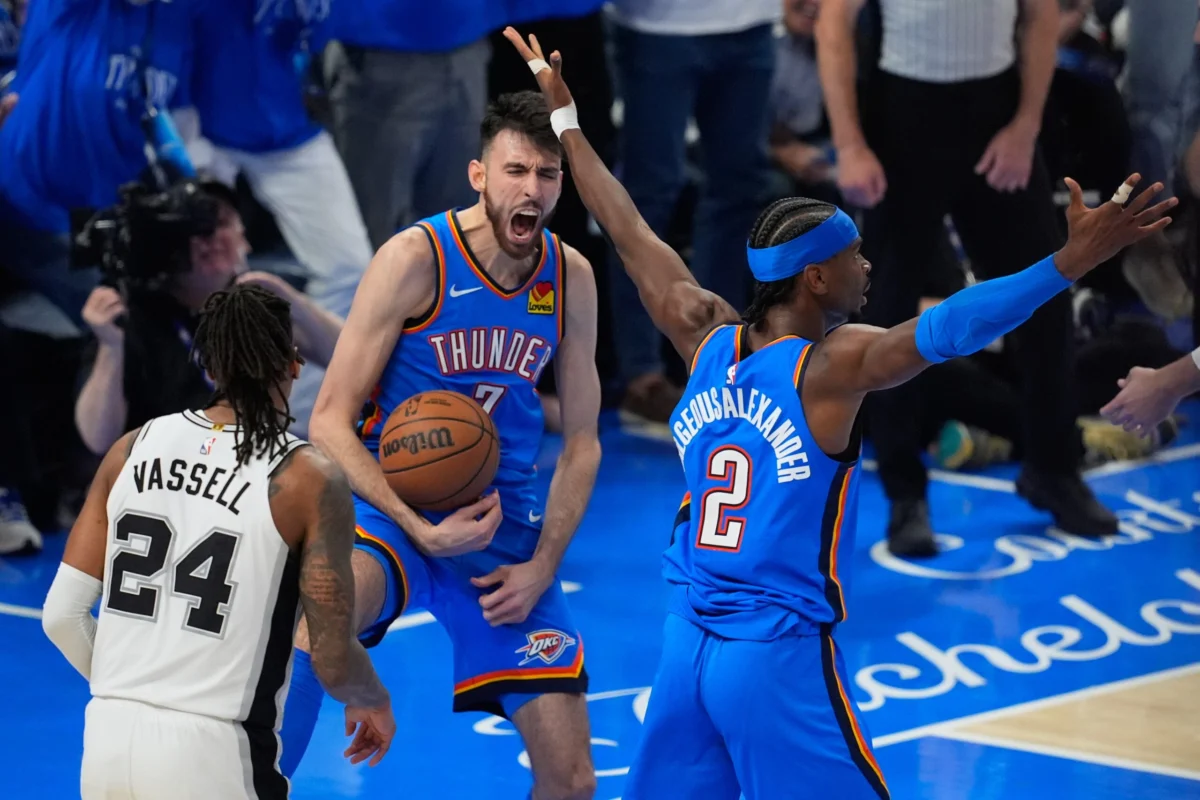
The Oklahoma City Thunder, the defending NBA champions, emphatically asserted their dominance in Game 2 of the Western Conference Finals, overcoming the San Antonio Spurs with a decisive 122-113 victory. This hard-fought contest, a strategic masterpiece for the Thunder, leveled the high-stakes series at 1-1, neutralizing the Spurs’ initial advantage and setting the stage for a compelling shift to San Antonio for the next two matchups. Leading the charge for Oklahoma City was their stellar guard, Shai Gilgeous-Alexander, the league’s back-to-back Most Valuable Player, who delivered a masterful performance with 30 points and nine assists, a stark contrast to his relatively subdued outing in Game 1.
A Championship Pedigree Under Pressure
The Thunder entered Game 2 on their home court at Paycom Center under immense pressure, having dropped the series opener in a thrilling double-overtime classic. Losing two consecutive home games to open a conference finals series would have placed the defending champions in a precarious 0-2 hole, historically a difficult deficit to overcome. Gilgeous-Alexander acknowledged the team’s understanding of the stakes. "The guys brought it tonight, knowing what it would have meant if we lost this one," he remarked post-game, emphasizing the palpable energy from the opening tip. "We brought the energy from the jump." This sentiment underscored the Thunder’s collective resolve to protect their home court and re-establish their championship mettle.
Oklahoma City’s journey to this point has been nothing short of historic. As the league’s best regular-season team with an impressive 64 wins, they have consistently demonstrated their elite status. Their path through the playoffs has been equally dominant, sweeping the Phoenix Suns and LeBron James’s Los Angeles Lakers in the first two rounds, showcasing a blend of youthful athleticism, strategic depth, and seasoned championship experience. Their aspiration to become the first team to repeat as NBA champions since the Golden State Warriors in 2017 and 2018 fuels their every move, adding an extra layer of intensity to every possession in this pivotal series.
Conversely, the San Antonio Spurs represent a remarkable resurgence. After missing the playoffs since 2019, they have returned with a vengeance, securing an outstanding 62 regular-season wins, a testament to their rapid development and the transformative impact of their generational talent, Victor Wembanyama. Despite their strong regular-season performance, which included winning four of five contests against the Thunder, Game 2 presented a different challenge, particularly with the continued absence of their starting guard De’Aaron Fox, who remained sidelined due to a right ankle sprain. His playmaking and scoring prowess were noticeably missed in the face of Oklahoma City’s invigorated defense.
Game 2 Chronology: A Battle of Adjustments and Resilience
The narrative of Game 2 unfolded as a compelling strategic chess match, punctuated by individual brilliance and collective effort. Two nights after their epic double-overtime clash, both teams, recognized for having the best regular-season records in the NBA, delivered another intense display that captivated fans and analysts alike.
First Quarter: A Feeling-Out Process
The opening frame saw both teams exchange blows, feeling each other out after the exhaustive Game 1. The score remained tied at the end of the first quarter, reflecting the evenness and cautious aggression of both squads. It was clear from the outset that the Thunder had adjusted their defensive intensity and offensive approach, particularly concerning their star player.
Second Quarter: Thunder’s Surge and Defensive Clampdown
The second quarter proved to be the turning point for Oklahoma City. Galvanized by Gilgeous-Alexander, who had struggled with efficiency early in Game 1, the Thunder roared ahead, establishing an 11-point halftime lead. SGA led the charge from tip-off, demonstrating his signature mid-range game, converting contested pull-ups and smooth fadeaways with high efficiency. His ability to consistently create space and knock down shots provided the offensive rhythm the Thunder needed.
Crucially, Oklahoma City’s defense intensified dramatically. They hustled relentlessly, forcing the Spurs into 13 turnovers in the first half alone, converting these opportunities into 16 valuable points. This aggressive defensive posture was particularly aimed at stifling Victor Wembanyama, who had delivered a historic performance in Game 1 with 41 points and 24 rebounds. The Thunder’s defensive scheme saw veteran center Isaiah Hartenstein frequently wrestling with Wembanyama in the post, denying him easy looks, while aggressive double-teams converged on the Frenchman whenever he touched the ball, effectively limiting his impact and forcing him into uncomfortable positions. This collective effort significantly reduced Wembanyama’s offensive output and altered the Spurs’ offensive flow.
Third Quarter: Spurs’ Resilient Rally
Despite the Thunder’s strong first-half performance and the stifling defense on Wembanyama, the San Antonio Spurs, showcasing their own resilience and championship pedigree, mounted a spirited comeback in the third quarter. Even without the injured De’Aaron Fox, the Spurs managed to erase a 13-point deficit, pulling level midway through the frame. This rally was fueled by the collective effort of their supporting cast and moments of individual brilliance. Rookie Stephon Castle provided one of the game’s most memorable highlights, leaping for a sensational dunk over the outstretched arm of the seven-foot-tall Hartenstein, a play that left both the crowd and players gasping and momentarily shifted the momentum.
However, despite their impressive rally, San Antonio never quite managed to retake the lead. Oklahoma City, demonstrating composure and maturity, absorbed the pressure, preventing the Spurs from completing their comeback. Gilgeous-Alexander commended his team’s mental fortitude, stating, "The guys were ready to play, [we] didn’t get discouraged by the runs they made. Obviously, they’re a good team, they are gonna make runs." This ability to weather the storm and respond to opposition surges is a hallmark of championship-caliber teams.
Fourth Quarter: Thunder Closes with Authority
Entering the final quarter with a narrow but crucial lead, the Thunder methodically extended their advantage, never relinquishing control. Shai Gilgeous-Alexander continued his stellar play, sinking yet another patented step-back jump shot that showcased his clutch scoring ability. Complementing his star’s efforts, Alex Caruso delivered a timely lay-up, extending the Thunder’s lead to nine points with a mere 20 seconds remaining, effectively sealing the victory. The final minutes were a testament to Oklahoma City’s ability to execute under pressure and close out a tight contest.
The game was also marked by intense physical play, which regrettably led to injuries. Oklahoma City’s Jalen Williams and San Antonio’s Dylan Harper both left the court during the game with undisclosed injuries and did not return. The severity of these injuries could have significant implications for their respective teams in the crucial upcoming games.
Individual Performances and Strategic Nuances
Shai Gilgeous-Alexander (OKC): His 30 points and nine assists were not just numbers; they represented a masterclass in controlled aggression and efficiency. After a less impactful Game 1, SGA took command from the opening tip, driving the Thunder’s offense with his elite mid-range scoring and astute playmaking. His ability to consistently break down defenders and hit tough shots was paramount to the Thunder’s success. He shot an efficient 12-of-23 from the field and made all six of his free throws, showcasing his offensive versatility and poise.
Victor Wembanyama (SAS): Game 2 presented a significant challenge for the young phenom. Following his monumental 41-point, 24-rebound performance in Game 1, the Thunder’s defensive strategy effectively stifled him. Wembanyama found himself frequently double-teamed and physically challenged by Isaiah Hartenstein and other Thunder defenders. While still contributing defensively with blocks and rebounds, his offensive rhythm was disrupted. He finished with 18 points and 11 rebounds, a respectable stat line but a notable decrease from his Game 1 heroics. His post-game assessment was candid: "Gilgeous-Alexander made shots, but nothing that he hasn’t made all season. We worked on it, we just didn’t apply as much." This honest reflection highlighted the Spurs’ defensive struggles against SGA’s brilliance.
Isaiah Hartenstein (OKC): His role in defending Wembanyama was crucial. Hartenstein’s physicality and defensive acumen were instrumental in making Wembanyama work for every possession, denying him easy looks and forcing him out of his comfort zones. His contribution underscored the importance of collective defensive effort against a generational talent.
Stephon Castle (SAS): The rookie guard stepped up in key moments, particularly with his highlight-reel dunk. His ability to contribute offensively and provide a spark off the bench was vital in the Spurs’ third-quarter rally, demonstrating his potential and composure in a high-pressure environment.
De’Aaron Fox (SAS): His absence for a second consecutive game due to a right ankle sprain was keenly felt by the Spurs. Fox’s explosive scoring, speed, and playmaking are critical components of San Antonio’s offense, and his presence would have provided another crucial offensive outlet, potentially easing the pressure on Wembanyama and allowing the Spurs to better navigate the Thunder’s aggressive defense.
Broader Implications and the Road Ahead
With the series now knotted at 1-1, the Western Conference Finals shifts to San Antonio for Games 3 and 4, scheduled for Friday and Saturday. This move represents a critical juncture for both teams. For the Thunder, having "stolen" home-court advantage back by winning Game 2, the pressure now shifts to the Spurs to defend their home floor. As Gilgeous-Alexander succinctly put it, "We got a W [win], it’s all you can ask for. Now we got to go on the road against a really good team and go get one." The Thunder will aim to maintain their defensive intensity and SGA’s offensive rhythm while trying to snatch a road victory.
For the Spurs, the challenge intensifies. They must find ways to free up Victor Wembanyama against the Thunder’s stifling defense and adapt their offensive schemes to compensate for the continued absence of De’Aaron Fox, if he remains sidelined. The coaching staff, led by the legendary Gregg Popovich, will undoubtedly be strategizing adjustments to exploit any weaknesses in the Thunder’s defense and maximize their own offensive efficiency. The supporting cast will need to maintain their third-quarter intensity and provide consistent scoring and defensive effort.
The injuries to Jalen Williams and Dylan Harper also loom large. Williams is a vital two-way player for the Thunder, contributing significantly on both ends of the floor. His potential absence could impact Oklahoma City’s wing depth and defensive versatility. Similarly, Harper’s role for the Spurs, particularly in providing energy and depth, would be missed. The medical updates on their conditions will be closely monitored, as their availability could influence tactical decisions and team rotations in the upcoming games.
This series, featuring two of the league’s top regular-season teams and a compelling clash of generational talents and seasoned champions, promises to be a thrilling spectacle. The winner of this intense Western Conference Finals will advance to the NBA Finals, where they will face the victor of the Eastern Conference Finals, contested between the New York Knicks and the Cleveland Cavaliers. As the series moves to San Antonio, the strategic adjustments, mental fortitude, and individual brilliance of the players will determine which team ultimately emerges victorious and earns the right to compete for the coveted NBA championship.
